Mitte Guide: The Tourist Core, Minus the Tourist Traps
Nearly every Berlin landmark is in Mitte, and nearly all the crowding is on one two-kilometre line. How to do the district properly, and what to skip by name.
Almost everything a first-time visitor to Berlin comes to see is in Mitte, and almost everything a Berliner would tell you is worth seeing is not. That gap is the whole problem with the district, and it is also entirely solvable — most of the crowding, the overpriced food and the sense of being processed is concentrated along a single east–west axis about two kilometres long, and stepping four streets north of it changes the experience completely. This Mitte Berlin guide is about how to have the tourist core without the tourist trap, which mostly means knowing which way to walk.
What follows covers the sub-neighbourhoods within Mitte and what each is actually like, the specific things here that are not worth your money, the courtyards and streets that the guidebooks route past, and where the district’s residents go when they are not at work. Prices and details were checked in September 2026. For a district-by-district view of the whole city, see our Berlin neighbourhoods guide.
The Parts of Mitte, and What Each Is Like
| Area | What is there | What it feels like |
|---|---|---|
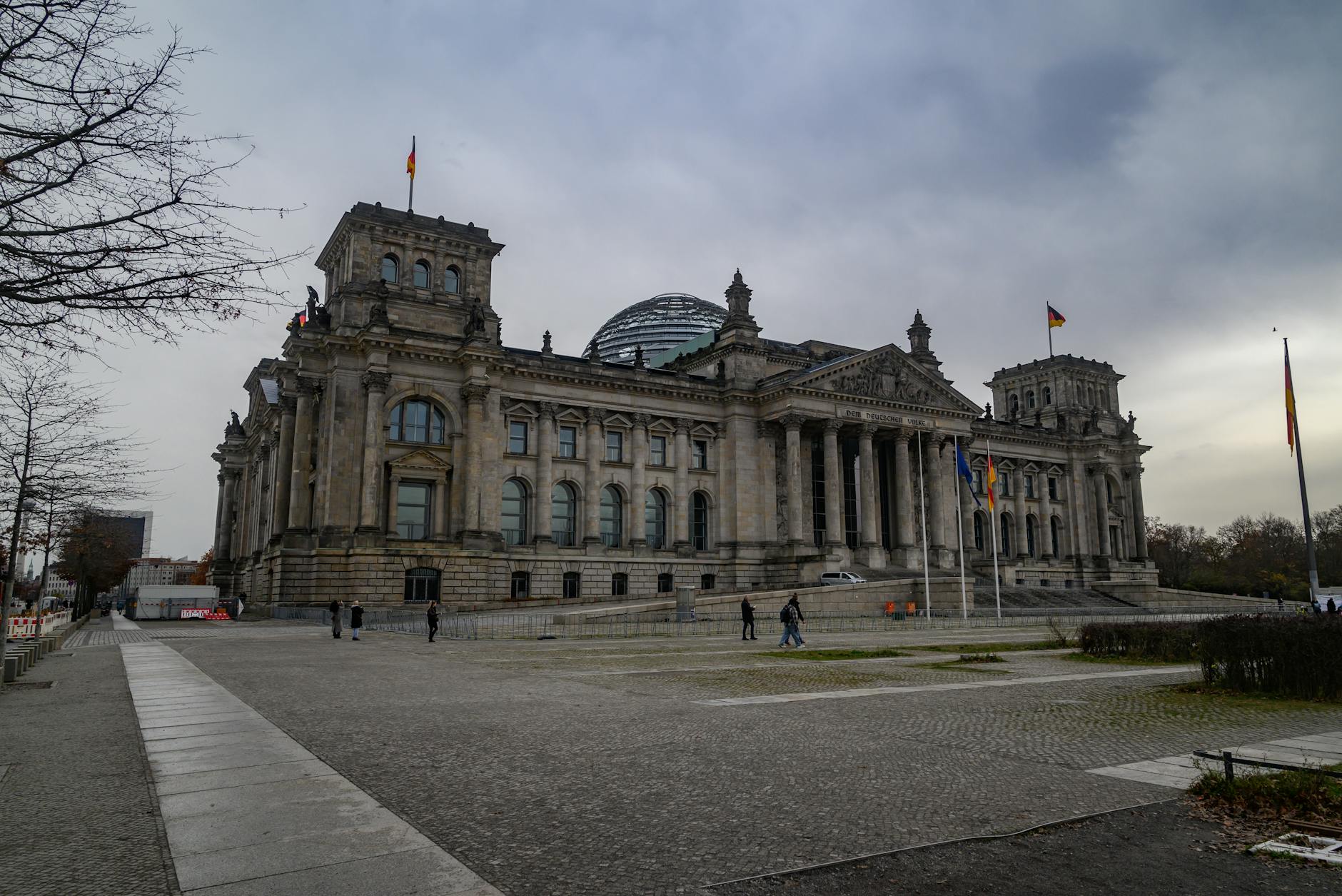
| Unter den Linden and the government quarter | Brandenburg Gate, Reichstag, ministries, embassies | Formal, wide, busy by day, deserted at night |
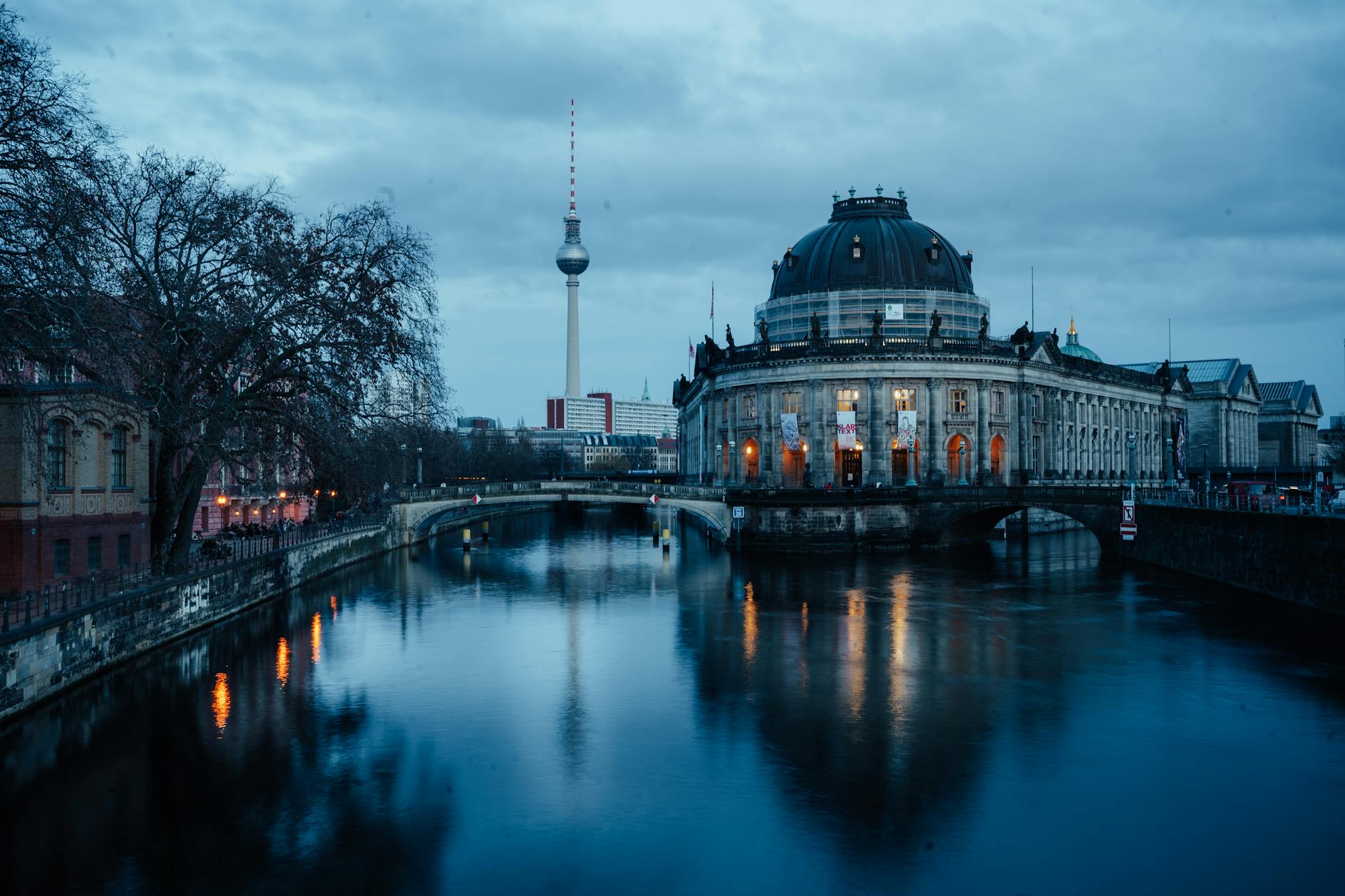
| Museum Island and the Spree | Five museums, the cathedral, Humboldt Forum | Grand, crowded, almost nobody lives here |
| Alexanderplatz | TV Tower, shopping centres, transport hub | Windy, concrete, genuinely useful, not beautiful |
| Scheunenviertel | Old Jewish quarter, synagogue, galleries, courtyards | The most interesting square kilometre in the district |
| Rosenthaler Platz and Torstraße | Bars, restaurants, small shops, actual residents | Where Mitte behaves like a neighbourhood |
| Rosa-Luxemburg-Platz | Volksbühne theatre, Karl-Liebknecht-Haus, cinemas | Quieter, political, a bit stern |
| Nikolaiviertel | Reconstructed old town, three small museums | Pretty, artificial, worth an hour |
First, a Confusion Worth Clearing Up
The administrative Bezirk called Mitte also contains Wedding, Moabit, Gesundbrunnen and Tiergarten, which are nothing like each other and nothing like the central district people mean when they say “Mitte”. This page is about central Mitte — sometimes called Alt-Mitte — which is roughly the area bounded by the Spree, Torstraße, Alexanderplatz and the Tiergarten.
It is worth knowing because signage, addresses and official maps use the borough boundaries, and because “we’re staying in Mitte” can mean a ten-minute walk from Museum Island or a twenty-five-minute U-Bahn ride from it.
The Tourist Axis, and How to Do It Properly
The Brandenburg Gate, Unter den Linden, Museum Island and Alexanderplatz form one continuous line, and you can walk the whole thing in about forty minutes without stopping. Almost every visitor does exactly this, at roughly the same times of day, which is why it feels the way it does.
Three adjustments make it a much better walk:
- Go early. The Brandenburg Gate at half past seven in the morning is genuinely empty, and the sun rises directly behind it. By eleven there are several hundred people in the square and it stays that way until dusk.
- Walk it east to west in the evening instead. Starting at Alexanderplatz and finishing at the Gate at sunset reverses the flow of every walking tour in the city and puts the light behind you the whole way.
- Do not eat on it. There is essentially nothing worth eating between the Gate and Alexanderplatz at a price a local would pay. Everything good is three or four streets north.
The Reichstag dome is free but requires advance registration, and it is the single best thing on this axis. The Holocaust Memorial is two minutes from the Gate, free and open at all hours, and its underground information centre is the part most visitors skip.
Unter den Linden, and Why It Feels Odd
Berlin’s grand boulevard runs from the Brandenburg Gate east to the Spree, lined with the State Opera, the Humboldt University, the Neue Wache memorial and a row of embassies and bank headquarters. It is handsome, it is historically loaded, and it is one of the least enjoyable major streets in any European capital to actually walk down.
The reason is worth understanding. Unter den Linden was rebuilt twice — after the war by the GDR, and again after reunification — and both rebuildings prioritised monumentality over street life. The buildings are set well back, the pavements are enormous, the ground floors are embassies and offices rather than shops and cafés, and traffic runs down the middle. There is nothing at eye level to hold your attention, so people walk it briskly and remember nothing except the Gate at one end.
Two things on it are worth stopping for. The Neue Wache, Schinkel’s small guardhouse, now holds a single Käthe Kollwitz sculpture of a mother with her dead son under an open oculus, open to the rain and snow — it is Germany’s central memorial to the victims of war and tyranny, it is free, and it takes two minutes. And Bebelplatz, the square opposite the university, holds Micha Ullman’s memorial to the 1933 book burning: a window in the paving looking down into a room of empty white shelves. Both are easy to walk past and neither is signposted at the scale it deserves.
The Government Quarter and the Spree Bend
North-west of the Brandenburg Gate, the federal government occupies a band of buildings in the bend of the Spree — the Chancellery, the parliamentary offices, the Reichstag — laid out along a deliberate east–west axis known as the Band des Bundes, intended to symbolically stitch the two halves of the city together across the old border.
It is a strange place to walk. The buildings are large, white and abstract, the spaces between them are wide and windswept, and outside working hours there is essentially nobody there. But the riverside path along the Spree behind the Reichstag is one of the pleasantest walks in central Berlin, there are boat moorings and summer bars along it, and the White Crosses memorial to people who died attempting to cross the Wall stands on the bank opposite the parliament. It leads directly to Hauptbahnhof in one direction and to the Tiergarten in the other.
The Tourist Traps, Named
Being specific is more useful than a general warning, so:
- The costumed actors at Checkpoint Charlie. They are not soldiers, the guardhouse is a replica, and the stamp in your passport has no meaning and can theoretically cause you problems. Look at the sign, read the free open-air panels along the fence, and walk five minutes to the Topography of Terror instead, which is free and serious.
- Souvenir shops selling “authentic” Wall fragments. The Wall was 155 kilometres long and a great deal of what is sold as it is painted concrete. Buy them as souvenirs if you like them; do not buy them as relics.
- Restaurants with photographs of the food outside on Unter den Linden and around Museum Island. A reliable global signal, and it holds here.
- The TV Tower at full price on a hazy day. Around €25 to stand inside the one landmark you actually wanted in your photograph. Our best views ranking explains what to do instead.
- Bicycle rickshaws along the tourist axis. Agree the price before you get in, in writing if necessary. This is a recurring complaint and it is entirely avoidable.
None of this makes Mitte a bad district. It makes it a district with a well-developed extraction industry along one specific corridor, which you can simply decline to participate in.
The Scheunenviertel: The Part Worth Your Day
North of the Spree, roughly between Oranienburger Straße, Torstraße and Rosa-Luxemburg-Platz, lies the old Scheunenviertel — the “barn quarter”, historically the poorest part of central Berlin and, from the nineteenth century, the heart of the city’s Eastern European Jewish community. It was devastated by the Nazi period and neglected under the GDR, and since the 1990s it has become the most expensive and most self-consciously stylish part of Berlin. All three of those layers are still legible on the same street.
The Neue Synagoge
The gilded dome on Oranienburger Straße belongs to the New Synagogue of 1866, once the largest in Germany and a deliberate statement of Jewish confidence in Prussian society. It survived Kristallnacht largely because a local police officer intervened, was then destroyed by bombing in 1943, and today the front section has been restored to house the Centrum Judaicum. The building behind the façade is largely gone; the outline of the vanished main hall is marked on the ground behind it.
Große Hamburger Straße
A short street carrying an extraordinary weight. It held Berlin’s oldest Jewish cemetery, which the Gestapo destroyed in 1943; the site is now a small green space with a symbolic gravestone and a memorial. Next door stood a Jewish old people’s home that the Gestapo used as a deportation assembly point. And on a gap site where a building was destroyed by bombing, the artist Christian Boltanski mounted The Missing House — plaques on the exposed side walls of the neighbouring buildings naming the people who lived in the vanished flats.
Our Jewish history in Berlin guide covers the wider route through this quarter, and the Jewish Museum in Kreuzberg gives the full account.
Auguststraße and the galleries
Auguststraße was the centre of Berlin’s contemporary art scene in the 1990s, when artists occupied abandoned buildings here in numbers. It is far more polished now, but the KW Institute for Contemporary Art still occupies a former margarine factory on the street and remains one of the most serious contemporary exhibition spaces in the city. Clärchens Ballhaus, a dance hall running since 1913, is on the same street; it closed for a long renovation and has reopened, so check what is on before you plan an evening around it.
The Courtyards Nobody Tells You About
Berlin’s nineteenth-century blocks are built around chains of interior courtyards, and Mitte has the most spectacular examples in the city.
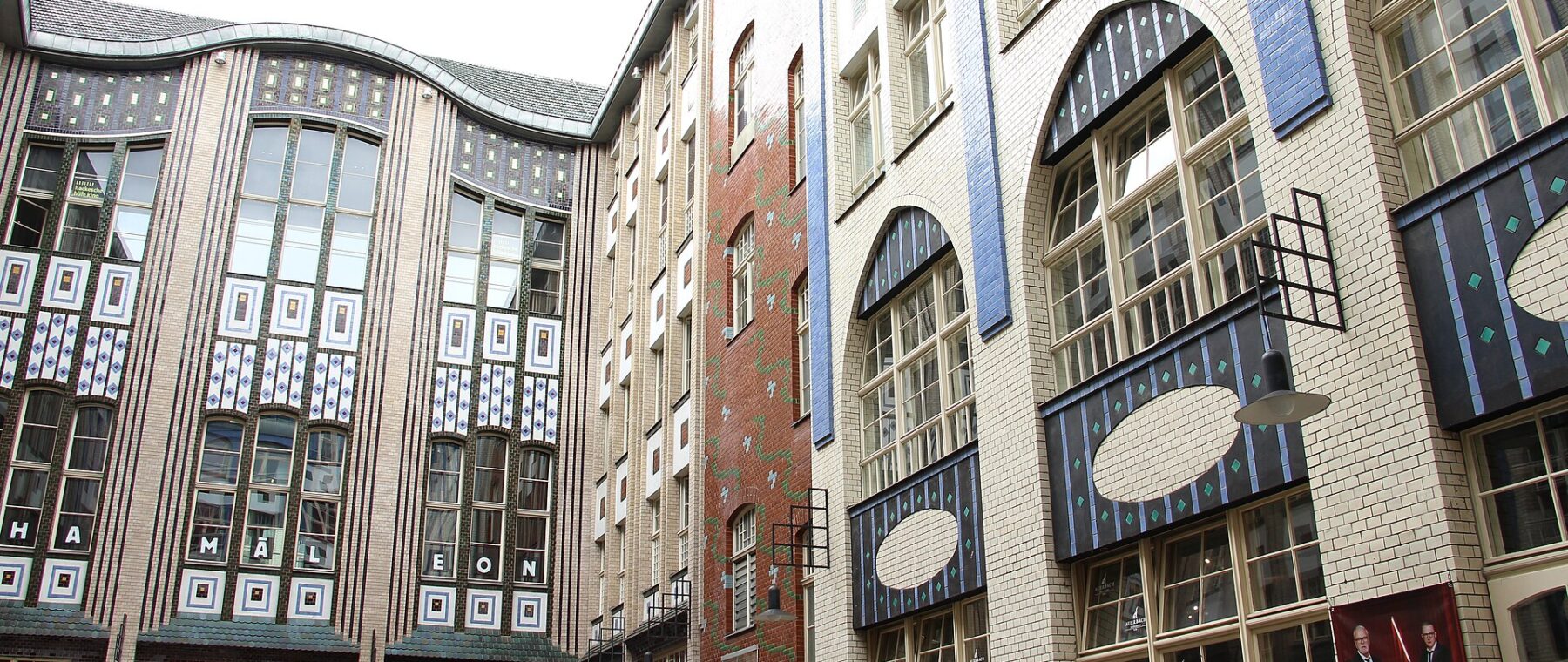
Hackesche Höfe is the famous one — eight linked courtyards completed in 1906, with August Endell’s blue and white Art Nouveau glazed tiling in the first yard. It is beautiful and it is thoroughly commercialised, and the crucial point is that most visitors photograph the first courtyard and go back out. Walk through all eight; they get quieter and more residential as you go.
Haus Schwarzenberg, at Rosenthaler Straße 39, is the courtyard immediately next door, and it is the reason to come. It was deliberately left unrenovated — raw brick, layers of street art, stickers, paste-ups — and it contains the Museum Otto Weidt’s Workshop for the Blind, a small, free museum in the actual premises where a brush manufacturer hid and protected his blind and deaf Jewish employees from deportation. It also holds the Anne Frank Centre. It is thirty seconds from one of the most photographed courtyards in Berlin and receives a fraction of the visitors.
The Sophie-Gips-Höfe on Sophienstraße are a third example, quieter and more architectural, and the whole cluster can be walked in under an hour. A general rule applies across Berlin: if a courtyard gate is open and there is no sign forbidding it, people walk in.
Where People in Mitte Actually Go
The district’s residential life happens in a band along and just off Torstraße, running from Rosenthaler Platz east towards Rosa-Luxemburg-Platz, and in the streets north of it.
- Rosenthaler Platz — the junction where Mitte stops being a museum. Bars, late shops, cheap food, a constant flow of trams and a good deal of noise. Very little of it is aimed at visitors.
- Weinbergspark — a sloping park a few minutes north with a beer garden, packed on any warm evening, and one of the pleasantest free spots in the centre.
- Zionskirchplatz — a quiet square around a church whose parish sheltered GDR dissident groups in the 1980s. Now a farmers’ market on Thursdays and one of the calmest corners in Mitte.
- Rosa-Luxemburg-Platz — the Volksbühne theatre, one of the most politically charged stages in Germany, plus Kino Babylon and the headquarters of Die Linke on the corner.
- Monbijoupark — on the Spree opposite Museum Island, with a public swimming pool for children and a stretch of river bank that fills up in summer.
Two Museums in Mitte That Are Not on Museum Island
The Museum für Naturkunde on Invalidenstraße holds the tallest mounted dinosaur skeleton in the world along with one of the finest Archaeopteryx fossils in existence. It is a proper nineteenth-century natural history museum with the glass jars and the wooden cabinets intact, and it is one of the best value tickets in Berlin. Excellent with children — see our museums for kids guide.
Hamburger Bahnhof, five minutes further west, is a contemporary art museum in a former railway terminus, with vast halls and a serious collection. Both are within twenty minutes’ walk of Hauptbahnhof and both are considerably less crowded than anything on Museum Island.
Eating and Drinking in Mitte
Mitte has the highest concentration of fine dining in Berlin and the worst mid-range value in the city, and both facts follow from the same cause: the customers here are on expense accounts or passing through, and neither group comes back.
The practical rules are straightforward. Move north of Torstraße and prices drop noticeably. Rosenthaler Platz, Brunnenstraße and the streets around Weinbergspark have the district’s honest bars and restaurants. The Vietnamese, Korean and Israeli kitchens scattered through the Scheunenviertel are consistently the best value sit-down food in central Mitte. And for a cheap lunch that is not a mistake, the food halls and street stalls near Alexanderplatz beat anything on Unter den Linden.
Our guides to cheap food in Berlin, fine dining and brunch have the specifics, and the bar guide covers the Torstraße corridor properly.
Mitte Through the Year
The district changes character with the season more than most of Berlin, because so much of it is public space rather than residential street.
- Summer — the Spree banks around Monbijoupark and behind the Reichstag fill with people, the beer gardens open, and the tourist axis becomes genuinely congested from about ten in the morning. Early starts pay off more in July than at any other time.
- Autumn — arguably the best season here. The courtyard creepers turn, the crowds thin from October, and the museums are comfortable again.
- Winter — the Christmas markets arrive in late November, including the paid one on Gendarmenmarkt and free ones at the Rotes Rathaus and along Unter den Linden. Sunset is around 15:50 in December, which makes the floodlit buildings available at a civilised hour.
- Spring — the quietest shoulder season, and the point at which the outdoor tables reappear on Torstraße. Our guide to the best time to visit Berlin weighs it all up.
Mitte With Children
Better than it looks, provided you avoid making them walk Unter den Linden. The Museum für Naturkunde is the obvious anchor. The DDR Museum opposite the cathedral is deliberately hands-on and holds most children’s attention for an hour. Monbijoupark has a children’s swimming pool in summer and a good playground. Alexanderplatz has the Weltzeituhr, a rotating world clock that is an easy meeting point, and enough space for children to run without being in anybody’s way.
What does not work is a museum day on Museum Island, which is long, adult-paced and involves a great deal of queuing. Our Berlin with kids guide and playgrounds guide cover the alternatives.
Getting Around Mitte
Mitte is small enough to walk end to end, and walking is genuinely the right way to do it — the district is dense, flat and full of things you would miss underground. Brandenburg Gate to Alexanderplatz is about forty minutes; Museum Island to Rosenthaler Platz is fifteen.
When you do want transport: the U2, U5, U6 and U8 all cross the district, the S-Bahn runs east–west on the viaduct through Friedrichstraße, Hackescher Markt and Alexanderplatz, and the M1 tram runs north from Museum Island up through the Scheunenviertel and on into Prenzlauer Berg, which is the single most useful line for visitors. The 100 and 200 buses cover the tourist axis at the price of a normal ticket.
Everything here is fare zone A. Our U-Bahn and S-Bahn guide and BVG ticket guide cover the network and which ticket is actually worth buying.
A Half-Day Route That Avoids the Crowds
Start at Rosenthaler Platz. Walk south down Rosenthaler Straße to Haus Schwarzenberg and the Otto Weidt museum, then next door through all eight Hackesche Höfe courtyards. Cut west along Sophienstraße and Auguststraße past the galleries, then down to Oranienburger Straße for the Neue Synagoge. Turn south through Monbijoupark, cross the Spree and you are on Museum Island with the whole crowd suddenly around you again — at which point you have already had the better half of the district to yourself.
That is around two hours at a walking pace, costs nothing beyond whatever you choose to enter, and it is the version of Mitte that people who live in Berlin would actually recommend.
Frequently Asked Questions
Is Mitte worth staying in or visiting?
Visiting, certainly — nearly every landmark in Berlin is here. As a district to spend time in, it is the least representative part of the city: central Mitte has few residents, expensive mid-range food, and very little nightlife by Berlin standards. For where to base yourself, see our neighbourhood accommodation guide.
What is the Scheunenviertel?
The old “barn quarter” north of the Spree, historically Berlin’s poorest central district and the heart of its Eastern European Jewish community before 1933. It now holds the New Synagogue, the Hackesche Höfe courtyards, the Auguststraße galleries and the most interesting walking in Mitte.
Are the Hackesche Höfe worth visiting?
Yes, but walk all eight courtyards rather than photographing the first and leaving, and give equal time to Haus Schwarzenberg next door — the unrenovated courtyard with the free Otto Weidt museum, which is the more affecting of the two by a wide margin.
What should I skip in Mitte?
The costumed actors at Checkpoint Charlie, any restaurant with photographs of its food on Unter den Linden, “authentic” Wall fragments sold as relics, and the TV Tower on a hazy day. None of them will ruin a trip; all of them cost money for nothing.
How long do you need in Mitte?
Two full days covers the major sights without rushing. A third day spent entirely north of Torstraße, in the Scheunenviertel and around Rosenthaler Platz, will tell you more about the district than the first two.
Is Mitte safe at night?
Yes, and it is one of the quietest central districts after dark — the government quarter in particular is close to deserted. Alexanderplatz is the one place worth ordinary caution late at night, as with any large transport hub. See our Berlin safety guide.
Where is the best free thing to do in Mitte?
The Reichstag dome, if you registered in advance. If you did not: the Holocaust Memorial and its information centre, the Otto Weidt museum at Haus Schwarzenberg, and the Topography of Terror are all free, and all three are better than most things you would pay for.
One practical note for a district where you will be checking opening times, ticket prices and tram departures all day: a handful of apps make Berlin markedly easier to move around, and the official transport one is not always the best of them. Our guide to the apps and tools worth installing covers what is actually useful here.
Related Berlin Guides
- Berlin Neighbourhoods: What Each District Is Actually Like
- Museum Island Berlin
- Brandenburg Gate: Visiting Berlin’s Landmark
- Gendarmenmarkt: Berlin’s Most Beautiful Square
- Nikolaiviertel: Berlin’s Reconstructed Old Town
- Jewish History in Berlin
- Free Attractions in Berlin
- Kreuzberg Guide: SO36 vs Kreuzberg 61
Photo Credits
The first courtyard of the Hackesche Höfe: Berlin – Hackesche Höfe by Fred Romero, CC BY 2.0, via Wikimedia Commons.
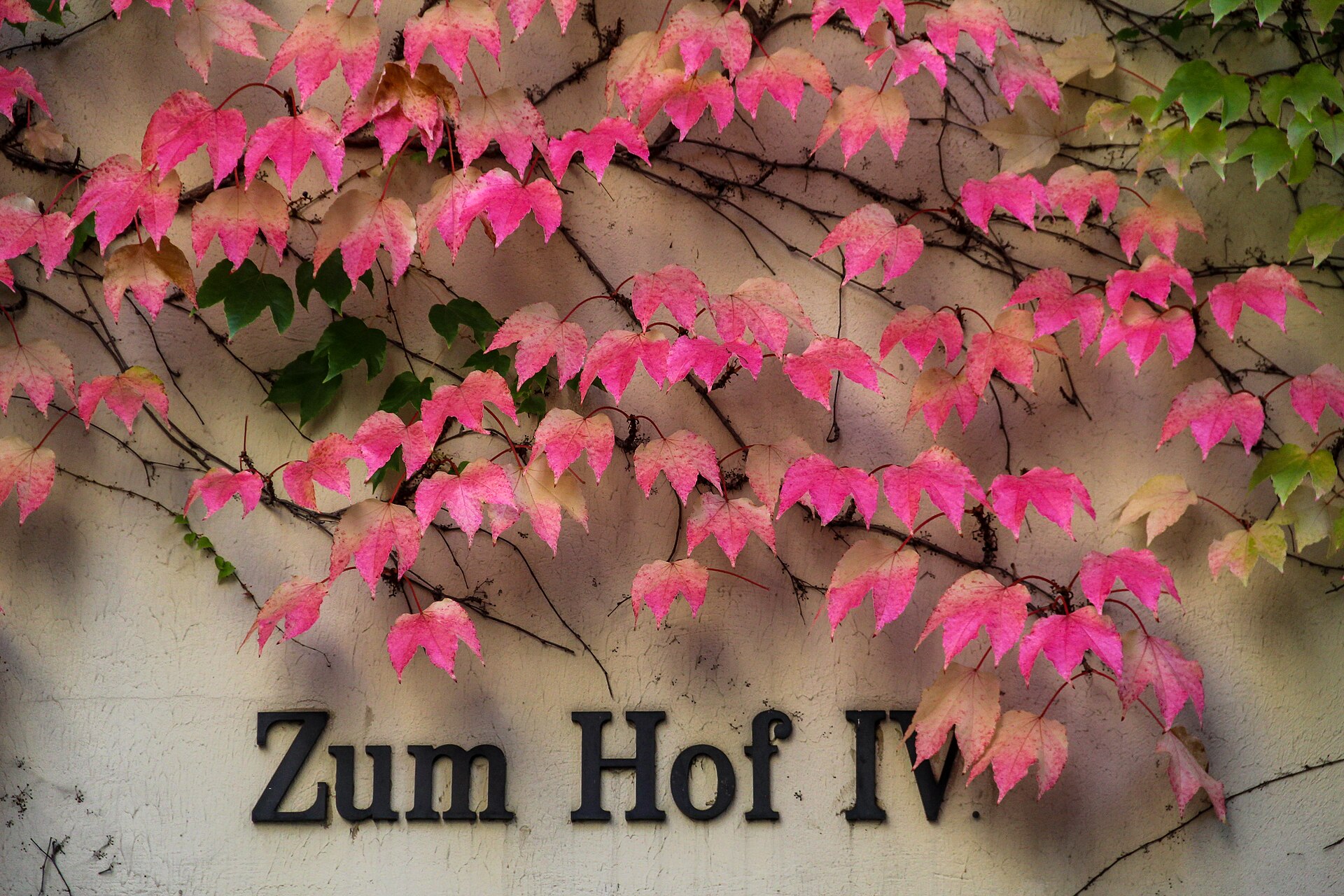
A courtyard sign in the Hackesche Höfe: Berlin, Hackesche Höfe — 2011 — 2438 by Dietmar Rabich, CC BY-SA 4.0, via Wikimedia Commons.
Final Word
Mitte is not a trap, but it is a funnel. It is designed — by geography, by transport, by every itinerary ever written — to move a very large number of people along the same two-kilometre line at the same times of day, and if you follow that line you will get the version of Berlin that fits on a postcard and very little else.
The fix costs nothing. Do the famous walk early or late, refuse to eat on it, and then spend the rest of your time in the streets between Rosenthaler Platz and Rosa-Luxemburg-Platz. That is where Mitte has courtyards, a free museum about a man who hid his employees from the Gestapo, a park full of people drinking beer on a slope, and prices that a Berliner would recognise.