Checkpoint Charlie Berlin History: Visiting Guide (2026)
Complete Checkpoint Charlie Berlin history and visiting guide for 2026: Cold War origins, 1961 tank standoff, museum, prices, what to see today.
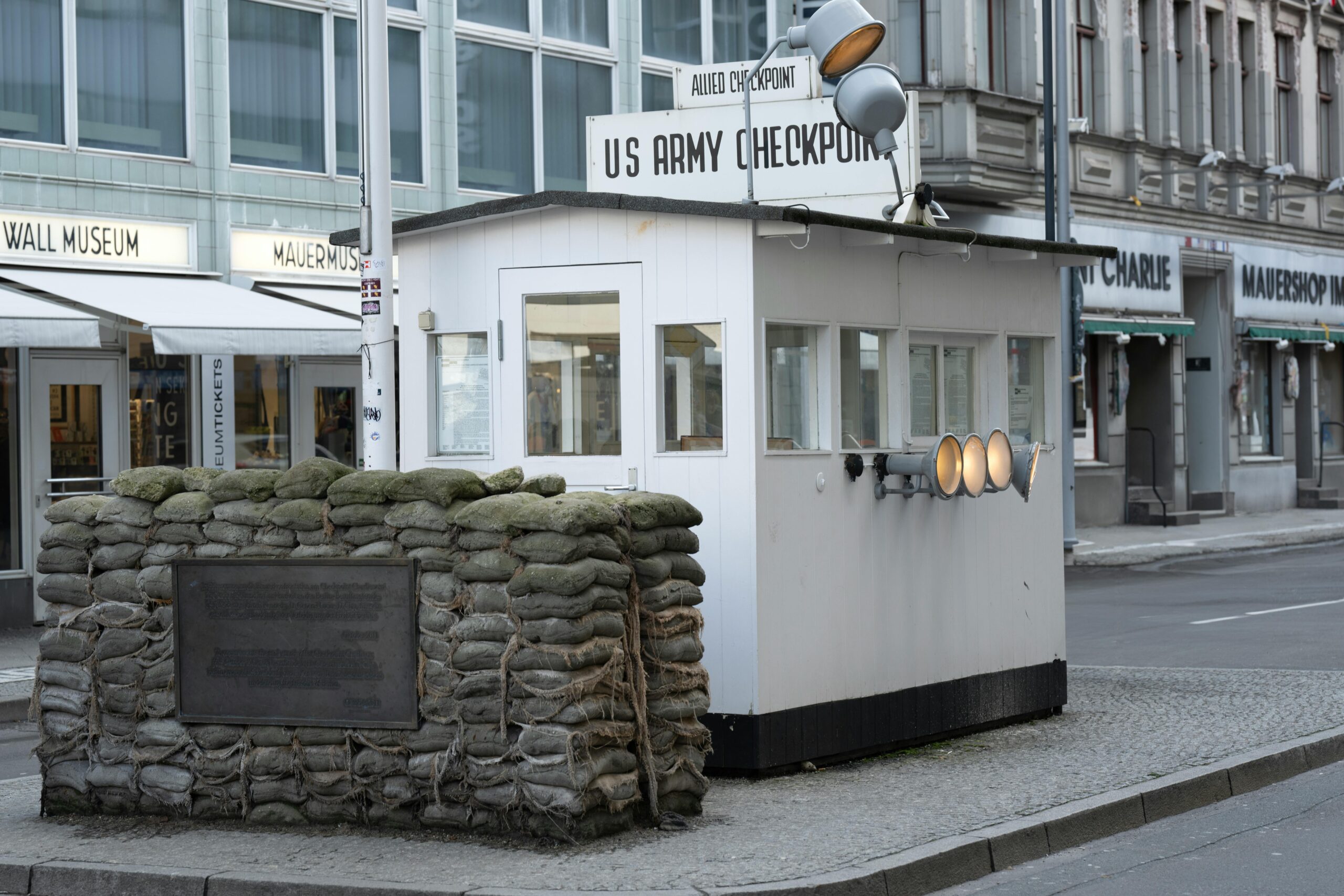
For 28 years, Checkpoint Charlie was the most famous border crossing in the world — the only crossing point in Berlin where foreign tourists, diplomats, and Allied military personnel could cross between East and West. The 1961 Soviet-American tank standoff here brought the world to the edge of nuclear confrontation. The escape attempts that ended in the death strip beyond it became some of the Cold War’s most photographed tragedies. Today, the Checkpoint Charlie Berlin history story is preserved at one of the city’s busiest tourist sites — a reconstructed guard post, an “ANI YOU ARE LEAVING THE AMERICAN SECTOR” sign, the newly-renovated Checkpoint Charlie Museum, and a small streetside exhibit that tells the broader story of the Wall.
This guide covers Checkpoint Charlie’s history, what to see there today, the museum, prices, hours, and how to combine the visit with other Wall sites. The outdoor area is free and open 24 hours; the museum costs €18 and takes 90-120 minutes for a full visit.
Checkpoint Charlie Berlin History: The Origin
Before the Wall (1945-1961)
From 1945 to 1961, Berliners moved freely between East and West Berlin. Subway and S-Bahn lines crossed the border without checkpoints. Most border crossings were unmarked. The city’s division existed politically but not physically.
That changed on August 13, 1961, when East German troops sealed the inner-city border with barbed wire and concrete. Within weeks, only seven official crossing points remained for limited categories of travelers between the two halves.
1961: Checkpoint Charlie Opens
August 13, 1961: The Friedrichstrasse crossing — known as Checkpoint Charlie in NATO phonetic alphabet (Alpha was Helmstedt, Bravo was Dreilinden, Charlie was Friedrichstrasse) — opened as the only crossing point for foreign nationals, including diplomats and Allied military personnel. The name “Charlie” stuck and became globally recognized.
From day one, Checkpoint Charlie became a powerful symbol — the visible meeting point of East and West, observed continuously by Soviet and American watchers, frequently the site of confrontations and propaganda displays from both sides.
October 27, 1961: The Tank Standoff
The most dramatic moment in Checkpoint Charlie history came on October 27, 1961. A US diplomat had been denied entry to East Berlin earlier that month. The Americans responded by sending tanks to Checkpoint Charlie. The Soviets responded with their own tanks. For 16 hours, US M48 Patton tanks faced Soviet T-54 tanks across the border, barrels pointing at each other from 75 meters apart.
The world held its breath. A wrong move, a misfired round, could have triggered war. President Kennedy and Soviet leader Khrushchev defused the situation through back-channel diplomacy. The tanks withdrew on October 28. But the moment had crystallized Checkpoint Charlie’s role as the global Cold War’s most dangerous flashpoint.
Escape Attempts at Checkpoint Charlie
Checkpoint Charlie itself wasn’t a site of major escape attempts — its high security and visibility made it almost impossible to use. The escape attempts associated with Checkpoint Charlie usually happened nearby — through the Wall sections immediately adjacent to the crossing. Several famous attempts:
- Peter Fechter (August 17, 1962): An 18-year-old East Berliner attempted to climb the Wall just south of Checkpoint Charlie. Shot by border guards, he was left to bleed to death in the death strip in full view of West Berliners. His death became one of the era’s most galvanizing stories of Wall brutality.
- Tunnel attempts: Several escape tunnels were dug from West Berlin under the Friedrichstrasse area, with mixed success.
- Vehicle escapes: Multiple modified-car escape attempts were documented throughout the Wall era, some successful at Checkpoint Charlie itself when guards were distracted or bribed.
1989: The Wall Falls, Checkpoint Charlie Becomes a Tourist Site
After November 9, 1989, when the Wall opened, Checkpoint Charlie’s military function ended overnight. The American guard hut was removed in June 1990 and is now displayed at the Allied Museum in Dahlem. The original site sat largely empty for several years.
By the late 1990s, redevelopment around Checkpoint Charlie began. A reconstructed guard post was installed (a replica of the original), the famous “You Are Leaving the American Sector” sign was erected, and the surrounding area filled with cafés, the original Checkpoint Charlie Museum, and tourist infrastructure.
Visiting Checkpoint Charlie Today
The Outdoor Site (Free)
Address: Friedrichstrasse 43-45, Mitte
Hours: Open 24 hours
Cost: Free
The outdoor reconstruction includes:
- Reconstructed Allied guard post (a replica)
- “You Are Leaving the American Sector” sign in English, Russian, French, and German
- Sandbags and authentic Cold War-era visual context
- Two large photographs (one US soldier, one Soviet soldier) facing each direction across the former border
- Information boards in multiple languages explaining the site’s history
Allow 15-30 minutes for the outdoor visit. Be prepared for crowds — Checkpoint Charlie is one of Berlin’s busiest tourist sites, particularly at midday in summer.
Checkpoint Charlie Museum (€18)
Address: Friedrichstrasse 43-45 (adjacent to outdoor site)
Hours: Daily, varies by season (typically 9am-10pm)
Cost: €18 adults, €10 children/students, family tickets available
The Checkpoint Charlie Museum (Mauermuseum) was completely renovated and reopened in 2024 with expanded exhibits. The collection focuses on:
- Cold War history and the Berlin Wall’s construction
- Famous escape attempts (with original objects — modified cars, hot-air balloon parts, hidden compartments)
- The Tank Standoff of October 1961
- Stories of individual border guards and victims
- Berlin Wall art and protest culture
- Broader Cold War global context
Allow 90-120 minutes for a comprehensive visit. The museum is dense with content; less rushed visitors get more from it. Audio guides available in multiple languages (additional €5).
The Black Box Cold War Information Center (Free)
A smaller permanent outdoor exhibition near the main checkpoint site, focused specifically on the Cold War in Berlin. Free, open 24 hours.
Photography at Checkpoint Charlie
Photography is welcome throughout the outdoor area. Common shots include:
- The reconstructed guard post with the “You Are Leaving” sign
- The Soviet soldier photograph viewed from the western side
- The American soldier photograph viewed from the eastern side
- Wide shots showing the scale of the former border zone
The two soldiers in the famous photographs are not actors — they are real images of soldiers who served at the checkpoint. Some “soldiers” pose with tourists for tips at the actual checkpoint location, but these are unofficial — the city has discouraged this and it’s gradually decreasing.
Combining Checkpoint Charlie With Other Wall Sites
Half-Day Wall + Checkpoint Charlie Itinerary
- 10:00 AM: Brandenburg Gate (15 min photo stop)
- 10:30 AM: Topography of Terror (90 min — adjacent to one of Berlin’s longest preserved Wall sections)
- 12:30 PM: Lunch nearby
- 1:30 PM: Walk to Checkpoint Charlie (10 min)
- 2:00 PM: Outdoor Checkpoint Charlie experience (30 min)
- 2:30 PM: Checkpoint Charlie Museum (90 min)
- 4:30 PM: Coffee break
Full-Day Wall-Focused Itinerary
Combine with our broader Berlin Wall sites and memorials guide to plan a comprehensive day including the Berlin Wall Memorial Bernauer Strasse and East Side Gallery alongside Checkpoint Charlie.
Practical Tips for Visiting Checkpoint Charlie
When to Visit
- Best: Early morning (9-10am) or evening (6-8pm) for fewer crowds
- Worst: Saturday afternoon — packed with tour groups
- Museum: Visit weekdays for shorter waits
Getting There
- U-Bahn: Stadtmitte (U2/U6), 2-minute walk; Kochstrasse / Checkpoint Charlie (U6), at the site
- Bus: 200 from Zoologischer Garten passes nearby
- Walking: 10 minutes from Brandenburg Gate, 15 minutes from Potsdamer Platz, 20 minutes from Hauptbahnhof
What to Avoid
- The “Soldiers” with stamps: People dressed as US/Soviet soldiers offering to stamp your “passport” for tips. Unofficial, expensive, and considered tacky by most locals.
- Surrounding tourist traps: Many adjacent shops sell low-quality Cold War memorabilia at inflated prices. The Checkpoint Charlie Museum gift shop is more reputable.
Accessibility
The outdoor site is fully wheelchair-accessible (level concrete sidewalks). The Checkpoint Charlie Museum has elevator access throughout. See our accessible Berlin transportation guide.
Beyond Checkpoint Charlie: Where to Go Next
- Topography of Terror: 5-minute walk — combines Nazi history with one of Berlin’s longest preserved Wall sections
- Brandenburg Gate: 15-minute walk — the symbolic center of Wall history
- Berlin Wall Memorial Bernauer Strasse: 20-minute U-Bahn — the most comprehensive Wall site
- East Side Gallery: 25-minute U-Bahn or S-Bahn — the longest preserved Wall section
- Tränenpalast (Palace of Tears): 5-minute walk to Friedrichstrasse station — former border crossing terminal exhibit
- Mall of Berlin / Potsdamer Platz: 10-minute walk — combine with shopping or modern Berlin sightseeing
Checkpoint Charlie Berlin History: Lesser-Known Facts
- The original American guard hut was removed in June 1990 — the structure visitors see today is a replica
- The original guard hut is preserved at the Allied Museum in Dahlem (worth a separate visit for serious Cold War enthusiasts)
- The “Charlie” name comes from NATO phonetic alphabet — Helmstedt was “Alpha,” Dreilinden was “Bravo,” Friedrichstrasse was “Charlie”
- The famous photograph of the Soviet soldier facing West Berlin and the American soldier facing East Berlin are both real archival photos, displayed at large scale
- The Mauermuseum (Checkpoint Charlie Museum) has been at the site since 1962 — making it one of Berlin’s longest-running museums about the Wall
- The October 1961 tank standoff was de-escalated through direct phone communication between Kennedy and Khrushchev’s representatives
External Resources
For additional, authoritative information on Checkpoint Charlie Berlin history, the following sources are useful:
Quick Reference: Checkpoint Charlie Berlin History
This checkpoint charlie berlin history guide is updated for 2026 with current pricing, schedules, and recommendations. Use this checkpoint charlie berlin history resource as your one-stop reference and bookmark for return visits. For travelers researching checkpoint charlie berlin history alongside related Berlin topics, see our linked guides for additional coverage.
The wider point is that Checkpoint Charlie is not an isolated case — it sits on a two-kilometre corridor through Mitte where almost all of Berlin’s tourist pricing is concentrated, and where four streets north changes everything. Our Mitte guide names the rest of them and sets out the walking route that avoids the lot.
Frequently Asked Questions
What is the Checkpoint Charlie Berlin history?
Checkpoint Charlie was the most famous Cold War border crossing — the only crossing point in divided Berlin (1961-1989) for foreign tourists, diplomats, and Allied military personnel. It was the site of the 1961 US-Soviet tank standoff that brought the world to the edge of war, and remains a globally recognized symbol of the Cold War.
Is Checkpoint Charlie worth visiting?
Yes — but manage expectations. The outdoor reconstruction is small and tourist-heavy, but the historical significance is real. The renovated Checkpoint Charlie Museum (€18) is excellent and worth the time for serious Cold War interest. Most visitors spend 90-150 minutes total at the site.
How much does Checkpoint Charlie cost?
The outdoor site is free and open 24 hours. The Checkpoint Charlie Museum costs €18 for adults (€10 reduced) and is open daily. The Black Box Cold War information center is also free.
What’s at Checkpoint Charlie today?
A reconstructed Allied guard post, the famous “You Are Leaving the American Sector” sign in four languages, large archival photographs of US and Soviet soldiers, the comprehensive Checkpoint Charlie Museum, and the smaller Black Box Cold War information center.
Is the original Checkpoint Charlie still there?
The original American guard hut was removed in June 1990 and is now displayed at the Allied Museum in Dahlem. The structure visitors see today is a replica reconstructed at the same location.
How did Checkpoint Charlie get its name?
From the NATO phonetic alphabet — Charlie is the third letter, and Friedrichstrasse was the third Allied checkpoint between East and West. The other two were Alpha (Helmstedt-Marienborn on the inter-zonal border) and Bravo (Dreilinden, between West Berlin and West Germany via the GDR).
Where can I learn more about Berlin Wall escape attempts?
The Checkpoint Charlie Museum has extensive exhibits including original objects from famous escape attempts (modified vehicles, hot-air balloon components, hidden compartments). The Berlin Wall Memorial on Bernauer Strasse also has comprehensive content. See our Berlin Wall sites guide.
Are the soldiers at Checkpoint Charlie real?
The men dressed as US/Soviet soldiers at the outdoor site are unofficial actors who pose for tips. They are not officially affiliated with the site and their fees can be high. Locals consider them a tourist trap.
How long should I spend at Checkpoint Charlie?
30 minutes for the outdoor site only; 90-120 minutes if visiting the Checkpoint Charlie Museum. Combined with adjacent sites (Topography of Terror, walk to Brandenburg Gate), plan 4-5 hours for a comprehensive central Berlin Wall experience.
Final Verdict: Checkpoint Charlie Berlin History
Checkpoint Charlie remains essential despite its tourist-heavy reputation. The outdoor reconstruction may be modest, but the historical significance — the site of the 1961 tank standoff, the iconic divided-Berlin border crossing, and the symbolic heart of Cold War Berlin — justifies the visit. Combine with the Checkpoint Charlie Museum (recently renovated, excellent), the adjacent Topography of Terror, and a longer Wall-focused itinerary for the full experience.
For the broader historical context, see our Berlin Wall history timeline, best Berlin Wall sites and memorials, and East Side Gallery guide.