Berlin Wall History Timeline: Complete 1961-1989 Guide
Complete Berlin Wall history timeline 1961-1989: construction, escapes, deaths, Kennedy speech, fall of the Wall, and reunification.
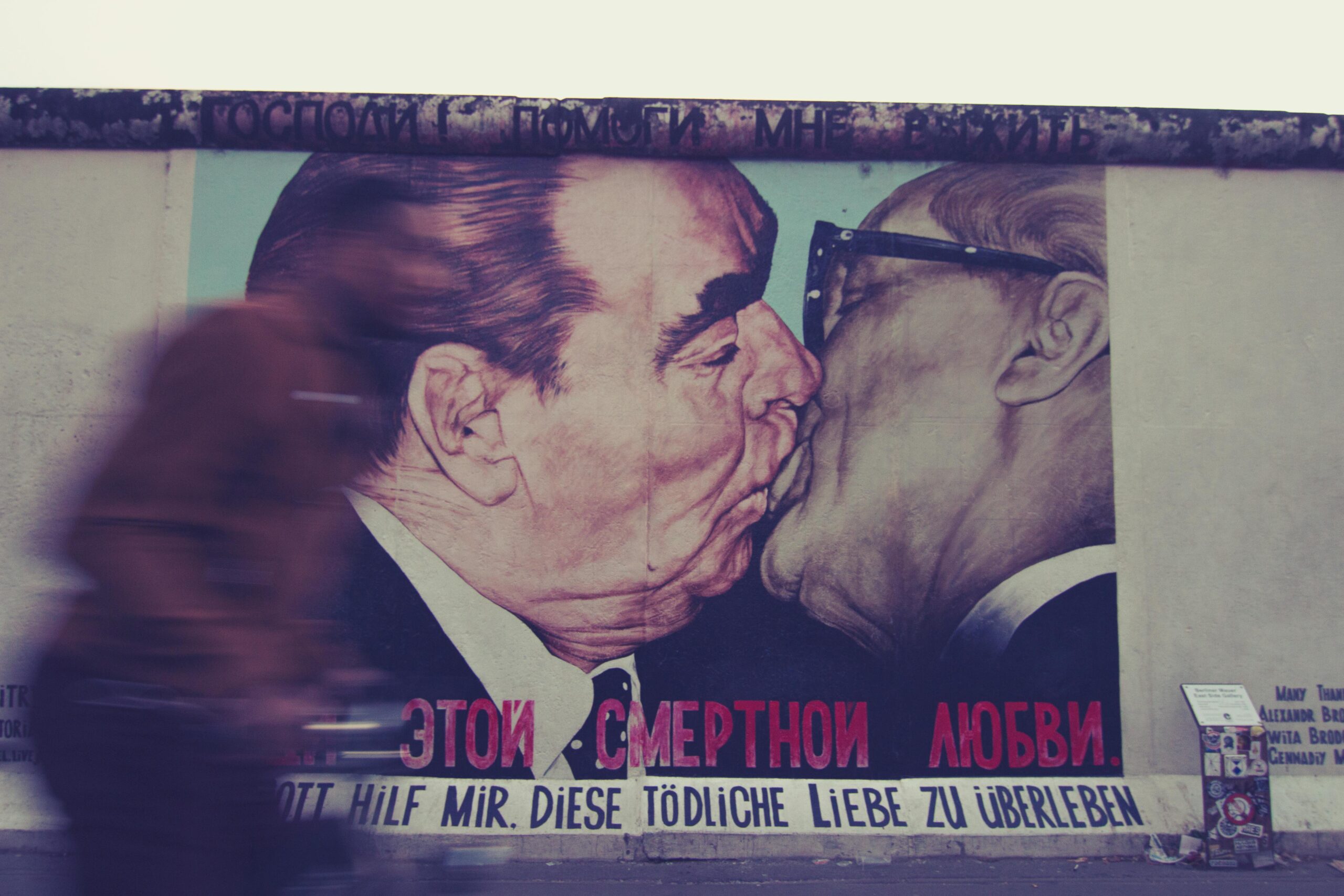
The Berlin Wall stood for 28 years, two months, and 27 days — from August 13, 1961, to November 9, 1989. In that time, it killed at least 140 people, divided 4 million Berliners, became the global symbol of the Cold War, and ended in one of the 20th century’s most extraordinary single nights. The full Berlin Wall history timeline reaches from post-WWII division through the 1961 construction crisis, the years of ever-tightening control, the gradual diplomatic shifts of the 1970s and 1980s, and the surprise opening on November 9, 1989. This guide walks through the complete timeline year-by-year, with the key events, dates, and figures that shaped how the Wall rose and fell.
For a focused guide to where to visit Berlin Wall sites today, see our best Berlin Wall sites and memorials guide. For Checkpoint Charlie specifically, see our Checkpoint Charlie history and visiting guide.
Background: How Berlin Was Divided (1945-1961)
1945: Division at Yalta and Potsdam
Following Nazi Germany’s surrender on May 8, 1945, the four Allied powers (US, UK, France, Soviet Union) divided Germany and Berlin into four occupation zones. Despite Berlin sitting deep within the Soviet zone of Germany, the Allies agreed Berlin would be jointly administered. Soviet zone became East Germany; the three Western zones became West Germany. Berlin was split into West Berlin (US, UK, French zones) and East Berlin (Soviet zone) — but for 16 years, residents could move freely between the two halves.
1948-1949: The Berlin Blockade and Airlift
From June 24, 1948, to May 12, 1949, the Soviet Union blocked all road, rail, and water access to West Berlin in an attempt to force Western powers out. The Western Allies responded with the Berlin Airlift — at peak, 12,941 tons of supplies per day flown into Tempelhof and Tegel airports. The Soviets eventually backed down. Berlin had become the first major Cold War flashpoint.
1949: Two Germanys Founded
May 23, 1949: West Germany (Federal Republic of Germany / BRD) founded.
October 7, 1949: East Germany (German Democratic Republic / DDR) founded under Soviet control. Berlin’s two halves now belonged to formally separate countries.
1953: East German Workers’ Uprising
June 17, 1953: A workers’ uprising in East Berlin against working conditions spread across the country. Soviet tanks crushed the protests. Hundreds were killed, thousands arrested. The event remained a defining trauma in East German memory.
1958-1961: The Berlin Crisis and Mass Emigration
In November 1958, Soviet leader Khrushchev demanded Western powers withdraw from West Berlin within six months — the start of the “Berlin Crisis” that dominated Cold War diplomacy for three years. Meanwhile, East Germans were fleeing west in growing numbers. Between 1949 and 1961, an estimated 3.5 million people (about 20% of the East German population) emigrated to the West, many through Berlin’s open border. By summer 1961, the daily flow exceeded 1,500 people. East Germany’s economy and demographics were collapsing.
1961: The Berlin Wall Goes Up
August 12, 1961: The Decision
East German leader Walter Ulbricht — with Soviet approval — secretly ordered the closure of the Berlin border. Despite a famous June 1961 statement (“Niemand hat die Absicht, eine Mauer zu errichten” — “Nobody has the intention to build a wall”), Ulbricht had been planning the operation for months.
August 13, 1961: Construction Begins
In the early hours of Sunday, August 13, 1961, East German troops sealed the border between East and West Berlin with barbed wire, fencing, and armed guards. Subway and S-Bahn lines connecting the two halves were cut. Streets were torn up. Within 24 hours, the city was physically divided. Initially the barrier was crude — barbed wire, hastily-erected concrete blocks. Over months and years, it would harden into the elaborate “Anti-Fascist Protection Wall” the East German government called it, but Berliners and the world knew as simply “the Wall.”
August 13-22, 1961: Initial Reactions
Western powers protested but did not act. President Kennedy reportedly remarked, “A wall is a hell of a lot better than a war.” Within days, families found themselves split — some on the wrong side of the new border, some watching relatives across barbed wire from Bernauer Strasse windows.
August 17, 1961: First Death
Günter Litfin, a 24-year-old tailor, became the first person killed trying to cross the new Berlin Wall — shot by East German Transport Police while attempting to swim across the Humboldt Harbor. He would not be the last.
October 27, 1961: Tank Standoff at Checkpoint Charlie
Soviet and American tanks faced off at Checkpoint Charlie for 16 hours after a US diplomat was denied entry to East Berlin. The tanks withdrew without incident — but the moment captured the global tension surrounding the Wall.
1961-1975: The Wall Hardens
Construction Phases
The Wall evolved through four major construction phases:
- Phase 1 (1961): Barbed wire and basic concrete blocks
- Phase 2 (1962-1965): Concrete walls reinforced with watchtowers
- Phase 3 (1965-1975): Pre-fabricated concrete elements, expanded death strip
- Phase 4 (1975-1989): The “Border Wall 75” — the smooth, white, anti-climb design that became the Wall’s iconic image. Up to 4 meters high, with rounded tops to prevent grip.
The “Death Strip” (Todesstreifen)
Behind the western-facing wall stretched a buffer zone — the death strip — typically 30-60 meters wide, containing:
- Inner wall (often higher than the outer wall)
- Anti-vehicle ditches
- Tank traps and sand-filled metal beds
- Tripwires
- Watchtowers (302 in total along the entire 156 km perimeter around West Berlin)
- Patrol roads with regularly-spaced guard dogs on running wires
- Bright lighting
- Mines (in some sections, removed later)
Escapes and Deaths
Despite the elaborate barrier, over 5,000 East Germans successfully escaped to the West during the Wall’s existence. Methods included:
- Tunnels (over 70 known major tunnels dug)
- Hidden in vehicles (modified cars, trucks)
- Climbing the Wall in early years
- Hiding in trains
- Hot-air balloons and improvised aircraft (the famous Strelzyk-Wetzel balloon escape, 1979)
- Swimming across rivers and lakes
- Forged documents
Estimates of the total death toll range from 140 to 200+ people killed at the Wall — most shot by border guards while attempting to escape. The Berlin Wall Memorial maintains the official documentation.
Notable Early Escape Stories
- Conrad Schumann (August 15, 1961): An East German border guard photographed leaping over barbed wire — the iconic image of early Wall resistance.
- Tunnel 57 (October 1964): 57 East Germans escaped through a tunnel under Bernauer Strasse — one of the largest single tunnel escapes.
- Peter Fechter (August 17, 1962): An 18-year-old East Berliner shot by border guards while attempting to climb the Wall, left to bleed to death in the death strip in full view of West Berliners. International outrage followed.
1963: Kennedy’s “Ich bin ein Berliner” Speech
June 26, 1963: US President John F. Kennedy delivered his famous speech at the Schöneberg Town Hall, telling West Berliners “Ich bin ein Berliner” — declaring American solidarity. The speech remains one of the most famous Cold War moments and a defining episode in Berlin Wall history.
1975-1989: The Long Stalemate and Détente
1971-1972: Diplomatic Recognition
The Quadripartite Agreement on Berlin (September 1971) and the Basic Treaty (December 1972) between East and West Germany formalized the division. The two German states officially recognized each other for the first time. The Wall remained, but its political meaning shifted from “temporary crisis” to “permanent border.”
1980s: Ongoing Tension and Slow Thaw
The Wall’s grip remained tight throughout the 1980s. East German Stasi (state security) operated one of the most pervasive surveillance states in history — monitoring approximately one in seven East German adults at peak. Escapes continued but became rarer. Meanwhile, Soviet leader Mikhail Gorbachev’s 1985 reforms (Glasnost and Perestroika) began undermining the entire Eastern Bloc system.
June 12, 1987: “Tear Down This Wall”
US President Ronald Reagan, speaking at the Brandenburg Gate, addressed Soviet leader Gorbachev directly: “Mr. Gorbachev, tear down this wall!” The speech became a symbol of Western resistance — though at the time, few imagined the Wall would actually fall within 30 months.
1989: The Year the Wall Fell
Spring-Summer 1989: The Eastern Bloc Cracks
Hungary began dismantling its border with Austria in May 1989 — the first physical breach in the Iron Curtain. Thousands of East Germans started fleeing through Hungary to Austria and West Germany. Poland’s Solidarity movement won partially-free elections in June. The Eastern Bloc’s collapse was beginning.
August 19, 1989: Pan-European Picnic
A symbolic border event in Hungary saw 600+ East Germans cross into Austria — the largest mass escape since 1961. East German citizens flooded into West German embassies in Prague and Warsaw demanding refuge.
October 1989: Mass Protests in East Germany
Weekly Monday demonstrations in Leipzig grew from 70,000 in early October to 320,000 by month’s end. Protesters demanded reform, free elections, and the right to travel. East German leader Erich Honecker resigned on October 18.
November 9, 1989: The Wall Falls
At a press conference on the evening of November 9, East German government spokesman Günter Schabowski announced new travel regulations — and when asked when they took effect, mistakenly replied “immediately, without delay.” East German TV and radio reported that the borders were open. Within hours, tens of thousands of East Berliners gathered at border crossings demanding to pass. Confused border guards eventually opened the gates around 10:30 PM. Berliners from both sides flooded the Wall.
The night became one of the 20th century’s most photographed events — Berliners climbing on top of the Wall at Brandenburg Gate, families reuniting after 28 years, strangers embracing across what had been an impassable barrier hours before.
November 10, 1989: Wall Comes Down
Demolition of the Wall began informally as Berliners attacked it with hammers, picks, and chisels (the “Mauerspechte” — wall woodpeckers). Official demolition followed in subsequent weeks and months.
1990-1991: Reunification
March 1990: First Free East German Elections
The Christian Democratic Union (CDU) won East Germany’s first and only free election. The new government immediately began negotiations with West Germany on reunification.
July 1990: Currency Union
July 1, 1990: East Germany adopted the West German Deutsche Mark. The economic integration of the two Germanys began.
October 3, 1990: German Reunification
East Germany formally dissolved and joined the Federal Republic of Germany. The Berlin Wall’s demolition continued in coming years. October 3 remains German Unity Day (Tag der Deutschen Einheit), a national holiday.
Berlin Wall History Timeline: Year-by-Year Summary
| Year | Event |
|---|---|
| 1945 | Berlin divided into four Allied occupation zones |
| 1948-49 | Soviet blockade of West Berlin; Berlin Airlift |
| 1949 | East and West Germany founded as separate states |
| 1953 | East German workers’ uprising crushed by Soviets |
| 1961 | August 13: Berlin Wall construction begins |
| 1961 | August 17: Günter Litfin, first death at the Wall |
| 1961 | October 27: Tank standoff at Checkpoint Charlie |
| 1962 | August 17: Peter Fechter shot at the Wall, sparking outrage |
| 1963 | June 26: Kennedy’s “Ich bin ein Berliner” speech |
| 1971-72 | Quadripartite Agreement and Basic Treaty |
| 1975-89 | “Border Wall 75” iconic version constructed |
| 1987 | Reagan’s “Tear down this wall” speech at Brandenburg Gate |
| 1989 | October: Mass demonstrations in Leipzig |
| 1989 | November 9: The Wall falls |
| 1990 | October 3: German reunification |
The Wall’s Legacy
Today, Berlin retains significant traces of the Wall — preserved sections at the Berlin Wall Memorial on Bernauer Strasse, the East Side Gallery (1.3 km of the Wall painted by 118 international artists), the underground exhibits at Checkpoint Charlie, and a cobblestone strip running through the city marking the original Wall path. For travelers wanting to engage with this history, see our Berlin Wall sites and memorials guide.
The Wall’s psychological and social legacy continues. Discussion of “Ostalgie” (nostalgia for the East) and the persistent economic gaps between former East and West Germany remain part of contemporary German political discourse.
Berlin Wall History Timeline: Key Numbers
- Total length: 156 km around West Berlin
- Inner-city length: 43 km dividing East and West Berlin
- Watchtowers: 302
- Border crossings (West to East): 7 official
- Wall existence: 28 years, 2 months, 27 days
- Documented deaths at the Wall: 140+ confirmed
- Successful escapes: 5,000+
- East Germans who fled before 1961: 3.5 million
External Resources
For additional, authoritative information on Berlin Wall history timeline, the following sources are useful:
Quick Reference: Berlin Wall History Timeline
This berlin wall history timeline guide is updated for 2026 with current pricing, schedules, and recommendations. Use this berlin wall history timeline resource as your one-stop reference and bookmark for return visits. For travelers researching berlin wall history timeline alongside related Berlin topics, see our linked guides for additional coverage.
The ground that carried all of this is unusually concentrated. The Memorial to the Murdered Jews of Europe stands on part of what was the government quarter of the Third Reich, a hundred metres from the Brandenburg Gate and within sight of where the Wall later ran — and it was built by the perpetrator nation, on its most valuable land, with no admission charge and no fence. Our Holocaust Memorial guide covers the seventeen-year argument that produced it.
Frequently Asked Questions
When was the Berlin Wall built?
Construction began on August 13, 1961, when East German troops sealed the border with barbed wire and concrete. The barrier hardened into the elaborate concrete structure over the next 14 years.
When did the Berlin Wall fall?
The Berlin Wall fell on November 9, 1989, when East German authorities mistakenly announced immediate travel freedoms during a press conference. East Berliners flooded the border crossings; guards eventually opened the gates around 10:30 PM. Demolition began the next day.
How long did the Berlin Wall stand?
28 years, 2 months, and 27 days — from August 13, 1961, to November 9, 1989.
How many people died at the Berlin Wall?
The Berlin Wall Foundation has documented 140+ confirmed deaths of people killed by East German border guards or while attempting to cross. Estimates range from 140 to over 200 depending on methodology and what counts as a “Wall death.”
How many people escaped the Berlin Wall?
Over 5,000 East Germans successfully escaped to the West during the Wall’s existence using methods including tunnels, hidden vehicles, climbing, balloons, swimming, and forged documents.
Why was the Berlin Wall built?
The official East German justification was preventing Western “fascist aggression.” The actual reason was preventing the mass emigration of East Germans to the West — between 1949 and 1961, an estimated 3.5 million East Germans (20% of the population) had fled, devastating the East German economy and demographics.
What was the Berlin Wall called by East Germany?
East Germany officially called it the “Anti-Fascist Protection Wall” (Antifaschistischer Schutzwall) — claiming it protected East Germany from Western fascism. Most Berliners and the international community simply called it “the Wall” or “the Berlin Wall.”
Where can I see remnants of the Berlin Wall today?
The Berlin Wall Memorial on Bernauer Strasse preserves the most intact section. The East Side Gallery preserves 1.3 km painted by 118 international artists. Checkpoint Charlie has a reconstructed border post and underground museum. A cobblestone strip marks the Wall’s path through central Berlin. See our Berlin Wall sites guide.
What was the longest part of the Berlin Wall history timeline?
The “Border Wall 75” phase — the smooth white concrete design that became the Wall’s iconic image — was constructed between 1975 and 1989, making it the longest-lasting and most photographed version of the Wall.
Final Verdict: Berlin Wall History Timeline
The Berlin Wall’s 28 years define one of the 20th century’s most important historical narratives — Cold War division, the trauma of separated families, the slow undermining of authoritarian regimes, and the unexpected joy of November 9, 1989. Understanding this timeline transforms a Berlin visit from sightseeing to engagement with one of modern history’s most consequential events.
For where to see this history in Berlin today, see our best Berlin Wall sites and memorials guide, Checkpoint Charlie history and visiting guide, and East Side Gallery guide.