East Side Gallery Berlin: Wall Art Guide (2026)
Complete East Side Gallery Berlin guide for 2026: longest preserved Berlin Wall section, famous murals, hours, photos, and combining with other Wall sites.
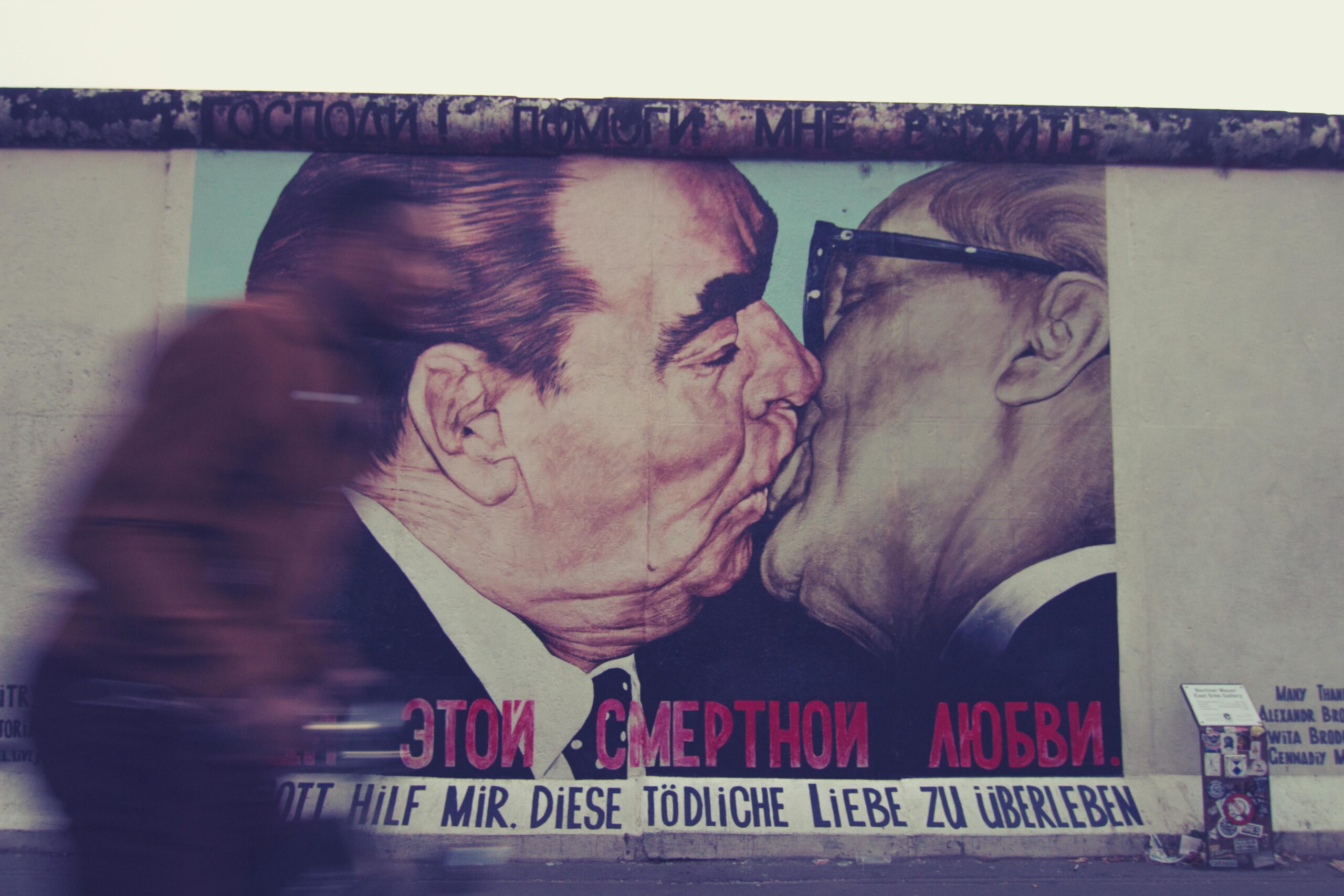
The East Side Gallery is the longest preserved section of the Berlin Wall — a 1.3 km stretch of inner-Wall along the Spree, painted by 118 artists from 21 countries in 1990 immediately after the Wall fell. Today it stands as the world’s longest open-air gallery, the most photographed Berlin Wall site, and one of the city’s defining visual identities. For travelers wanting to see the East Side Gallery Berlin properly, a self-guided 30-90 minute walk along its full length delivers some of the city’s most powerful images — including Dmitri Vrubel’s “Fraternal Kiss” (Brezhnev kissing Honecker) and Birgit Kinder’s iconic Trabant breaking through the Wall.
This guide covers everything you need to know: how to find it, when to visit, what to look for, the most famous murals, and how to combine it with other Berlin Wall sites. The East Side Gallery is free and open 24 hours.
East Side Gallery Berlin: Quick Facts
- Location: Mühlenstrasse, Friedrichshain (between Ostbahnhof and Oberbaumbrücke)
- Length: 1.3 km (4,265 ft)
- Murals: 105 original paintings by 118 artists from 21 countries
- Hours: Open 24 hours, 365 days a year
- Cost: Free
- Accessibility: Fully wheelchair-accessible (paved promenade)
- Nearest transit: Warschauer Strasse (S-Bahn/U-Bahn) on east end; Ostbahnhof (S-Bahn) on west end
The History of East Side Gallery Berlin
Origins (1990)
In the months immediately following the Wall’s fall on November 9, 1989, the inner-Wall along Mühlenstrasse stood as a 1.3 km stretch of bare concrete facing the recently-cleared Spree riverside. In February 1990, an East German artists’ association invited international artists to paint the eastern face of this section as a celebration of freedom and a memorial to the Wall era.
From February to September 1990, 118 artists from 21 countries created 105 murals. The paintings represented diverse styles — political commentary, abstract art, surreal compositions, satirical cartoons. The collected works were dedicated as the East Side Gallery in September 1990, just one year after the Wall fell.
Restoration (2009)
By the 2000s, the East Side Gallery had begun deteriorating — graffiti, weather damage, and the original (often hastily-applied) paint had degraded many of the murals beyond recognition. In 2009, a comprehensive restoration project saw the original artists (or their estates) repaint their works on the original Wall sections. The restoration preserved the gallery as a coherent collection rather than letting it fade.
Threats and Protests (2013-Present)
The East Side Gallery has been threatened multiple times by development plans for the surrounding area. In 2013, plans to remove a section to make way for a luxury apartment building led to large-scale protests. The plans were eventually modified, but ongoing development pressure continues. The Wall section is now protected as a national monument.
The Most Famous East Side Gallery Berlin Murals
Walking the full 1.3 km, you’ll see 105 murals. These are the most photographed and historically significant:
“My God, Help Me to Survive This Deadly Love” (Dmitri Vrubel)
Also known as the “Fraternal Kiss” — the most famous mural at the East Side Gallery. Russian artist Dmitri Vrubel painted Soviet leader Leonid Brezhnev kissing East German leader Erich Honecker, based on a 1979 news photograph capturing the Soviet leadership style of “fraternal kissing.” The image has become emblematic of Cold War absurdity. Always crowded with photographers.
“Trabant Breaks Through the Wall” (Birgit Kinder)
An iconic 1990 East German Trabant car (the universally-mocked Eastern Bloc compact car) crashing through the Wall — a celebration of Eastern Berliners’ newfound freedom. One of the most photographed murals.
“Berlin Reflects” (Various)
A complex political mural featuring text, faces, and abstract elements reflecting on division, reunification, and the costs of both.
“Hands Reaching Out” (Various)
A poignant memorial-style mural representing East Berliners reaching toward freedom — a recurring visual theme across multiple Wall paintings.
“World Population” (Schamil Gimajew)
A statistical visualization mural showing global population statistics — one of the more conceptual works.
“Test the Best” (Birgit Kinder)
The same artist as the Trabant mural — a different work emphasizing themes of testing and freedom.
“Detour to the Japanese Sector” (Thierry Noir)
Thierry Noir was one of the first artists to paint the West Berlin side of the Wall during the 1980s — making him one of the few East Side Gallery artists with pre-Wall-fall street art credibility. His distinctive face-character style is recognizable across the gallery.
“Things Are Stranger Now” (Various)
A reflective mural addressing the awkward post-reunification period.
“Curriculum Vitae” (Various)
A text-heavy mural reflecting on personal histories shaped by the Wall.
How to Visit the East Side Gallery Berlin
Walking Direction
The East Side Gallery runs east to west along the Spree. You can walk it in either direction. Most visitors enter at one end and exit at the other:
- East end (start): Warschauer Strasse / Oberbaumbrücke. Closer to nightlife, restaurants, and onward U/S-Bahn transit. The Oberbaumbrücke (one of Berlin’s most photogenic bridges) is right at this end.
- West end (start): Ostbahnhof. Quieter, less developed, with shorter walk to the train station.
Walking the full 1.3 km takes 30 minutes at brisk pace, 60 minutes with photo stops, 90+ minutes for a thorough visit reading information panels.
Best Times to Visit
- Morning (8-10 AM): Best photography light, fewer crowds
- Late afternoon (4-6 PM): Golden-hour light on the murals
- Evening: Atmospheric, with bridge and Friedrichshain skyline views
- Worst: Saturday midday in summer (heaviest tour group traffic)
Photography Tips
- Bring a wide-angle lens for the full mural compositions
- Best light is morning (eastern face, sun from southeast) and late afternoon
- Crowds are heaviest at the Brezhnev/Honecker kiss — patience is required
- The Oberbaumbrücke at the east end is one of Berlin’s most photogenic bridges
- Check for any active murals being repainted — restoration projects sometimes block sections
What to See Around the East Side Gallery
Oberbaumbrücke
One of Berlin’s most photogenic bridges, connecting Friedrichshain (east end of East Side Gallery) to Kreuzberg. Two-tiered, with the U1 U-Bahn running on the upper level. A short walk across delivers stunning views of the Spree.
Berghain
The world’s most famous techno club, just behind the East Side Gallery. The sprawling former power station is open Friday night through Monday morning. See our where to stay in Berlin for nightlife guide for the broader club scene context.
Holzmarkt
Funky waterfront alternative-culture complex with bars, restaurants, music venues, and outdoor seating. Just east of the East Side Gallery along the Spree. Excellent post-Wall-walk dinner option.
Mercedes-Benz Arena and Mall
Modern entertainment complex (formerly O2 World) at the east end. Less interesting historically but has cinemas, restaurants, and shopping if you need conveniences.
Markthalle Neun and Maybachufer Market
10-minute walk south to Kreuzberg’s food markets. See our Berlin street food markets guide.
Combining East Side Gallery With Other Wall Sites
Half-Day Wall Itinerary Including East Side Gallery
- 9:30 AM: Berlin Wall Memorial Bernauer Strasse (90 min)
- 11:30 AM: U-Bahn to Brandenburg Gate (15 min photo stop)
- 12:00 PM: Lunch in Mitte
- 1:30 PM: Checkpoint Charlie + Museum (90 min)
- 3:30 PM: U-Bahn or S-Bahn to Warschauer Strasse
- 4:00 PM: Walk East Side Gallery west-to-east (60-90 min)
- 5:30 PM: Sunset photos at Oberbaumbrücke
- 6:00 PM: Dinner at Holzmarkt or Friedrichshain restaurant
For More Wall Site Options
See our complete Berlin Wall sites and memorials guide for a comprehensive list.
Practical Tips for East Side Gallery Berlin
Accessibility
The East Side Gallery sits on a flat paved promenade alongside the Spree, fully wheelchair-accessible. No stairs or barriers along the entire 1.3 km length. The nearby U-Bahn stations (Warschauer Strasse, Ostbahnhof) have elevator access.
Safety
Generally safe at all hours. Pickpocketing happens occasionally on busier days at the most crowded photo points (the Brezhnev/Honecker kiss). Standard urban precautions apply: keep valuables in front pockets, watch your bag in crowds.
Weather
The East Side Gallery is fully outdoors with no shelter. In rain, the murals remain visible but photo conditions deteriorate. Summer afternoons can be hot — bring water. Winter requires warm layers.
Toilets
Limited public facilities along the Wall itself. The Mercedes-Benz Arena complex (east end), Berghain area (north of east end), and the Ostbahnhof station (west end) have facilities.
Drinks and Snacks
No food or drink vendors directly along the Wall. The Holzmarkt area immediately east has multiple cafés, kiosks, and bars. The Mercedes-Benz Arena has chains. For a proper meal, walk to nearby Friedrichshain restaurants (Boxhagener Platz area, 10-minute walk).
Tour Options
Several tour operators include the East Side Gallery in their itineraries:
- Berlin on Bike — Berlin Wall Tour: Cycling tour stopping at the East Side Gallery and other Wall sites
- Free Walking Tour Berlin: Several free tour operators include the East Side Gallery
- Original Berlin Walks: Cold War Tour: Comprehensive guided tour with East Side Gallery stop
- Self-guided audio tours: Available via apps; alternatively, the official information panels along the Wall provide good context
The East Side Gallery’s Cultural Impact
The East Side Gallery isn’t just a memorial to the Wall — it’s also one of the world’s largest open-air galleries and a landmark in protest art history. The 1990 paintings represented a moment of global solidarity, with international artists choosing to come to Berlin and paint on what had been an instrument of oppression. Today the Wall continues to inspire street artists worldwide. Many of the original artists — Dmitri Vrubel, Birgit Kinder, Thierry Noir — remain active and have international reputations.
The gallery has appeared in countless films, music videos, fashion campaigns, and documentaries. It’s frequently cited as one of Europe’s most important contemporary public art installations.
Lesser-Known East Side Gallery Berlin Facts
- The East Side Gallery is officially the world’s longest open-air gallery — recognized by the Guinness Book of Records
- The 1990 painters worked under tight deadlines and harsh conditions; many murals were completed in 1-3 weeks
- The 2009 restoration cost €2.2 million and was funded by the Berlin Senate
- One section of the original 1990 East Side Gallery was removed in 2013 for development; the lost section’s murals are documented but no longer visible
- The Wall here is technically the inner Wall of the original border installation — the death strip and outer wall were removed in 1990, leaving only the eastern (city-facing) inner Wall
- The “Test the Best” Trabant mural and the “Brezhnev-Honecker Kiss” are both iconic enough to appear on Berlin tourism marketing
External Resources
For additional, authoritative information on East Side Gallery Berlin, the following sources are useful:
Quick Reference: East Side Gallery Berlin
This east side gallery berlin guide is updated for 2026 with current pricing, schedules, and recommendations. Use this east side gallery berlin resource as your one-stop reference and bookmark for return visits. For travelers researching east side gallery berlin alongside related Berlin topics, see our linked guides for additional coverage.
Two minutes from the northern end of the Gallery stands the crossing that made this stretch of riverbank a frontier in the first place — a mock-medieval brick bridge that was blown up in 1945, walled off in 1961, and rebuilt with a Calatrava steel span in the 1990s. Our Oberbaum Bridge guide covers that history and, more usefully, exactly where to stand for the sunset photograph.
The Gallery sits at the southern edge of a district with a great deal more to it — Karl-Marx-Allee and its tiled workers’ palaces are a fifteen-minute walk north, and the Volkspark beyond that. Our Friedrichshain guide sets out a day that starts here at first light and ends on the riverbank.
Frequently Asked Questions
What is the East Side Gallery Berlin?
The East Side Gallery is a 1.3 km section of the original Berlin Wall painted by 118 artists from 21 countries in 1990 immediately after the Wall fell. It stands as the longest preserved section of the Berlin Wall and the world’s longest open-air gallery.
Is the East Side Gallery free?
Yes — the East Side Gallery is completely free and open 24 hours, 365 days a year.
How long is the East Side Gallery walk?
The East Side Gallery is 1.3 km (4,265 ft) long. A leisurely walk takes 60-90 minutes with photo stops; brisk walking takes about 30 minutes.
Where is the East Side Gallery?
The East Side Gallery runs along Mühlenstrasse in Friedrichshain, between Ostbahnhof S-Bahn station (west end) and Warschauer Strasse U-Bahn / S-Bahn station (east end). The Oberbaumbrücke is at the east end.
What’s the most famous East Side Gallery mural?
Dmitri Vrubel’s “My God, Help Me to Survive This Deadly Love” — known as the “Fraternal Kiss” — depicting Soviet leader Brezhnev kissing East German leader Honecker, based on a 1979 news photograph. It’s the most photographed mural at the East Side Gallery.
Is the East Side Gallery wheelchair-accessible?
Yes — the entire 1.3 km sits on a flat paved promenade alongside the Spree, fully wheelchair-accessible. The nearby U-Bahn and S-Bahn stations have elevator access. See our Berlin accessible transportation guide.
How many murals are at the East Side Gallery?
105 original murals by 118 artists from 21 countries, painted in 1990 and restored in 2009. The collection includes political commentary, abstract art, surreal compositions, and protest pieces.
Is the East Side Gallery the original Berlin Wall?
Yes — it is the inner Wall of the original border installation, preserved in its original location. The death strip and outer wall were removed in 1990, but the inner concrete remains intact along the entire 1.3 km section.
When was the East Side Gallery painted?
February to September 1990, immediately after the Berlin Wall fell on November 9, 1989. Restoration work in 2009 returned the murals to their original condition with the participation of the original artists.
Final Verdict: East Side Gallery Berlin
The East Side Gallery is essential for any Berlin trip. Its 1.3 km of preserved Wall, painted by 118 artists in a moment of post-Wall solidarity, stands as both memorial and contemporary art landmark. The walk takes 60-90 minutes, costs nothing, and delivers some of Berlin’s most photographed images. Combine with the adjacent Oberbaumbrücke, post-walk dinner at Holzmarkt, and other Wall sites for a comprehensive Cold War day.
For more historical context, see our Berlin Wall history timeline, best Berlin Wall sites and memorials, and Checkpoint Charlie history and visiting guide.
1 comment
Comments are closed.