Sachsenhausen Memorial Day Trip from Berlin: Complete Guide
Complete Sachsenhausen Concentration Camp Memorial day-trip guide from Berlin — how to get there, opening hours, what to see, and visitor etiquette.
Visiting Sachsenhausen Memorial is one of the most consequential things you can do during a Berlin trip. The former concentration camp at Oranienburg, about an hour north of central Berlin by S-Bahn, was the model camp of the Nazi system — built in 1936 by SS architect Bernhard Kuiper as a “modern” prototype that influenced the design of the larger camps that followed. More than 200,000 prisoners passed through Sachsenhausen between 1936 and 1945. Tens of thousands died here. After the war, the Soviet occupation forces continued to operate parts of the site as a Special Camp from 1945-1950, imprisoning around 60,000 Germans, of whom about 12,000 died.
This guide is meant to help you visit Sachsenhausen with the seriousness the place requires. It covers the practical logistics — how to get there, opening hours, what tour options exist, what to expect — and the questions visitors ask but often feel awkward about. Take this trip when you can give it a full day of attention; do not try to fit it between sightseeing items.
Sachsenhausen at a Glance
| Detail | Info |
|---|---|
| Location | Oranienburg, ~40 km north of central Berlin |
| Admission | Free |
| Audio Guide | ~€3 (multiple languages) |
| Hours (Apr–Sep) | 08:30–18:00 daily |
| Hours (Oct–Mar) | 08:30–16:30; museum buildings closed Mondays |
| Recommended Visit | 4–5 hours |
| Minimum Age | Recommended for visitors aged 14+ |
| Transit from Berlin | S1 to Oranienburg (~45 min) + 20-min walk or bus 804/821 |
A Brief History of Sachsenhausen
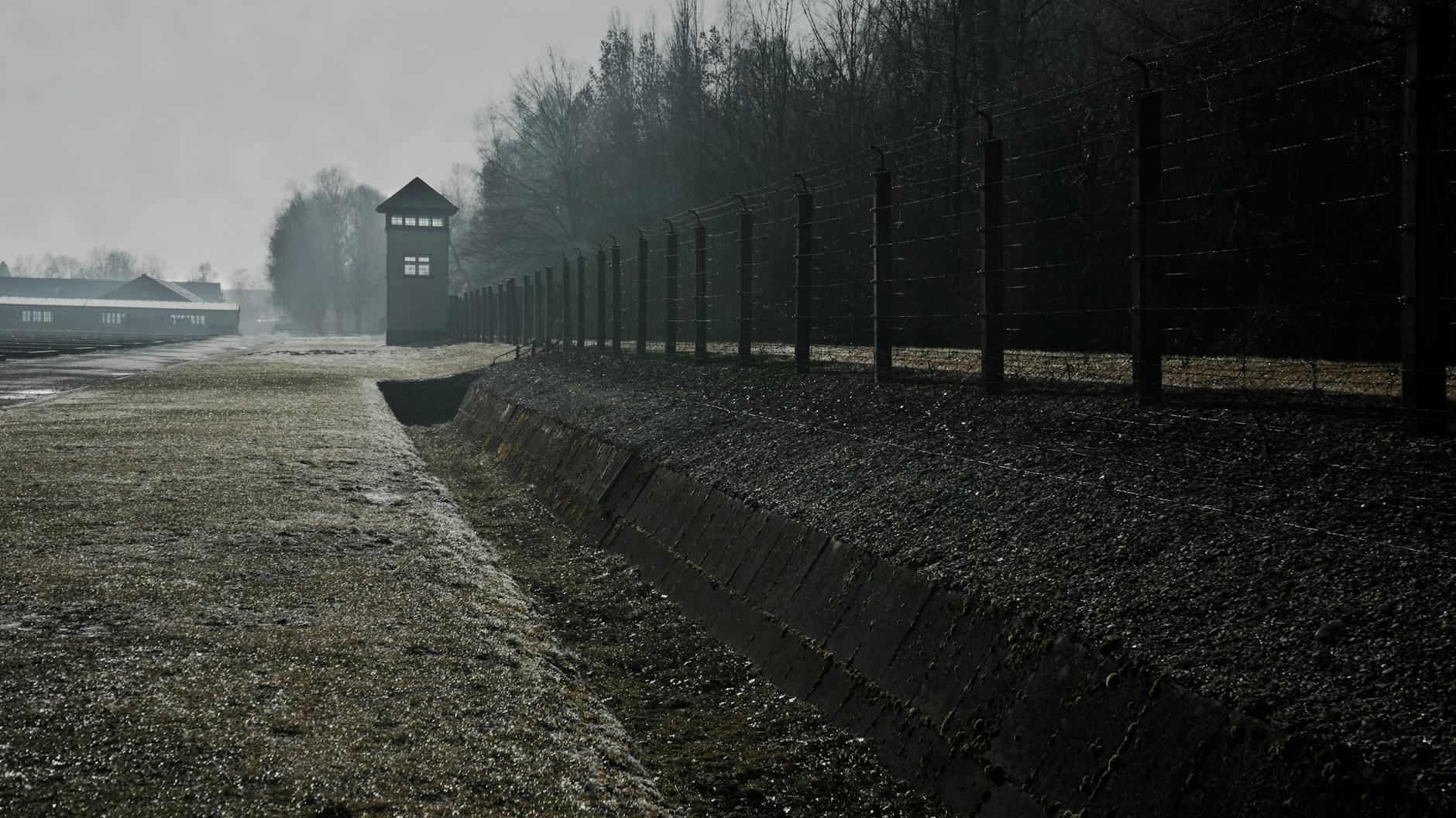
Sachsenhausen was constructed in 1936 to a precise architectural plan by SS architect Bernhard Kuiper. The camp’s triangular layout — with prisoner barracks arranged in concentric semicircles facing the central guard tower (Tower A) — was designed as a “model” that allowed the SS to observe the entire camp from a single position. The triangular plan was studied by SS architects who designed the larger camps at Auschwitz, Buchenwald, and Dachau.
From 1936 to 1945, more than 200,000 people were imprisoned at Sachsenhausen — political opponents of the Nazi regime, Jewish prisoners (particularly after Kristallnacht in 1938), Soviet prisoners of war, Roma and Sinti, gay men, Jehovah’s Witnesses, and people the regime had categorized as “habitual criminals” or “asocial.” Tens of thousands died from the brutal conditions, forced labor, medical experiments, or systematic execution. The “Station Z” execution facility at the camp’s northern edge was the site of mass shootings, gas chamber killings (a smaller chamber than at the larger camps), and the systematic murder of Soviet prisoners of war — approximately 13,000 of whom were shot at the Industrial Court adjacent to the camp.
The camp was liberated by Soviet and Polish forces on April 22-23, 1945. Approximately 3,000 prisoners — those too ill to be evacuated on the death marches the SS forced as the Allies approached — were found alive. From August 1945 until 1950, the Soviet occupation authorities operated parts of Sachsenhausen as “Special Camp No. 7” (later renumbered “Special Camp No. 1”), imprisoning about 60,000 Germans — initially Nazi functionaries, later including political opponents of the new East German regime. About 12,000 died in the Soviet Special Camp. The site became a national memorial of the German Democratic Republic in 1961.
How to Get to Sachsenhausen from Berlin
The most reliable route is the S1 S-Bahn to Oranienburg, the line’s northern terminus. From Friedrichstrasse, the journey takes about 45 minutes. The S1 runs every 20 minutes throughout the day. Buy an ABC-zone day ticket (€11.40) because Oranienburg is in VBB zone C — the standard AB-zone ticket from central Berlin doesn’t cover the journey.
From Oranienburg station, two options. The 20-minute walk through the residential streets follows clear signage (Gedenkstätte Sachsenhausen) — a quiet, contemplative walk that some visitors prefer as a transition into the memorial. Alternatively, bus 804 (running every 30 minutes, the “Friedensplatz” direction) takes about 5 minutes to the memorial parking area. The 821 also reaches the memorial. Both buses are covered by your ABC ticket.
For visitors who prefer a guided experience, several Berlin tour operators run organized Sachsenhausen day tours (around €29 per person, departing Alexanderplatz around 10 am). The advantage of these tours is the guided narrative and a knowledgeable historian leading the group. The disadvantage is that you’ll move on a fixed schedule and have less time to engage individually with specific exhibits.
What to See at the Memorial
The Visitor Center
Start at the visitor center near the bus stop and parking area. Pick up an audio guide (€3, available in English, German, French, Spanish, Italian, Polish, Hebrew, Czech, Dutch, Russian, Portuguese, and a few others). The center also has free printed maps and basic orientation. The visitor center bookshop carries serious academic histories and survivor memoirs — a quiet place to spend 20-30 minutes before entering the camp grounds proper.
Tower A and the Main Gate
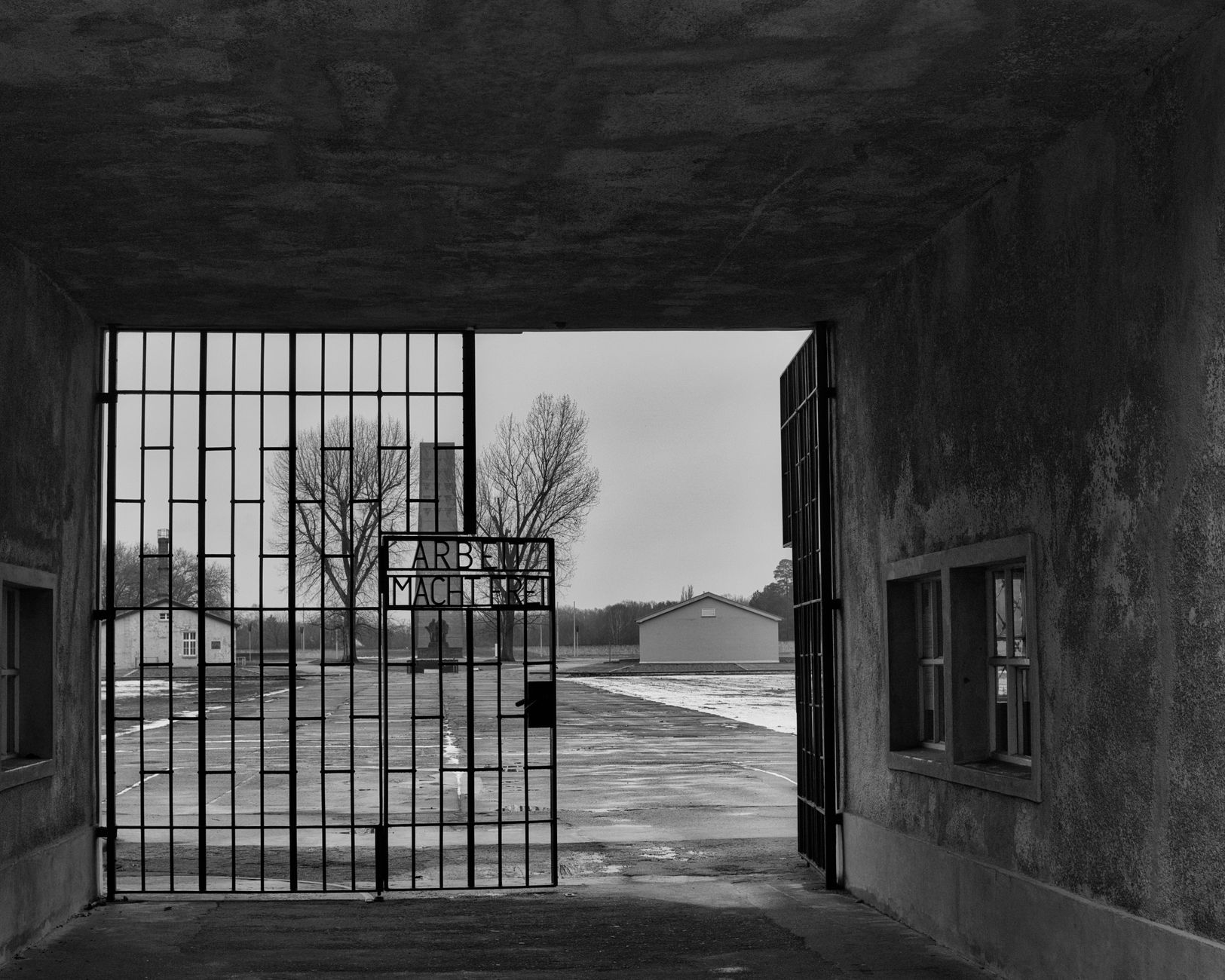
The entrance to the prisoner camp passes through Tower A and the main gate, with its iron lettering “Arbeit Macht Frei” — the cynical “work sets you free” slogan deployed at multiple Nazi camps. The gate and tower are preserved in their original 1936 form. Standing in front of the gate is one of the moments most visitors describe as the hardest part of the visit; allow yourself time before continuing inside.
The Roll Call Ground (Appellplatz)
The semicircular roll call area dominates the camp’s interior. This was where prisoners stood for hours, sometimes through the night, while the SS conducted counts and selected prisoners for transport. The geometric clarity of the layout — the triangular plan radiating outward from the SS observation point at Tower A — was deliberate. Walking around the perimeter reveals the camp’s design logic in a way photographs can’t.
The Reconstructed Barracks
Two reconstructed prisoner barracks — Barracks 38 and 39 — are open as exhibition spaces. Barracks 38 covers the daily life of prisoners. Barracks 39 focuses on Jewish prisoners specifically. Both contain the original bunks, sanitation areas, and washroom spaces. The exhibitions inside are dense and somber; allow at least an hour to engage seriously with them.
Station Z and the Execution Site
At the camp’s northern edge, “Station Z” was the killing facility — the name was the SS’s grim joke, with A being the entrance gate and Z the exit. The site contained an execution trench, a gas chamber, a small crematorium, and the gallows. The remaining foundations are now contained within a contemplative architectural memorial designed by architects Engel and Zillich in the 1980s. This is the heaviest part of the visit; many visitors take a long pause here.
The Soviet Special Camp Memorial
The separate exhibition covering the 1945-1950 Soviet Special Camp use of the site is housed in former camp buildings on the eastern edge. The exhibition is one of the few places in Germany where the post-war Soviet imprisonment system is given dedicated public memorial treatment. About 60,000 Germans were imprisoned here between 1945 and 1950; about 12,000 died. The exhibition is in German with English translation; allow 60 minutes.
Notable Sachsenhausen Prisoners
The camp held a wide range of prisoners over its operational years. Some names that may be familiar: Martin Niemöller, the Protestant pastor whose “First they came for…” quote remains widely circulated, was imprisoned at Sachsenhausen from 1938. Stalin’s eldest son Yakov Dzhugashvili was held here as a Soviet prisoner of war (he died at the camp in 1943). Lucien Pissarro, nephew of the Impressionist painter Camille Pissarro, was imprisoned and later transferred to Bergen-Belsen. Tens of thousands of less-famous prisoners — the political opponents, Jewish men arrested during Kristallnacht, Soviet POWs, Roma and Sinti, gay men — represent the broader human dimension of the camp.
Visitor Etiquette and Conduct
Sachsenhausen is a memorial and a graveyard. Several practical points of behavior matter:
Dress respectfully. The memorial is not a fashion site. Avoid bright tourist t-shirts, slogans, or anything that signals leisure rather than reflection.
Photography is allowed, but be thoughtful. Photographing the entry gate, the barracks, and the architectural memorials is acceptable. Selfies, smiling photographs, or social-media-oriented posing at the memorial is widely considered disrespectful and may be challenged by other visitors. The official guidance: photograph what helps you remember and understand; don’t perform.
Keep voices low. The grounds are large and quiet by design. Conversation that’s audible 20 meters away is too loud.
The memorial is not recommended for children under 14. Some of the exhibitions include graphic photography and detailed testimony of violence. Younger children rarely benefit from the visit and can disrupt the experience for others. If you’re traveling with younger kids, plan a separate activity for them in Berlin while one parent visits Sachsenhausen.
The visit will affect you. Most visitors leave Sachsenhausen quieter than they arrived. Plan for a low-key evening afterward rather than an intense activity.
Self-Guided vs Guided Tour
Both work; both have trade-offs. The €3 audio guide combined with the free printed map gives you complete coverage of the major sites at your own pace, with high-quality historical commentary. You can spend as long as you want at any specific exhibit, and you control the pacing of the heavier sections.
Guided tours — either through Berlin operators (typically €29 per person, 6 hours including transport) or the memorial’s own English-guided tours (check schedules on the memorial website) — give you a knowledgeable human voice on the history and answer questions in real time. The downside is the fixed group pace.
My recommendation for first-time visitors: take the guided tour if you have any uncertainty about the history. The framework of a guide’s narrative makes the immersion more meaningful. For visitors with strong existing knowledge of WWII history, the self-guided audio approach allows deeper engagement with the specific exhibits.
Practical Tips for the Visit
Bring water and a light snack. The grounds are large (about 30 hectares) and you’ll walk several kilometers across the visit. There’s a small café at the visitor center but it’s basic. Dress for the weather — much of the grounds are open and exposed, both hot in summer and cold/windy in winter.
Allow at least 4 hours on site, ideally 5. The standard “I’ll do it in two hours” approach doesn’t do the memorial justice. Plan the visit as a full day from Berlin — arrive around 10 am, leave around 3-4 pm. Eat a real lunch in Oranienburg town (a few cafés near the station) rather than rushing through.
The memorial has wheelchair accessibility on the main paths, though some buildings are accessible only via steps. Contact the visitor service in advance for specific accessibility planning. Free luggage storage at the visitor center.
Combining the Visit With Other Itinerary Items
Don’t try to combine Sachsenhausen with other major sightseeing on the same day. The visit demands a quiet pace afterward. A reasonable Berlin itinerary integrates Sachsenhausen on its own day, with the morning at the camp and a quiet afternoon back in Berlin. Pair it with a related history visit on another day — our Jewish Museum Berlin guide covers the natural follow-up. The broader Jewish history of Berlin provides context for understanding the wider story. Older guidebooks sometimes suggest combining Sachsenhausen with Potsdam in a single day; this is logistically possible but historically inappropriate.
Frequently Asked Questions
Is Sachsenhausen free to visit?
Yes. Entrance to the memorial grounds and all exhibitions is free. The audio guide is €3. Berlin transit to Oranienburg requires an ABC-zone ticket (~€4.40 single, €11.40 day pass). Tour operators charge separately if you choose a guided experience.
How long does a Sachsenhausen visit take?
Plan for 4-5 hours on site. With travel time from central Berlin (about 1 hour each way), the full day from Berlin runs 6-7 hours minimum. Rushing the visit shortchanges both the experience and the historical understanding the memorial is designed to communicate.
Can I bring children?
The memorial recommends visits for children 14 and older. Younger children may struggle with the content emotionally and may also disturb the contemplative atmosphere for other visitors. Families with younger children should plan separate activities — see our Berlin with kids guide for age-appropriate alternatives.
Do I need a guided tour or can I go alone?
Both work. The €3 audio guide is excellent and lets you set your own pace. Guided tours (Berlin operators, typically €29) add expert narrative and historical context. First-time visitors with limited WWII history background benefit from a guided tour; visitors with strong existing knowledge often prefer the self-guided audio approach.
Is the memorial open on Mondays?
The outdoor grounds are open daily year-round, including Mondays. The museum buildings (Barracks 38 and 39, Soviet Special Camp exhibition) are closed Mondays from October through March. From April through September, all buildings are open every day. The full memorial experience requires the buildings, so avoid Mondays in winter.
Can I take photos?
Yes, but with respect. Photographing the architecture, the gate, the barracks, and the memorials is acceptable and welcome. Avoid selfies, smiling photographs, or social-media-style posing — both because it’s disrespectful to victims and because other visitors will notice and react. The memorial’s published guidance: photograph what helps you remember; do not perform.
Can I combine Sachsenhausen with another day trip?
I don’t recommend it. The visit is emotionally and intellectually demanding, and trying to fit Potsdam or another activity in the same day undermines both. Dedicate a full day to Sachsenhausen; do other day trips on other days.
Final Word
Sachsenhausen is not a “tourist attraction” in the conventional sense. It’s a memorial built by survivors, historians, and an evolving German society to ensure the past doesn’t disappear. Visiting requires you to give it the seriousness it asks for — a full day of attention, a quiet evening afterward, and the willingness to engage with material that won’t make you feel good. The memorial isn’t designed to make you feel good. It’s designed to keep certain things from being forgotten. Going there is one of the most important things you can do during a Berlin trip.