Berlin Accessible Transportation Wheelchair Guide (2026)
Complete Berlin accessible transportation wheelchair guide for 2026 — accessible buses, trams, S-Bahn, U-Bahn elevators, taxi services, and tools for travelers with mobility needs.
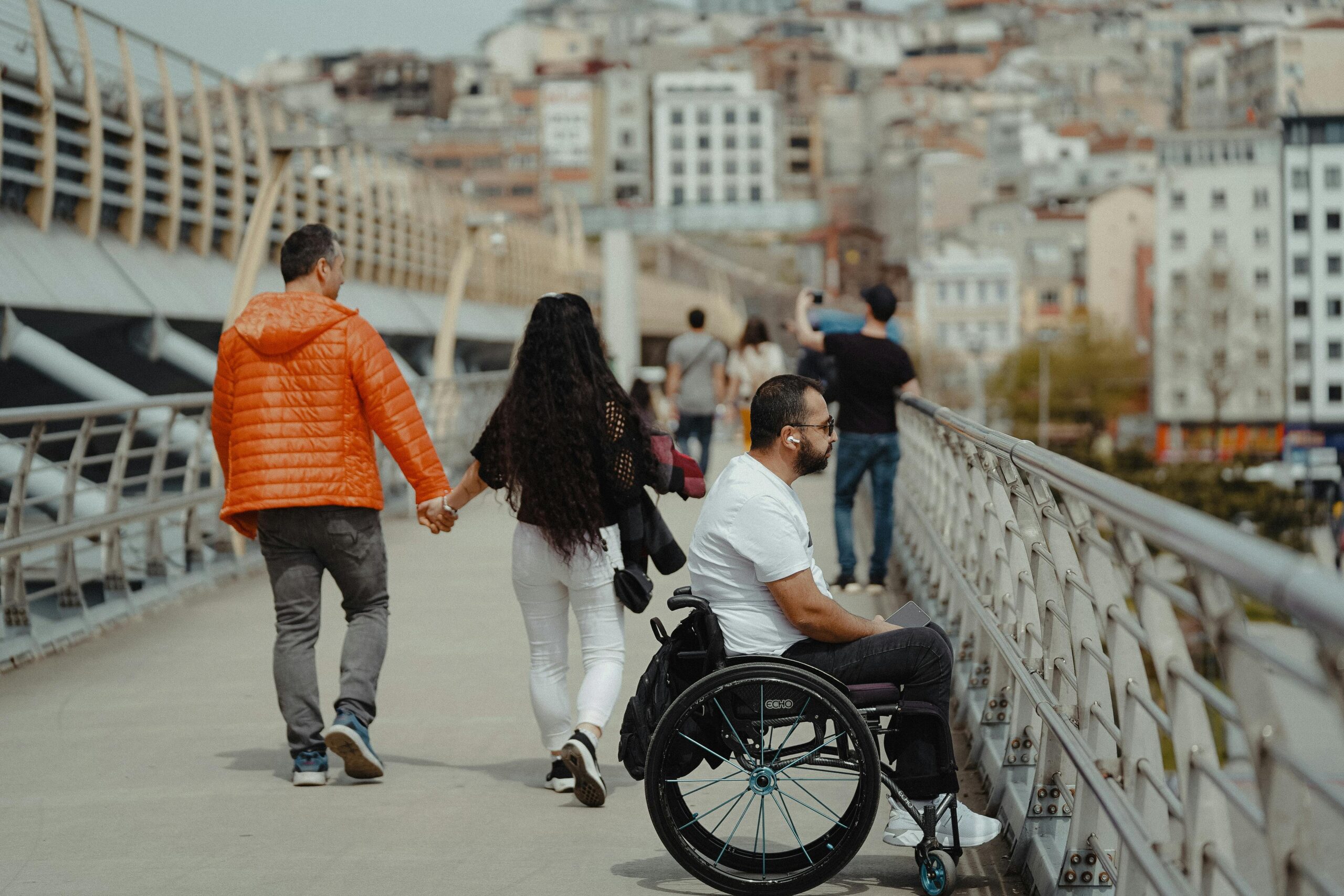
Berlin is one of Europe’s most accessible major capitals — a status earned by decades of investment in step-free transit, accessible attractions, and disability-friendly tourism services. The city was named European “Barrier-free city” by the EU Commission in 2013 and has continued upgrading since. For travelers using berlin accessible transportation wheelchair services, the practical reality matches the awards: the entire BVG bus fleet is wheelchair-accessible, all S-Bahn stations are step-free, and most U-Bahn stations have working elevators. This guide covers everything you need to know to navigate Berlin with mobility needs — bus, tram, train, taxi, and the support services that fill the gaps.
Berlin isn’t perfect. About 20% of U-Bahn stations still lack reliable elevator coverage, some older trams remain partially inaccessible, and broken lifts can disrupt journeys. But with careful planning and the right tools, the city is genuinely navigable for wheelchair users, travelers with limited mobility, and people with sensory or cognitive disabilities. Here’s how.
Berlin Accessibility: The Big Picture
Berlin’s accessibility infrastructure is operated mainly by BVG (Berliner Verkehrsbetriebe) for buses, trams, U-Bahn, and ferries; and by S-Bahn Berlin GmbH for the S-Bahn network. Both operators publish detailed accessibility information and offer free assistance services. Highlights:
- 100% of BVG buses are low-floor with fold-out ramps — fully wheelchair accessible since 2009
- All S-Bahn stations are step-free or being made step-free under ongoing renovations
- ~80% of U-Bahn stations have elevator access, with the remaining 20% scheduled for upgrades
- All BVG trams are accessible via lift or fold-down ramp at the front doors
- BVG ferries are wheelchair accessible
- Free assistance service (VBB-BAV) for travelers when standard accessible transport isn’t possible
Berlin Accessible Transportation Wheelchair: BVG Services
Buses (Fully Accessible)
Every bus in the BVG fleet — including night buses (N-buses), MetroBuses (M-buses), and tourist routes (100, 200, 300) — is low-floor with a manual fold-out ramp at the middle door. Drivers will lower the bus and deploy the ramp on request. Each bus has space for one wheelchair (two on double-decker tourist buses 100, 200, 300).
To board:
- Wait near the middle door (look for the wheelchair pictogram)
- Signal the driver as the bus arrives — wave or make eye contact
- Driver will lower the bus and unfold the ramp
- Wheelchair users have priority over the wheelchair-designated space
- Press the wheelchair button (blue, marked with a pictogram) before your stop
Trams (Accessible Via Ramp)
Berlin’s tram fleet is fully accessible. The first or second door at the front of each tram has a fold-down ramp deployed by the driver on request. Inside, dedicated wheelchair space is marked with floor pictograms.
U-Bahn (Mostly Accessible)
Approximately 80% of the 175 U-Bahn stations have elevator access. The BVG website maintains a real-time map of working and broken elevators (search “Aufzugsstörungen” or “Elevator faults”). Within accessible stations:
- Elevators run from street to mezzanine and from mezzanine to platform
- All trains have wheelchair-designated spaces near the doors
- Gap between platform and train: typically 5-15 cm horizontal, minimal vertical — manageable for most wheelchair users but tighter than an S-Bahn
- Audio and visual stop announcements on all newer trains
S-Bahn (Fully Accessible Network)
All 168 S-Bahn stations have step-free access (elevators or ramps from street to platform). Some platforms still have a slight gap to the train; staff can deploy a portable ramp on request. The S-Bahn is generally easier than the U-Bahn for wheelchair users due to wider doors, smaller gaps, and more space inside trains.
Ferries (Fully Accessible)
BVG operates 6 ferry routes (F10-F23). All boats are wheelchair-accessible with ramps and dedicated spaces. Ferries are part of the standard transit ticket system.
Best Routes and Stations for Wheelchair Users
The Most Reliably Accessible U-Bahn Lines
- U5 (Hauptbahnhof — Hönow) — newer line, all stations step-free
- U2 (Pankow — Ruhleben) — mostly accessible, key central stations like Alexanderplatz, Friedrichstrasse have elevators
- U6 (Tegel — Mariendorf) — all major central stations accessible
Accessible Major Sights
- Brandenburg Gate: No barriers, ground-level access
- Reichstag dome: Fully wheelchair accessible (elevator to dome, ramp inside spiral); requires advance booking
- Museum Island: All five museums have elevator/ramp access; Pergamon (when open) and Bode have particularly good wheelchair facilities
- East Side Gallery: Outdoor, ground-level — fully accessible
- Holocaust Memorial: Accessible perimeter; the underground exhibition has elevator access
- Tiergarten: Paved paths throughout, suitable for wheelchairs
- Berlin TV Tower (Fernsehturm): Accessible elevator to viewing platform
- Berlin Zoo and Aquarium: Mostly wheelchair-friendly with rentable wheelchairs at the entrance
- Charlottenburg Palace: Ground floor accessible; upper floors via stairs (limited)
Booking Accessible Travel: VBB-BAV Service
The VBB-BAV (Behindertenbeförderungsdienst — Disability Transport Service) is a free supplementary service for travelers with mobility limitations when normal accessible transit isn’t available — for example, when an elevator is broken or when a station’s accessibility is genuinely insufficient.
How to Book VBB-BAV
- Phone: +49 30 25 414 414 or use the BVG app
- Book at least 60 minutes in advance (24 hours preferred)
- Specify your origin, destination, time, and any specific needs
- A wheelchair-accessible vehicle will pick you up at the door of the inaccessible station
- Service is free for transit ticket holders
The BAV is operated by an external company contracted by BVG and is genuinely a quality fallback for journeys where standard accessibility doesn’t work.
Berlin Accessible Transportation Wheelchair Apps and Tools
BVG Fahrinfo App
The official BVG app filters routes for accessibility — toggle the “barrier-free” option to ensure suggested journeys avoid stations without working elevators. Available in English. Critical tool for daily use.
Wheelmap.org
Berlin-developed open-source mapping tool (created by Sozialhelden e.V.) showing accessibility ratings for restaurants, shops, museums, attractions, and toilets across the city. Color-coded markers (green=accessible, yellow=partial, red=inaccessible). Available as a website and mobile app.
Berlin.de Accessibility Section
The official Berlin city website (berlin.de) maintains an accessibility section with venue-by-venue ratings, hospital and pharmacy locations, and emergency contact info.
Accessible Taxis and Rideshare
Wheelchair-Accessible Taxis
Berlin has a fleet of wheelchair-accessible taxis (Inklusions-Taxis) that can transport users with their wheelchairs. To request:
- Phone the central taxi service at +49 30 8444 4444 or +49 30 21 02 02 (Taxi Berlin)
- Specify “Inklusions-Taxi” or “Rollstuhltaxi” when booking
- Book at least 30-60 minutes in advance for guaranteed availability
- Standard meter rates apply (no surcharge for accessibility)
Rideshare Apps
Uber, Bolt, and FreeNow operate in Berlin but their standard fleets are not consistently wheelchair-accessible. FreeNow’s “FreeNow Match” specifically marks accessible vehicles in some markets, though availability in Berlin can be limited. For guaranteed accessibility, use the dedicated accessible taxi service.
Step-Free Stations: Quick Reference
Always Step-Free Major Stations (Verified Reliable)
- Alexanderplatz (U2/U5/U8/S-Bahn ring + east-west)
- Hauptbahnhof (U5/S-Bahn east-west)
- Friedrichstrasse (U6/S-Bahn east-west)
- Potsdamer Platz (U2/S-Bahn)
- Brandenburger Tor (U5/S-Bahn)
- Zoologischer Garten (U2/U9/S-Bahn west)
- Warschauer Strasse (U1/U3/S-Bahn east-west)
- Bahnhof Zoo (U2/U9/S-Bahn west)
- Hackescher Markt (S-Bahn)
- Ostkreuz (S-Bahn ring + east-west)
- Westkreuz (S-Bahn ring + west)
- Südkreuz (S-Bahn ring + south)
Stations With Recurring Elevator Issues (Check Before Travel)
The BVG real-time elevator status page lists current outages. As a general rule, smaller and older U-Bahn stations are more prone to elevator faults — when in doubt, plan via the BVG app’s barrier-free filter.
Hotels for Wheelchair Users
Most major Berlin hotels (4-star and above) have at least 2-5 wheelchair-accessible rooms with roll-in showers, lowered counters, and emergency systems. Highly-rated accessible properties include:
- Hilton Berlin (Mitte) — multiple accessible rooms, central location
- Park Inn by Radisson Berlin Alexanderplatz — central, accessible amenities
- Hotel Adlon Kempinski Berlin — luxury option with comprehensive accessibility
- Mövenpick Hotel Berlin — central, well-equipped accessible rooms
- NH Collection Berlin Mitte am Checkpoint Charlie
- Holiday Inn Berlin City East Prenzlauer Allee — family-friendly with accessible rooms
For booking, request the accessible room directly via the hotel (not always available through booking platforms). Specify any specific needs (roll-in shower, transfer board, lowered bed) when reserving. See our where to stay in Berlin guide.
Accessible Sights and Attractions
Museums With Excellent Accessibility
- Jewish Museum Berlin — exceptional wheelchair access, audio guides, tactile maps
- Topography of Terror — outdoor and indoor exhibits both accessible
- Holocaust Memorial Information Centre — fully accessible underground exhibition
- Hamburger Bahnhof — contemporary art, full elevator/ramp coverage
- DDR Museum — interactive, fully accessible
- German History Museum — comprehensive accessibility, audio guides
- Neues Museum — Egyptian collection accessible via elevator
Tours With Accessibility Programs
- Original Berlin Walks runs accessible city tours by request
- Several boat tour operators have wheelchair-accessible vessels (book in advance)
- Hop-on-hop-off bus tours (Big Bus, City Sightseeing) have wheelchair lifts
Practical Tips for Berlin Accessible Transportation Wheelchair Users
Plan With Real-Time Tools
Always check the BVG app for elevator status before starting a journey. Broken elevators are common at older U-Bahn stations and can disrupt routes that worked yesterday.
S-Bahn Often Beats U-Bahn
The S-Bahn network is uniformly step-free with smaller platform-train gaps and more space inside trains. When possible, plan routes via S-Bahn rather than U-Bahn.
Avoid Rush Hour
Weekday rush hours (7-9am, 4-6pm) crowd transit and make wheelchair maneuvering harder. Travel between 9:30am-3:30pm and after 6pm for easier journeys.
Tourist Bus Routes 100, 200, 300
These bus routes are designed for tourists and pass major sights. They use double-decker buses with two wheelchair spaces each, fully accessible ramps, and slow-paced sightseeing speed. Excellent option for wheelchair users wanting to see central Berlin without relying on U-Bahn elevators.
Carry a Spare Battery and Charger
Power wheelchair users: charging spots are available at most major transit stations and tourist information centers. Plan for top-ups during long days out.
Get a Berlin Tourist Information Map
The visitBerlin.de “Accessible Berlin” map (available free at airports, Hauptbahnhof, and tourist information centers) marks accessible attractions, routes, and toilets. A printed map is useful as a backup.
Accessible Toilets and Facilities
Public accessible toilets are available at:
- All major U-Bahn and S-Bahn stations (most are euro-key activated; ask staff for access)
- All museums and major attractions
- Train stations including Hauptbahnhof, Ostbahnhof, Südkreuz
- Tourist information centers
- Most large department stores (KaDeWe, Galeria Kaufhof)
- BER Airport throughout
The European EuroKey unlocks most accessible facilities — order before your trip from the German club for the disabled (Bundesvereinigung Selbsthilfe Körperbehinderter) or buy on arrival at any major train station.
External Resources
For additional, authoritative information on berlin accessible transportation wheelchair services, the following sources are useful:
- BVG: Barrier-free travel — official guide
- visitBerlin: Accessible Berlin
- Wheelmap.org: Accessibility ratings
Quick Reference: Berlin Accessible Transportation Wheelchair
This berlin accessible transportation wheelchair guide is updated for 2026 with current pricing, schedules, and recommendations. Use this berlin accessible transportation wheelchair resource as your one-stop reference, and bookmark for return visits. For travelers researching berlin accessible transportation wheelchair alongside other Berlin topics, see our linked guides for related coverage.
At the airport, both terminals are step-free, with lifts from the station platforms to the check-in halls, but the distances are real: the walk between Terminal 1 and Terminal 2 and out to the far piers can be long, and it is worth mentioning when you book assistance. Our BER terminals guide shows the layout level by level.
Frequently Asked Questions
Is Berlin wheelchair accessible?
Yes — Berlin is among Europe’s most wheelchair-accessible major capitals. The entire BVG bus fleet is low-floor with ramps, all S-Bahn stations are step-free, and approximately 80% of U-Bahn stations have working elevators. The city won the EU Commission’s “Barrier-free city” award in 2013 and has continued investing.
How does berlin accessible transportation wheelchair access work for tourists?
Use buses, trams, S-Bahn, and ferries — all are fully wheelchair-accessible. For U-Bahn, check the BVG app’s barrier-free filter to plan routes via stations with working elevators. Book the free VBB-BAV service for emergency or backup transport when standard accessible options aren’t available.
Are Berlin taxis wheelchair accessible?
Berlin has a dedicated fleet of wheelchair-accessible taxis (Inklusions-Taxis). Phone +49 30 8444 4444 or +49 30 21 02 02 to book; specify “Rollstuhltaxi” or “Inklusions-Taxi”. Standard meter rates apply.
What’s the easiest way to get from BER airport to central Berlin in a wheelchair?
The S9 line from BER Airport is fully accessible — wheelchair spaces in trains, step-free at every station along the route. The journey to Alexanderplatz takes about 50 minutes. Alternative: book a wheelchair-accessible taxi for €60-€80.
Are Berlin attractions wheelchair accessible?
Most major sights are fully accessible: Brandenburg Gate, Reichstag dome, all five Museum Island museums, East Side Gallery, Holocaust Memorial, TV Tower, Berlin Zoo. Detailed wheelchair accessibility ratings are available at visitBerlin.de/en/accessible-berlin and on Wheelmap.org.
What if a U-Bahn elevator is broken?
Use the BVG app to check real-time elevator status and plan an alternate route. If no accessible alternative exists, book the free VBB-BAV service (60 minutes advance notice) for door-to-door transport.
Are there accessible hotels in Berlin?
Yes — most 4-star and 5-star hotels offer accessible rooms with roll-in showers and adapted facilities. Book the accessible room directly via the hotel rather than through third-party platforms. See our Mitte hotels guide.
Is the Berlin TV Tower wheelchair accessible?
Yes — the TV Tower (Fernsehturm) has a wheelchair-accessible elevator to the viewing platform. The restaurant Sphere is also wheelchair accessible.
Final Verdict: Berlin Accessible Transportation Wheelchair Travel
Berlin works for wheelchair users in a way few major European capitals do. The combination of fully accessible buses, trams, ferries, and S-Bahn — plus 80% of U-Bahn stations and a robust backup service — means most journeys are navigable. Use the BVG app to verify real-time accessibility, plan routes via S-Bahn when possible, and don’t hesitate to use the free VBB-BAV service when needed. With these tools, Berlin is one of the easier major European cities for travelers with mobility, sensory, or cognitive needs.
For broader transit context, see our Berlin transportation guide, Berlin U-Bahn & S-Bahn guide, and Berlin safety tips.