BER Terminals 1, 2 & 5: Which One Are You Flying From?
Terminal 1 or 2, what is on each level, how the piers and gates are organised, how to walk between terminals, and why anything telling you to go to Terminal 5 is out of date.
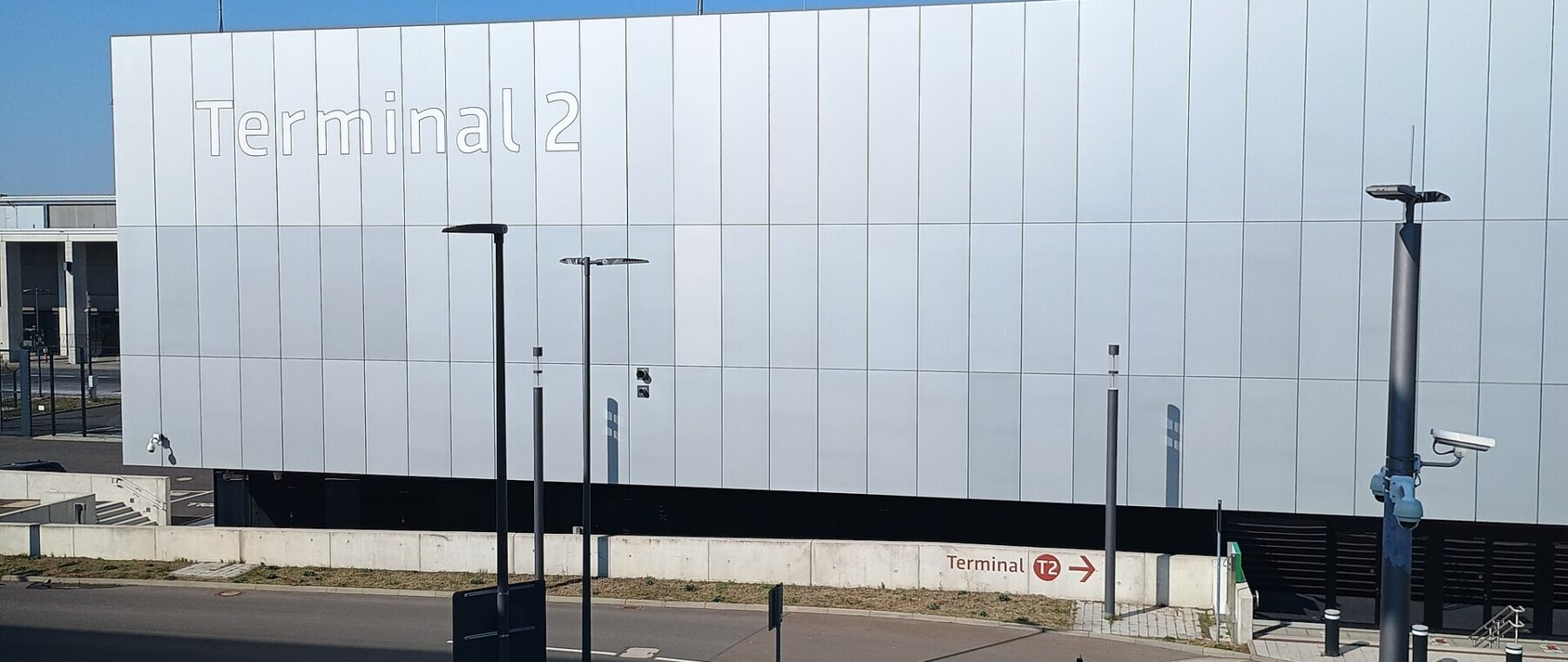
A surprising number of people still turn up at Berlin’s airport asking for a terminal that has not existed for years. They have an old booking email, a travel article from 2021, or a memory of flying from Schönefeld, and they are standing in the wrong place with forty minutes until bag drop closes. The good news is that the BER airport terminals are far simpler today than they were in the airport’s first two years: there are two, they sit side by side, and you can walk from one to the other in about five minutes. The bad news is that the details — levels, piers, gates, where the trains stop — are exactly the kind of thing that costs you time if you have not looked at them before you arrive.
This guide explains how Terminals 1 and 2 work, what is on each level, how the piers and gate areas are organised, which airlines use which terminal, what happened to Terminal 5, and how to get between them whether you are arriving by train, connecting between flights or meeting someone off a plane. It was checked in October 2026; terminal assignments can change with the airline schedule, so always confirm yours in your airline’s app. For everything else about the airport, from security to sleeping cabins, see our complete BER airport guide.
BER Terminals at a Glance
| Terminal 1 | Terminal 2 | Terminal 5 | |
|---|---|---|---|
| Status | Open — main terminal | Open — opened 24 March 2022 | Permanently closed (shut February 2021; decision not to reopen, 2022) |
| Used by | Most airlines, full-service and long-haul | Mainly low-cost carriers, especially Ryanair | No flights |
| Check-in | Level E1, ten check-in islands, 118 counters | Level E0 | — |
| Security | Level E1 | Level E1 | — |
| Gates | Main Pier, South Pier, North Pier | North Pier of Terminal 1, via two bridges | — |
| Rail station | Directly beneath (levels U1/U2) | None — walk from T1 | Old Schönefeld station, not an airport stop |
| Taxis | Main rank outside | Use Terminal 1 | — |
| Food and shops | Wide choice, landside and airside | Smaller plaza after security | — |
The Quick Answer: Which Terminal Am I Using?
- Open your airline’s app or booking confirmation a day before you fly. It will show the terminal.
- If it says Terminal 1 or T1, take the train to the airport station and go straight up.
- If it says Terminal 2 or T2, take the train to the same station, then walk to T2, following the signs. Allow at least five extra minutes, more with luggage.
- If it says Terminal 5 or SXF, or sends you to the old Schönefeld airport, the information is out of date. Your flight is using Terminal 1 or 2 — check the airline’s app or the BER departure boards.
- If it says Tegel or TXL, the information is very out of date. Tegel closed in November 2020.
As a rule of thumb, Terminal 1 handles many full-service European airlines and long-haul services, but find out your terminal before you set off. If you are flying Ryanair, assume Terminal 2 until you are told otherwise.
Terminal 1: The Main Building
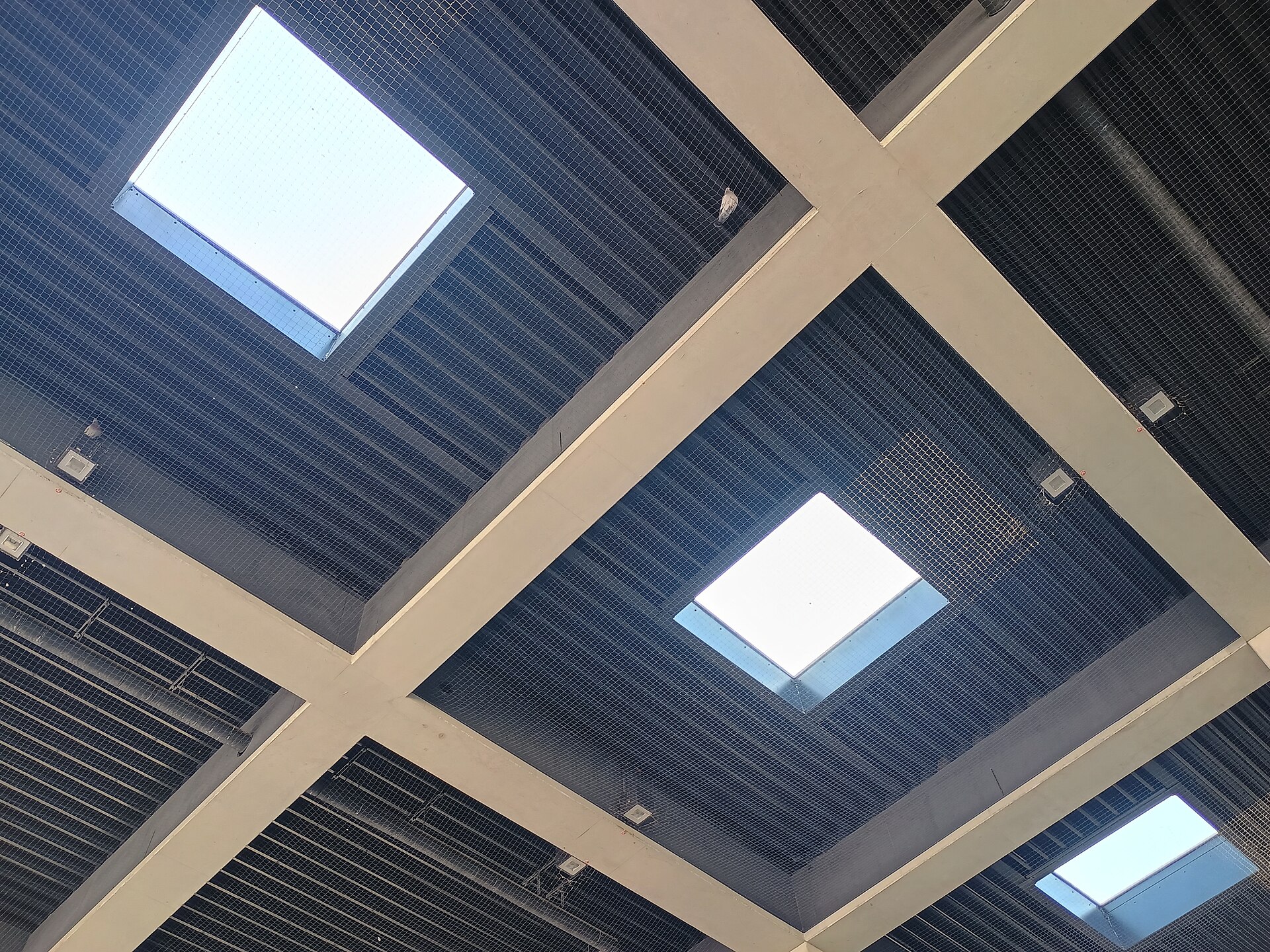
Terminal 1 is the building that took fourteen years to open, and it is where almost everything at BER happens. It is a large hall of strict geometric lines behind a glass facade, designed by the architects gmp in a deliberately calm style. Behind the main hall, the piers with the aircraft gates extend out towards the aprons.
What is on each level
BER uses a level system that looks confusing at first and makes sense once you know it. “E” levels are above ground, counting up from E0; “U” levels are underground.
| Level | What is there |
|---|---|
| E4 | Visitor terrace, reached from the gallery above the check-in hall |
| E3 | Not open to passengers |
| E2 | Non-Schengen departures, food court, lounges, smokers’ lounge |
| E1 | Check-in, security, the marketplace of shops and cafés, Schengen departures |
| E0 / E0Z | Arrival gates, baggage reclaim, arrivals hall |
| U1 | Passage to the station and to Airport City, left-luggage office |
| U2 | Railway station platforms |
The practical sequence, then, is simple. Departing: come up from the station (U2, U1) to E1, check in, go through security on E1, and either stay on E1 for a Schengen flight or go up to E2 for a non-Schengen one. Arriving: leave the aircraft at E0, collect your bags on E0, exit into the arrivals hall on E0, and take the escalators or lifts down to U1 and U2 for the trains.
Check-in
Terminal 1’s check-in hall on E1 is organised around ten check-in islands with 118 counters in total, plus self-service kiosks and bag-drop machines. The departure boards list which island your flight uses, and islands are numbered clearly from the gallery above. Most airlines expect you to have checked in online; for many, the counter is now simply where you drop your bag. If you have oversized items, find the bulky-baggage drop point rather than queuing at the normal counter.
Security
Security checkpoints are on E1, behind the check-in hall. There are several, and the signs will direct you to the one serving your gate area. Queues vary a great deal by time of day. Some flights to particular destinations, including the United States and Israel, have additional security screening before boarding, on a mezzanine level serving a handful of dedicated gates.
Landside facilities
Before security, Terminal 1 has cafés, bakeries, a newsagent, cash machines, service desks and a REWE supermarket that is open around the clock. The left-luggage office is on level U1. The visitor terrace, with its ticketed 90-minute slots, is reached from the gallery on the upper level of the check-in hall.
Piers and Gates in Terminal 1
This is where BER gets complicated, and where the walking distances are. Terminal 1 has three piers. Gate assignments can change, so the departure boards are the final word.
Main Pier: two floors, Schengen below, non-Schengen above
The Main Pier extends straight out from the central building and is split horizontally:
- Level E1 — Schengen flights: flights to and from other Schengen countries, with no passport control.
- Level E2 — non-Schengen flights: flights to the UK, Ireland, the US, Turkey and elsewhere outside Schengen, with passport control between security and the gates.
- Level Z: a mezzanine with a small number of gates used for flights needing additional pre-boarding security checks.
South Pier
The South Pier is a walk from security, but a straightforward one.
North Pier
The North Pier is also where passengers who check in at Terminal 2 go to board: Terminal 2 connects to the North Pier by two bridges. Many North Pier flights board without jet bridges, which means walking or taking a bus across the apron, sometimes in the rain.
How long is the walk to the gate?
From security to the nearest Main Pier gates is a few minutes. To the far end of the South or North Pier, allow well over ten minutes at a normal pace, more if you are travelling with children, and more again if you need to go through passport control. Do not stop for a long coffee until you know where your gate is.
Terminal 2
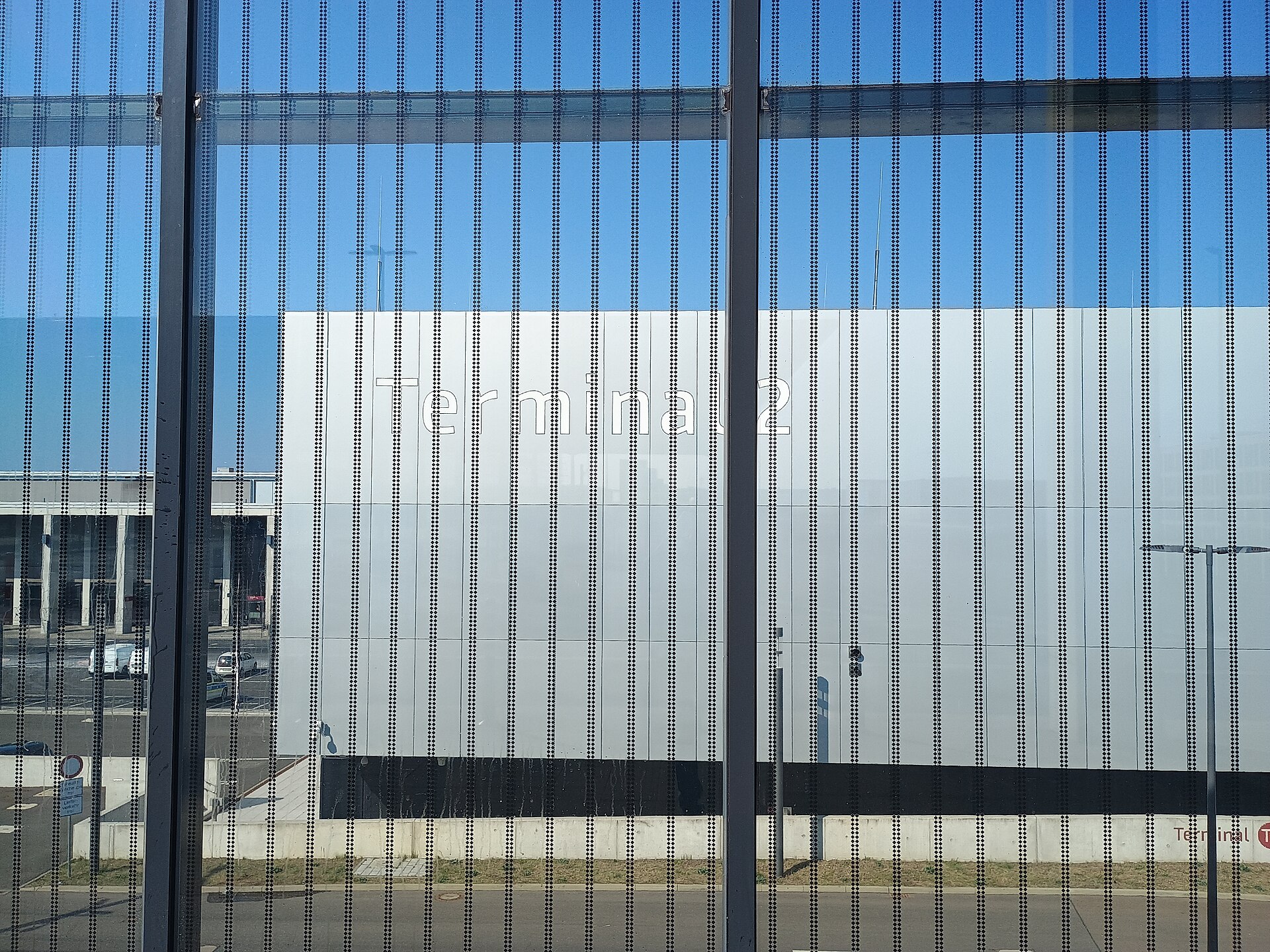
Terminal 2 was built alongside Terminal 1 to add check-in and security capacity, and was actually complete by the end of September 2020 — just before BER opened. Because of the collapse in air travel during the pandemic, it then stood empty until 24 March 2022. It has a gross floor area of 32,000 square metres and was designed to handle up to six million passengers a year.
What Terminal 2 is, and is not
Terminal 2 is best understood as a check-in and security building rather than a full terminal with its own gates. You check in and drop bags on level E0, go up to level E1 for security, and emerge into a plaza with a few shops, cafés and service points. From there, two bridges take you into the North Pier of Terminal 1, where your gate is. Arriving passengers on Terminal 2 flights collect their bags on E0 of Terminal 2.
Check-in here relies on self-service kiosks and bag-drop machines, and the shops and restaurants are beyond security. If you want to eat properly or shop, do it landside in Terminal 1 before you walk across, or in the North Pier after security.
Which airlines use Terminal 2
Terminal 2 has been used mainly by low-cost carriers, above all Ryanair, with other budget airlines such as Wizz Air and Vueling reported there too. Assignments are set by the airport and the airlines and can change between the summer and winter schedules, so treat this as a guide and check your own booking.
One change to note: blaming rising airport charges and taxes, Ryanair closed its Berlin aircraft base from 24 October 2026 and cut its Berlin capacity for the winter 2026–27 schedule by half, dropping 12 routes. It still flies to BER, on fewer routes. If you booked a Ryanair flight for this winter or 2027, keep an eye on your email for schedule changes.
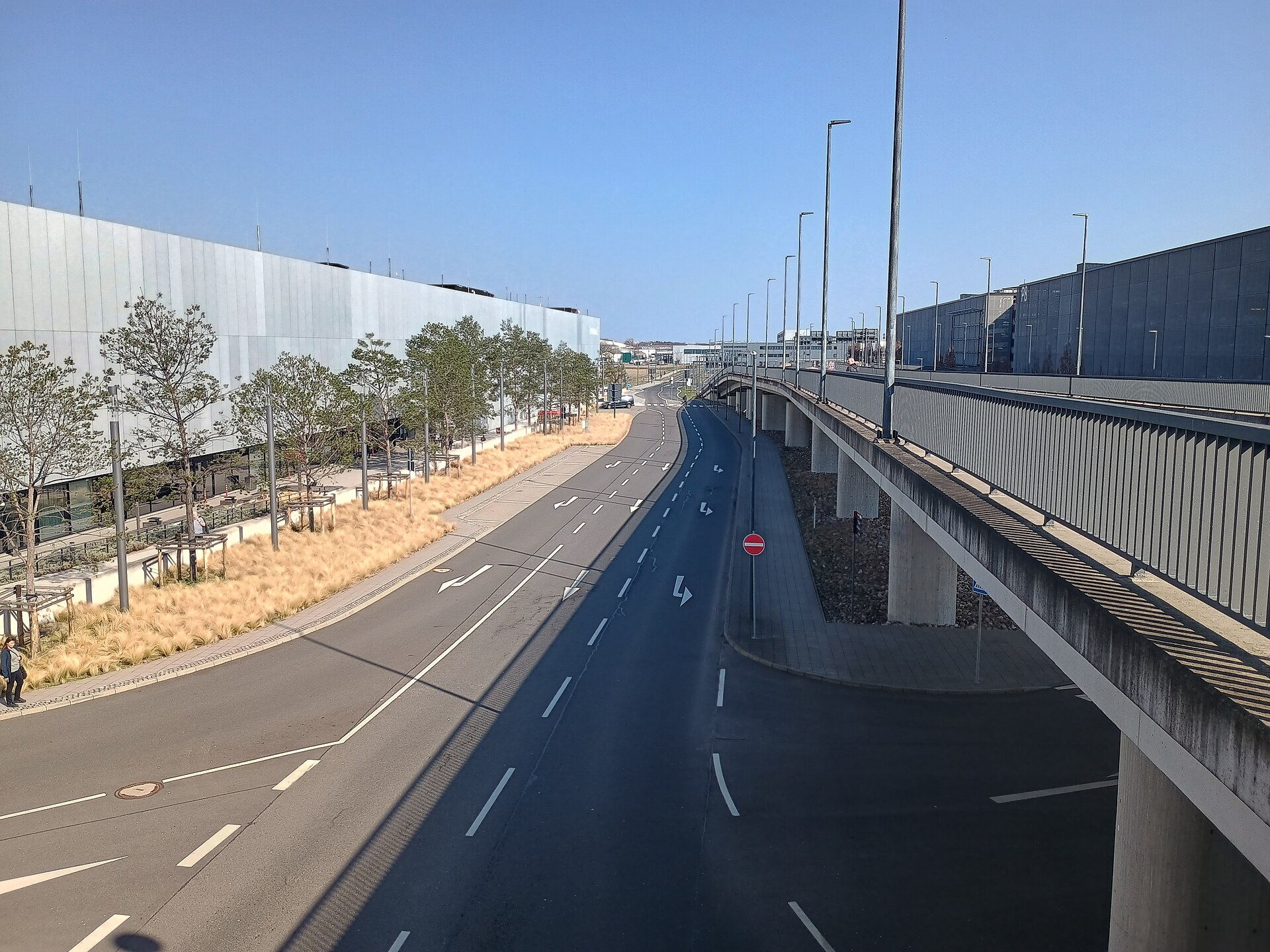
Getting Between Terminals 1 and 2
Landside, from the station or Terminal 1
All trains stop at the station beneath Terminal 1, and taxis and most buses stop outside it. To reach Terminal 2, follow the T2 signs. The walkway to Terminal 2 starts on the Terminal 1 arrivals level, E0, and the walk takes a few minutes. With heavy bags, children or limited mobility, allow extra time. Lifts are available along the route.
Airside, between flights
Because Terminal 2 passengers board from Terminal 1’s North Pier, the two terminals share the same airside area. If you are connecting between flights on the same booking, you will normally stay airside. The gate areas of the two terminals are connected, so you can walk between them. If your connection involves moving between Schengen and non-Schengen flights, you will pass through passport control on the way; if you are on separate tickets, you will have to go landside, collect and re-check your bags, and pass through security again, which needs a great deal more time.
What Happened to Terminal 5?
Terminal 5 was the old Schönefeld Airport — East Germany’s airport during the GDR years, home to the state airline Interflug, and after reunification a major airport for low-cost airlines. When BER opened in October 2020, the old Schönefeld buildings became Terminal 5, and they handled flights until February 2021.
With passenger numbers depressed by the pandemic, Terminal 5 was taken out of service early in 2021, and in 2022 the decision was made to close it permanently. It will not reopen. Its airlines moved to Terminals 1 and 2. The railway station that served it has returned to its old name, Schönefeld (bei Berlin), and trains still stop there — but it is not an airport station, and the airport terminals are a couple of stops further on. If you get off there by mistake, get back on the next train towards Flughafen BER.
The same goes for anything you read about Terminal 5 check-in or flights from Terminal 5: it is out of date. Parking at the former terminal is a different matter: car parks P54 and P56 are still in use there, with rail or shuttle connections on to BER.
Terminal 1 or Terminal 2: What the Difference Means for You
You do not usually get to choose your terminal, but knowing how the two compare helps you plan the hours before a flight.
| If you care about… | Terminal 1 | Terminal 2 |
|---|---|---|
| Getting there by train | Station directly underneath | A few minutes’ walk from the station |
| Food before security | Good choice, plus a 24-hour supermarket | Limited — eat in Terminal 1 first |
| Food after security | Wide choice, including the E2 food court | A small plaza, then the North Pier |
| Lounges | On level E2 | Reach them only if your route allows |
| Boarding | Often by jet bridge | Often on foot or by bus across the apron |
| Travelling with small children | Easier: shorter routes, more facilities | Manageable, but plan the walk |
| A very early departure | Easiest, especially if sleeping at the airport | Add the walk to your timings |
The honest verdict is that neither terminal is unpleasant. Terminal 2 is simply more basic, and the extra walk is the only thing that routinely catches people out.
Connecting Between Flights at BER
BER is not a major transfer hub, and it shows: signage for connecting passengers is less prominent than at Frankfurt or Munich, and many people changing planes here are on separately booked low-cost tickets rather than through-tickets. How long you need depends almost entirely on which of these situations you are in.
- Same booking, Schengen to Schengen: your bags are normally checked through, and you stay airside. Follow the signs for connecting flights and check the boards for your new gate. This is the simplest case.
- Same booking, crossing between Schengen and non-Schengen: you stay airside but pass through passport control, and possibly an additional security check. Allow noticeably more time, particularly at busy periods and if you are a non-EU traveller being registered in the Entry/Exit System for the first time.
- Separate bookings: you are, in effect, arriving and then departing. You go landside, collect your bags, check in again for the second flight — possibly in the other terminal — and pass through security again. Treat three hours as a sensible minimum, more if either flight is non-Schengen, and remember that on separate bookings you generally have no right to onward care, compensation or transport if a delay makes you miss the second flight, though your rights on the delayed flight itself still apply.
If a long connection leaves you with time to spare, the visitor terrace, the sleeping cabins and the supermarket in Terminal 1 are the best ways to use it; our BER airport guide covers when it is worth leaving the airport altogether. And if a tight self-connection worries you, check what your travel insurance covers before you fly.
Arriving: Where You Come Out
- Terminal 1 flights arrive at gates on levels E0 and E0Z; baggage reclaim and the arrivals hall, where people meeting you wait, are both on E0. From there, taxis are outside and the trains are two levels down.
- Terminal 2 flights collect their bags on level E0 of Terminal 2. From there, follow the signs for the passage to Terminal 1 for trains and taxis.
- Non-Schengen arrivals pass through border control before reclaim. Since October 2025 the EU’s Entry/Exit System has been registering non-EU travellers’ fingerprints and facial images on first entry, which can add a few minutes. See our Berlin visa and entry requirements page.
Meeting someone at BER
Tell them to come out into the Terminal 1 arrivals hall, even if they flew into Terminal 2, and agree a meeting point there, such as a specific café or the top of the escalators to the station. The arrivals boards show which baggage belt each flight uses and when bags are on it, which is a far better guide to when your guest will appear than the landing time. If you are driving, pick-up and drop-off at the terminal forecourts are time-limited, so it is often easier to wait in a car park and walk over when they have their bags.
From the Station to Your Terminal, Step by Step
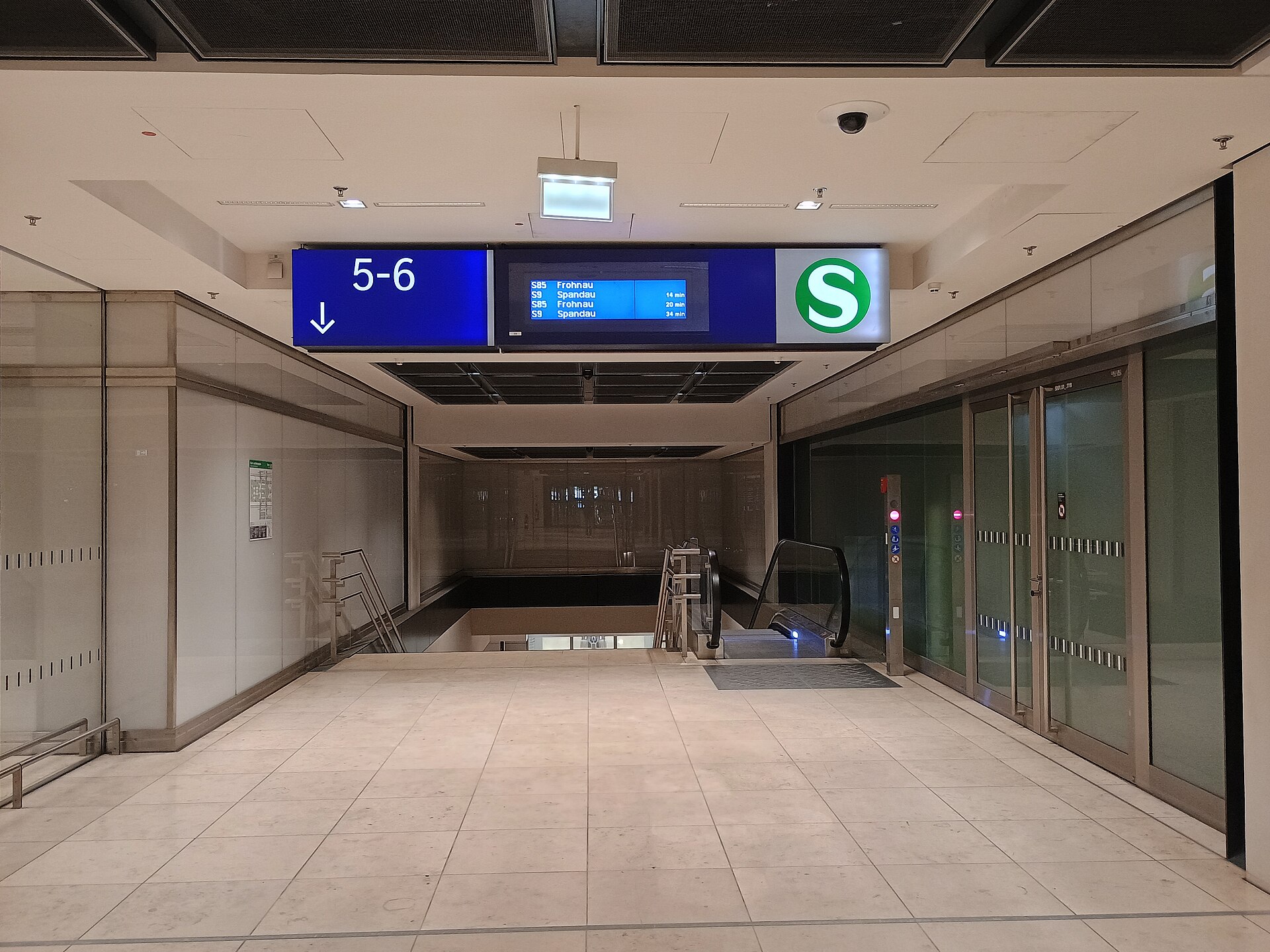
- Get off the train at Flughafen BER (the station under Terminal 1). Not Schönefeld.
- Take the escalators or lifts up to U1. The left-luggage office is on this level if you need it.
- Continue up to E0 (arrivals) and then E1 (check-in and departures) for Terminal 1.
- For Terminal 2, follow the T2 signs through the passage, a walk of a few minutes.
- Check the departure boards for your check-in island or counter, drop bags, and head to security.
Travelling in the other direction, remember that the airport is in fare zone C: you need an ABC ticket, not AB. Our BER airport to city centre guide compares the train, S-Bahn and taxi options, and our BVG tickets guide explains the fare zones.
Accessibility in Both Terminals
Both terminals are step-free, with lifts linking every public level from the station platforms up to the check-in halls and, in Terminal 1, the visitor terrace. Assistance for passengers with reduced mobility covers both terminals and runs from arrival at the airport to your seat on the aircraft; book it through your airline at least 48 hours before travel. The walk from Terminal 1 to Terminal 2, and the distances to the far piers, are the main things to plan around — if walking long distances is difficult, mention it when you book assistance. See also our guide to accessible transport in Berlin.
Tips for Using BER’s Terminals Well
- Check your terminal the day before, not at the station.
- Eat landside in Terminal 1 if you are flying from Terminal 2 and want a real choice.
- Find your gate before you shop. The far piers are a proper walk.
- Non-Schengen gates are upstairs. If your gate is for a flight outside Schengen, you are going up to E2 and through passport control.
- Use the REWE in Terminal 1 for water and snacks at supermarket prices.
- Look at the site plans on the airport website before a tight connection.
- Ignore anything that mentions Terminal 5, Schönefeld Airport or Tegel.
Frequently Asked Questions
How many terminals does BER have?
Two are in use: Terminal 1, the main terminal, and Terminal 2, a smaller building next door used mainly by low-cost airlines. Terminal 5, the former Schönefeld Airport, stopped handling flights in February 2021, and in 2022 the airport decided not to reopen it.
How do I get from Terminal 1 to Terminal 2 at BER?
On foot. Follow the T2 signs from Terminal 1 to the walkway on arrivals level E0; from there it is only a few minutes. Airside, the terminals share the same area through Terminal 1’s North Pier.
Which terminal does Ryanair use at BER?
Mainly Terminal 2, with boarding from the North Pier of Terminal 1. Ryanair halved its Berlin capacity for winter 2026–27 and closed its base there on 24 October 2026, though it still serves BER, so check your booking for changes.
Is there a train station at Terminal 2?
No. The station is beneath Terminal 1. Passengers for Terminal 2 get off there and follow the signs from level E0; it is a few minutes on foot.
Is BER Terminal 5 open?
No. It closed in February 2021, and in 2022 the airport decided it will not reopen. The nearby station is now called Schönefeld (bei Berlin) and is not an airport stop.
Where are the non-Schengen gates at BER?
On level E2 of Terminal 1’s Main Pier, above the Schengen gates on level E1. You pass through passport control on the way.
Are the terminals at BER open all night?
The public areas of the terminals are open 24 hours a day, with the round-the-clock REWE supermarket and the NapCab sleeping cabins on landside level U1. Regular scheduled flights may not take off or land between midnight and 05:00, though exceptions are allowed. See our BER airport guide for the night-flight rules.
Related Berlin Guides
- Berlin Brandenburg Airport (BER): The Complete Guide
- BER Airport to City Centre
- BVG Tickets in Berlin
- Berlin Visa and Entry Requirements
- Accessible Transport in Berlin
- Berlin Transportation Guide
Photo Credits
Terminal 2 seen from outside: (20260318) BER Airport Terminal 2 01 by Roy Zuo, CC BY-SA 4.0, via Wikimedia Commons.
Terminal 1 ceiling: (20260318 121821166 HDR) Flughafen BER Terminal 1 by Roy Zuo, CC BY-SA 4.0, via Wikimedia Commons.
Terminal 2 through the Terminal 1 glass: (20260318) BER Airport Terminal 2 03 by Roy Zuo, CC BY-SA 4.0, via Wikimedia Commons.
Road beside Terminal 2: (20260318) BER Airport Terminal 2 02 by Roy Zuo, CC BY-SA 4.0, via Wikimedia Commons.
Escalators to the S-Bahn platforms: (20260318 122527392 HDR) Flughafen BER Terminal 1 by Roy Zuo, CC BY-SA 4.0, via Wikimedia Commons.
Final Word
BER’s terminals look intimidating on a site plan and turn out to be very manageable in practice. Two buildings, one station, one short walk between them. The letters and levels matter mainly when you are in a hurry: Schengen departures on E1, everything else on E2, the North Pier for boarding from Terminal 2, and Terminal 5 consigned to history along with Tegel.
Check which terminal you need the day before, leave five extra minutes if it is Terminal 2, and find your gate before you settle down with a coffee. Do those three things and BER will be the least eventful part of your trip, which, given its history, is quite an achievement.