Berlin U-Bahn & S-Bahn Guide: Complete Metro Tutorial (2026)
Everything tourists need to know about Berlin's U-Bahn and S-Bahn. Lines, fare zones, tickets, validation, schedules, and how to read the map. Updated for 2026.
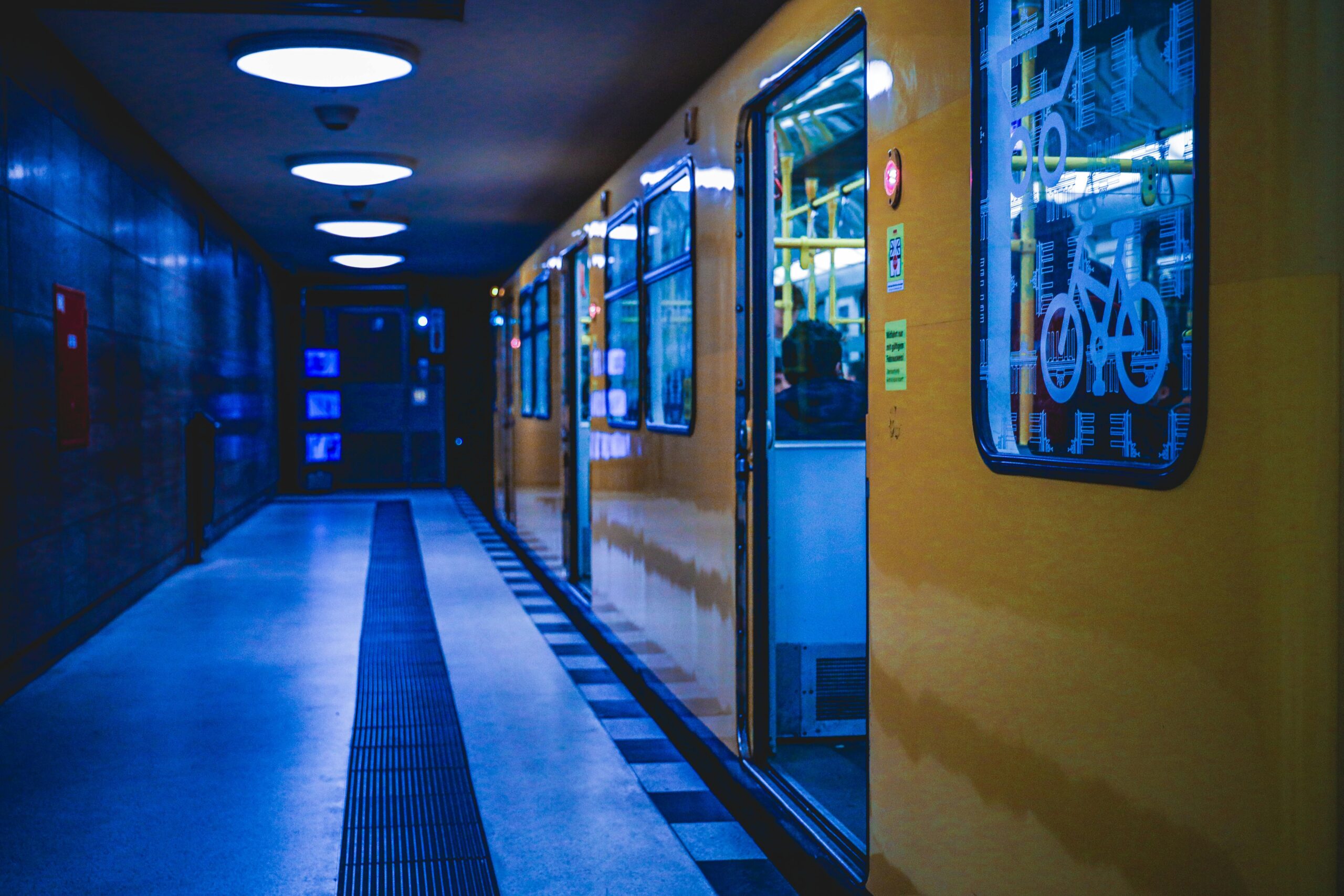
Berlin’s metro system is among the best in Europe — fast, frequent, comprehensive, and remarkably easy to use once you understand its two parallel networks. The U-Bahn (Untergrundbahn, “underground railway”) and S-Bahn (Stadtschnellbahn, “city rapid railway”) together cover virtually every part of the city, with trains running every 3-10 minutes throughout the day and 24-hour service on Friday and Saturday nights. For visitors, this Berlin U-Bahn S-Bahn guide explains everything you need to know: which network does what, how to read the maps, how to buy tickets, and how to use the system efficiently for sightseeing and night travel.
Why this guide? Travelers researching berlin u-bahn s-bahn guide often find conflicting information. This berlin u-bahn s-bahn guide resource is researched and updated by editors who actually live in or visit Berlin regularly. Use this berlin u-bahn s-bahn guide guide as your single reference for trip planning.
If you can navigate London’s Tube or New York’s Subway, you’ll learn the Berlin system in a single afternoon. Most Berlin neighborhoods are within a 5-minute walk of an U- or S-Bahn station, and journeys across the city center rarely take more than 15-20 minutes.
Quick summary: This guide to berlin u-bahn s-bahn guide covers everything you need to know — recommendations, prices, practical tips, and frequently asked questions for 2026.
Berlin U-bahn S-bahn Guide: U-Bahn vs. S-Bahn: What’s the Difference?
Key Takeaways: Berlin U-bahn S-bahn Guide
- This berlin u-bahn s-bahn guide guide is updated for 2026 with current prices and availability.
- For most travelers, the recommendations in this berlin u-bahn s-bahn guide article apply year-round.
- Bookmark this berlin u-bahn s-bahn guide resource for trip-planning reference.
Berlin has two parallel rapid transit networks, run by different operators but sharing the same ticketing system.
The U-Bahn
The U-Bahn is Berlin’s metro: 9 lines (U1-U9), 175 stations, mostly underground, operated by BVG (Berliner Verkehrsbetriebe — the city’s transport authority). The U-Bahn covers the inner city densely, with most lines crossing the central districts of Mitte, Kreuzberg, Charlottenburg, and Prenzlauer Berg. Trains are yellow-and-white, generally smaller than S-Bahn trains, and operate at higher frequency in central areas.
The U-Bahn map is color-coded by line:
- U1 (yellow): Warschauer Strasse – Uhlandstrasse (East-West through Kreuzberg)
- U2 (red): Pankow – Ruhleben (North-South-West, runs through Mitte and Charlottenburg)
- U3 (turquoise): Warschauer Strasse – Krumme Lanke (Branch off U1)
- U4 (yellow): Innsbrucker Platz – Nollendorfplatz (Short Schöneberg line)
- U5 (brown): Hauptbahnhof – Hönow (East-West through Mitte and Friedrichshain)
- U6 (purple): Alt-Tegel – Alt-Mariendorf (North-South through Mitte and Kreuzberg)
- U7 (light blue): Rudow – Rathaus Spandau (Diagonal across the city)
- U8 (dark blue): Wittenau – Hermannstrasse (North-South through central neighborhoods)
- U9 (orange): Osloer Strasse – Rathaus Steglitz (North-South through West Berlin)
The S-Bahn
The S-Bahn is Berlin’s commuter rail: 16 lines (S1-S46, with gaps in numbering), 168 stations, mostly above ground, operated by S-Bahn Berlin (a subsidiary of Deutsche Bahn). The S-Bahn covers a larger area than the U-Bahn, extending well beyond the city limits into the surrounding Brandenburg region. Trains are red-and-yellow with the distinctive S logo.
The most important S-Bahn line for tourists is the Ringbahn (S41/S42) — the iconic ring line that circles central Berlin and intersects with most other S- and U-Bahn lines. The Ringbahn is essentially Berlin’s metro circle line, and it defines the boundary between fare zones A and B.
Other key S-Bahn lines:
- S1, S2, S25, S26: North-South through the city center via Friedrichstrasse and Brandenburger Tor
- S3, S5, S7, S9: East-West through the city center via Hauptbahnhof, Friedrichstrasse, and Alexanderplatz
- S8, S85: North-South in the eastern districts
- S9: Connects to BER airport from central Berlin
Berlin’s Fare Zones: A, B, and C
Berlin’s transit network uses three fare zones:
- Zone A: The inner city inside the S-Bahn ring (Ringbahn). Includes Mitte, Friedrichshain, Kreuzberg, central Charlottenburg, central Prenzlauer Berg, and most of the major sights.
- Zone B: The outer city, from the Ringbahn to the city limits. Includes Tegel, Spandau, Köpenick, and outer Charlottenburg.
- Zone C: Beyond Berlin’s city limits, into Brandenburg. Most importantly, Zone C includes BER Airport and Potsdam.
For sightseeing within Berlin, an AB ticket is sufficient. For trips to BER airport or Potsdam, you’ll need an ABC ticket. There’s no benefit to buying just a B ticket unless you’re commuting between two outer locations.
Berlin Transit Tickets: What to Buy
Frequently Searched: Berlin U-bahn S-bahn Guide
People searching for berlin u-bahn s-bahn guide typically also look for related neighborhood guides, pricing breakdowns, and seasonal recommendations. The sections above and below cover the most common berlin u-bahn s-bahn guide questions in detail. For ongoing updates to this berlin u-bahn s-bahn guide guide, bookmark this page.
Single Tickets (Einzelfahrausweis)
- AB: €3.80 (regular), €2.50 (reduced)
- BC: €4.20 (regular), €3.00 (reduced)
- ABC: €4.70 (regular), €3.40 (reduced)
Valid for 2 hours, one direction (no round trips). Best for occasional rides — break-even with a day pass at 3+ rides.
Short Trip Ticket (Kurzstrecke) — €2.50
Valid for up to 3 U/S-Bahn stations or 6 bus/tram stops. Useful for very short journeys but easy to forget about; tourists rarely benefit.
Day Tickets (24-Stunden-Karte)
- AB: €10.60
- BC: €11.00
- ABC: €12.30
Valid 24 hours from validation. The break-even with single tickets is approximately 3 single trips. Best for typical sightseeing days.
7-Day Pass (7-Tage-Karte)
- AB: €43.50
- BC: €44.10
- ABC: €50.50
Valid 7 consecutive days from validation. Best for week-long stays. Equivalent to 4 day tickets — break-even is approximately 4 days of usage.
Berlin WelcomeCard
The most popular tourist option, combining transit with discounts at over 200 attractions and partners (typically 25-50% off). Available in 48-hour, 72-hour, 4-, 5-, and 6-day variants for either AB or ABC zones.
- WelcomeCard AB 48h: €27.00
- WelcomeCard AB 72h: €38.00
- WelcomeCard AB 4-day: €43.00
- WelcomeCard AB 5-day: €49.00
- WelcomeCard AB 6-day: €54.00
- WelcomeCard ABC 48h: €33.00
- WelcomeCard ABC 72h: €43.00
The WelcomeCard makes sense if you’ll use 3+ partner discounts during your trip. See our Berlin Welcome Card vs Museum Pass guide for the full comparison.
Berlin CityTourCard
Similar to the WelcomeCard but slightly cheaper, with around 30 partner discounts (vs 200 for WelcomeCard). Better value if you only need transit and a few discounts.
Special Tickets
- Day Group Ticket (5 people): AB €31.00. Excellent value for groups.
- Bicycle ticket: €2.50 single (required to take bikes on most U/S-Bahn outside rush hours)
- Children under 6: Free
- Children 6-14: Reduced (Ermässigt) tickets — about 60% of regular price
How to Buy Tickets
BVG App (Best Option for Most Travelers)
The BVG (or BVG Tickets/BVG Fahrinfo) app is the easiest way to buy tickets. Download before your trip, register with credit card or PayPal, and tickets activate automatically when you select the journey time. You can buy single tickets, day passes, week passes, and Welcome Cards. Tickets display as QR codes that you show on demand to inspectors.
Yellow Vending Machines
Found at every U-Bahn and S-Bahn station, with English language settings. Accept cash and most credit cards. Print paper tickets that you must validate in the small yellow or red boxes on the platform before boarding (failure to validate = same penalty as not having a ticket).
BVG Service Centers
Located at major stations (Alexanderplatz, Hauptbahnhof, Zoologischer Garten). Useful for complex purchases or if you have questions.
Bus Drivers
You can buy single tickets from bus drivers (cash only, no day passes).
Tram Driver Cabin
Same as buses — cash only single tickets.
Validating Your Ticket
This is the rule visitors most often miss: paper tickets bought from a vending machine must be validated in the small yellow or red boxes on the platform before boarding. The box stamps the date and time on your ticket. App tickets activate automatically and don’t need validation. Tickets bought from bus or tram drivers are validated at purchase.
Failure to validate is treated identically to fare evasion — the inspector will issue a €60 fine. Inspectors are plain-clothed and unpredictable; expect 1-2 random checks per week of regular travel.
Hours of Operation
- Weekday daytime: Trains every 3-10 minutes from approximately 4:30am
- Weekday late night (Mon-Thu): Service ends approximately 12:30am-1am. Night buses (N1-N97) and night trams (M-prefixed routes) take over.
- Weekends (Fri night through Sun night): 24-hour U-Bahn and S-Bahn service. All major lines run every 15 minutes overnight.
- Public holidays: Sunday schedule typically.
For night transit specifics, see our Berlin night transportation guide.
How to Read the Berlin Transit Map
The official BVG/S-Bahn map combines all U-Bahn, S-Bahn, regional rail, and tram lines on a single map. The visual hierarchy:
- U-Bahn lines: solid colored lines with U1-U9 labels
- S-Bahn lines: solid colored lines with S-prefixed numbers
- Trams (M and 12-86 series): thinner colored lines
- The Ringbahn (S41/S42): the prominent oval ring around central Berlin
- Major interchange stations: shown with white circles intersecting multiple lines
Key central interchange stations to memorize:
- Alexanderplatz: U2, U5, U8, S3, S5, S7, S9, plus tram and regional lines. Berlin’s central transit hub.
- Hauptbahnhof: U5, S3, S5, S7, S9, plus tram, bus, and all long-distance trains. Berlin’s main station.
- Friedrichstrasse: U6, S1, S2, S3, S5, S7, S9. Short walk to Brandenburg Gate.
- Potsdamer Platz: U2, S1, S2, S25, S26.
- Zoologischer Garten: U2, U9, S3, S5, S7, S9, plus regional. West Berlin’s central hub.
- Warschauer Strasse: U1, U3, S3, S5, S7, S9, plus tram. Friedrichshain-Kreuzberg border, key for nightlife.
- Ostkreuz: S3, S5, S7, S9, S41, S42, S8, S85. Major eastern interchange — important for BER airport routes.
Common Tourist Routes
From Mitte to the Major Sights
- Brandenburg Gate ↔ Alexanderplatz: U5 (5 min) or S5/S7 (4 min)
- Hauptbahnhof ↔ Brandenburg Gate: U5 (3 min) or walking (10 min)
- Alexanderplatz ↔ Museum Island: 5 min walk, no transit needed
- Brandenburg Gate ↔ Reichstag: 5 min walk
Crossing the City
- Charlottenburg ↔ Friedrichshain: U2 from Wittenbergplatz to Warschauer Strasse (~25 min)
- Mitte ↔ Kreuzberg (Schlesisches Tor): U1 from Friedrichstrasse via Stadtmitte/Hallesches Tor (~15 min)
- Prenzlauer Berg ↔ Kreuzberg: M1 tram south to Hackescher Markt, U1 east to Schlesisches Tor (~25 min)
To BER Airport
- Hauptbahnhof: FEX express train (23 min direct)
- From central Mitte: S9 (45-55 min)
- From Friedrichshain: S9 or S45 from Ostkreuz (35-45 min)
See our complete BER Airport to city center guide.
Etiquette and Tips
On the Train
- Stand on the right of escalators; walk on the left.
- Don’t eat strong-smelling food on the train.
- Pre-board moves: wait for passengers to exit before boarding.
- Backpacks come off in crowded trains.
- Watch the doors close — they don’t reopen for late-comers like in some other systems.
- Bicycles need their own ticket and aren’t allowed in rush hours (Mon-Fri 6-9am, 2-5pm) on the U-Bahn.
Safety
Berlin’s transit is generally safe at all hours. Pickpocketing happens occasionally on busy tourist routes (around Brandenburger Tor S-Bahn, Alexanderplatz, Friedrichstrasse). Keep valuables in front pockets or zipped bags. The U8 line through Kottbusser Tor and Schönleinstrasse can have a slightly rougher atmosphere late at night but isn’t dangerous.
Accessibility
Approximately 90% of Berlin’s S-Bahn stations and 80% of U-Bahn stations have step-free access (elevators or ramps). The BVG website has an accessible station finder. See our Berlin accessible transportation guide for detail.
Beyond U/S-Bahn: Other Transit Options
Trams (Strassenbahn)
Berlin’s tram network operates primarily in the eastern districts (a legacy of the GDR era). The MetroTram lines (M1, M2, M4, M5, M6, M8, M10, M13, M17) run frequently and often supplement U-Bahn coverage. The M10 is particularly useful, connecting Hauptbahnhof to Friedrichshain via Prenzlauer Berg.
Buses
Buses fill in gaps in the U/S-Bahn network. The 100, 200, and 300 routes (the “Berlin sightseeing buses”) deliberately pass major tourist sights and are essentially free sightseeing tours with a regular ticket. The 100 runs from Zoologischer Garten via Tiergarten, Brandenburg Gate, and the Reichstag to Alexanderplatz.
Regional Trains (RE, RB)
For trips beyond Berlin (Potsdam, Brandenburg, the Spreewald, Dresden), regional trains depart from Hauptbahnhof and Ostbahnhof. A standard ABC transit ticket covers regional trains within Berlin’s limits.
Ferries
BVG operates 6 ferry routes, mostly in the Wannsee and Köpenick lake areas. Routes F10 (Wannsee), F11 (Spandau), F12 (Berlin-Mitte), and F23 (Köpenick) operate as part of the regular transit network — your AB or ABC ticket includes ferry travel.
Common Mistakes to Avoid
- Forgetting to validate paper tickets. €60 fine.
- Buying an AB ticket for the airport. BER is in Zone C — you need ABC.
- Confusing U2 (red) with S2 (green). They’re different lines on different operators.
- Boarding the wrong direction. Berlin S- and U-Bahn platforms list end stations, not directions — check the destination on the front of the train.
- Riding without a ticket because “the bus driver didn’t check.” Inspectors do check.
Frequently Asked Questions
How much does Berlin public transport cost per day?
An AB day pass costs €10.60. For most tourist days (3+ rides), this is the best value. For week-long stays, the 7-day AB pass at €43.50 is more cost-effective than 7 day passes.
Do I need to validate my ticket every time I ride?
Paper tickets must be validated once at the start of the ticket’s validity period (single ticket = before boarding the first train; day pass = at first activation). After that, the timestamp on the ticket controls validity. App tickets validate themselves automatically.
Is the U-Bahn or S-Bahn faster?
The S-Bahn is generally faster for longer distances (fewer stops, longer station spacing). The U-Bahn is faster for short hops in the central districts where stations are closer together. For trips of 5+ km across the city, the S-Bahn usually wins.
What’s the BVG app and should I download it?
BVG Fahrinfo is the official transit planner; BVG Tickets is the official ticket purchase app. Both are free, in English, and significantly easier than dealing with vending machines. Download both before your trip.
Is Berlin transit safe at night?
Generally yes. Trains and stations are well-lit and have CCTV. Some stations (Kottbusser Tor, parts of Alexanderplatz late at night) can attract more activity but aren’t dangerous to passengers in a meaningful way. Travel in pairs after 3am if it makes you more comfortable.
How do I get from BER airport to my hotel?
Most travelers use the FEX (Airport Express) to Hauptbahnhof (23 min, €4.70 ABC ticket), then transfer to U-Bahn or S-Bahn. The S9 line goes directly to central Berlin (45-55 min) without a transfer. Taxi is €45-€65 and takes 30-50 minutes depending on traffic. See our BER airport guide.
Is the Berlin WelcomeCard worth it?
Yes if you’ll use 3+ partner discounts during your stay. The transit-only saving over a 72-hour period is roughly €5-€10, but the partner discounts (museums, attractions, restaurants, tours) add real value if you actively use them. See our WelcomeCard vs Museum Pass guide.
Can I take a bike on the U-Bahn or S-Bahn?
Yes, with a bicycle ticket (€2.50 single). Not allowed during weekday rush hours (6-9am, 2-5pm) on the U-Bahn. Always allowed on the S-Bahn.
What’s the busiest time on the U-Bahn?
Weekday rush hours, particularly 7-9am and 4-6pm. Trains are still frequent, but expect crowded carriages on central lines. Mid-morning, mid-afternoon, and weekends are noticeably calmer.
Quick Reference Summary: Berlin U-bahn S-bahn Guide
The complete berlin u-bahn s-bahn guide information above can be summarised as follows: prices vary by season and area, booking 6-10 weeks ahead is best for peak periods, and the right berlin u-bahn s-bahn guide choice depends on your trip type. Refer back to the relevant section above for detailed berlin u-bahn s-bahn guide recommendations.
Final Verdict
Berlin’s U-Bahn and S-Bahn together form one of Europe’s best urban transit systems — fast, frequent, comprehensive, and genuinely easy to use once you understand the basics. Buy a day or week pass through the BVG app, learn the major interchange stations, and you’ll have the city at your fingertips for €10-€44 depending on length of stay. For most travelers, transit (not taxis or rideshares) is the best way to navigate Berlin.
For more transit detail, see our Berlin transportation guide, BVG tickets and passes guide, and BER airport guide.
External Resources
For additional, authoritative information on berlin u-bahn s-bahn guide, the following official and trusted sources are useful: