Jewish Museum Berlin: Libeskind Building Guide (2026)
Daniel Libeskind's zigzag masterpiece in Kreuzberg — voids, axes and the Holocaust Tower. 2026 hours, free core exhibition, and how to plan four hours.
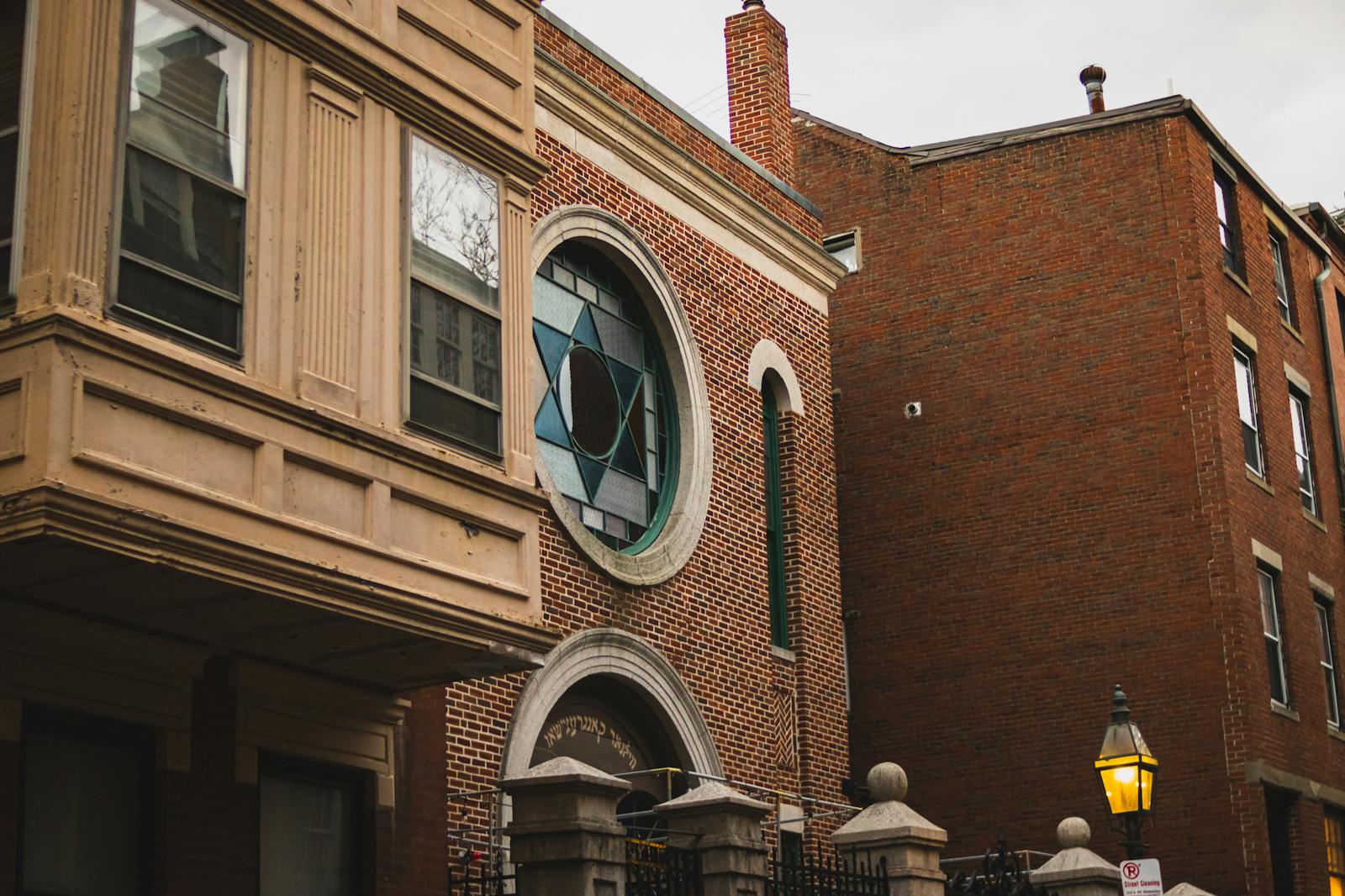
The most important exhibit at the Jewish Museum Berlin is the building itself. Daniel Libeskind’s 2001 zinc-clad zigzag on Lindenstrasse in Kreuzberg is one of the most discussed pieces of post-war architecture in the world, and visitors who arrive expecting a conventional museum often leave saying the same thing: they understood the architecture before they understood the exhibitions. This is by design. 2026 marks the twenty-fifth anniversary of the Libeskind building’s opening, and the museum has timed a major exhibition (“Between the Lines: Daniel Libeskind and the Jewish Museum Berlin,” 8 May – 1 November 2026) to celebrate the building itself. If you’re visiting Berlin this year, this is the museum to plan around.
Quick orientation. Address: Lindenstrasse 9–14, 10969 Berlin (Kreuzberg). Hours: Tuesday–Sunday 10:00–19:00, closed Monday. Core permanent exhibition: free since the 2020 reopening — Berlin’s most underrated free cultural offering. Temporary exhibitions: €10 / €4 reduced. Under 18 free. ANOHA children’s museum next door (separate ticket, see below). Allow three to four hours minimum. Airport-style security at entry; bring photo ID.
Why the Libeskind Building Is the Most Important Exhibit
Daniel Libeskind, born in Łódź in 1946 to Polish-Jewish Holocaust survivors, won the international design competition for the museum’s new wing in 1989, beating 188 other entries. The Jewish Museum Berlin was his first realised building — he was 43 and had never before built a building. The design, called “Between the Lines,” is built on two organising principles: a visible zigzag line that traces the building’s footprint and an invisible straight line that cuts across it. Where the two lines intersect, the building leaves a void — a deliberately empty concrete shaft that runs from the basement to the roof. There are five of these voids. They are the museum’s most radical idea.
Libeskind drew on four sources for the design. First, the addresses of significant Jewish Berliners — Paul Celan, Max Liebermann, Heinrich von Kleist, Rahel Varnhagen, Hegel — mapped onto the urban grid and overlaid on the museum’s site to generate the zigzag. Second, the unfinished structure of Arnold Schönberg’s opera Moses und Aron, which ends abruptly mid-act and was never completed. Third, the Bundesarchiv’s Memorial Book listing every German Jewish victim of the Holocaust by name. Fourth, Walter Benjamin’s One-Way Street, the fragmented modernist text that the building’s path quietly evokes. The result is a building that you experience as architecture but that’s also a coded archive of the lives it commemorates.
The Three Axes
You enter the Libeskind building from the underground passage connecting it to the older Baroque Kollegienhaus — the original 1735 visitor centre. Once inside the new building’s basement, three intersecting corridors run away from you in different directions, sloping at slightly different angles, lit only at the ends. These are the three Axes — Libeskind’s mapping of the three trajectories of German-Jewish life in the twentieth century.
- Axis of Exile — leads outdoors into the Garden of Exile.
- Axis of the Holocaust — leads to the Holocaust Tower.
- Axis of Continuity — leads to an 82-step staircase that takes you up to the main exhibition.
Take all three. The choice of which axis to enter first is yours, but the architecture is built to be experienced as a sequence, and most visitors instinctively go to the Holocaust Tower last because of its weight.
The Holocaust Tower
One of the most physically affecting interior spaces I have ever stood in. The Holocaust Tower is a 24-metre unheated concrete shaft, accessible only by a single heavy door at the end of the Axis of the Holocaust. You step in, the door closes behind you, and you find yourself in a tall narrow silo lit only by a slit of daylight at the very top. The temperature drops several degrees. The sound from the corridor outside is almost completely muffled. You can hear traffic faintly. You can hear the heating system of the building, distantly. There is nothing else. Most visitors stay for two or three minutes. Don’t talk inside. Don’t take photographs (the no-flash rule is respected here as a matter of decency). Just stand and listen.
The Garden of Exile
The outdoor section at the end of the Axis of Exile. Forty-nine concrete stelae rise from a tilted ground plane in a seven-by-seven grid, each topped with an olive tree planted out of reach. Forty-eight contain Berlin soil; the central one contains soil from Jerusalem. Walking through the slanted garden is physically disorienting — Libeskind’s intention, evoking the displacement of exile. The geometry is also a deliberate echo of Peter Eisenman’s later Memorial to the Murdered Jews of Europe near the Brandenburg Gate, though Libeskind’s garden predates Eisenman’s design by several years.
The Memory Void and Shalekhet
Of the five voids cut into the building, only one is enterable: the Memory Void. Inside it is Menashe Kadishman’s installation Shalekhet (Fallen Leaves), completed in 1997, which fills the floor with ten thousand circular iron faces, each unique, each with eyes and mouth cut out. The faces are dedicated to all victims of violence and war, not only to Jewish victims. Visitors walk across them. The metal clangs underfoot as the faces shift slightly with each step. The sound — and the experience of physically stepping on the faces — is the work. Most visitors find the Memory Void the single most affecting moment in the museum.
The Core Exhibition
The permanent exhibition, “Jewish Life in Germany: Past and Present,” reopened on August 23, 2020 after two years of redesign and now covers 3,500 m² across 13 chapters and 8 thematic rooms. It traces two millennia of German-Jewish history from medieval Ashkenaz (the early settlements in Speyer, Worms, and Mainz) through Moses Mendelssohn and the Enlightenment, the emancipation era, the rise of antisemitism, the golden 1920s in Berlin, the Shoah, the postwar Displaced Persons camps, and the post-1990 wave of Russian-speaking Jewish immigration that has reshaped contemporary German-Jewish life.
The 2020 redesign was controversial. The previous installation, in place from 2001 to 2018, was more chronological and more conventional. The new design centres Jewish first-person voices, uses fewer object-led displays, and ends with a video installation, Mesubin (The Gathered), in which contemporary German Jews speak about their lives. Some critics felt the shift made the museum less historically rigorous; others praised the move from museum-of-victims to museum-of-living-community. I find the new exhibition more intellectually honest about the museum’s purpose. Allow at least 90 minutes for the core exhibition alone.
For the wider Jewish history landscape across Berlin — the synagogues, memorials, cemeteries, and the active community today — see our Jewish history in Berlin guide.
The Old Building and the Glass Courtyard
The 1735 Kollegienhaus next to the Libeskind building is the entry point — the only surviving Baroque structure in historic Friedrichstadt, originally the Royal Court of Justice. It now houses ticketing, the main museum shop, and temporary exhibition spaces. The 2007 Glass Courtyard between the two buildings is itself a Libeskind design — a sukkah-inspired roof of steel “branches” enclosing a covered courtyard used for events. The new Libeskind café and the connections between the two main buildings all radiate from here.
Temporary Exhibitions in 2026
- Between the Lines: Daniel Libeskind and the Jewish Museum Berlin — 8 May to 1 November 2026. Free admission. The major anniversary exhibition celebrating the building’s 25th year, with drawings, models, and the design process documented.
- The Opposite of Now: Artistic Paths to a Different Present — 4 September 2026 to 10 January 2027. Contemporary artists responding to the museum’s collections.
ANOHA: The Children’s World
Fromet-und-Moses-Mendelssohn-Platz 1 (entrance on Enckestrasse) · Tue–Fri 9:00–16:00 (last entry 14:45), Sat/Sun/holidays 10:00–17:00 · €7 adult, kids 3–7 free, 8–17 €5.
Across the street from the main museum, ANOHA is the children’s museum opened in June 2021 inside the former wholesale flower market. Architect Olson Kundig designed an enormous wooden Noah’s Ark inside the hall — climbable, walkable, populated with 150 recycled-material animal sculptures. Aimed at ages 3 to 10 (officially 3 to 12). One of the best children’s museums in Berlin, full stop. Note the relatively new €3 non-refundable online booking fee per basket (free at the on-site ticket counter). For other family options, see our museums for kids guide.
A Suggested Four-Hour Itinerary
- 00:00 — Security at the Kollegienhaus entrance. Pick up the free audio guide app on your phone (it’s the JMB App, available in German, English, French, Italian, Spanish, Hebrew, Russian, plus German plain-language and German Sign Language).
- 00:20 — Descend to the basement and walk the three Axes.
- 00:45 — Holocaust Tower. Sit inside for two full minutes.
- 01:00 — Garden of Exile. Walk to the centre.
- 01:30 — Memory Void and Shalekhet.
- 02:00 — Take the 82-step Axis of Continuity staircase up to the core exhibition.
- 02:00–03:30 — Core exhibition (90 minutes minimum).
- 03:30 — Temporary exhibition in the Old Building.
- 03:50 — Café and garden, weather permitting.
Practical Visit Details
- Audio guide: the JMB App is free; download before arrival. Multiple languages plus accessibility tracks.
- Security: airport-style screening at the Kollegienhaus entrance. Photo ID required.
- WiFi: free in the museum (Telekom hotspot, 3 hours).
- Wheelchair access: fully accessible throughout.
- Photography: permitted for personal use without flash or tripod in most spaces. House rules apply to specific exhibits.
- Cloakroom: mandatory for large bags. Free.
- Café: Shalom’chen Berlin, vegetarian/vegan Israeli cuisine, Tue–Sun 10:00–17:00, hot meals 12:00–16:00. Card only.
- Museum Pass Berlin: €32 for 3 days, includes the temporary exhibitions here.
- Berlin Welcome Card: 25% off temporary exhibition tickets.
- 2026 closures: Mondays (except Whit Monday 25 May), Rosh Hashanah 12–13 September, Yom Kippur 21 September, 14 November (an award ceremony), 24 December.
How to Get There
- U-Bahn: U1, U3, or U6 to Hallesches Tor (5 minutes’ walk). U6 to Kochstrasse (8 minutes).
- Bus: 248 stops directly at “Jüdisches Museum.” M29 and M41 stop nearby.
- Walking: 10 minutes from Checkpoint Charlie or the Topography of Terror — natural pair-ups for a half-day of historical sites.
The Pre-Libeskind Museum and Its History
One piece of history almost no first-time visitor knows. There was a Jewish Museum in Berlin long before Libeskind’s building opened in 2001. The original Jüdisches Museum Berlin was founded on January 24, 1933 — just six days before Hitler came to power — in a building next to the New Synagogue on Oranienburger Strasse. It opened to the public on January 24 with works by Max Liebermann and other Jewish artists. The Nazis closed it on November 10, 1938, the morning after Kristallnacht; the Gestapo confiscated its collection. The museum did not exist again until 1971, when it was refounded as the Jewish Museum Department of the Berlin Museum at a much smaller scale. The current institution — the Jewish Museum Berlin Foundation — was established as an independent legal entity only in 2001, with the opening of the Libeskind building.
The 1933–1938 museum was, at the time, one of the largest Jewish museums in Europe. Knowing that the present institution stands in a kind of unbroken line back to that doomed 1933 founding adds an extra dimension to the visit. The first director of the post-2001 museum, W. Michael Blumenthal — born in Berlin in 1926, fled Germany as a child, served as US Treasury Secretary under Jimmy Carter, returned to direct the museum — built the institution we visit today.
The W. Michael Blumenthal Academy
Across Lindenstrasse from the main museum, in another Libeskind-designed building (his “In-Between Spaces” — three angular concrete cubes embedded in the former flower-market hall), is the W. Michael Blumenthal Academy. This is where the museum’s library, archive, education centre, and the Leo Baeck Institute Berlin branch live. The reading room is open Tuesday and Wednesday 10:00–17:00, Thursday and Friday 12:00–17:00, and is free for anyone with research interests. The Diaspora Garden installation inside is a quietly remarkable indoor planting that’s worth seeing even without a research reason to visit.
Pair With Other Memorial Sites
A good way to plan an extended day. The Jewish Museum is ten minutes’ walk from Checkpoint Charlie and from the Topography of Terror, both of which sit on the boundary between Kreuzberg and Mitte. The Memorial to the Murdered Jews of Europe (Holocaust Memorial) is fifteen minutes’ walk further north near the Brandenburg Gate — the natural pairing for the museum, since both are by major contemporary architects engaging the same subject (Eisenman’s stelae vs. Libeskind’s voids). A full memorial-focused day in Berlin could chain Topography of Terror → Jewish Museum → Memorial to the Murdered Jews of Europe over six or seven hours.
Frequently Asked Questions
Is the Jewish Museum Berlin free?
The core permanent exhibition is free since the 2020 reopening. Temporary exhibitions cost €10 / €4 reduced. Under 18 is always free.
How long do you need at the Jewish Museum Berlin?
Three to four hours minimum. A full day if you include ANOHA next door and the temporary exhibitions in the Old Building.
Is the Jewish Museum suitable for children?
The main core exhibition is recommended for ages 10 and up. Younger children should visit ANOHA, the children’s museum next door, designed for ages 3–10.
Is photography allowed at the Jewish Museum?
Yes, for personal use without flash or tripod in most spaces. House rules restrict photography in specific exhibits. The Holocaust Tower is by convention photo-free.
What is the Holocaust Tower?
A 24-metre unheated concrete shaft accessible only by a heavy door at the end of the Axis of the Holocaust. Lit only by a slit of daylight at the top. One of the most physically affecting interior spaces in any contemporary building.
What is the Memory Void?
The only one of the five voids in the Libeskind building that visitors can enter. It houses Menashe Kadishman’s installation Shalekhet (Fallen Leaves), a floor covered in 10,000 iron faces. Walking on the faces, which clang as they shift, is part of the work.
Who designed the Jewish Museum Berlin?
Daniel Libeskind, born Łódź 1946. The Berlin building was his first realised commission. He won the international competition in 1989 against 188 other entries.
Where is the Jewish Museum Berlin?
Lindenstrasse 9–14, 10969 Berlin, in Kreuzberg. Five minutes’ walk from U-Bahn Hallesches Tor.
Final Word
The Jewish Museum Berlin is one of the most important museum buildings in the world and one of the most important museums in Germany. The free core exhibition since 2020 makes it one of Berlin’s best-value cultural offerings. The 2026 twenty-fifth anniversary year is a particularly good time to visit — the “Between the Lines” exhibition in the Old Building puts the building itself at the centre of the visitor experience, which is where it has always belonged.
Read companions: our Jewish history in Berlin guide for the wider citywide context, our Nazi history in Berlin guide for the related history sites, our Checkpoint Charlie guide for the natural pair-up just up the road, and our museums for kids guide if you’re planning a visit with ANOHA included.