Hamburger Bahnhof Berlin: Contemporary Art Museum Guide (2026)
Germany's most important contemporary art museum — Joseph Beuys, the Marx Collection, the 2022 federal acquisition story, and the 2026 thirtieth-anniversary programme.
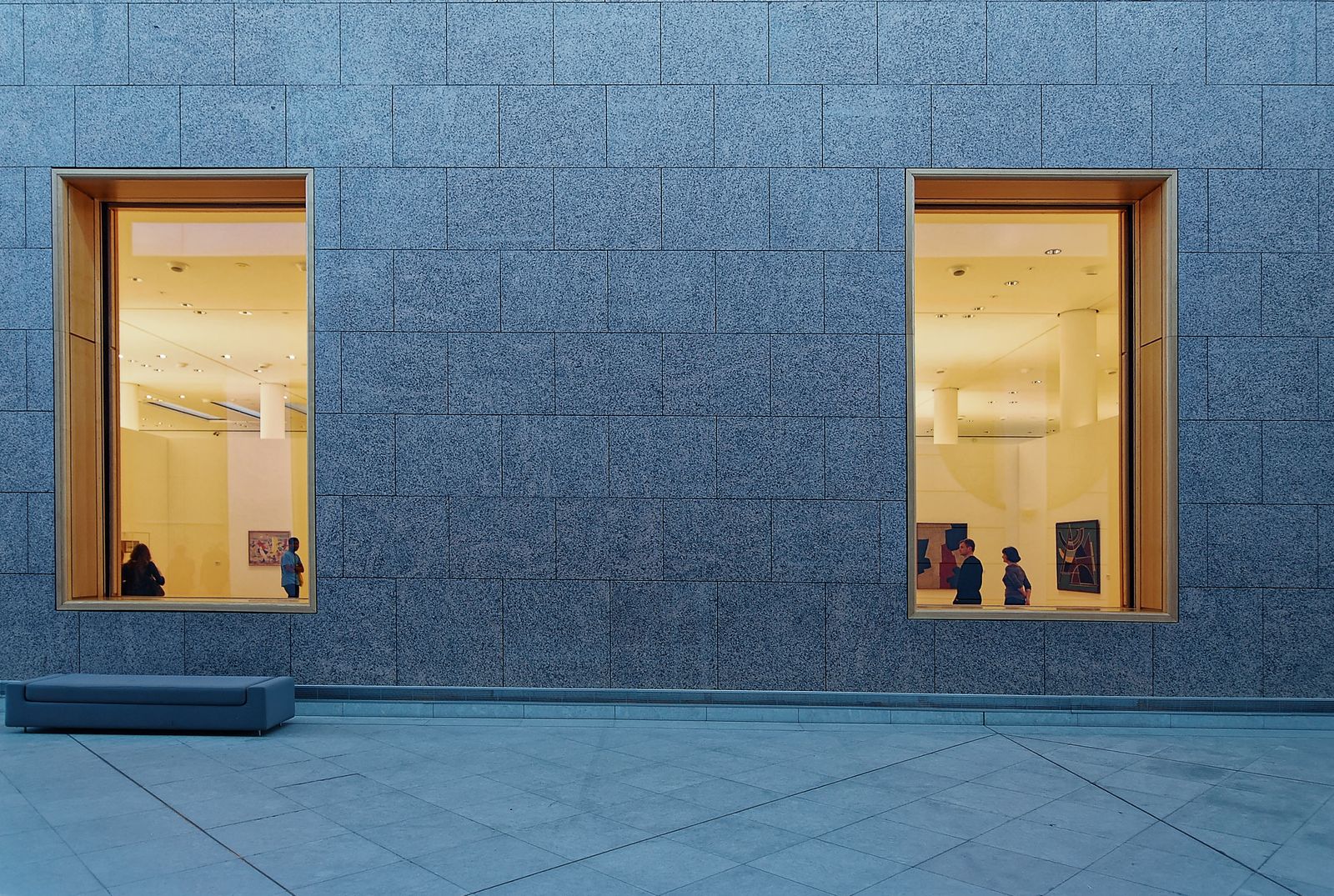
The Hamburger Bahnhof — full name Hamburger Bahnhof – Nationalgalerie der Gegenwart — is the most important contemporary art museum in Germany and one of the most important in continental Europe. The building is a converted nineteenth-century railway terminus, the only surviving major terminus station in Berlin. The collection holds one of the world’s most important concentrations of Joseph Beuys, plus Andy Warhol, Anselm Kiefer, Cy Twombly, Robert Rauschenberg, Bruce Nauman, and Roy Lichtenstein. The museum celebrated its thirtieth anniversary in 2026 with a substantial anniversary programme. If you have one day in Berlin for contemporary art, this is the museum. If you have a museum-heavy week, this is still the museum that defines what serious post-war collecting looks like in Germany.
Quick orientation. Address: Invalidenstrasse 50–51, 10557 Berlin (the Moabit/Mitte boundary, near Hauptbahnhof). Hours: Tuesday 10:00–18:00, Wednesday 10:00–18:00, Thursday 10:00–20:00, Friday 10:00–18:00, Saturday/Sunday 11:00–18:00, closed Monday. Tickets €16 / €8 reduced, under 18 free. Berlin Museum Pass valid. Allow at least 2–3 hours; a serious visit is half a day.
The Building — From Hamburg-Berlin Railway to Art Cathedral
The Hamburger Bahnhof opened in 1846 as the Berlin terminus of the Berlin-Hamburg Railway, designed by Friedrich Neuhaus in late neoclassical style. It’s the only nineteenth-century terminus building surviving in Berlin — the other great Berlin termini (Anhalter Bahnhof, Stettiner Bahnhof, Lehrter Bahnhof) were all destroyed in WWII or demolished afterwards. Hamburger Bahnhof closed as a working station in 1884 when traffic shifted to other lines, and the building was repurposed as the Bau- und Verkehrsmuseum (Construction and Transport Museum) in 1906. WWII bombing in 1944 damaged the building badly, and it sat largely dormant from 1945 to the 1980s.
In 1990, the post-reunification German state began planning a major contemporary art museum and identified the Hamburger Bahnhof as the right building. The architect Josef Paul Kleihues led the conversion from 1990 to 1996, restoring the nineteenth-century neoclassical façade and main hall while opening up the side wings into white-cube galleries suitable for contemporary art. The museum opened on November 2, 1996 with a major Sigmar Polke retrospective. The flagship hall — the former central concourse, with its vaulted glass roof — is one of the great contemporary art spaces in any European museum.
The 2022 Turning Point — How Berlin Saved the Museum
The most important recent chapter in the museum’s history is one almost no tourist guide explains. In 2004 the museum added the Rieckhallen — a 1,800 m² annex of contemporary halls in a former forwarding depot adjacent to the main building, built specifically to house the Friedrich Christian Flick Collection, a 1,500-work contemporary art loan from Flick that gave the museum its international reputation through the 2000s and 2010s.
In 2020, the property owner CA Immo announced plans to demolish the Rieckhallen for redevelopment. Flick withdrew his collection in 2021, sending most of it to the new museum he was establishing in Frankfurt. The Hamburger Bahnhof faced losing its largest contemporary exhibition space. After a major public campaign and political pressure, the German federal government paid €66 million in November 2022 for the Hamburger Bahnhof building and the city of Berlin paid roughly €100 million for the Rieckhallen — €170 million total, one of the largest art-related public acquisitions in recent German history. The museum was officially renamed Hamburger Bahnhof – Nationalgalerie der Gegenwart at the same time, formally elevating it to the federal-level Nationalgalerie family. The Rieckhallen reopened in September 2024 with a major Mark Bradford exhibition.
The narrative matters because it explains how the museum currently positions itself: not a Berlin city museum but the national museum of contemporary art, with a building secured for the public for the foreseeable future.
The Beuys Collection — Why Hamburger Bahnhof Matters Globally
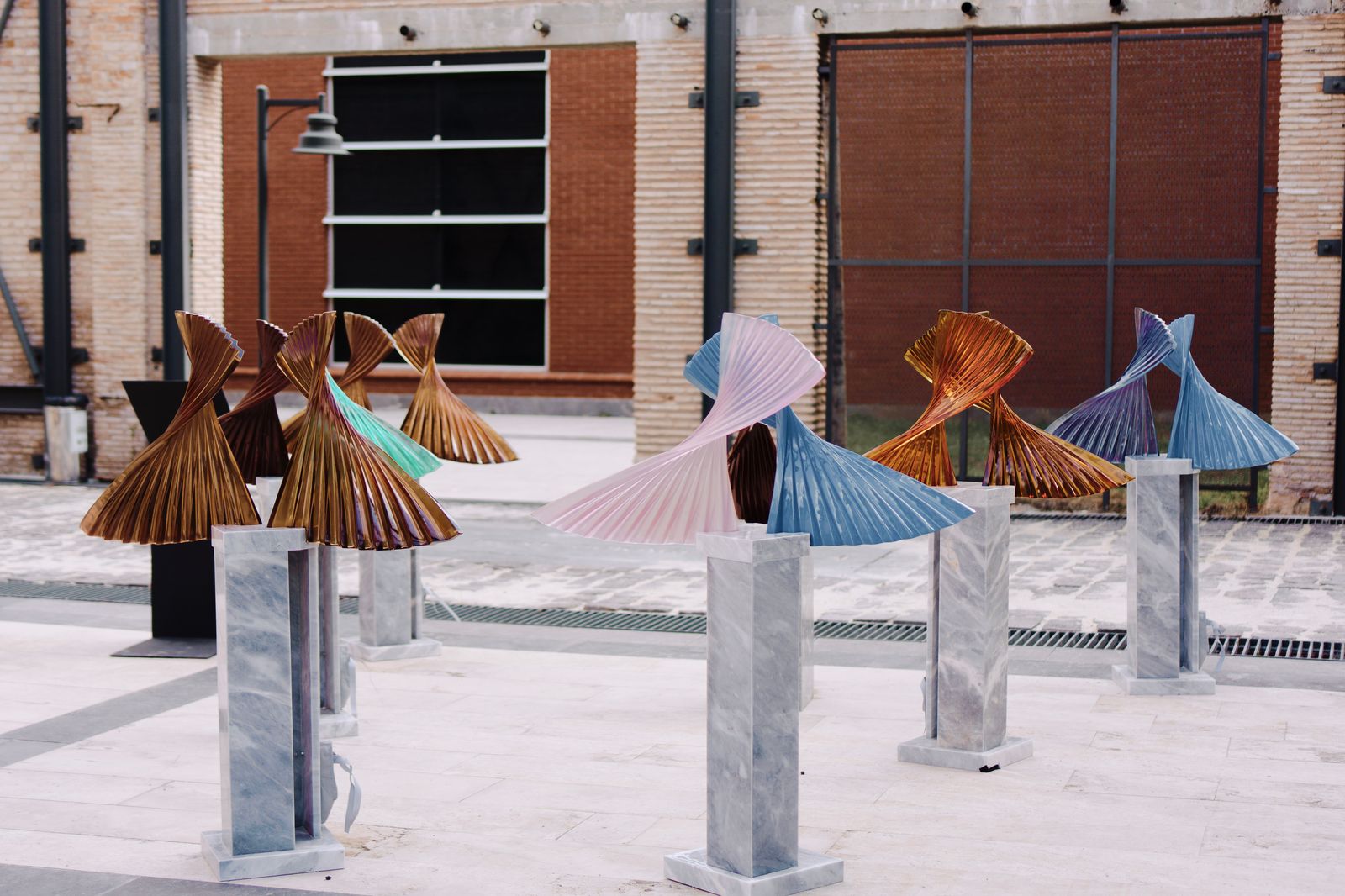
Joseph Beuys (1921–1986) is the most important German artist of the post-war period, and the Hamburger Bahnhof holds one of the world’s three or four most important concentrations of his work — alongside Schloss Moyland in Bedburg-Hau, the Kunsthaus Zürich, and Dia Beacon in New York. Fifteen of his major sculptural environments are installed in the Kleihueshalle, including:
- Das Kapital Raum 1970–1977 — a room-sized installation that anchors the Marx Collection. Blackboards covered in chalk diagrams, copper pots, a piano, a film projector. The room is a thinking-machine.
- Unschlitt / Tallow (1977) — a massive wedge of tallow (animal fat) cast from a damaged urban underpass in Münster, a meditation on social sculpture.
- End of the Twentieth Century — large basalt stones with felt and grease.
- Plight — a felt-padded room with a grand piano, a thermometer, and a blackboard.
- I Like America and America Likes Me — the media archive of Beuys’s famous 1974 performance, in which he spent a week locked in a New York gallery with a wild coyote.
The Marx Collection — Erich Marx’s contemporary art holdings on long-term loan to the museum — provided the donation core that anchored the museum’s founding. Beuys is the centrepiece of the Marx Collection. If you have only ninety minutes at Hamburger Bahnhof, spend them in the Kleihueshalle with Beuys; the parcours is signposted and you can move through it at your own pace.
The Permanent Collection — What Else You’ll See
Beyond Beuys, the permanent collection covers post-WWII contemporary art across European and American practice.
- Andy Warhol — the Mao paintings (the museum’s most-photographed Warhols), the celebrity portraits, the early Pop Art works.
- Robert Rauschenberg — large-format combines and silkscreens, including the major late series.
- Cy Twombly — substantial holdings of his late paintings, including some of the cycles that established him as a senior late-twentieth-century master.
- Anselm Kiefer — enormous canvases on German history, mythology, and the burdens of postwar identity. His scale matches the building’s scale.
- Roy Lichtenstein — major comic-strip-derived paintings.
- Bruce Nauman — neon and video works, including the seminal language pieces.
- Sigmar Polke and Gerhard Richter — major works by the two most important post-war German painters.
- Marzona Collection — Egidio Marzona’s substantial archive of avant-garde and conceptual art from the 1960s and 70s.
- Dan Flavin’s neon installation on the façade of the building — green and yellow fluorescent tubes lighting the front since the museum’s 1996 opening. Briefly switched off in October 2022 during the European energy crisis (a global art-press story at the time), now lit again.
The Rieckhallen — 1,800 m² of Big Art
The Rieckhallen annex, designed by Kuehn Malvezzi and added in 2004, was closed for sixteen months after the Flick Collection’s withdrawal in 2021 and Berlin’s acquisition in 2022. The space reopened in September 2024 with Mark Bradford’s “Keep Walking” — a museum-scale solo show that re-established the Rieckhallen as one of Europe’s premier spaces for large-format contemporary art. Since then it has shown major commissioned works and parts of the collection presentation “Museum in Motion.” The hall is roughly 1,800 m² of open white-cube space — taller and wider than the main museum’s galleries, suitable for the kind of monumental installation that smaller museums can’t accommodate. Plan a visit that includes the Rieckhallen as well as the main building; many visitors walk past it without realising it’s part of the museum.
What’s On in 2026
The 2026 anniversary year programme is unusually strong. Confirmed exhibitions include:
- Joseph Beuys parcours — the permanent Beuys installation, open since April 2024, ongoing through 2026 and beyond.
- Museum in Motion — collection presentation through July 2026.
- A Thousand Times Berlin — major Nationalgalerie collection display opening in June 2026.
- Petrit Halilaj: An Opera Out of Time — September 2025 through May 2026.
- Saâdane Afif: Five Preludes — December 2025 through September 2026.
- Giulia Andreani: Sabotage — February through September 2026.
- Shilpa Gupta: What Still Holds — March 2026 through January 2027.
- CHANEL Commission: Lina Lapelytė, “We Make Years Out of Hours” — May 2026 through January 2027, in the Historic Hall.
Check smb.museum for any additions and for individual exhibition admission notes. Some smaller exhibitions are included with the standard ticket; the major Historic Hall commissions are too.
The Current Directors and the Recent Programming
Worth knowing because the museum’s programming has shifted noticeably in the past few years. The Hamburger Bahnhof is currently directed jointly by Sam Bardaouil and Till Fellrath, the curatorial duo behind the Lyon Biennale 2022 and a series of internationally-praised exhibitions. They took over the museum in 2023 and have built a programme that’s notable for two things: a sustained engagement with non-Western contemporary art (Shilpa Gupta, Petrit Halilaj, Sammy Baloji, Giulia Andreani), and a commitment to large-format Historic Hall commissions that activate the building’s defining space. The thirtieth anniversary 2026 programme — culminating in the CHANEL Commission’s Lina Lapelytė work in the Historic Hall — reflects this curatorial direction.
The shift matters because for much of the 2010s the museum’s programming felt narrower — a strong but predictable rotation of canonical post-war Western contemporary names. The current direction reads as a deliberate broadening of the museum’s frame, with stronger curatorial concepts behind temporary shows than in some past years. Whether you find the work to your taste varies year to year, but the museum’s intellectual posture is at its most confident in 2026.
A Note on the Building’s Position in Berlin
The Hamburger Bahnhof’s neighbourhood is itself worth a paragraph. The museum sits on the Mitte/Moabit boundary on Invalidenstrasse, between the Charité hospital complex to the west and the Naturkundemuseum and Humboldt University Campus North to the east. The area is one of the most underrated cultural clusters in central Berlin: in a fifteen-minute walking radius you have the Tieranatomisches Theater (eighteenth-century anatomy building, occasionally exhibition space), the Bauakademie reconstruction site, Berlin Hauptbahnhof’s modernist architecture, the new government quarter five minutes south, and Invalidenpark with its sculpture programmes. The Moabit side of Invalidenstrasse — the museum’s actual address — is grittier and less restored than the Mitte side, which gives the museum its slightly back-route feel even though it sits adjacent to one of the busiest train stations in the country.
This is also worth knowing for arrival: the museum is much easier to reach than its address might suggest. Walking from Berlin Hauptbahnhof takes five minutes; the trains from anywhere in Germany arrive there, which means you can step off a long-distance train and be in the Beuys parcours within fifteen minutes.
Plan Your Visit
- Address: Invalidenstrasse 50–51, 10557 Berlin.
- Hours: Tue 10:00–18:00, Wed 10:00–18:00, Thu 10:00–20:00, Fri 10:00–18:00, Sat/Sun 11:00–18:00, closed Mon.
- Tickets: €16 / €8 reduced. Under 18 free. €25 annual pass (excellent value if you’ll visit more than once).
- Berlin Museum Pass valid (€32 for 3 days, covers Hamburger Bahnhof plus 30+ others).
- Thursday late opening — the museum stays open until 20:00 on Thursdays. The quietest visit of the week.
- Family ticket: €10 family rate available on family Sundays.
- Audio guide: free, in multiple languages including English, French, Italian, Spanish.
- Photography: permitted in the permanent collection without flash or tripod. Restrictions on some temporary exhibitions — check the signage at the entrance to each space.
- Wheelchair accessible: yes, throughout.
- Cloakroom: free, mandatory for large bags.
- Café/restaurant: Sarah Wiener restaurant on site, open during museum hours.
- Shop: excellent museum shop, particularly strong on contemporary art books and Beuys-related editions.
How to Get There
- Berlin Hauptbahnhof: 5 minutes’ walk north. Probably the easiest arrival from anywhere by train.
- U-Bahn: U5 Naturkundemuseum (5 minutes’ walk) — newest station, the museum is next door to the Natural History Museum.
- S-Bahn: Hauptbahnhof or Friedrichstrasse.
- Tram: M5, M8, M10, M12 to Invalidenpark.
- Bus: 142, 245 to Invalidenpark.
What to Pair It With
- Museum für Naturkunde (5 minutes’ walk) — the natural history museum next door, dinosaurs and the wet collection. See our museums for kids guide if you’re with family.
- Berlin Hauptbahnhof (5 minutes’ walk) — the modernist Norman Foster-era train station is itself an architectural sight.
- Government quarter (15 minutes’ walk south) — Reichstag, Chancellery, Brandenburg Gate. See our Berlin after reunification guide.
- Tieranatomisches Theater at the Humboldt University Campus North (5 minutes’ walk) — small architectural and zoological collection, free, occasional contemporary art exhibitions.
- Schinkel Pavillon (20 minutes by S-Bahn) — small contemporary art space; see our contemporary art museums guide.
The Dan Flavin Façade
One detail worth knowing before you arrive. The exterior of the museum building has been lit since 1996 by Dan Flavin’s untitled neon installation — long green and yellow fluorescent tubes mounted on the columns and main façade of the original 1846 station. The piece is a permanent commission and has become one of the visual signatures of the museum, particularly at dusk when the colours start to read against the surviving neoclassical architecture. In October 2022, in the early months of the European energy crisis after the Russian invasion of Ukraine, the museum temporarily switched off the Flavin tubes for the first time in 26 years. The decision was reported widely in the international art press as a symbolic moment — the city’s most public piece of contemporary art going dark to save power. The tubes are lit again, and the contrast of nineteenth-century railway architecture, 1990s neon, and the wider Mitte skyline behind is one of the better evening photographs in central Berlin. Walk past in the early evening to see it before you go in.
The museum sits on the edge of Moabit, and five minutes’ walk away, behind a brick wall on Invalidenstraße, is one of Berlin’s quietest and most unexpected parks: the Geschichtspark on the site of a nineteenth-century prison where resistance prisoners were held in 1945. Go on to lunch at the Arminius-Markthalle, a restored 1891 market hall a few stops west. Our Wedding and Moabit guide has the route.
Frequently Asked Questions
Is Hamburger Bahnhof worth visiting?
Yes — Germany’s most important contemporary art museum, home to one of the world’s most important Beuys collections, and one of the great post-industrial museum buildings in Europe.
How much does Hamburger Bahnhof cost?
€16 adult, €8 reduced, under 18 free. The €25 annual pass pays off if you visit twice. The €32 Berlin Museum Pass also covers it.
What’s at Hamburger Bahnhof?
The Marx Collection (Joseph Beuys, Andy Warhol, Cy Twombly, Robert Rauschenberg, Anselm Kiefer, Roy Lichtenstein), the Marzona Collection of avant-garde art, the Dan Flavin neon façade, and a rotating program of major contemporary art exhibitions in the Historic Hall and Rieckhallen.
Is photography allowed at Hamburger Bahnhof?
Yes in the permanent collection without flash or tripod. Restrictions on some temporary exhibitions — check the signage at each space.
How long do you need at Hamburger Bahnhof?
2–3 hours minimum. Half a day for a serious visit including the Beuys parcours, the rotating exhibitions, and the Rieckhallen annex.
Is Hamburger Bahnhof a real train station?
It was — the Berlin–Hamburg Railway terminus from 1846 to 1884. It’s the only nineteenth-century terminus building surviving in Berlin. The other great Berlin termini were destroyed in WWII or demolished afterwards.
What happened to the Flick Collection?
The loan ended in 2021 after the Rieckhallen building was threatened with demolition. Flick withdrew most of the collection to his new museum in Frankfurt. Berlin then bought the Rieckhallen for around €100 million in November 2022 and the federal government paid €66 million for the main museum building, securing the institution’s future. The Rieckhallen reopened in September 2024.
Best time to visit Hamburger Bahnhof?
Thursday evening (open until 20:00) for the quietest experience. Weekday mornings are also reliably uncrowded. Family Sundays for the €10 family ticket.
Final Word
The Hamburger Bahnhof in 2026 is at its strongest. The Rieckhallen are back. The federal acquisition has secured the museum’s future. The new co-directors Sam Bardaouil and Till Fellrath have built a programme that’s been critically acclaimed across Europe. The thirtieth anniversary year is a particularly good reason to visit. If you’re choosing one contemporary art museum to spend a half-day in during a Berlin trip, this is the one.
For the wider contemporary scene: our contemporary art museums guide covers the institutional context; our galleries guide covers the commercial side; our Museum Island guide covers the classical complement. For the major historical museum nearby, see our Jewish Museum guide.