Berlin Gallery Scene: 20+ Best Contemporary Art Galleries (2026)
Berlin has 400+ commercial galleries, almost all free to enter. The 2026 guide to where to go, when, how to behave, and the three best walking routes.
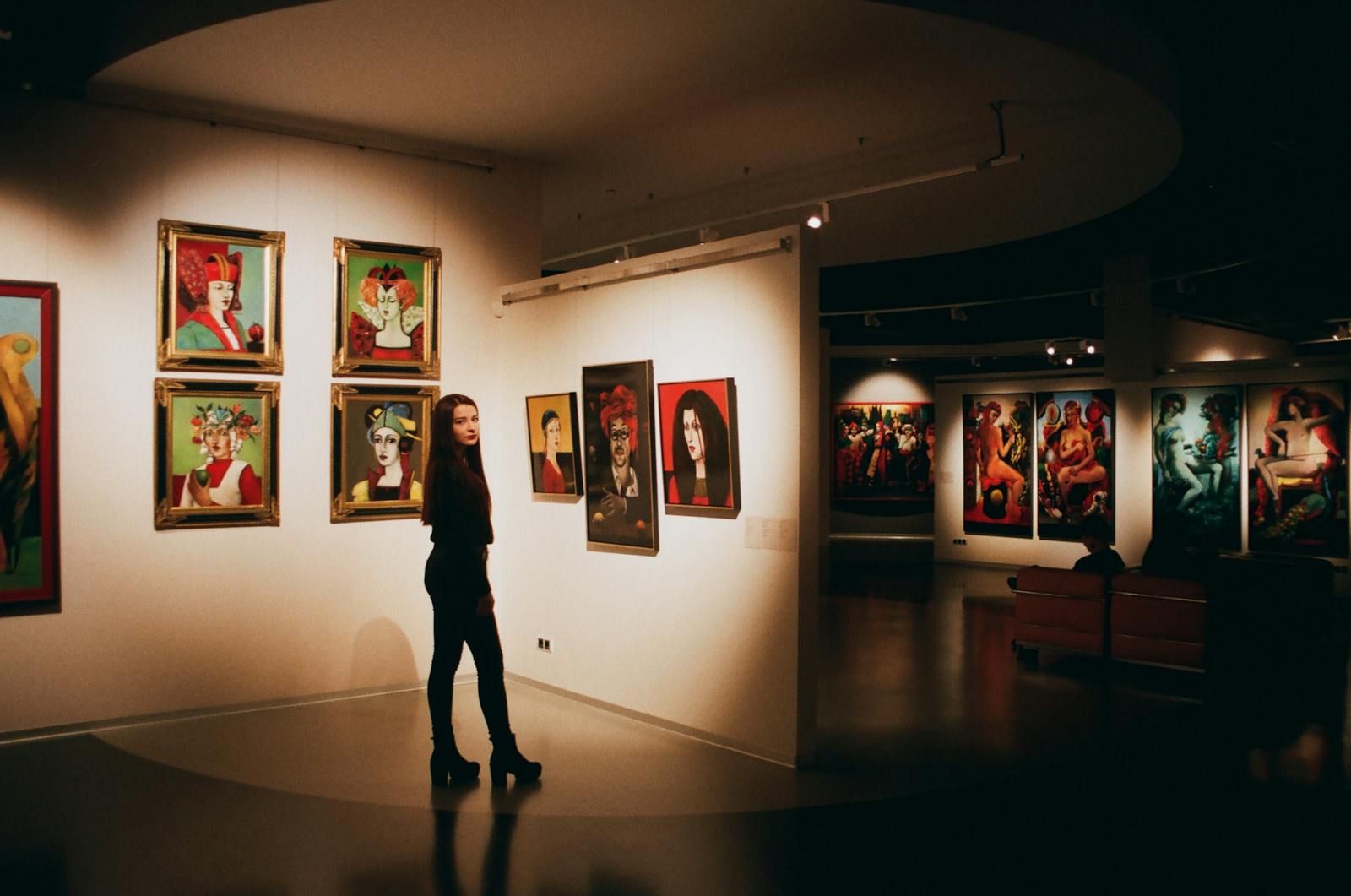
Berlin has more than four hundred commercial art galleries, almost every one of which is free to enter. Most tourists never set foot in one. The reason, mostly, is that galleries look intimidating from the outside — you can’t see in, the doors are heavy, the people at the desk seem to be doing something private — and visitors assume they need to be buyers or insiders to walk through the door. They don’t. The Berlin art galleries contemporary scene runs on a social contract that’s open to anyone: walk in, browse, leave. No tickets, no obligations, no expectation that you’ll talk to anyone. The trade-off for the world is that galleries get a steady stream of curious foot traffic; the trade-off for you is that the most current contemporary art in the city is often free.
This is a guide to the gallery scene as a visitor sees it — what to see, how to behave, where to go, when to visit. It’s the commercial counterpart to our contemporary art museums guide. The institutional museums hold the canonical work that’s already entered the art-historical story; the galleries are where you’ll see what’s being made now. A serious art day in Berlin uses both.
How Berlin Galleries Work (The Bit Nobody Tells You)
- Free entry, always. No ticket, no booking, no obligation. Galleries make their money from sales to collectors, not from the door.
- Walk in, browse, leave. Nod at the desk staff if you make eye contact. No interaction required beyond that.
- Standard hours: Tuesday to Saturday roughly 11:00 to 18:00. Closed Sunday and Monday at most galleries. Plan around this — tourists arriving in Berlin on a Sunday afternoon and trying to gallery-hop will find everything shut.
- Vernissages (openings) are usually Thursday or Friday evenings. Free drinks, open to anyone who walks in, no invitation required. Check the gallery’s Instagram for the next vernissage if you want to time your visit for one.
- Exhibitions rotate every 6–8 weeks at most galleries. The work you see is fresh; the artist is usually still alive.
- Gallery vs museum: galleries are commercial — they sell the work on display, in editions or as unique pieces. Museums hold permanent collections (mostly) and charge admission. The same artists often appear in both, but the work in the gallery is the new work; the work in the museum is the canonical or historical work.
You don’t need to know about art history. You don’t need to dress up. You’re allowed to ask the desk person what the show is about — that’s part of their job. You’re equally allowed to spend ten minutes looking and leave without speaking to anyone. Either is normal Berlin gallery behaviour.
Mitte — The Original Gallery District
The historic gallery cluster is around Auguststrasse, Linienstrasse, Rosa-Luxemburg-Platz, and Oranienburger Strasse in the post-Wall Mitte gentrification zone. The galleries arrived here in the 1990s when rents were almost zero; many of the originals (Eigen + Art, Sprueth Magers, KW Institute) are still here. A two- or three-hour Mitte loop is the most efficient gallery walk in the city.
- Eigen + Art (Auguststrasse 26) — Judy Lybke’s Leipzig School powerhouse. Neo Rauch, Olaf Nicolai, Tim Eitel.
- Sprueth Magers (Oranienburger Strasse 18) — Monika Sprüth and Philomene Magers’ international flagship. Cindy Sherman, Barbara Kruger, Cao Fei, Sterling Ruby.
- KW Institute for Contemporary Art (Auguststrasse 69) — not a commercial gallery but a kunsthalle; the small ticketed institution that runs the Berlin Biennale.
- Schinkel Pavillon (Oberwallstrasse 32) — small octagonal institution with consistently strong programming.
- Galerie Thomas Schulte (Charlottenstrasse, Tuteur House) — international conceptual art.
- Carlier Gebauer (Markgrafenstrasse 67) — film, photography, installation.
- BARBARA WIEN (Schöneberger Ufer 65) — artist books, conceptual art, the most bibliophile of the major galleries.
- Société (Genthiner Strasse 36) — younger gallery with market traction.
Potsdamer Strasse — The New Galerienviertel
The newer gallery cluster, established in the 2010s in the post-industrial blocks along Potsdamer Strasse south of the Landwehrkanal. The galleries here tend to be larger than the Mitte spaces — repurposed factory floors, with the ceiling height that suits big contemporary work. Around thirty galleries cluster here.
- Esther Schipper (Potsdamer Strasse 87) — Berlin’s flagship contemporary gallery. Olafur Eliasson, Philippe Parreno, Pierre Huyghe, Ann Veronica Janssens.
- Galerie Buchmann (Charlottenstrasse 75) — internationally established artists, well-curated programming.
- Tanya Leighton — emerging and mid-career contemporary.
- Klosterfelde — long-running gallery with an experimental edge.
- Galerie Crone — multi-generational European contemporary.
- Aurel Scheibler — modern and contemporary classics.
Kreuzberg — The Brutalist Church and Beyond
- KÖNIG GALERIE at St. Agnes (Alexandrinenstrasse 118–121) — by far the most architecturally dramatic gallery in Berlin. Johann König’s flagship inside the 1965 brutalist Catholic church St. Agnes, restored as a gallery in 2015 with the original concrete left exposed. The Skylight gallery upstairs and the underground chapel space below are both used for exhibitions. KÖNIG also runs a smaller satellite at the Tempelhof Tor entrance.
- daadgalerie (Oranienstrasse 161) — the DAAD artist residency programme’s exhibition space, showing work by international artists living in Berlin on the DAAD’s year-long fellowships.
- Alexander Levy — emerging contemporary.
Charlottenburg — The Quiet West
The historic West Berlin gallery district, established before the Wall and never quite as fashionable as the post-1990 Mitte and Potsdamer Strasse scenes, but home to several of the most established blue-chip names.
- Galerie Max Hetzler (Bleibtreustrasse 45 + Goethestrasse satellite) — Albert Oehlen, Christopher Wool, Günther Förg, Sarah Lucas.
- Galerie Buchholz (Knesebeckstrasse 30) — Wolfgang Tillmans, Isa Genzken, Lucy McKenzie.
- Camera Work (Kantstrasse 149) — photography heavyweight gallery.
- Aedes Architecture Forum — architectural drawings, models, and exhibitions.
Tempelhof and Beyond — The Frontier
- Wentrup (Tempelhofer Berg 3) — recently relocated, larger space.
- Halle am Berghain — occasional curated contemporary art exhibitions in the techno club’s annex; see our Berghain guide.
- Julia Stoschek Foundation (Leipziger Strasse 60) — private collection of moving-image art, free or donation, weekends typically 12:00–18:00. Closing the Berlin space in October 2026 — visit while you can.
- Boros Collection (Reinhardtstrasse 20) — private contemporary collection in the converted Reichsbahnbunker, guided tours Thursday to Sunday by reservation.
Project Spaces and Artist-Run Venues
Berlin’s project-space scene runs parallel to the commercial galleries — smaller, more experimental, often artist-run, frequently temporary. Worth seeking out if you have a specific interest in emerging or non-commercial work.
- Diskurs Berlin — small project space with strong programming.
- Galerie NEU — old-guard project gallery from the early-2000s Berlin energy.
- Mountains — recent younger gallery, often featured in Gallery Weekend’s “Perspectives” section.
- n.b.k. (Neuer Berliner Kunstverein) (Chausseestrasse 128/129) — institutional contemporary art association, free entry.
- Flutgraben (Alt-Treptow) — artist-run studios with occasional public exhibitions.
A Short History of the Berlin Gallery Scene
For most of the twentieth century, the centre of the German art market was in Cologne and Düsseldorf. Berlin’s gallery scene as you see it today is almost entirely a post-reunification phenomenon. After 1989, the empty post-industrial buildings of East Berlin offered the cheapest commercial real estate in any major European city, and galleries from across Germany and abroad opened second spaces, satellite spaces, and eventually flagship spaces in Mitte. Eigen + Art moved up from Leipzig in 1992. Sprueth Magers opened the Berlin space in 2008. Esther Schipper relocated her flagship from Düsseldorf in the late 1990s. König Galerie opened in 2002 and moved to St. Agnes church in 2015.
By the mid-2010s, Berlin had displaced Cologne as Germany’s commercial-art capital and become one of the three or four most important European gallery cities (alongside London, Paris, and Brussels). The rents have, of course, risen steeply; Mitte is no longer cheap, and the Potsdamer Strasse cluster emerged in part because galleries needed bigger spaces at lower prices than the original district could provide. The scene is now in a more mature phase — fewer new openings, more consolidation, the major spaces well established — but Berlin’s importance to the international contemporary art market is now structural.
A Note on Politeness at Openings
One small etiquette note for anyone going to a vernissage. The free drinks at gallery openings are real — usually wine, sometimes beer, occasionally a curated cocktail at the bigger spaces. They are not, however, the point of the evening. The art is. Take a drink, look at the work, leave when the crowd thickens past comfort. Don’t queue twice for wine. Don’t loudly photograph the buffet (there usually isn’t one). Don’t talk on your phone in the gallery space. If you see the artist (often standing somewhere near the work, looking awkward), a brief “I really liked the piece in the back room” is a generous and welcome thing to say. They’ve usually been working towards this opening for two years.
Smaller Districts Worth Knowing
- Wedding and Moabit — emerging galleries are slowly moving north as the central districts get expensive. Worth watching but not yet a destination cluster.
- Neukölln — the artist-residential district, has more studios than galleries but several project spaces with strong programmes (Diskurs, Klemm’s).
- Schöneberg — the historic gallery district from West Berlin’s pre-1989 era still has a small cluster, mostly modern and post-war specialists rather than contemporary.
For first-time visitors, stick to the four main districts (Mitte, Potsdamer Strasse, Charlottenburg, Kreuzberg) on your first trip. The rest will be there next time.
Major Art Events to Time Your Visit
- Gallery Weekend Berlin 2026 — 1–3 May 2026. The defining annual moment in Berlin’s gallery scene. Around 50 galleries, 63 locations, 80+ artists from 20+ countries, openings Friday evening and continuing through Sunday. Free Art Talks at the Neue Nationalgalerie and Hamburger Bahnhof. Most galleries open all weekend including Sunday (the rare Sunday opening on the calendar). The KaDeWe shop windows transform into 24/7 public exhibitions. The whole city moves at a different rhythm.
- Berlin Art Week — 9–13 September 2026 (15th edition). City-wide, includes the institutional museums and the major commercial galleries. Many vernissages on the Wednesday and Thursday evenings.
- Positions Berlin Art Fair — 10–13 September 2026 at Tempelhof Airport Hangar 5–6. Berlin’s main commercial art fair, parallel to Berlin Art Week.
- Paper Positions Berlin — September 2026, focused on works on paper.
- Berlin Biennale 13 — 2026 edition at KW Institute and partner venues.
For the first-time visitor, Gallery Weekend in May is the single best week to see the Berlin gallery scene. Hotels book up; plan ahead.
Three Walking Routes
Mitte Loop (~3 hours)
Start at KW Institute (Auguststrasse 69). Walk west along Auguststrasse stopping at Eigen + Art. Cross to Linienstrasse and continue west. Loop south to Oranienburger Strasse for Sprueth Magers. End at Schinkel Pavillon on Oberwallstrasse. Lunch at Hackescher Markt, ten minutes east.
Potsdamer Strasse Spine (~2.5 hours)
Start at Esther Schipper (Potsdamer Strasse 87). Walk north along Potsdamer Strasse, stopping at Klosterfelde, Tanya Leighton, Galerie Crone. End at BARBARA WIEN (Schöneberger Ufer 65). Lunch at Joseph Roth Diele on Potsdamer Strasse.
Charlottenburg Afternoon (~2 hours)
Start at Galerie Max Hetzler (Bleibtreustrasse 45). Walk to Galerie Buchholz (Knesebeckstrasse 30). Coffee on Kantstrasse, then Camera Work. End at the Helmut Newton Foundation (Jebensstrasse 2) — covered in our contemporary art museums guide.
What to Look For When You Don’t Know Where to Start
If you’ve never spent time looking at contemporary art and you’re not sure what to “do” inside a gallery, a few suggestions. Read the title and the artist’s name on the wall first; they’re often part of the work. Stand at the entrance to the room and look at how the show is hung — galleries care a lot about installation, and the relationship between works often reveals what the show is about. Pick up the printed statement at the desk if there’s one; gallery statements are sometimes deliberately opaque but usually contain at least one useful sentence. Spend a minute in front of each piece rather than glancing as you walk past — most contemporary art rewards a sixty-second sit. If you find yourself liking a particular piece, take a photo of the wall label so you can look up the artist later. You don’t need to know in advance what you’ll like; that’s part of the discovery.
Berlin galleries are pitched at a serious audience but they’re also unusually welcoming to non-collectors. The trade is that they want the work seen by as many people as possible; the collectors will find them anyway. Walk in.
Frequently Asked Questions
Are Berlin galleries free to enter?
Yes — almost every commercial gallery is free, no ticket, no booking. Some private collections (Boros, Julia Stoschek) require advance booking and may have a small fee.
When is Gallery Weekend Berlin?
1–3 May 2026. The next edition (2027) will be 30 April – 2 May. Friday evening openings, Saturday and Sunday opening hours extended.
What’s the best Berlin neighbourhood for galleries?
Mitte (around Auguststrasse) for the historic district and the highest density. Potsdamer Strasse for the larger, factory-floor spaces. Charlottenburg for the established blue-chip names. Kreuzberg for KÖNIG GALERIE specifically and a handful of smaller venues.
Where to see contemporary art in Berlin?
Commercial galleries are often more current than museums. Top picks: KÖNIG GALERIE, Esther Schipper, Sprueth Magers, KW Institute, Schinkel Pavillon, Eigen + Art, Galerie Max Hetzler.
Are Berlin galleries open on weekends?
Saturday yes (typically 11:00–18:00). Sunday almost always closed except during Gallery Weekend, Berlin Art Week, and a small number of artist-run spaces that keep weekend hours. Monday closed almost universally. Plan Tuesday through Saturday.
What’s the difference between a gallery and a museum?
Galleries are commercial — they sell the work on display and rotate exhibitions every six to eight weeks. Museums hold permanent collections and charge admission. Many artists appear in both: the gallery shows their new work; the museum shows their work that has already entered the historical narrative.
I’ve never been to a gallery — will I look out of place?
No. Walk in, browse, leave. No interaction required. The desk person is there to answer questions if you want, not to sell to you. Galleries actively want footfall — the more eyes on the work, the better for the artist.
What’s a vernissage?
A gallery opening, usually Thursday or Friday evening, with free wine and an open door. Anyone can attend; no invitation required. Check gallery Instagrams for dates.
Final Word
Berlin’s gallery scene is one of the great hidden cultural assets of the city — free, unintimidating once you know the rules, and frequently better for current contemporary art than the museums. Time your visit to Tuesday–Saturday, pick a district cluster, walk between four or five galleries in a couple of hours. You’ll see more new work than in any museum visit. For the institutional context, see our contemporary art museums guide; for the major contemporary museum, our Hamburger Bahnhof guide; for the small private collections that bridge gallery and museum, the contemporary art museums article covers Boros and Julia Stoschek.
Bring a small notebook. Most galleries leave printed exhibition statements at the door — collect them as you go. By the end of an afternoon you’ll have a sense of what the Berlin scene is making this season, and an aesthetic education at zero cost.