Berghain Berlin: Everything You Need to Know Before You Go (2026 Guide)
How to visit Berghain in 2026 — door policy, music, rooms, prices, and the back door via the Halle classical concerts.
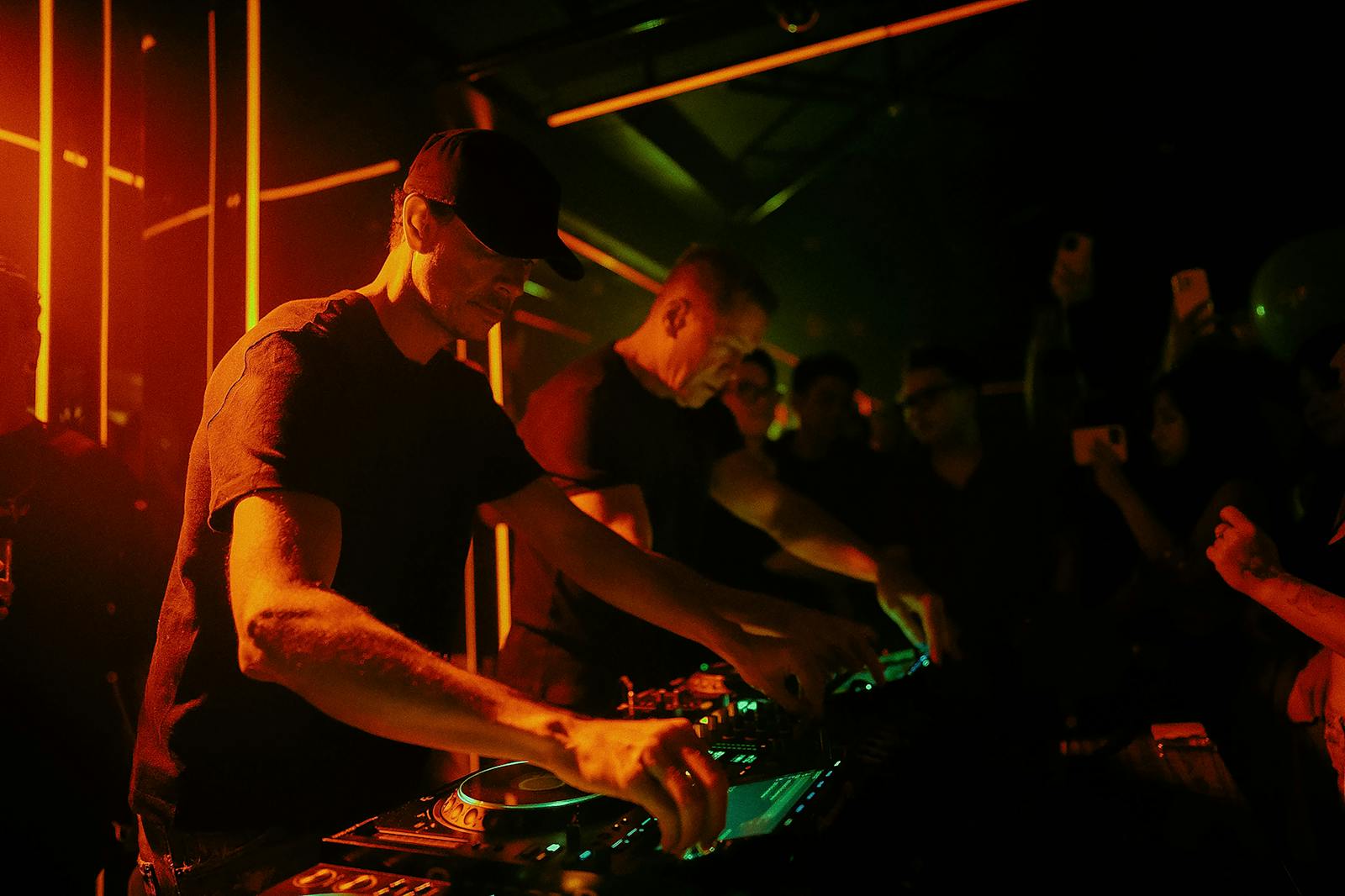
I’ll start with the line everyone wants me to start with: yes, tourists do get into Berghain. I’ve watched it happen. I’ve also watched groups of confident-looking thirty-somethings get a quiet shake of the head from Sven Marquardt and walk away into the Friedrichshain dawn with no idea what they did wrong. Welcome to Berghain — the world’s most mythologised techno club, a former East Berlin power plant that the German tax courts ruled in 2016 to be a cultural institution of the same legal class as the Berliner Philharmonie. This guide is everything I’ve learned about it over years of going, reading, listening, and standing in that famous queue: the history, the rooms, the door, the music, the rules, and the realistic odds.
I’ve written this for the person who’s about to fly to Berlin and is alternately curious and terrified. By the end you’ll know what Berghain actually is, how the door actually works, what the building is like inside, who plays there, what to wear, what it costs (cards now work, as of September 2025), what to do if you get rejected, and — most importantly — how to enjoy yourself in there if you make it past the door. You’ll also know about the back-door way in that almost no one talks about: the ticketed classical concerts in the Halle.
What Is Berghain? The Cathedral of Techno
Berghain is a nightclub. That sentence is technically correct and almost completely misleading. It’s a 1,500-capacity sound cathedral in a brutalist former combined heat and power plant on the boundary between Friedrichshain and Kreuzberg — hence the portmanteau name — with eighteen-metre concrete ceilings, a custom Funktion-One sound system, and a weekend programme that runs continuously from Saturday night to Monday morning. It opened in December 2004 in the building you see today, founded by Norbert Thormann and Michael Teufele, who’d previously run Ostgut, a queer techno club at Ostbahnhof that closed in early 2003. The Ostgut DNA is still in the room: a club rooted in Berlin’s gay scene that opened up over time into a broader techno temple while retaining its consent culture, its anonymity, and its refusal to be a tourist attraction.
Quick orientation. Address: Am Wriezener Bahnhof, 10243 Berlin. Nearest transport: S-Bahn Ostbahnhof (S3, S5, S7, S9, S75), then a five-minute walk along Mühlenstrasse and across the empty plot to the eastern face of the building. Capacity: roughly 1,500 across all rooms, with the main floor holding around 500 dancers at peak. Doors: Saturday 23:59 to Monday morning, typically closing around 08:00 Monday. Entry: €25–€30 for Klubnacht; cards have been accepted at the door and bars since September 2025, but the Garderobe is still cash. Music: techno on the main floor, house and disco and electro upstairs in Panorama Bar, more experimental and live programming in Säule downstairs, and special events in the Halle annex. Photography: no, never, the cameras on your phone will be stickered at the door.
A Short History — From Ostgut to Cultural Institution
The story actually begins not with Berghain but with Ostgut, an unofficial queer techno party that ran from 1998 to 2003 in a warehouse at Ostbahnhof — sweaty, dark, men-mostly, and famous in the international techno underground long before mainstream visitors noticed. When the city redeveloped the Ostbahnhof site, Thormann and Teufele had to move. They found their permanent home in an empty heating plant a few hundred metres east: a 1953–54 socialist neoclassical structure built to supply hot water to East Berlin’s apartment blocks. Panorama Bar opened in October 2004 in the upper level. The main Berghain floor opened in December 2004. By 2011 the club had purchased the building outright from Vattenfall, securing its future against the kind of developer pressure that has killed dozens of other Berlin venues.
The 2016 moment is the one that changed the legal landscape. The Berlin-Brandenburg Financial Court ruled that Berghain qualified as a high-culture institution and was therefore entitled to the reduced 7% VAT rate on entry instead of the full 19% rate applied to other entertainment venues. The ruling cited the curatorial nature of the music programming, the seriousness of the artistic project, and the comparison to concert halls. Whatever you make of techno’s cultural status, this is a club that the German tax courts have placed in the same category as the opera. In 2024 the UNESCO Intangible Cultural Heritage list followed, recognising Berlin’s techno culture as a whole.
Like every Berlin club, Berghain closed during COVID. It reopened in 2021 with shifts that have stuck: the awareness team has a more prominent role, prices have crept up from €18 to today’s €25–€30, the Halle annex began running ticketed classical concerts, and from September 2025 card payments finally arrived at the door and at the bars. These details matter when you’re planning the night.
The Building — Brutalist Cathedral on Wriezener Bahnhof
The architecture is half the point. The interior was designed by Studio Karhard — Thomas Karsten and Alexandra Erhard — in a deliberately stripped, brutalist style that lets the building speak for itself. The main floor was carved out of the former turbine hall: 18-metre concrete ceilings, exposed steel pillars, a single fixed light bar running across the room, and almost no decoration. The sound system is by Funktion-One, the British loudspeaker company whose monolithic stacks are the gold standard in dance music. The bass on the main floor is famously physical — you’ll feel it in your sternum before your ears notice it.
The result is a room that does what almost no other club in the world manages: it makes you feel small. Most clubs are designed to amplify ego — the dance floor as stage. Berghain’s main floor inverts that. The ceiling and the bass put you in your place. People dance with their eyes closed, alone or in pairs, for hours. The architecture is doing as much work as the DJ.
Inside the Club — Every Room Explained
Berghain Main Floor
The ground-floor turbine hall. Hard, fast, dub-tinged techno is the house sound: between 130 and 138 BPM, more weight than speed, more depth than spectacle. The main bar is in the southwest corner with a small seating annex. The Eisbar (ice bar) at the back serves snacks. There’s no VIP, no bottle service, no stage. The DJ booth is recessed into the back wall and the artists are not the focal point — the room is.
Panorama Bar
One floor up via a wide industrial staircase. The mood lightens here — literally. The Panorama Bar’s most famous feature is the row of tall windows along one wall, originally blacked out, now uncovered at the discretion of the DJ. When they’re opened mid-set, usually around dawn, the sunrise floods the room and the cheering can be heard downstairs. Music is house, electro, disco and the broader edges of dance music. The dance floor is smaller, denser, more euphoric. Many regulars never go to the main floor at all.
Säule
Säule means “column.” A smaller, low-ceilinged side room dedicated to more experimental electronic music, live acts, ambient sets, and occasional artist residencies. Easier to find a seat or a quiet corner. The programming is often the most interesting part of the night for music nerds.
Halle and Garten
The Halle is the cathedral-like annex used for special events including the now-regular Orchestral Sessions — sit-down classical concerts inside the Berghain building, ticketed in advance, with none of the door selection that applies to Klubnacht. We’ll come back to this. The Garten is the summer outdoor area with a separate bar and smoking-permitted zones, opened seasonally.
Lab.oratory
The men-only gay sex club downstairs in the basement of the Berghain building, with a separate entrance on the south side. Lab runs on Saturdays during Klubnacht with two-hour entry windows. Entry around €12, card payments since January 2024. This is a different space with a different culture; visitors who aren’t there for it should not wander in.
Klubnacht — The Saturday-to-Monday Marathon
The defining feature of Berghain culture, and what most first-time visitors get wrong, is the Klubnacht arc. Doors open at 23:59 on Saturday night. The club is then continuously open until Monday morning, typically closing around 08:00 — sometimes later. That’s roughly 32 hours of music. People come and go throughout. Many locals show up for a six- to ten-hour stretch on Sunday morning or afternoon, when the queues are shorter and the crowd is calmer. The 11pm tourist rush on Saturday is the worst time to arrive: longest queue, hardest door, most overdressed crowd. The dawn-to-noon Sunday window is the secret.
Friday nights are different. Most weeks there’s a Panorama-Bar-only Friday night with a separate door — usually easier — running until Saturday afternoon. The main Klubnacht starts late Saturday.
The Resident DJs and What You’ll Hear
Berghain’s residents are the people whose musical identity defines the club. On the main floor, the canonical names are Marcel Dettmann, Ben Klock, Norman Nodge, Boris, and nd_baumecker. Upstairs at Panorama Bar, the residents include Tama Sumo, Steffi, Cassy, Prosumer, and Virginia. The roster expands and contracts; check the current programme. Internationally famous guests rotate through (DVS1, Helena Hauff, Avalon Emerson, Function, Joey Anonymous, Nina Kraviz on occasion), but the residents are the soul.
The lineup for any given Klubnacht is published on berghain.berlin in the first week of the previous month. The running order — which DJ plays when — appears on Thursday at noon before the Saturday opening. Look it up. If the bouncer asks who’s playing tonight (rare but it happens), naming a current DJ is a soft signal that you know where you are. Naming someone who finished hours ago is a soft signal that you don’t.
The Door — Understanding Türpolitik
Now the question everyone wants answered: how do you get in. The honest answer is that nobody can give you a formula because there isn’t one. Sven Marquardt — born in East Berlin in 1962, head doorman since the Ostgut days, working photographer with two published books, including the autobiography Die Nacht ist Leben — has said in interviews that his decisions are subjective and based on his read of the room. He’s not looking for a particular outfit or hairstyle. He’s looking for the right balance of energies for what’s happening inside on any given night, which is why his rejections often seem incomprehensible to the rejected.
That said, certain patterns are observable. Things that help: arriving in groups of two or three rather than five, being visibly sober, speaking quietly in the queue, being dressed appropriately (more on dress code below), being there for the music rather than the photo opportunity, looking calm and not anxious, and timing your arrival outside the 11pm Saturday tourist peak. Things that fail: loud English chatter at the front of the line, sunglasses (read as cover for intoxication), suits and high heels (read as bottle-service tourist), Stag/Hen parties of any size, asking the bouncer questions, attempting to bribe, and any attempt to look at your phone in the queue. If you’re rejected, do not argue. Do not ask why. Do not try again that night. Walk away, accept it as part of the culture, and try another club. Locals get rejected too — by some accounts 30% of the time.
One small practical signal that helps: when the bouncer asks how many you are, answer in German if you can — “zwei”, “drei”, “vier”. Says you’ve done your homework. ID always required. Bring a passport or EU ID card; foreign driving licences are sometimes refused at the door.
Best Time to Go — An Hourly Strategy
If you’re aiming for the marathon Klubnacht, here’s what I’d actually do.
- Saturday 00:00–02:00: tourist peak. Queue 2–3 hours, hardest door, dressiest crowd. Avoid.
- Saturday 02:00–06:00: better, queue shorter, but still selective.
- Sunday 04:00–08:00: the sweet spot. Queue under 30 minutes, friendlier door, regulars rolling in for the morning shift.
- Sunday 12:00–18:00: the real Berliner window. Daylight outside, sunbeams in Panorama Bar, the calmest crowd of the weekend, friendliest door.
- Bouncer shift changes happen roughly every 6 to 8 hours (often around 06:00 and 18:00); a different bouncer is a different conversation.
Dress Code — There Isn’t One, and Why That Matters
Berghain has no official dress code. The “wear black” advice you’ve read everywhere is shorthand for something more specific: dress like you came to dance for ten hours in a hot, dark room, not to be photographed afterwards. Black t-shirt, black trousers, black sneakers or boots — yes, of course this works. But colour also works if it doesn’t read as costume. Fetish gear works if it’s authentic. Mesh works. Leather works. Vintage works. What fails is anything that signals tourist or that signals “I dressed up to come here”: suits and ties, high heels, sequins, branded streetwear logos, sports jerseys, group t-shirts, anything from a hen party. The bouncer is looking for someone who wears these clothes on a Sunday night when they’re not here, not someone trying to look right for the door. The distinction is real and visible.
For more on what to wear and how to dress for clubs across Berlin, see our Berlin club etiquette guide.
Prices, Payment, and Practicalities
Entry to Klubnacht runs €25–€30 depending on the lineup and the night. Friday Panorama-Bar nights are usually less. Cards are accepted at the door and the bars since September 2025, which is a recent and welcome change — though most regulars still bring cash. Drinks are reasonable for a Berlin club: beer around €5, mixed drinks €10–€15, water (still always available, always reasonably priced) around €2.50–€4. Free tap water at the bars on request. Free condoms and free earplugs available from the Garderobe.
The Garderobe is €2.50 for a coat with €1.50 bag access if you want to retrieve things during the night. Cash only at the Garderobe. Write down your tag number; do not photograph it, since your camera will be taped. If you leave the club and come back, there’s a €5 re-entry fee — pay it once per Klubnacht. Tell the door staff before you leave for an ATM run and they’ll usually let you back in without re-queuing.
The Rules Inside — Phone Stickers, Awareness, Anonymity
At the door, both cameras on your phone will be covered with stickers. Do not remove them. People are ejected for it, and the club has the right to ban offenders permanently. The no-photo policy is a deliberate cornerstone of the Berghain experience: anonymity protects the queer community that built the club, protects the people inside who can dance without performing for a feed, and breaks the dopamine loop of mobile-phone use. After ten minutes you stop reaching for your phone. After an hour you forget you have one.
The awareness team is the second cornerstone. Berghain’s “Für ein faires Pogo” (FFP) initiative — also known as the awareness team — is a group of trained staff in pink high-vis who roam the rooms specifically to handle harassment, consent issues, and anyone who needs help. They are easy to find and easy to talk to. Approach them if you see something, or if you need something. The consent culture of Berlin’s queer clubs is real, taken seriously, and a major reason the scene has held its character. If you’re unfamiliar with darkroom etiquette, the rule is simple: ask, and leave people alone unless they’ve said yes. The darkroom in Berghain is primarily a gay cruising space; straight visitors who wander in often misread the room.
Accessibility at Berghain
One detail almost no English-language guide covers. Berghain is step-free on the ground floor, with wheelchair-accessible toilets. The upper Panorama Bar is reachable via the central stairs only — no lift, regrettably. Visitors with a German disability card showing 50% or higher impairment can skip the queue at the door; the “B” mark on the card entitles a companion to free entry. Bring the card to the door.
Beyond Klubnacht — How to Visit Without the Door
This is the back door that no one mentions. The Halle annex regularly hosts the Orchestral Sessions: ticketed, sit-down classical concerts inside the Berghain building, programmed by labels and musicians associated with the club’s wider universe. Tickets sell online weeks in advance via berghain.berlin and the club’s affiliated promoters. There’s no door selection. You buy the ticket, you walk in. The crowd is mixed, the lighting is up, you can look at the architecture properly, and you’ll have stood inside the building most travellers spend years failing to enter. For anyone with limited time, kids in tow, or a desire to see the place without the door-policy lottery, this is the move.
The same applies to occasional special exhibitions, Pop-Kultur Festival showcases hosted at Berghain, and the Friday-only Kantine — the small beer-garden style restaurant on the south side of the building with a much friendlier door.
What to Do If You Don’t Get In
You probably will get rejected at some point if you go enough times. It happens to everyone. The graceful response is to accept it and have a backup plan. Within a U-Bahn ride of Berghain you have several excellent alternatives: Sisyphos in Lichtenberg (festival-in-a-club, much more welcoming door), ://about blank across the street from Ostkreuz, Kater on the Holzmarkt riverside (formerly Kater Blau, much friendlier), Tresor on Köpenicker Strasse, and Ritter Butzke in Kreuzberg. None of them is a lesser experience. Some of them are better suited to you. The Berlin scene is wide and forgiving; Berghain is one room among many.
Frequently Asked Questions
Is it actually possible to get into Berghain as a tourist?
Yes. Tourists get in regularly. Your chances improve if you go in a pair, dressed simply in black, sober, calm, knowing the lineup, at Sunday morning or Sunday afternoon rather than Saturday midnight. Expect rejection to be possible regardless — even locals are turned away on a regular basis.
What is the dress code for Berghain?
No official dress code. Black, dark, comfortable clothing and broken-in sneakers or boots is the default. Avoid suits, heels, branded sportswear, hen-party uniforms, sunglasses, and anything that signals tourist.
How much does it cost to get into Berghain?
€25–€30 for Klubnacht, lower for Friday Panorama-Bar nights. Cards have been accepted since September 2025. Coat check is €2.50 cash. Re-entry is €5.
What time should I arrive at Berghain?
Avoid the 23:59–02:00 Saturday rush. The friendliest door is Sunday morning between 04:00 and 08:00, or Sunday afternoon between 12:00 and 18:00.
Can you take photos inside Berghain?
No. Both phone cameras are stickered at the door and removing the stickers can get you ejected and permanently banned. There are no exceptions, even in the Halle classical concerts.
What music does Berghain play?
Techno on the main floor (130–138 BPM, hard, dubby). House, electro and disco upstairs in Panorama Bar. Experimental and live music in Säule. Classical and special programming in the Halle.
Is Berghain a gay club?
Berghain has its roots in Berlin’s gay party scene (specifically Ostgut and Snax) and remains a queer-friendly space with a strong gay presence, particularly on Sunday mornings and during special events like Snax. The crowd is mixed, the energy is queer-centred, and Lab.oratory — the connected men-only gay sex club downstairs — operates on Saturdays.
What should I do if I get rejected at Berghain?
Walk away calmly without arguing. Try a nearby alternative: Sisyphos, Kater, ://about blank, Tresor, or Ritter Butzke are all within a short U-Bahn ride and welcoming. See our techno clubs guide for the full list.
Final Word
The mythology around Berghain has, in some ways, become its own enemy. The number of people who arrive in Berlin convinced that getting past Sven Marquardt is a status game has corroded the very thing the club was built to protect: a room where the music is the point, where the bass is in your chest, and where the person next to you is dancing with their eyes closed because they don’t care who’s watching. The best advice I can give you is to want to be inside for the right reasons. The door staff can read the difference between someone who’s there to dance for ten hours and someone who’s there to prove they’ve been there. If you actually love the music — and you’ve checked who’s playing — your odds are better than the internet says, and your experience inside will be one of the most singular nights of your life.
For a wider view of the city’s club scene, see our Berlin nightlife guide, best techno clubs, and nightlife for first-timers. For the LGBTQ+ angle that’s so central to Berghain’s DNA, the LGBTQ+ nightlife guide is the companion piece. And for everything else you’ll need to know about etiquette across the city’s clubs, the club etiquette guide is mandatory reading before Saturday night.