Wedding & Moabit: Where Berliners Move When Rents Rise
An 1891 market hall, a park inside a prison wall, the Plötzensee Memorial, a flak tower and a lakeside lido — Berlin's slow-changing northern districts, and whether they deserve your time.
If you typed Wedding Berlin neighborhood into a search engine expecting bridal boutiques, you are not the first, and Berliners will enjoy the joke. Wedding — pronounced roughly “Vedding” — is a working-class district in the north of the city, named after a medieval village, and for twenty-five years it has been the place Berlin’s newspapers promised was “about to be the next Kreuzberg”. It never quite was. Next door, Moabit, an island ringed by rivers and canals just north-west of the government quarter, has been through much the same slow change with even less fanfare. Together they are where Berliners have moved when the rents in Friedrichshain, Kreuzberg and Neukölln got away from them.
This guide covers what the two districts are actually like and what is worth your time in them: a restored nineteenth-century market hall, a park laid out on the footprint of a notorious prison, the execution site of the German resistance, a crematorium turned arts centre, a wartime flak tower you can climb, a lakeside lido, and a lot of ordinary streets that most visitors never see. Prices and opening hours were checked in September 2026 — treat them as the right order of magnitude. For the wider comparison of Berlin’s districts, see our Berlin neighbourhoods guide.
Wedding and Moabit at a Glance
| Place | District | Why go | Cost (Sept 2026) |
|---|---|---|---|
| Arminius-Markthalle | Moabit | 1891 market hall with food stalls and bars | Free; meals €8–15 |
| Geschichtspark Zellengefängnis | Moabit | Quiet park on the site of a 19th-century prison | Free |
| Hamburger Bahnhof | Moabit edge | Contemporary art in a former railway station | Check current price |
| Plötzensee Memorial | Charlottenburg-Nord, by Wedding | Execution site of Nazi-era resistance | Free |
| Strandbad Plötzensee | Wedding | Lake lido with a sandy beach | €10 adult (summer season) |
| Humboldthain flak tower | Gesundbrunnen | WWII bunker tours and a rooftop view | Tours paid; park free |
| Bernauer Straße | Wedding/Mitte border | Berlin Wall Memorial | Free |
| Silent Green | Wedding | Arts venue in a former crematorium | Varies by event |
Why These Two Districts Get Talked About Together
Wedding and Moabit sit side by side north of the Tiergarten, divided by the Berlin–Spandau Ship Canal. Wedding was a borough of West Berlin in its own right, and Moabit the largest part of the borough of Tiergarten, until 2001, when both were folded into the new, much larger borough of Mitte — which is why a Wedding postcode can say “Berlin-Mitte” on the letter while looking nothing like the Mitte of museum islands and embassies. Both were industrial, working-class and largely overlooked for most of the post-war period. Both have large Turkish, Arab, Balkan and African communities. And both have spent the last two decades being “discovered”, slowly, by students, artists and young families priced out of the districts further south and east.
That slowness is the interesting part. Unlike Prenzlauer Berg in the 1990s or Neukölln in the 2010s, neither district turned over in a few years. There are new cafés and natural-wine bars, but they sit between betting shops, Turkish bakeries, discount supermarkets and pubs that have not changed their curtains since the Wall came down. If you want to see what much of residential Berlin is like, away from the neighbourhoods that appear in travel magazines, this is a good place to do it. If you only have three days in the city, it is not where to spend one of them — but it is well worth half a day if you are interested in history, or if you are already at the Wall Memorial or the Hauptbahnhof and want to see what lies just beyond.
Wedding
What Wedding is like
Wedding takes its name from a village first recorded in the thirteenth century that had disappeared long before the city arrived. The district that grew up in its place from the 1860s onwards was built for factory workers — at AEG’s electrical works, at the Schering chemical plant on Müllerstraße, in breweries and machine shops — and they lived in some of the densest, darkest tenement blocks in Berlin. Between the wars it was Roter Wedding, Red Wedding, a Communist stronghold with a song written about it. In the first days of May 1929, police opened fire on demonstrators and residents in Wedding and Neukölln; more than thirty people were killed in what became known as Blutmai, Bloody May.
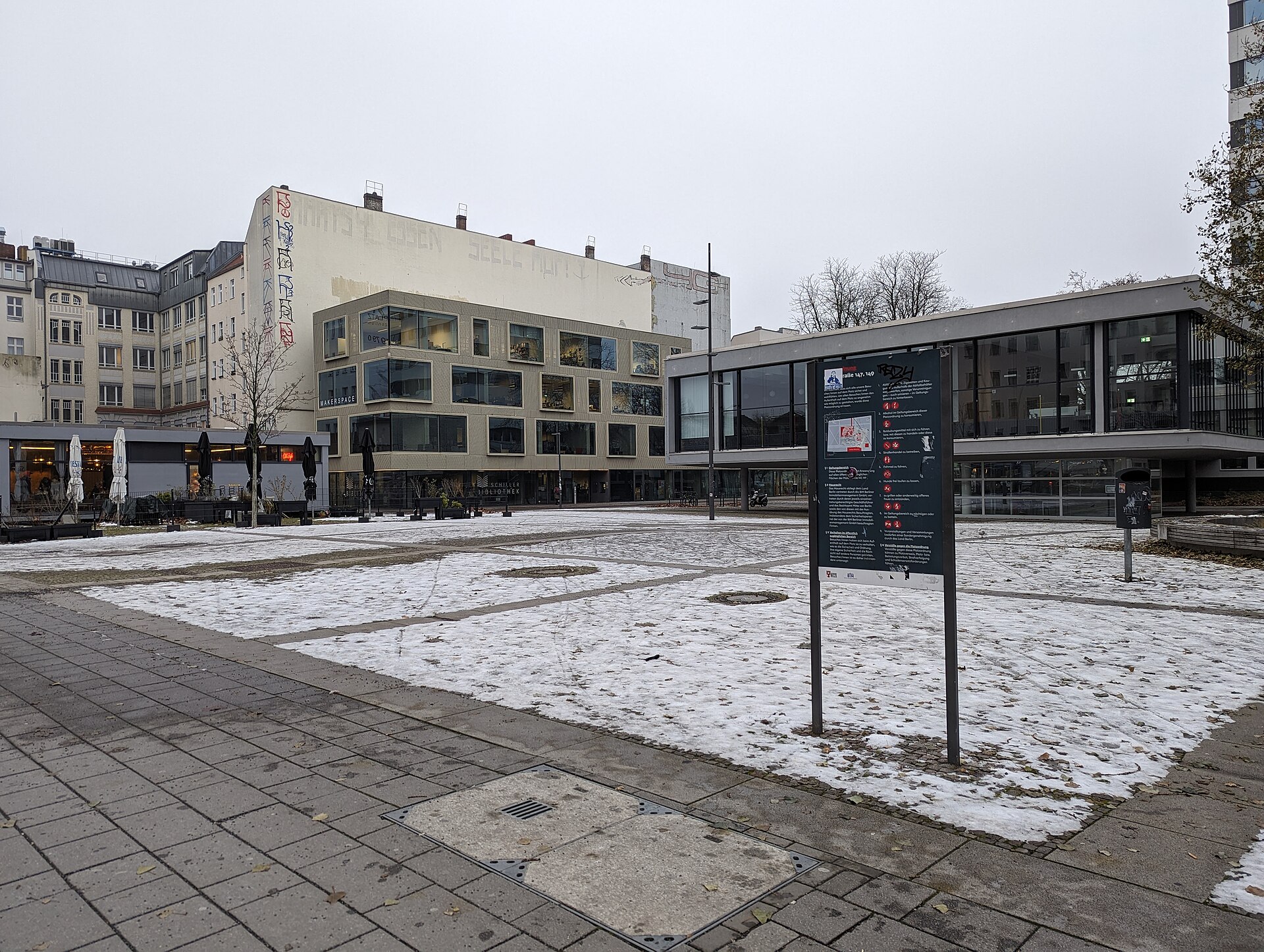
After the war Wedding was part of the French sector of West Berlin, and its southern and eastern edges ran along the Wall. It stayed poor, industrial and unfashionable. Today its population is young, very international, and — for inner Berlin — still comparatively low-income. The main street, Müllerstraße, is a long, busy, unlovely shopping road. Leopoldplatz, where the U6 and U9 cross, is its hub, with Schinkel’s small Alte Nazarethkirche on one side and the modern Schiller library on the other; it also has a visible drug and drinking scene, and the city has spent years trying to manage it. None of this is dangerous for a visitor in daylight, but it is not pretty either.
Sprengelkiez and Brüsseler Kiez
The Wedding that people move to is quieter. The Sprengelkiez, a triangle of residential streets bordered by the ship canal and the Nordufer, has cafés, small bakeries, a couple of good neighbourhood restaurants and a long green path along the water. The Brüsseler Kiez around Brüsseler Straße and Antwerpener Straße, near the university of applied sciences, is similar: tree-lined, a little studenty, with just enough going on to make an afternoon walk pleasant. Neither is a destination in itself, and that is really the point — you come here to see an ordinary Berlin Kiez at street level.
Silent Green
The most original venue in Wedding is Silent Green Kulturquartier on Gerichtstraße, built between 1909 and 1912 as Berlin’s first crematorium and converted into an arts complex. The domed former ceremonial hall is used for concerts, film screenings, talks and exhibitions, a large new underground hall has been built beneath the courtyard for bigger shows, and there is a restaurant with a garden. Check the programme online; events vary widely in price, and a few are free. Even if nothing is on, the courtyard and the building itself are worth a look.
The African Quarter
In the north of Wedding, the Afrikanisches Viertel is a residential area whose streets were mostly named, from the 1890s onwards, after places in Germany’s colonial empire — and in several cases after the men who had seized them. After many years of campaigning by Black German and African diaspora groups, some of those streets have been renamed in recent years to honour people who resisted German colonial rule instead. The quarter has no museum or single sight, but walking its streets, with the old and new signs in mind, is a quiet and genuinely thought-provoking hour. Take the U6 to Afrikanische Straße.
Parks and water: Plötzensee and Rehberge
Wedding’s great summer asset is Plötzensee, a small, clear lake on the district’s western edge, with the woods of Volkspark Rehberge spreading beside it. The Strandbad Plötzensee is a privately run lido with a sandy beach, an old-fashioned, unhurried atmosphere and a very local crowd. For the 2026 season, which ran from 1 May to 31 August, adult entry was €10, with reduced tickets at €6 and an evening rate after 18:00; check the operator’s own website for next year’s dates and prices before you go. It is a very different experience from the huge Strandbad Wannsee, and much easier to reach from the centre. Take the U6 to Rehberge and walk through the park. For more lakes, see our outdoor activities in Berlin guide.
Plötzensee Memorial
Just across the canal from the lake, strictly in Charlottenburg-Nord but always visited from Wedding, stands one of the most sombre places in Berlin. The Gedenkstätte Plötzensee is the former execution shed of Plötzensee prison, where some 2,900 people were put to death by guillotine or hanging between 1933 and 1945 — political opponents, resistance fighters, people from across occupied Europe, and prisoners convicted of the most trivial “offences” under Nazi law. Many of the men of the 20 July 1944 plot against Hitler were hanged here, from the iron beam that is still in place.
The memorial consists of the brick execution room, left almost bare, and a small documentation room with information on the victims. There is nothing else, and nothing else is needed. Entry is free. It is open daily from 09:00 to 17:00 from March to October and 09:00 to 16:00 from November to February, closed 24–26 and 31 December and 1 January. There are no guided tours; the site is intended for quiet remembrance. The entrance is on Hüttigpfad, off Saatwinkler Damm. For the wider context, see our guides to Nazi history in Berlin and the Topography of Terror.
Gesundbrunnen: The Wall, the Bunkers and the Spa That Was
The eastern part of old Wedding, around Gesundbrunnen station, takes its name from a mineral spring discovered in the eighteenth century and briefly turned into a fashionable spa, the Luisenbad. Nothing of the spa is left except the name of the library on Badstraße. Today Gesundbrunnen is a busy rail and U-Bahn junction with a big shopping centre next to it, and three things worth knowing about.
Bernauer Straße
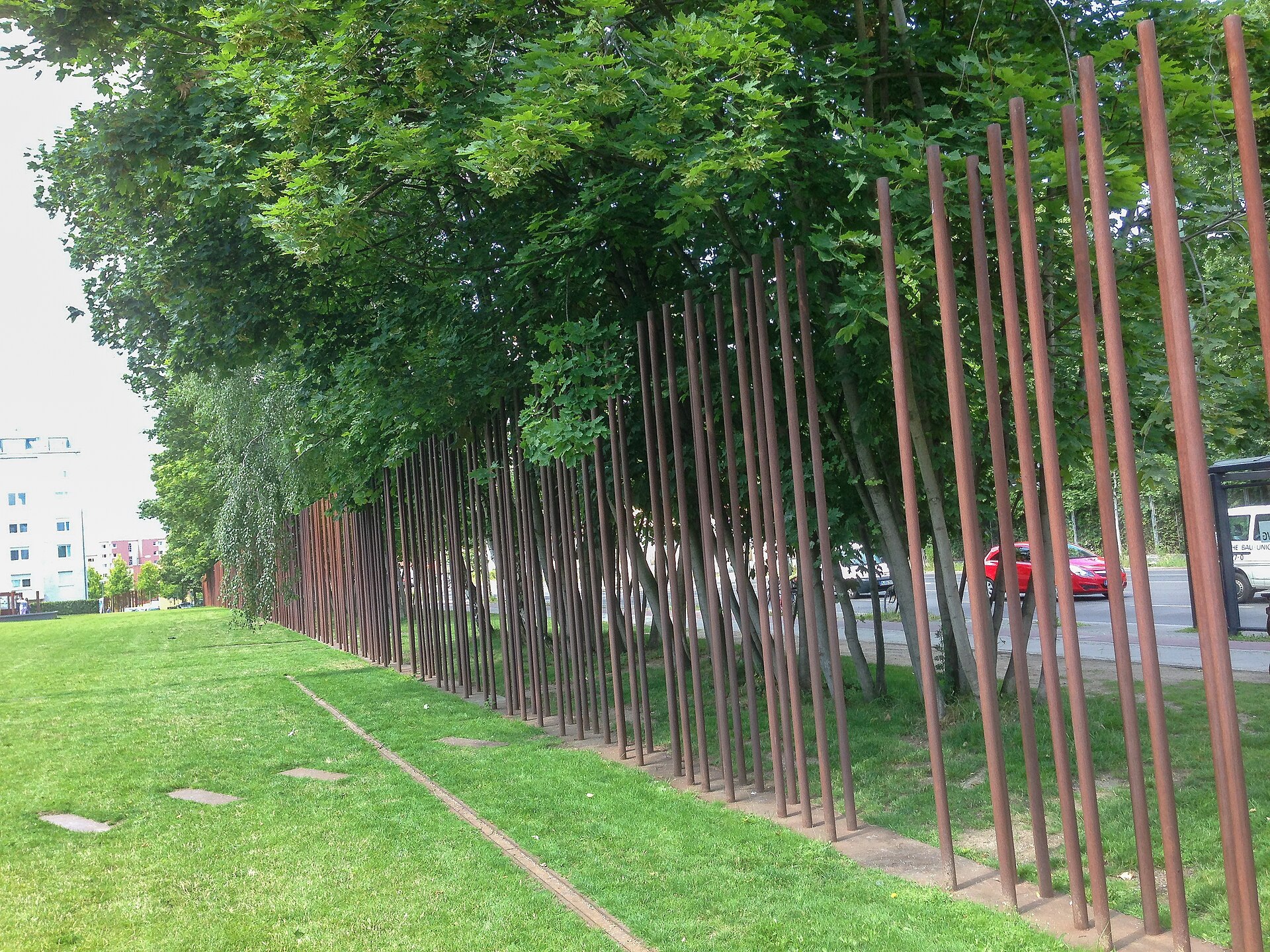
When the Wall went up in August 1961, the border ran along the front walls of the houses on Bernauer Straße: the buildings were in the East, the pavement outside them was in West Berlin’s Wedding. In the first days, people jumped from their windows into the West, some into firemen’s nets and some to their deaths, before the doors and then the windows were bricked up and eventually the houses demolished. The Berlin Wall Memorial now runs for well over a kilometre along the street, with a preserved section of the border strip, a watchtower and a viewing platform. It is free and it is the most important Wall site in the city. Our Berlin Wall sites and memorials guide covers it in detail.
Humboldthain and the flak tower
Volkspark Humboldthain, beside Gesundbrunnen station, hides one of the most extraordinary structures in Berlin: the remains of a Second World War flak tower, a colossal concrete anti-aircraft fortress that the Allies failed to demolish completely after the war and eventually buried under rubble. The northern side still rises out of the hill. You can climb to a viewing platform on top for free, with a view across the north of the city, and the association Berliner Unterwelten runs guided tours inside the tower and through other wartime bunkers from its base at Gesundbrunnen station. Tours are popular and often sell out, so book in advance; our Berlin bunker tours guide compares the options.
The Schillerpark estate
Just north of Leopoldplatz, the Siedlung Schillerpark is one of the six Berlin Modernism Housing Estates listed by UNESCO. Designed by Bruno Taut in the late 1920s, its red-brick blocks — clearly inspired by the Dutch modernism Taut had seen in Amsterdam — were built around green courtyards for working families. It is less spectacular than Taut’s Horseshoe Estate in Britz, but it is much closer to the centre, and for anyone interested in architecture it makes a good detour from the U6 at Rehberge or Seestraße.
Moabit
What Moabit is like
Moabit is an island. It is surrounded on every side by water — the Spree to the south, the Westhafen and Berlin–Spandau canals to the north, the Charlottenburg connecting canal to the west — and it has the slightly separate, self-contained feel that goes with that. The name probably comes from the Huguenot refugees who settled here in the early eighteenth century and gave their new home a biblical name, the land of Moab, although nobody is entirely sure.
Industrialisation brought factories, warehouses, the Westhafen docks, rail yards — and justice. Moabit is where Berlin puts people on trial and locks them up: the huge Kriminalgericht Moabit on Turmstraße, with its astonishing neo-baroque entrance hall, is one of the largest criminal courts in Europe, and the prison next to it still holds remand prisoners. “Moabit” in a Berliner’s mouth often means exactly that.
The district’s southern edge, along the Spree, is now close to the heart of power: the Chancellery, the Hauptbahnhof and new office blocks have crept right up to its borders. Its core, around Turmstraße, is still residential, mixed and fairly unglamorous. Like Wedding, it is changing slowly, and it rewards curiosity more than a checklist.
Arminius-Markthalle
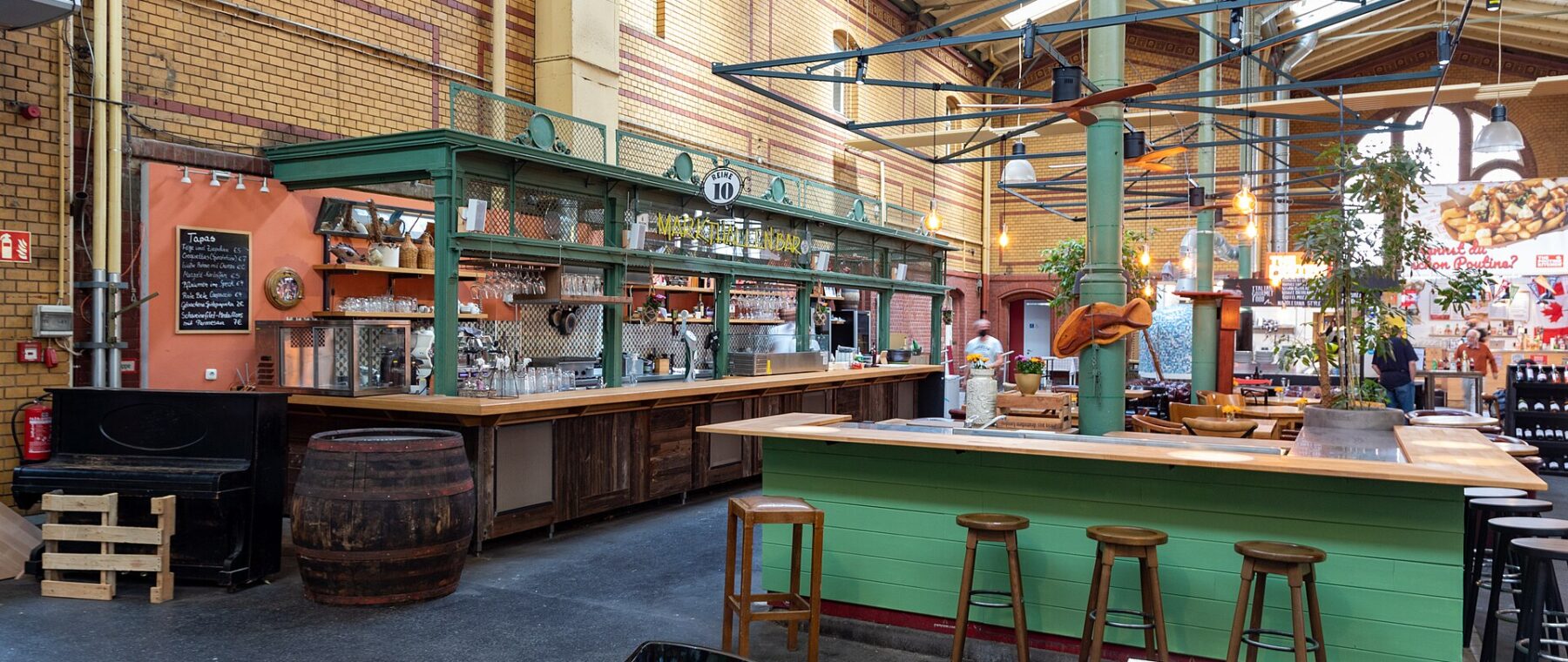
The reason most visitors come is the Arminius-Markthalle on Arminiusstraße, just off Turmstraße. Opened in 1891, it is one of the few survivors of the fourteen great municipal market halls Berlin built in the late nineteenth century, and inside it is a handsome space of brick, cast iron and skylights. After years of decline it has been revived as a mix of traditional market stalls and food counters: a butcher, a greengrocer and a baker alongside places selling burgers, pasta, poutine, tapas and craft beer, with shared tables in the middle.
It is open Monday to Saturday, 08:00 to 22:00, and closed on Sundays and public holidays. Grocery stalls generally keep shorter hours than the food counters, which mostly open from around midday. It is a very pleasant, unpretentious place for lunch, and the kind of spot where you will be one of very few tourists. The honest verdict: it is not the Markthalle Neun in Kreuzberg, and it does not try to be, but if you are anywhere near Moabit it is worth the detour. For other options see our street food markets guide.
Geschichtspark Ehemaliges Zellengefängnis
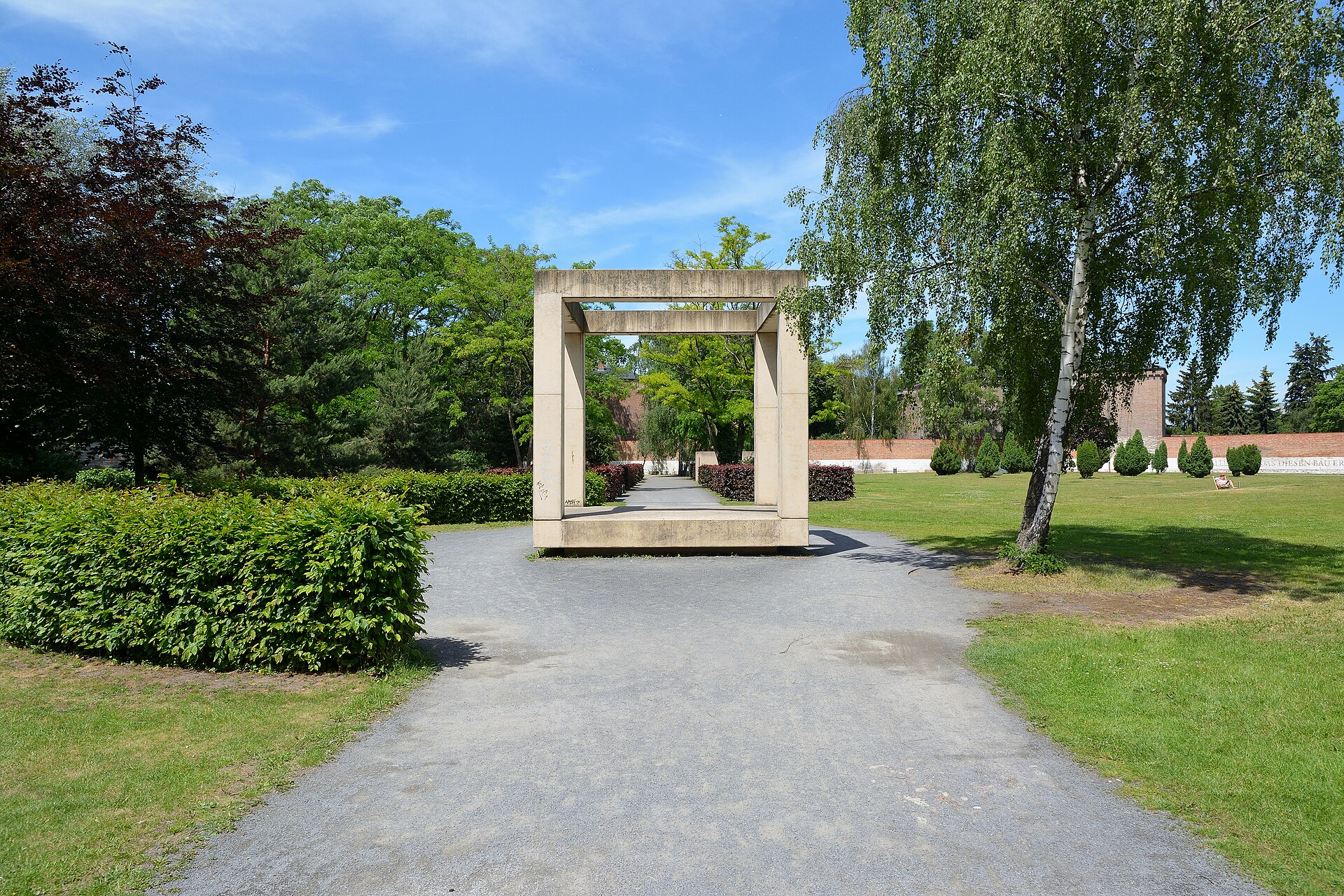
Five minutes’ walk from the Hauptbahnhof, behind a high brick wall on Invalidenstraße, lies one of the city’s most unusual parks. The Zellengefängnis Moabit, a model prison built in the 1840s on the star-shaped design of London’s Pentonville, stood here until the 1950s. Among its prisoners in the final months of the war were members of the German resistance, including the poet Albrecht Haushofer, who wrote his Moabit Sonnets in a cell here before being taken out and shot by the SS in April 1945.
The prison was demolished, and in 2006 the site opened as a history park. The outer wall remains. Inside, the footprint of the old wings is traced in hedges and paths, a cell has been recreated as an open concrete outline, and quotations from Haushofer’s sonnets are set into the walls. It is free, rarely busy, and a strange, quiet, rather beautiful place to sit for a quarter of an hour before a train.
Hamburger Bahnhof and the Spree
At the district’s south-eastern corner, the Hamburger Bahnhof — one of Berlin’s original railway termini — is now the city’s national museum of contemporary art, with works by Joseph Beuys, Andy Warhol and Anselm Kiefer among many others. It is technically on Moabit’s edge and a short walk from the Zellengefängnis park. See our Hamburger Bahnhof guide for current prices and exhibitions.
From there, a walk west along the Spree on the Moabit bank — past the Bundesratufer and the Helgoländer Ufer — is one of the most peaceful riverside walks in the inner city, with rowing clubs, houseboats and old warehouses. Further north, in the Stadtpark Moabit on Lehrter Straße, a former railway depot now houses the ZK/U, the Center for Art and Urbanistics, an artists’ residency with a garden and occasional open events.
A Half-Day Route
This route combines the best of both districts and links easily to the city centre. It works on any day but Sunday, when the market hall is closed.
- 10:00 — Start at Hauptbahnhof. Walk five minutes to the Geschichtspark Zellengefängnis.
- 10:45 — Hamburger Bahnhof, if contemporary art is your thing (allow 90 minutes), or walk along the Spree instead.
- 12:30 — U9 or bus to Turmstraße. Lunch at the Arminius-Markthalle.
- 14:00 — Bus or bike north to the Plötzensee Memorial (about 30 minutes by public transport).
- 15:15 — Walk through Volkspark Rehberge; in summer, a swim at the Strandbad Plötzensee.
- 17:00 — U6 to Wedding and dinner in the Sprengelkiez; or, if you still have energy, head east to the Wall Memorial on Bernauer Straße for the evening light.
If you are more interested in the Cold War than the Nazi period, swap Plötzensee for Humboldthain, the flak tower and Bernauer Straße. For a longer history-focused route across the city, see our Berlin history itinerary.
Getting Around
- U6 runs north through Wedding: Wedding, Leopoldplatz, Seestraße, Rehberge (for Plötzensee) and Afrikanische Straße.
- U9 links Moabit and Wedding: Hansaplatz, Turmstraße (for the Arminius-Markthalle), Birkenstraße, Westhafen, Leopoldplatz, Nauener Platz and Osloer Straße.
- U8 serves Gesundbrunnen, Voltastraße (for Humboldthain) and Bernauer Straße.
- Ring S-Bahn (S41/S42) stops at Westhafen, Beusselstraße, Wedding and Gesundbrunnen.
- Hauptbahnhof sits on Moabit’s south-eastern edge, with long-distance trains, the S-Bahn and the U5.
All of this is within fare zone AB. See our BVG tickets guide.
What It Costs
| Item | Typical price (September 2026) |
|---|---|
| Lunch at the Arminius-Markthalle | €8–15 |
| Döner or falafel on Müllerstraße or Turmstraße | €4–7 |
| Coffee in the Sprengelkiez | €3–4 |
| Strandbad Plötzensee (2026 season) | €10 adult, €6 reduced, €6 after 18:00 |
| Plötzensee Memorial, Zellengefängnis park, Wall Memorial | Free |
| Berliner Unterwelten tour | Check current price and book ahead |
Wedding and Moabit are among the cheapest parts of inner Berlin to eat and drink in. For more ways to stretch a budget, see Berlin on a budget.
Frequently Asked Questions
Is Wedding worth visiting?
For a short first trip to Berlin, only if you are already heading to the Wall Memorial on Bernauer Straße or have a particular interest in its sights — the Plötzensee Memorial, the flak tower tours, Silent Green or the lido. On a longer stay, it is a good place to see an unpolished, very international working-class Berlin neighbourhood in the middle of slow change.
Why is it called Wedding?
Nothing to do with marriage. The name comes from a medieval village called Weddinge, first recorded in the thirteenth century, which had disappeared by the time the modern district was built. Germans pronounce it with a “V”.
Is Wedding safe?
For visitors, yes, with ordinary city precautions. Leopoldplatz and parts of Gesundbrunnen have visible drug and drinking scenes, and some streets feel rough at night, but street crime against tourists is not a particular problem. See our Berlin safety tips.
What is Moabit known for?
For its criminal court and prison — “Moabit” is Berlin shorthand for being on trial — and, more happily, for the Arminius-Markthalle, the Geschichtspark on the site of the old cellular prison, and its quiet stretch of the Spree. It is an island surrounded by rivers and canals just north-west of the government quarter.
Is Wedding part of Mitte?
Administratively, yes. Since 2001 Wedding, Gesundbrunnen, Moabit and Tiergarten have all belonged to the borough of Mitte. In practice, and in the way Berliners talk, they remain entirely separate neighbourhoods with very different characters from historic Mitte. Our Mitte guide covers the historic core.
Can you swim at Plötzensee?
Yes. The Strandbad Plötzensee is a lido with a sandy beach, open in summer; in 2026 it opened from May, daily until the end of August and then only in good weather, with adult entry at €10. Check the operator’s website for current dates and prices.
Related Berlin Guides
- Berlin Neighbourhoods: What Each District Is Actually Like
- Berlin Wall Sites and Memorials
- Berlin Bunker Tours
- Hamburger Bahnhof
- Nazi History in Berlin
- Prenzlauer Berg Guide
- Neukölln Guide
- Schöneberg Guide
Photo Credits
Arminius-Markthalle interior: Arminius-Markthalle-1 by G. Sawatzky, CC BY-SA 4.0, via Wikimedia Commons.
Leopoldplatz in winter: 20231207 xl 1450-Am Leopoldplatz (Berlin-Wedding) 3 by Molgreen, CC BY-SA 4.0, via Wikimedia Commons.
Geschichtspark Ehemaliges Zellengefängnis Moabit: Berlin, Geschichtspark Ehemaliges Zellengefängnis Moabit NIK 7446 by Nightflyer, CC BY 4.0, via Wikimedia Commons.
Wall markers on Bernauer Straße: Berlin, Bernauer Straße, Grenzmauer 2014-07 (1) by HerrAdams, CC BY-SA 4.0, via Wikimedia Commons.
Final Word
Nobody should come to Berlin for Wedding and Moabit. But plenty of people who do find their way there come back with a clearer picture of the city than they got from the famous districts. These are the places where Berlin keeps its courts and its lido, its execution shed and its market hall, its bunkers and its bike paths along the canals — the working parts of a city rather than the shop window.
Give them half a day. Sit in the prison park in Moabit, eat lunch in the old market hall, stand for a few minutes in the brick room at Plötzensee, and then go and swim in the lake a kilometre away, the way Berliners do. It is an odd combination, and a very Berlin one.