WWII Bunker Tours in Berlin: Underground History Guide (2026)
Complete guide to WWII bunker tours in Berlin — Berliner Unterwelten, Berlin Story Bunker, the Führerbunker site, plus tickets, prices and booking tips for 2026.
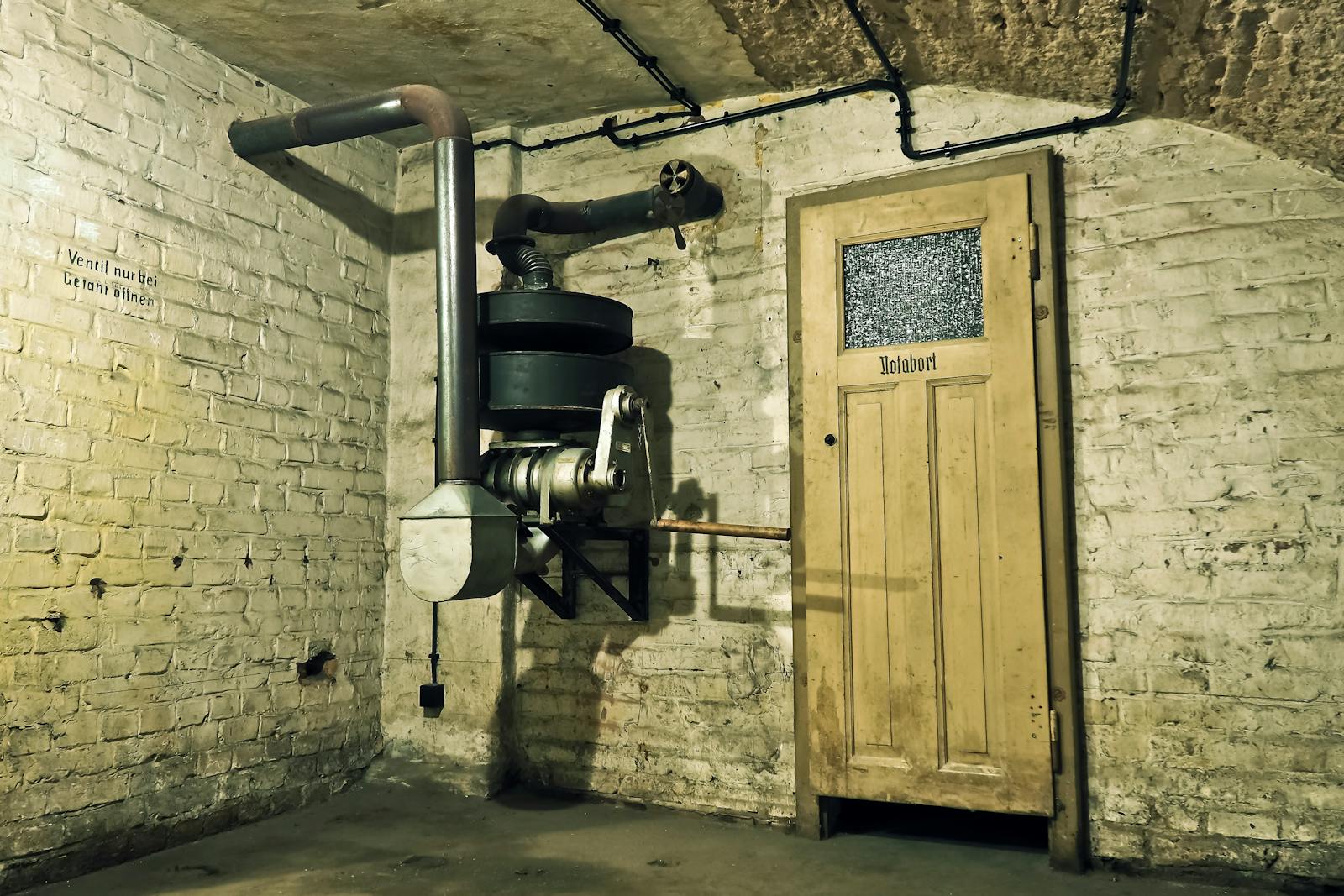
The first time I went down into a Berlin bunker — the Gesundbrunnen civil-defence shelter under the U8 platform, on a damp Tuesday in October — I remember being struck by how ordinary it looked at first. White-painted walls, faded signage in Fraktur script, doors with iron wheels that took two hands to spin. Then the guide pointed at the original phosphorescent arrows still glowing faintly in the gloom, and the temperature dropped about ten degrees as we got further in, and the ordinariness wore off fast. Of all the WWII sites in Berlin, the bunkers are the ones that have lodged most deeply in my memory. They’re the spaces the city was hiding inside while it was being destroyed above.
Berlin’s bunker network is one of the most extensive WWII-era underground systems in any major European city, and over the last two decades a handful of operators have made parts of it accessible to visitors. This guide covers every WWII bunker tour in Berlin currently running: the legendary tours run by Berliner Unterwelten, the Anhalter Hochbunker (now home to Berlin Story Bunker), the famous Führerbunker site (which you cannot enter — and I’ll explain why), the lesser-known sites like the Boros Collection bunker and the Fichtebunker in Kreuzberg, and the practical booking, pricing, accessibility and dress-code information you need to actually visit any of them. Prices and seasonality are checked against the operators’ current pages as of May 2026.
Why Berlin’s Bunkers Are Unique Among WWII Sites
A few things set Berlin’s bunker landscape apart from anywhere else in Europe. First, the scale: by 1945, Berlin had more than a thousand purpose-built air-raid shelters, on top of the wider use of subway stations, brewery cellars, and reinforced basements. The city was an obsessive target — the Royal Air Force and the US Army Air Forces flew 363 major bombing missions over Berlin between 1940 and 1945, dropping an estimated 67,000 tonnes of high explosive — and the regime had spent the entire war frantically building shelters to keep workers and party functionaries alive.
Second, the survival rate: because so many of the bunkers were built using forced labour to standards that defied easy postwar demolition (some had reinforced concrete walls up to 4.5 metres thick), Allied attempts to blow them up after 1945 mostly failed. The Soviets and the GDR repurposed many for civil defence during the Cold War; the West did the same in the British and American sectors. By the time reunification came in 1990, Berlin had inherited a network of bunkers that were too big to remove and too useful to forget.
Third, the politics: a number of the bunkers — most famously the Führerbunker, but also others — have been deliberately rendered inaccessible to prevent them becoming pilgrimage sites for the far right. That’s the reason you cannot tour Hitler’s bunker, and it’s the reason a single understated information board now marks the spot. We’ll get to that in detail below. The full Nazi-era context is covered in our guide to Nazi history sites in Berlin, which pairs well with this guide.
Berliner Unterwelten — The Main Bunker Tour Operator
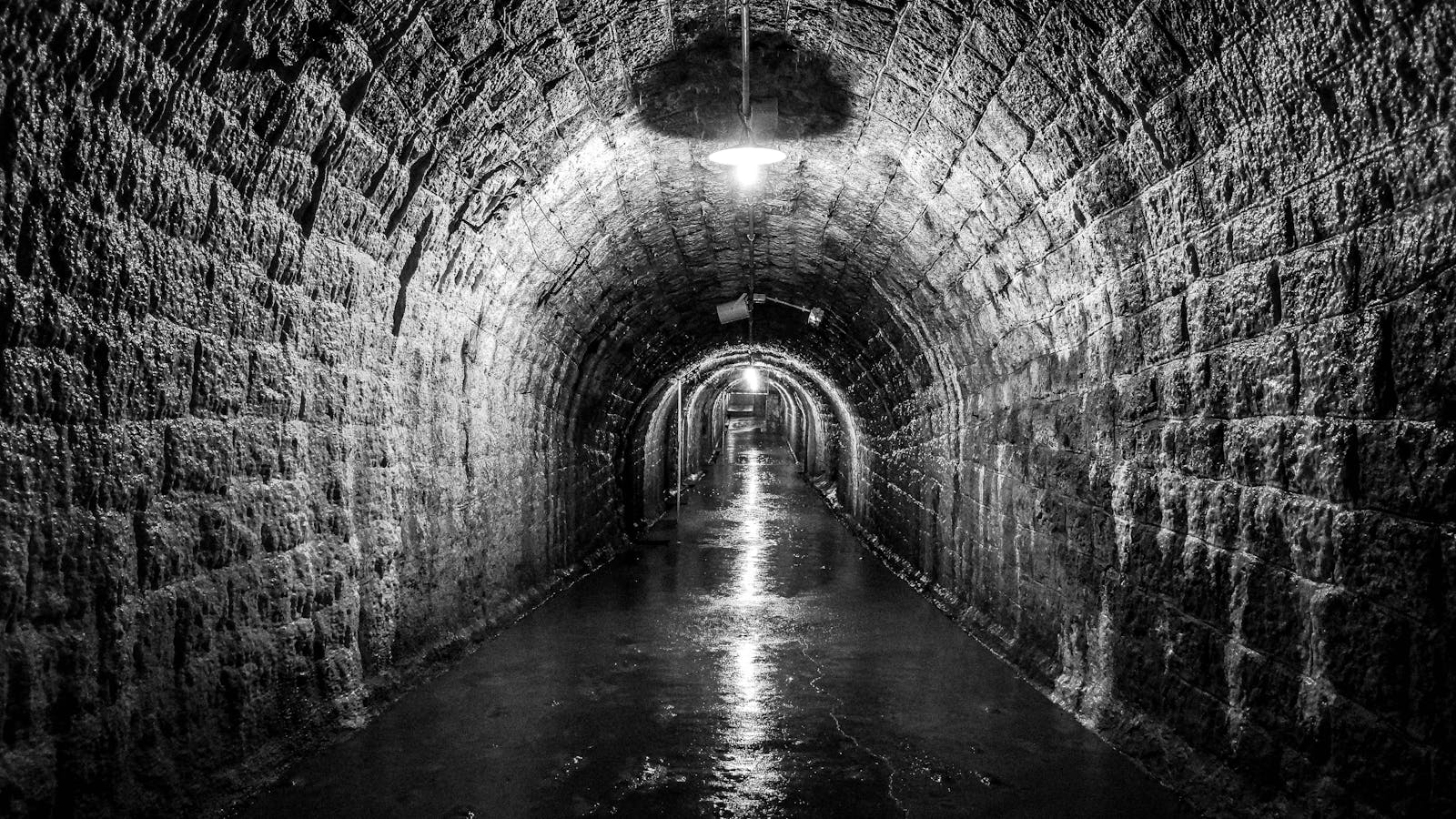
Berliner Unterwelten e.V. — literally “Berlin Underworlds” — is the non-profit association that has, since its founding in 1997, been the city’s central bunker tour operator. They have done more than anyone else to clear, preserve, and make accessible the network of WWII and Cold War shelters underneath Berlin. The association was awarded the Silberne Halbkugel — Silver Hemisphere, Germany’s national monument-preservation prize — in 2006. If you take only one bunker tour in Berlin, it will almost certainly be one of theirs.
Where to Find Them
Brunnenstrasse 105, 13355 Berlin, next to the southern entrance of U-Bahn Gesundbrunnen. Closest transport: S+U Gesundbrunnen (S1, S2, S25, S26, S41, S42, U8) or bus 247. The bookshop and ticket counter are inside this building; many of the public tours also depart from here.
How Booking Works
This is the single most important thing to know about visiting: booking is online-only, at tickets.berliner-unterwelten.de. There are no walk-up sales at the meeting points. Tickets are non-refundable. Tours sell out reliably — the English-language Dark Worlds tour, the most popular one, often books up two to six weeks in advance during peak season (May through October and around Christmas markets). My advice: as soon as you’ve booked your flights to Berlin, book your Unterwelten tour. If you find your dates are sold out, check the site every few days for cancellations.
Languages: German and English are standard, with the English Dark Worlds tour running daily. French, Spanish, Italian, Danish, and Dutch tours are offered seasonally — check the live calendar. ID is required for the reduced-price ticket (€13). Children under 7 are not admitted to any tour. No flash photography, generally no photography at all on most underground tours (for monument-protection and forced-labour-history reasons).
The Berliner Unterwelten Public Tours Compared
Unterwelten currently runs more than a dozen distinct public tours. The lineup shifts seasonally — Humboldthain, for example, is closed November through March for bat hibernation — and special weekend tours appear on the calendar from time to time. Below is the practical comparison of the major tours, with current prices and durations.
Tour 1 / Tour M — Dark Worlds (Gesundbrunnen Bunker)
Duration: 90 minutes · Price: €18 (reduced €13) · Meeting point: Brunnenstrasse 105 · Languages: German daily; English (as Tour M) daily.
The classic and the most-booked tour. You descend into the WWII civilian air-raid shelter integrated into the U-Bahn Gesundbrunnen station — phosphorescent signage still visible on the walls, original ventilation equipment, pneumatic-post tubes that once let employees of the breweries above ground communicate down to the bunker, and an extraordinary collection of artefacts excavated from the network. The exhibition includes objects found during the Unterwelten team’s own clearing work: gas masks, soldiers’ belongings, civilian shelter equipment, a touching collection of children’s drawings. The tour traces the development of the U-Bahn under the Third Reich and the civilian use of subway tunnels as makeshift bunkers during the air raids of 1943–45.
This is the tour I’d recommend if you’re only doing one. It hits all the WWII bases — civilian air-raid life, the bombing of Berlin, the original Nazi infrastructure, postwar rediscovery — in a compact 90 minutes that doesn’t require special clothing or extreme physical fitness.
Tour 2 — From Flak Towers to Mountains of Debris (Humboldthain)
Duration: 90 minutes · Price: €17 (reduced €13) · Season: April to end of October only (closed Nov–March for bat hibernation) · Meeting point: lower platform of the flak tower ruin in Volkspark Humboldthain, accessible from Badstrassenbrücke entrance · Minimum age: 18.
One of the most extraordinary visits in Berlin and almost completely unknown to the casual tourist. Adolf Hitler ordered six monumental flak towers built in three German cities in 1940; three were built in Berlin. After the war the Allies tried to demolish them all and mostly failed. The Humboldthain tower was partially demolished, then buried in rubble to form one of the artificial hills (Trümmerberge) you see in Berlin parks — the “Mountains of Debris” of the tour’s name. The Unterwelten team have, over many years and thousands of volunteer hours, cleared 1,400 cubic metres of rubble from three of the seven floors and now run tours into the interior.
The tower interior is about 10°C even in summer. Hard hats are provided. You should wear sturdy closed-toe shoes and a warm layer — refused entry without proper footwear. The 18+ age limit is strict. Photography is permitted in some sections. The Allied demolition attempt is one of the things you’ll see up close — twisted reinforcing steel where the explosives nearly worked, then didn’t.
Tour 3 — Subways and Bunkers in the Cold War (Blochplatz)
Duration: 90 minutes · Price: €18 (reduced €13) · Meeting point: Badstrasse/Böttgerstrasse, 13357 Berlin (Blochplatz) · Minimum age: 7 (recommended 14+).
This is the broader 20th-century tour. The bunker visited was originally built during U-Bahn construction in the 1970s and converted into a Cold War civil-defence shelter in 1981–83 for around 1,300 people. The tour covers the Berlin Airlift of 1948–49, the building of the Wall in 1961, the Rudow spy tunnel (Operation Gold, the famous British/American attempt to tap Soviet military phone lines), the Wall-era ghost stations (West Berlin trains passing through closed East Berlin stations with no stops), and the sewer escapes that some East Germans used to flee. If you’ve enjoyed Dark Worlds and want a continuation that takes you into the postwar period, this is the natural sequel. Pair it with our Checkpoint Charlie guide and our Berlin Wall timeline for context.
Atomic Bunker Pankstrasse
Duration: 60–90 minutes · Price: ~€13 · Meeting point: U-Bahn Pankstrasse station.
A Cold War nuclear shelter integrated directly into the U-Bahn Pankstrasse station, built in 1977. Designed to hold 3,339 people for two weeks in the event of an atomic attack — the kind of cheerful planning detail that becomes wildly visceral once you’re in the actual decontamination showers. Newer addition to the public tour roster and slightly cheaper.
Tour F — The Fichtebunker (Kreuzberg)
Location: Fichtestrasse 6, 10967 Berlin · Duration: 90 minutes · Currently: limited public tours, check Unterwelten calendar.
One of the strangest buildings in Berlin and worth knowing about even if you can’t catch a tour. The Fichtebunker began life in 1883 as a gasometer — a giant cylindrical brick container for storing illuminating gas. In 1940 the Nazis converted it into a six-storey mother-and-child air-raid bunker with a roof three metres thick, sized for 6,500 women and children. By the end of the war it held more than 30,000 people in catastrophic conditions. Postwar it served as a retirement home, then a homeless shelter (dubbed “the Bunker of the Hopeless” by Berliners), then a long-term food reserve for West Berlin during the Cold War. Today the upper floors have been converted into luxury “Penthouses on the Bunker” apartments — yes, really — while the lower floors are preserved and toured. From outside, the circular brick fortress is one of the most striking structures in Kreuzberg.
Other Tours to Watch For
Unterwelten’s calendar shifts. Other tours that appear regularly or seasonally:
- Tunnel and Bunker Dresdener Strasse — air-raid shelters and underground passages around Moritzplatz / Kreuzberg.
- Under the Berlin Wall — Cold War escape tunnels including Tunnel 57. Excellent for visitors interested in the Wall era.
- Tour S — Hochbunker Pallasstrasse — very limited public access, see below.
- Tour-only specials — themed weekends on the Stasi, on the Cold War, on the U-Bahn architecture, etc.
Berlin Story Bunker — “Hitler: How Could It Happen?”
Address: Schöneberger Strasse 23a, 10963 Berlin (behind the ruined façade of Anhalter Bahnhof) · Hours: Daily 10:00–19:00, last admission 17:30 · Price: €18 (audio guide in 10 languages included).
This is the second major bunker visit in Berlin and a completely different experience from Unterwelten. The Anhalter Hochbunker was built in 1942–43 by architect Karl Bonatz for Reichsbahn passengers using the adjacent Anhalter Bahnhof. Walls up to 4.5 metres thick. Designed for 3,500 people — by April 1945 over 12,000 were jammed inside, with temperatures reportedly reaching 60°C and standing room of less than one square metre per person. A tunnel once connected it directly to the railway station; today the station is a fragmentary ruin and the bunker is intact and houses one of the most ambitious permanent WWII exhibitions in the city.
The flagship exhibition is “Hitler — How Could It Happen?”, spread across 3,000 square metres of three floors. It does not glorify; it dissects. The exhibition uses photography, original documents, period objects and audio testimony to trace how the Weimar Republic gave way to Nazi rule, how the regime functioned, and how the Holocaust was perpetrated. It ends in a reconstructed model of the Führerbunker, including a 1:1 reconstruction of the room in which Hitler took his own life on April 30, 1945. This is, importantly, the only physical reconstruction of the Führerbunker death room you can visit anywhere; it’s how the Berlin Story Bunker has managed to satisfy the legitimate visitor curiosity about that history without creating a pilgrimage site at the actual location.
Two further exhibitions sit on the upper floors: “Germany 1945 — Today,” a quick survey of the postwar period, and a rotating special exhibition. Total exhibition space is around 6,500 m² and the audio guide is detailed enough that you should budget at least 3–4 hours. Booking is straightforward — door tickets, GetYourGuide, or visitBerlin’s shop. It rarely sells out the way Unterwelten does but advance booking saves the queue.
The Führerbunker — Why You Cannot Go Inside
The single most-searched WWII site in Berlin is also the one you cannot enter. This is by deliberate policy, and the reasons are worth understanding before you arrive.
The Führerbunker — the underground command complex where Hitler spent his final months and where he and Eva Braun took their own lives on April 30, 1945 — was located beneath the gardens of the old Reich Chancellery on Wilhelmstrasse. After the war, Soviet sappers attempted to demolish the structure in 1947; they succeeded in destroying the upper levels but the lower bunker proved resistant. East German authorities undertook further demolition in the 1980s in preparation for the construction of an apartment complex. During the post-reunification redevelopment of the area in the 1990s, the remaining cellar voids were filled with sand and concrete.
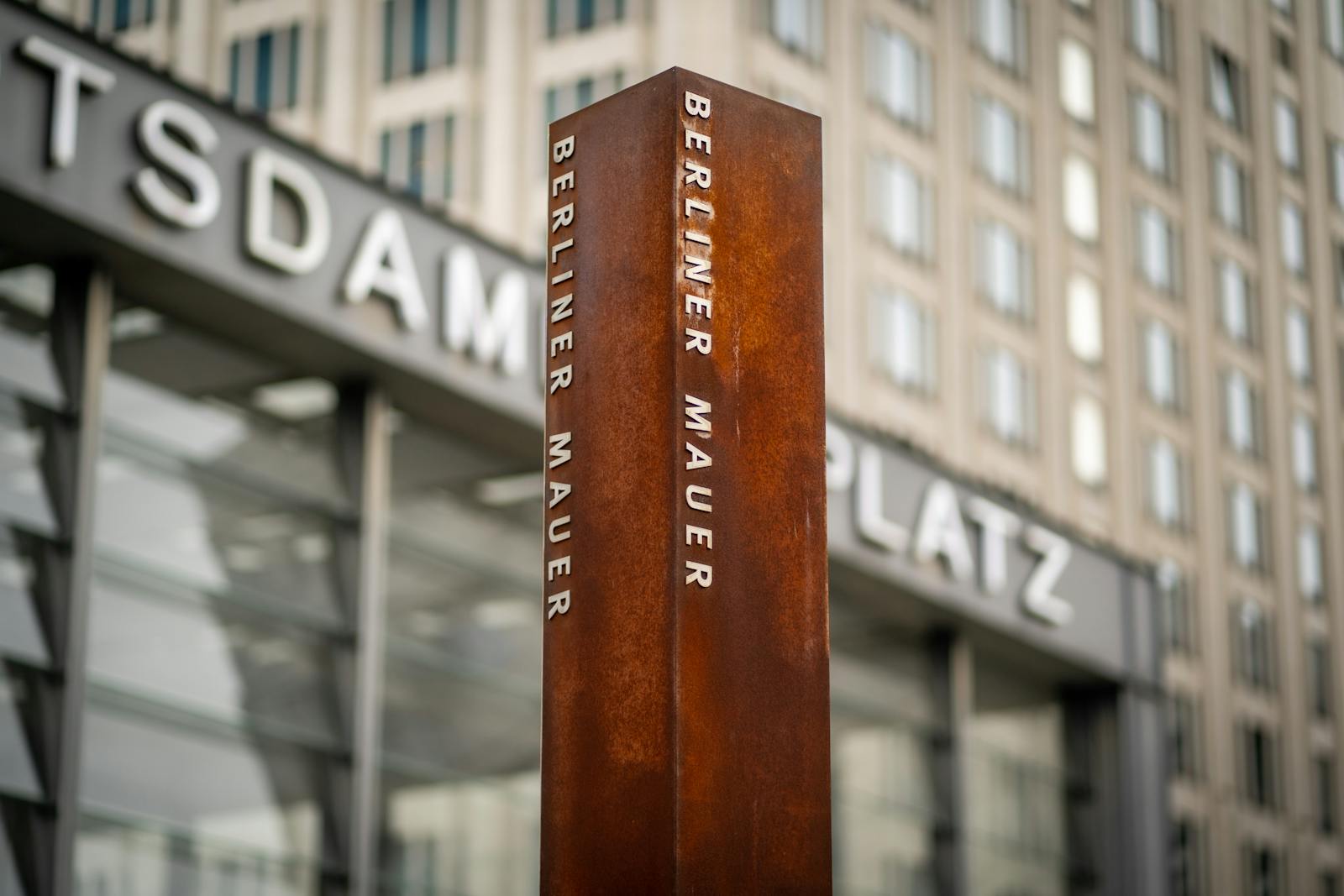
Where the bunker once was, you’ll find a small, deliberately unremarkable parking lot bordered by a residential apartment block. On June 8, 2006 — six days before the start of the FIFA World Cup hosted in Germany — the city installed a single understated information panel at the corner of In den Ministergärten and Gertrud-Kolmar-Strasse, showing a schematic plan of the bunker, a brief historical note, and a black-and-white photograph. The decision to install only a simple board rather than a memorial was deliberate: Berlin’s authorities, in consultation with historians and Holocaust education specialists, did not want to risk creating a site of neo-Nazi pilgrimage.
How to find the information board: walk from Potsdamer Platz S-Bahn east along Ebertstrasse (passing the Memorial to the Murdered Jews of Europe), turn left onto Gertrud-Kolmar-Strasse, and the parking lot with the panel is about 100 metres in. Total walking time from Potsdamer Platz is about 5 minutes. The board is free, open 24 hours, and almost always has a few quiet visitors. Read it, take in the deliberately mundane setting, and walk away. The point is the absence. If you want the physical reconstruction of the death room, that’s at the Berlin Story Bunker, ten minutes by U-Bahn south.
Other Berlin Bunkers Worth Knowing About
Reichsbahnbunker / Boros Collection
Reinhardtstrasse 20, 10117 Berlin · Tours Thursday–Sunday by prior online reservation at boros-collection.com.
One of the most architecturally striking bunkers in Berlin and one of the strangest reuse projects anywhere. The 1943 above-ground bunker on Reinhardtstrasse was built for up to 3,000 Reichsbahn passengers using forced labour. After 1945 it was used by the Red Army as a POW camp, then by East Germany as a textile warehouse (nicknamed “Bananenbunker” because tropical fruit was stored there), then by techno squatters from 1992 until 1996 as one of Berlin’s most extreme illegal clubs. In 2003 Christian Boros — Polish-born advertising executive and art collector — bought the building and spent five years converting it into a private exhibition space for his contemporary art collection, with a glass penthouse for his family added on top.
Today, the Boros Collection runs guided tours of the bunker and the rotating contemporary art exhibitions inside (currently Boros Collection 4). Tours are by online reservation only and typically book six to eight weeks in advance. It is the most aesthetically refined bunker visit in Berlin and the one that least feels like a war museum — which is part of the point. The bunker’s structure (4-metre thick walls, original layout, traces of the techno-club era) is openly visible behind the contemporary art.
Hochbunker Pallasstrasse
Pallasstrasse 5, 10781 Berlin (Schöneberg) · Limited public tours, check Berliner Unterwelten and Berlin Story calendars.
Visible from the street and unmissable: a raw concrete cube wedged under the long 1970s Pallasseum apartment block, which famously straddles the bunker on stilts. Construction began in 1943–45 by forced labourers and POWs to serve as a Reichspost bunker; it was never finished, hence the unfinished concrete appearance. After the war American troops tried to demolish it in 1946 and failed — the explosives knocked the building askew but couldn’t bring it down. It was converted to civil-defence use in 1986–89 at a cost of 10 million Deutschmark, decommissioned in 2010, and has been a protected monument since 2011. Public tours have been extremely rare. From the outside it’s free to visit and worth a walk-by if you’re already in Schöneberg — the visual juxtaposition of the brutalist 1970s housing slab atop the bombed-out Nazi bunker is one of the most surreal architectural sights in the city.
Humboldthain Flak Tower (Exterior)
Volkspark Humboldthain, Brunnenstrasse / Hochstrasse, 13357 Berlin · 24/7 · Free.
The exterior of the flak tower whose interior is toured on Berliner Unterwelten Tour 2 is freely accessible anytime — you can walk up the artificial hill that was built over the partially-demolished tower, and the surviving concrete platform at the top serves as a viewing point with one of the best free views in north Berlin. There’s no signage, no fee, no opening hours — just walk into the Volkspark Humboldthain from the south entrance and follow the gravel path up the hill. Pair with the Unterwelten Tour 2 in season for the full picture.
Tempelhof Airport Bunker Tunnels
Platz der Luftbrücke 5, 12101 Berlin · THF Tours, ~€18–20, ~2 hours, advance booking required.
Tempelhof Airport — the Nazi-era monumental terminal that became famous during the 1948–49 Berlin Airlift — sits on top of an extensive network of WWII air-raid shelters, technical tunnels, and partially-completed underground spaces. The airport’s own visitor centre (THF Visitor Center) runs guided tours that include the shelter rooms, the rooftop terrace (built as a Nazi-era assembly area for crowd events), and the surviving Cold War-era US military spaces. Bookings via thf-berlin.de. Pair with a walk on the Tempelhofer Feld park, which sits on the former runway grounds and is one of Berlin’s most beloved public spaces.
Practical Tips for Visiting Berlin Bunkers
What to Wear
Sturdy closed-toe shoes are mandatory for all Berliner Unterwelten tours — no sandals, no heels, no flip-flops. You will be turned away at the door without them. Bring a warm layer year-round; even in August, the underground temperature is around 10°C. For Humboldthain Flak Tower (Tour 2), bring a proper jacket — the interior is genuinely cold, and a hard hat is provided. Berlin Story Bunker is climate-controlled and you can wear whatever you’d wear to a regular museum.
Accessibility
None of the Berliner Unterwelten underground tours are wheelchair accessible — the bunkers were never designed for that, and original ladders and narrow staircases are part of the historical fabric. Berlin Story Bunker is partially accessible via elevator; contact in advance about specific needs. The Führerbunker information board and Humboldthain exterior are accessible. For broader accessibility planning, see our accessible transportation guide.
Photography
Photography is prohibited on most Berliner Unterwelten tours (monument-protection concerns, plus the forced-labour history of some sites makes the operator strict about the use of images). Photography is permitted at Berlin Story Bunker, at the Boros Collection (with some restrictions on the art), at the Humboldthain exterior, and at the Führerbunker information board.
Children and Age Limits
Children under 7 are not admitted to any Berliner Unterwelten tour. Tour 2 (Humboldthain) is 18+ only. The Berlin Story Bunker is suitable for older teenagers but is heavy material — the “Hitler: How Could It Happen?” exhibition is not appropriate for under-12s. The Boros Collection’s tours are for older visitors. For families with younger children interested in WWII history, the better choices are the DDR Museum and the German Spy Museum or the rooftop tour of Tempelhof Airport.
Toilets and Bags
No toilets at the Unterwelten meeting points — use the U-Bahn facilities or a café beforehand. No luggage storage at any of the bunker sites — leave large bags at your hotel or use the Berlin Hauptbahnhof or Gesundbrunnen station luggage lockers. Small backpacks are fine on most tours.
Best WWII Bunker Tour Itineraries
If You Have a Half Day
Berliner Unterwelten Tour 1 / Dark Worlds (90 minutes), preceded or followed by a walk to the Führerbunker information board. Total time: about 3 hours including transit.
If You Have a Full Day
Morning: Berlin Story Bunker at Anhalter Bahnhof (3–4 hours including the death-room reconstruction at the end). Lunch in Kreuzberg. Afternoon: Berliner Unterwelten Dark Worlds (90 minutes at Gesundbrunnen). End the day at the Führerbunker information board on your way back through Mitte.
If You Have Two Days
Day 1 as above. Day 2 morning: Berliner Unterwelten Humboldthain Flak Tower (Tour 2, April–October only). Day 2 afternoon: either the Tempelhof Airport tour (the WWII bunker tunnels and the Cold War terminal), or the Boros Collection if you booked far enough ahead. Round it out with a walk past the Hochbunker Pallasstrasse exterior in Schöneberg.
The single best free complement to any of these is eight minutes’ walk from Potsdamer Platz. The Topography of Terror stands on the block that held the Gestapo headquarters, the SS leadership and the Reich Security Main Office, and its outdoor trench runs directly above the excavated cellar walls of the Gestapo house prison — foundations that citizen groups dug up themselves in the 1980s, on ground nobody had marked. Entry is free and it opens on Mondays. Our Topography of Terror guide covers what to expect and how long to allow.
The Humboldthain tours start in Gesundbrunnen, in the north of old Wedding, and it is worth staying in the area afterwards rather than heading straight back to the centre. The Wall Memorial on Bernauer Straße is a short walk away, the free viewing platform on top of the flak tower looks over the whole of northern Berlin, and a little further west are the Plötzensee Memorial and the lake beside it. Our Wedding and Moabit guide joins them up.
Frequently Asked Questions
Can you visit Hitler’s bunker (Führerbunker) in Berlin?
No. The Führerbunker was largely demolished by Soviet sappers in 1947, further demolished by East Germany in the 1980s, and the cellar voids were filled with sand and concrete during 1990s redevelopment. The site is now a residential parking lot at the corner of In den Ministergärten and Gertrud-Kolmar-Strasse, marked by a single information board installed in 2006. The decision not to memorialise the spot was deliberate: Berlin authorities did not want to create a neo-Nazi pilgrimage site. The Berlin Story Bunker contains a 1:1 reconstruction of the room where Hitler died, which is as close as you can get to seeing the space.
Where is Hitler’s bunker located today?
The site is at the corner of In den Ministergärten and Gertrud-Kolmar-Strasse, about a 5-minute walk from Potsdamer Platz S-Bahn. The information panel is free, open 24/7, and almost always has a few quiet visitors.
Which is the best WWII bunker tour in Berlin?
For most visitors, Berliner Unterwelten’s Tour 1 / Dark Worlds is the best single tour — the WWII focus is clear, the duration is manageable, the English version runs daily, and the bunker artefacts are extraordinary. If you have time for two, add the Berlin Story Bunker for the wider exhibition context.
How do I book Berliner Unterwelten tours?
Online only at tickets.berliner-unterwelten.de. No walk-up sales. Tickets are non-refundable. Book 2–6 weeks ahead in peak season.
Do Berlin bunker tours run in English?
Yes. Berliner Unterwelten’s Dark Worlds tour runs daily in English (as Tour M). Other tours run in English seasonally — check the calendar. Berlin Story Bunker’s audio guide is offered in 10 languages.
Are Berlin bunker tours suitable for children?
Children under 7 are not admitted on any Unterwelten tour. Tour 2 (Humboldthain) is 18+ only. Tour 1 / Dark Worlds is suitable for ages 14 and up; younger children may find the bunker atmosphere unsettling. Berlin Story Bunker’s exhibitions cover difficult material and are not appropriate for under-12s.
How long do Berlin bunker tours last?
Berliner Unterwelten tours: 90 minutes. Berlin Story Bunker: 3–4 hours (self-paced). Boros Collection: roughly 90 minutes.
How much do Berlin bunker tours cost?
Berliner Unterwelten public tours: €17–€18 full price, €13 reduced (students, seniors, etc., with ID). Berlin Story Bunker: €18 with audio guide. Boros Collection: roughly €18. Tempelhof tours: ~€18–€20. The Führerbunker information board and Humboldthain exterior are free.
Can you visit the Boros Bunker without a tour?
No. The Boros Collection only operates by guided tour, Thursday through Sunday, with prior online reservation. The bunker exterior is freely visible at Reinhardtstrasse 20.
What should I wear for a Berlin bunker tour?
Sturdy closed-toe shoes (mandatory) and a warm layer (recommended year-round; underground temperatures are around 10°C even in summer). For Tour 2 / Humboldthain bring a proper jacket. Hard hats are provided when needed.
Are Berlin bunker tours wheelchair accessible?
No. The bunkers were never designed for accessibility and the original infrastructure — narrow staircases, low doorways, ladders in places — cannot be modified without destroying the historical fabric. Berlin Story Bunker is partially accessible; contact in advance for specific needs.
Is photography allowed inside Berlin bunkers?
Generally no on Berliner Unterwelten tours. Yes at Berlin Story Bunker, at the Boros Collection (with restrictions on individual artworks), and at all exterior sites including the Humboldthain flak tower and the Führerbunker information board.
How far in advance should I book a Berlin bunker tour?
Two to six weeks ahead in peak season (May–October and the December Christmas-market period). The English Dark Worlds tour and the seasonal Humboldthain tour fill up fastest. Off-peak, a few days ahead is usually enough.
Are there Cold War bunkers to visit in Berlin?
Yes. Berliner Unterwelten Tour 3 (Blochplatz, Subways and Bunkers in the Cold War) and the Atomic Bunker Pankstrasse tour both focus on Cold War civil-defence shelters. The Berlin Story Bunker’s upper-floor “Germany 1945 — Today” exhibition covers the postwar context, and our Stasi Museum guide covers the surveillance state above ground.
A Final Note on Bunker Visiting
If you’ve never been underground in a WWII bunker, the first one will reframe how you see the city above. The German civilians who used these shelters were ordinary people inside a regime that had built itself on lies and was, by 1943, being systematically incinerated from above. The bunkers held all of that — the propaganda posters, the children’s drawings, the gas masks, the rationing notices, the rumours, the fear, the silence. Walking through them in 2026, with the lights on and a guide pointing things out, you carry a small fraction of what that experience must have been. Take it slowly. Don’t be afraid to leave the group for a moment and just stand still in one of the corridors. The bunkers have a quality of silence that I haven’t found anywhere else in Berlin.
For the wider historical arc, our Berlin history and culture guide ties these underground sites into the larger story of the 20th-century city. To pair a bunker visit with related WWII-era memorials, see our Nazi history in Berlin guide and our Jewish history in Berlin guide. And if you’d rather see the post-1945 reckoning that came next, our Berlin after reunification guide picks up the thread.