Museum Island Berlin: Complete UNESCO World Heritage Guide (2026)
Complete 2026 guide to Museum Island Berlin — all five museums, the James Simon Galerie, ticket math, and how to plan around the Pergamon closure.
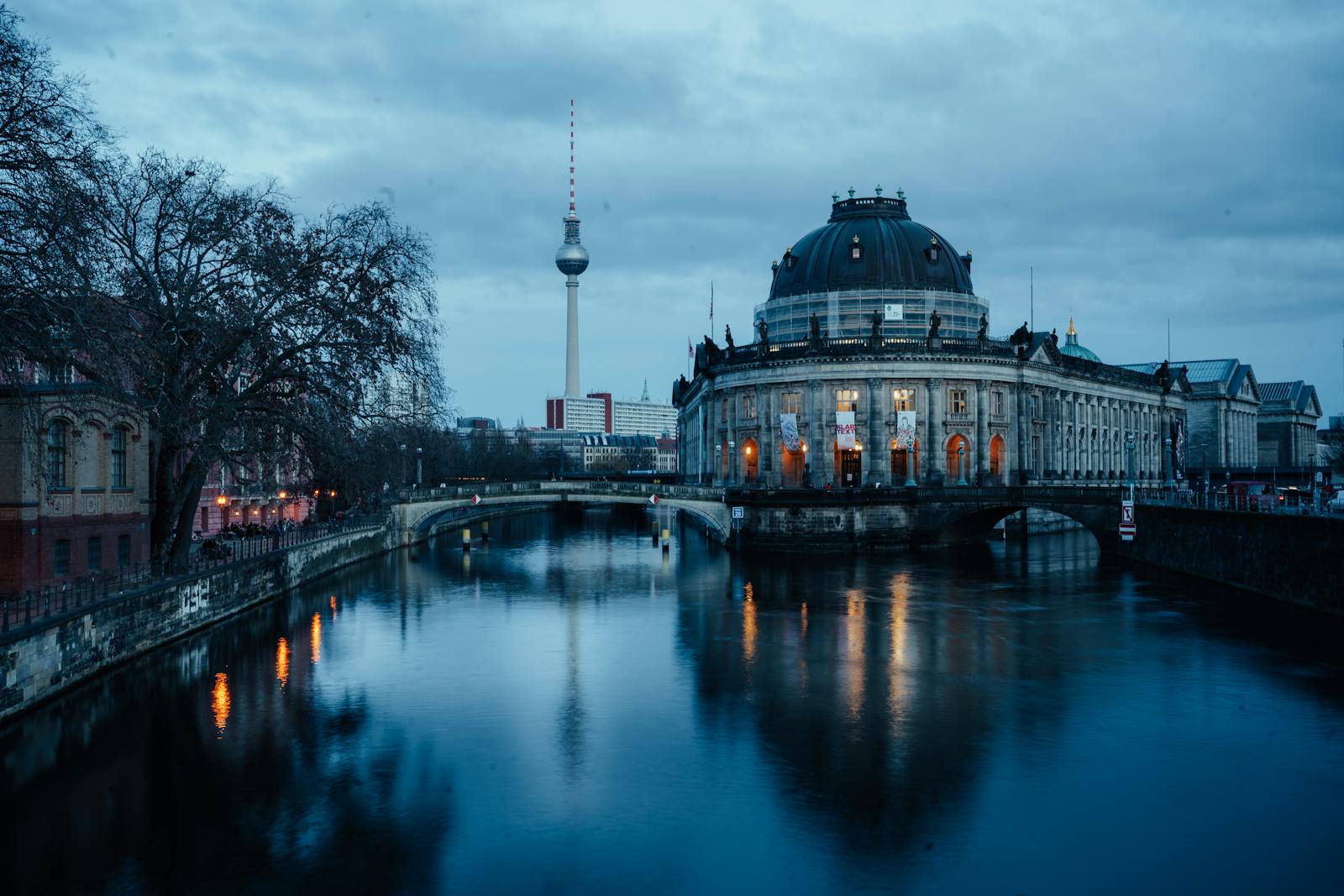
If you have one day in Berlin and you want to see something that genuinely couldn’t exist anywhere else in the world, walk to the northern half of the Spreeinsel — the small island in the middle of the river — and spend it on Museum Island Berlin. Five buildings, two centuries of construction, one continuous masterplan, and a collection that runs from the Babylonian Ishtar Gate to early-modern German Impressionism. UNESCO inscribed it as a World Heritage Site in 1999 and the masterplan that began in the late 1990s is still being completed twenty-five years later. This is a guide to what’s open in 2026, what’s currently behind hoardings, what’s worth your time, and how to spend either three hours or two days on the island without missing the things that matter.
The most important fact for any 2026 visit is the Pergamonmuseum. It’s closed. It has been closed since October 23, 2023, and most of it won’t reopen for many years yet. The north wing is currently expected to partially reopen in 2027; the south wing — the one with the Ishtar Gate — won’t reopen until around 2037. This shapes everything about how you visit. The good news: the four other museums are open, magnificent, and underrated by tourists who think Pergamon is the only one. And the Pergamon Panorama, a separate building across the canal, gives you a sense of what’s coming back.
What Is Museum Island? (The UNESCO Picture)
UNESCO inscribed Museumsinsel — its German name — in 1999 under criteria (ii) and (iv), recognising the ensemble of buildings as one of the most important developments in museum architecture between 1830 and 1930. The site covers 8.6 hectares on the northern end of an island in the Spree, in the Mitte district of central Berlin. All five museums are run by the Staatliche Museen zu Berlin (SMB), part of the Stiftung Preussischer Kulturbesitz — the federal foundation that holds Prussia’s cultural inheritance.
The five museums, from south to north of the island, are: the Altes Museum (1830), the Neues Museum (1855), the Alte Nationalgalerie (1876), the Bode-Museum (1904), and the Pergamonmuseum (1930). The James Simon Galerie, David Chipperfield’s 2019 entrance building, is the central visitor hub and is where you should start. Combined ticket: €24 day pass for all four open museums.
The James Simon Galerie — Where to Actually Start
Most travellers walk past it. Don’t. The James Simon Galerie, opened in July 2019 after twelve years of construction, was designed by David Chipperfield as the central visitor centre for the entire island. Tickets, the audio-guide rental, the lockers, the café, the museum shop, the public toilets, and the entry to the underground “Archaeological Promenade” connecting four of the museums all live in this building. Named after the Jewish art patron James Simon, the donor of the Nefertiti bust to the Neues Museum, it’s also a piece of architecture in its own right — a slender colonnade of tall thin columns on the canal-facing side, deliberately echoing Schinkel’s Altes Museum opposite.
Hours: Tue–Sun 10:00–18:00, closed Monday. Free to enter. Buy tickets here for any museum on the island; the queues are shorter than at the individual museum doors, especially in summer.
The Five Museums of Museum Island
Altes Museum (1830)
Am Lustgarten · Tue–Sun 10:00–18:00 · €12 / €6 reduced. Karl Friedrich Schinkel’s original Royal Museum, opened in 1830, is one of the most influential museum buildings of the nineteenth century — a long, low neoclassical block fronting the Lustgarten with eighteen Ionic columns and a domed rotunda inside modelled on the Pantheon. The collection is classical antiquities: Greek, Etruscan, Roman sculpture, vases, jewellery, mosaics. The Praying Boy bronze (c. 300 BC) and the small Pergamon collection items currently on display here are the highlights. Less crowded than the bigger names on the island.
Neues Museum (1855, restored 2009)
Bodestrasse 1 · Tue–Sun 10:00–18:00, Thu until 20:00 · €14 / €7 reduced. The most architecturally remarkable of the four open museums. Originally Friedrich August Stüler’s 1855 building, devastated in WWII bombing, left as a ruin for sixty years, and restored between 2003 and 2009 by David Chipperfield in a “complementary restoration” approach — preserving the bomb damage, the surviving frescoes, and the original ruined fabric while adding new contemporary elements in concrete and brick. The result is one of the most acclaimed restoration projects of the twenty-first century.
The collection is split between Egyptian antiquities (including the Bust of Nefertiti, c. 1340 BC, the single most famous object on the island) and the Museum of Prehistory and Early History. The Nefertiti bust sits in the North Dome Hall under a glass case with controlled lighting; photographing her directly is forbidden, but you can shoot from the two adjacent rooms looking in. Allow at least 90 minutes. If you only have time for one museum on the island, this is the one.
Alte Nationalgalerie (1876)
Bodestrasse 1 (next to Neues Museum) · Tue–Sun 10:00–18:00 · €12 / €6 reduced. A Greek-temple-shaped building (Stüler’s design, finished by his successor) raised on a high plinth, dedicated to nineteenth-century European art. The collection is genuinely world-class for the period: Caspar David Friedrich’s Monk by the Sea and Abbey in the Oakwood, the entire Adolph Menzel room (Berlin’s painter of the industrial revolution), Manet, Monet, Renoir, Rodin’s The Thinker, Schadow’s tender Princesses Group sculpture (the two daughters of King Frederick William III), Max Liebermann’s beach scenes. This is the museum people don’t expect to love and then love.
Bode-Museum (1904)
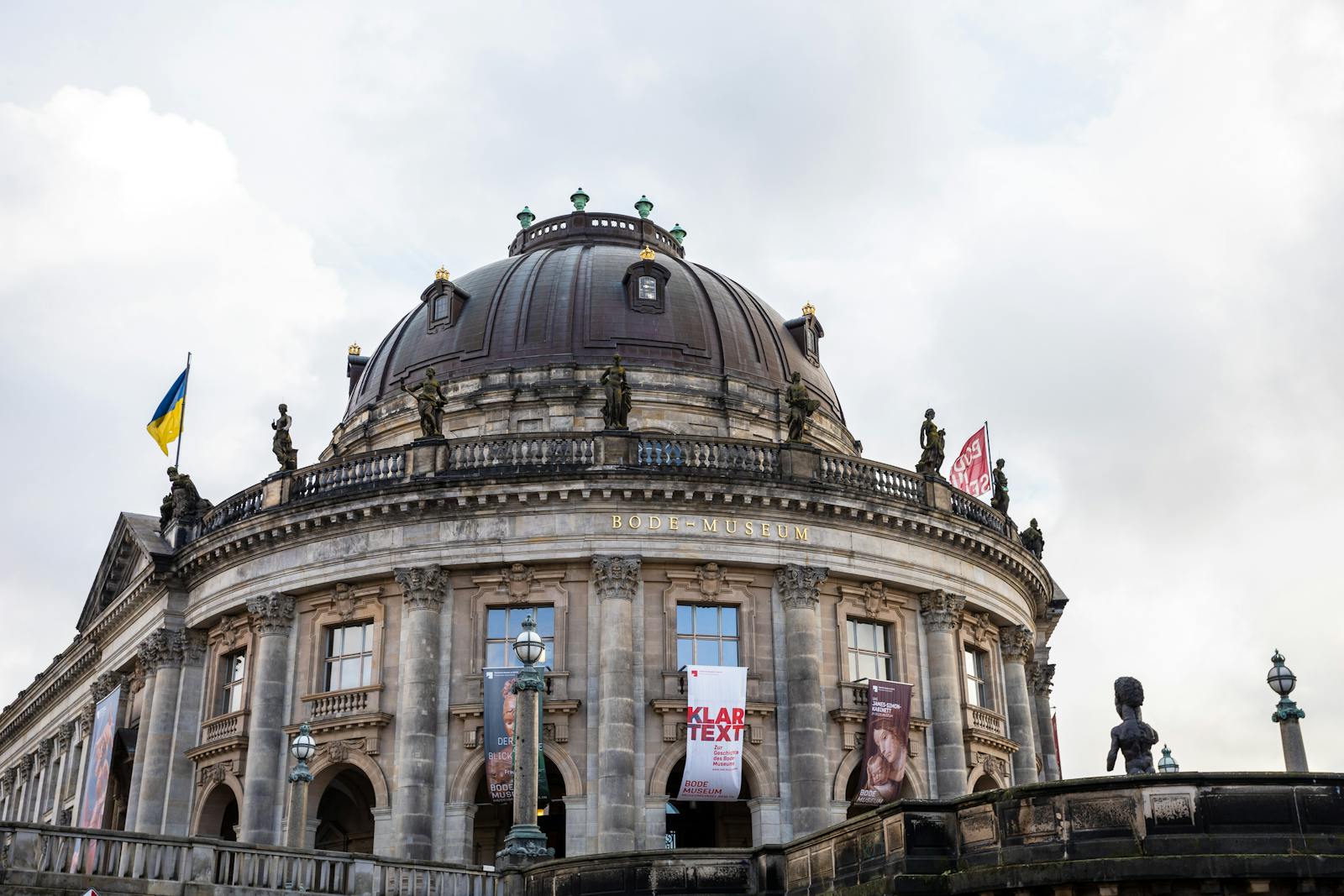
Am Kupfergraben · Tue–Sun 10:00–18:00 · €12 / €6 reduced. The neo-baroque palace at the northern tip of the island, named after Wilhelm von Bode, the founding director-general of the Berlin state museums. The dome and grand staircase alone are worth the visit. The collection is a sculpture museum — Donatello, Bernini, Canova, Tilman Riemenschneider — plus a Byzantine art collection, a small mosque-treasury, and the Münzkabinett (Coin Cabinet), one of the largest numismatic collections in the world with over 500,000 objects from 600 BC to today. The James Simon Cabinet (a small jewel-box of objects from the donor’s collection) reopened in 2019.
Pergamonmuseum — CLOSED (2023–2027 partial, 2037 full)
Closed since October 23, 2023. The most famous of the five museums is also the one you cannot enter. Alfred Messel’s 1910–1930 building houses the Pergamon Altar (Greek Hellenistic, c. 180-160 BC), the Market Gate of Miletus (Roman, 2nd century AD), the Ishtar Gate of Babylon (Neo-Babylonian, 6th c. BC), the Mshatta Façade (Umayyad, 8th century, Jordan), and the Aleppo Room. The north wing — Pergamon Altar and Market Gate of Miletus — is expected to reopen in 2027. The south wing — Ishtar Gate and Islamic art collections — is not scheduled to reopen until around 2037. Construction overruns, structural problems on the soft Spree-bank ground, and the discovery of two buried 1910s pump houses have all contributed.
For the full picture of what’s closed, when it reopens, and the alternatives currently on display, see our dedicated Pergamon Museum guide.
Pergamonmuseum. Das Panorama — The 2026 Substitute
Am Kupfergraben 2 · Tue–Sun 10:00–18:00 · €12 / €6 reduced (or included in the €24 Museum Island day pass). Across the canal from the closed Pergamonmuseum sits a temporary exhibition building housing two things: Yadegar Asisi’s huge 360-degree panoramic painting of the ancient city of Pergamon as it would have looked in 129 AD, and a selection of original Pergamon-collection objects including parts of the Telephos Frieze from the Great Altar. The Asisi panorama is about 30 metres wide and 25 metres tall; you walk in to a tower in the centre and look around. It’s not a substitute for the real museum, but it’s the only piece of the Pergamon experience available in 2026, and it’s worth the hour.
Tickets — The Math
The price options can be confusing. Here’s the practical guide.
- Single museum entry: €10–€14 per museum. Sensible if you’re only visiting one.
- Museumsinsel day pass (Bereichskarte): €24 / €12 reduced. Covers all four open museums (Altes, Neues, Alte Nationalgalerie, Bode) plus the Pergamon Panorama, for one day. The clear choice if you’re visiting two or more.
- Berlin Museum Pass (3-day): €32 / €16 reduced. Covers more than 30 museums across Berlin, including all four open Museum Island museums and the Jewish Museum’s temporary exhibitions. Excellent value if you’re museum-hopping.
- Berlin Welcome Card (with Museum Island): from €62 for 72 hours; includes the four open Museum Island museums, the Pergamon Panorama, public transport (AB or ABC zones), and 170+ discounts. Worth it if you’re also using public transport heavily.
- Under 18: always free at all SMB museums.
Important update for 2026: Museumssonntag (Museum Sunday), the program that made first-Sunday-of-the-month free at all state museums, ended in December 2024. Don’t plan a trip around it. See our free museum days guide for the current free-entry options.
How Long Do You Need?
- Half day (3–4 hours): Neues Museum for Nefertiti (90 min) + Alte Nationalgalerie (60 min). Skip the others.
- Full day (6–8 hours): All four open museums plus the Pergamon Panorama. Lunch in the James Simon Galerie café or across the bridge in Hackescher Markt.
- Two days: Day 1 as above. Day 2 — Humboldt Forum (see below) plus Berliner Dom and a slow walk through the surrounding streets.
Each museum needs 1.5–2 hours minimum if you’re paying attention.
Pair With the Humboldt Forum
Ten minutes’ walk south across the Schlossbrücke is the Humboldt Forum, opened July 2021 in the reconstructed Berlin Palace. It’s not part of Museum Island (it’s on Schlossplatz, the next plot south) but it complements the island perfectly — its collections are non-European (Ethnological Museum, Museum of Asian Art), which is exactly what Museum Island doesn’t cover. Free admission to permanent collections. If you have two days for museums, this is your second day.
What Else Is on the Island
- Berliner Dom (Berlin Cathedral) — the green-domed Lutheran cathedral at the southern end of the island. Not a state museum but a significant building; the Hohenzollern crypt is worth seeing (€10 dome climb, €15 cathedral entry).
- Lustgarten — the open lawn between the Altes Museum and the cathedral, good for a sit and a sandwich.
- Spree riverbank at the northern tip behind the Bode-Museum — a beloved local hangout in summer.
Photography
Photography without flash and without tripod is generally allowed in the permanent collections. The one important exception: you cannot photograph the Nefertiti bust directly in her display room in the Neues Museum’s North Dome Hall. You can photograph her from the two adjacent rooms looking into the dome — many visitors miss this and assume the ban is total.
A Brief History of Museum Island
The sequence of construction tells the story. 1830: Schinkel’s Altes Museum opens — Prussia’s first public museum, built to house the royal collection of classical antiquities. 1855: Stüler’s Neues Museum opens next door, expanding the Egyptian collection. 1876: Alte Nationalgalerie opens for the nineteenth-century art. 1904: Bode-Museum (originally Kaiser-Friedrich-Museum) at the northern tip. 1910–1930: Pergamonmuseum, the last and largest. 1939–1945: catastrophic war damage, especially to the Neues Museum. 1958: partial East German reopening. 1999: UNESCO inscription. 2009: Neues Museum reopens after Chipperfield’s restoration. 2019: James Simon Galerie opens. 2023: Pergamon closes for the long renovation. 2027: Pergamon north wing scheduled reopening. 2037: Pergamon south wing scheduled reopening — and the masterplan, on paper, complete.
How to Get to Museum Island
- U-Bahn: U5 Museumsinsel — the newest station on the line, opened 2020, with a star-painted ceiling. Direct underneath the island.
- S-Bahn: Hackescher Markt (5–10 minute walk) on the S3, S5, S7, S9.
- Tram: M1 or 12 to Am Kupfergraben.
- Bus: 100, 200, 300 to Lustgarten.
- Walking: from Brandenburg Gate, 20 minutes east along Unter den Linden.
The Archaeological Promenade
One of the most ambitious parts of the long Museumsinsel masterplan is the Archaeological Promenade — a subterranean passage that will eventually connect four of the five museums (all except the Alte Nationalgalerie, which sits separately) at basement level. Sections of the promenade are open under the James Simon Galerie and Neues Museum; the rest will follow as the Pergamon renovation progresses. The idea is that a single ticket will eventually let you walk between museums underground without going back outside — a continuous spine of antiquity from the Egyptian collection through the Greek and Roman to the Mesopotamian. Worth understanding before you visit so you know why some parts of the basement levels look unfinished. By the time the masterplan completes in the late 2030s, the promenade will be the connective tissue of one of the most ambitious museum complexes in the world.
Opening Hours, Closures, and Practical Notes
- Standard hours: Tuesday to Sunday, 10:00–18:00. The Neues Museum and Pergamon Panorama stay open until 20:00 on Thursdays.
- Closed Monday — the entire island’s museums shut on Mondays. The buildings themselves and the open areas (Lustgarten, riverbank) remain walkable.
- Closed days: December 24; January 1 from mid-morning; May 1 closures vary.
- Audio guides: free smartphone app (SMB) downloadable before arrival, or hire a device at the James Simon Galerie.
- Cloakroom: free, mandatory for large bags. Cash deposit lockers available.
- Café: James Simon Galerie has a decent café; Bode-Museum has a more atmospheric one in its grand entrance hall.
- Accessibility: all four open museums are step-free and wheelchair accessible. The James Simon Galerie has been designed to provide barrier-free access to all the major spaces.
A Note on the Cold War Years
For anyone interested in how the island ended up as it is today, the Cold War history matters. Museum Island sat in East Berlin throughout the partition. The GDR partially restored the buildings it could (the Pergamon reopened in 1959; the Bode reopened in 1958 as the Bode-Museum, renaming the prior Kaiser-Friedrich-Museum) but left the Neues Museum as a war ruin for the entire forty years of the GDR. The post-1990 masterplan inherited a half-restored, half-ruined ensemble and committed to bringing it all back to museum function. The Chipperfield restoration of the Neues Museum (completed 2009) was the most acclaimed piece of that work; the long Pergamon renovation is the most ambitious still in progress. Knowing the Cold War divisions — and the parallel story of how West Berlin built up the Kulturforum to house the same collections that had been left in the East — makes the island’s current state legible. For more on the post-1990 transformation of the city, see our Berlin after reunification guide.
Frequently Asked Questions
What is Museum Island Berlin?
An ensemble of five state museums on an island in the Spree in central Berlin, built between 1830 and 1930, inscribed as a UNESCO World Heritage Site in 1999.
Is the Pergamon Museum open in 2026?
No. The full museum has been closed since October 23, 2023. The north wing (Pergamon Altar, Market Gate of Miletus) is scheduled to reopen in 2027. The south wing (Ishtar Gate, Islamic art) is not scheduled until around 2037. The Pergamon Panorama, across the canal, is open as a substitute.
Which museum on Museum Island has Nefertiti?
The Neues Museum, in the North Dome Hall. Photographing her directly in the display room is forbidden, but you can shoot from the two adjacent rooms.
How much does Museum Island cost?
€24 / €12 reduced for a day pass to all four open museums plus the Pergamon Panorama. Single museum tickets €10–€14. Under 18 always free.
How to skip the line at Museum Island?
Buy tickets in advance online via smb.museum, or at the James Simon Galerie ticket desks (usually shorter queues than the individual museum doors).
Can you visit Museum Island for free?
Under-18s always enter free. International Museum Day (May 17) is free at many participating museums. Walking the island, the Lustgarten, and the riverbank is always free. The previous Museumssonntag program ended in December 2024 and has not been replaced.
What’s the best museum on the island?
Neues Museum if you want the single most famous object (Nefertiti) and the most architecturally remarkable building. Alte Nationalgalerie if you love painting. Bode-Museum for sculpture and the most underrated collection. Altes Museum for the building.
Is Humboldt Forum part of Museum Island?
No. The Humboldt Forum sits on Schlossplatz across the bridge to the south, in the reconstructed Berlin Palace. It complements the island with non-European collections but isn’t part of the UNESCO World Heritage Site.
Continuing the Story
Read companions: our Pergamon Museum guide for the closure timeline and reopening dates, our Hamburger Bahnhof guide for contemporary art, our contemporary art museums guide for the wider scene, our free museum days guide for the ticket math, and our museums for kids guide if you’re travelling with family.