Berlin Tours: Which Ones Are Worth Your Money
Every kind of Berlin tour compared honestly — free and paid walks, Spree boats, buses, bikes, Wall and Third Reich tours, bunkers, food and street art — with prices, who each suits, and the ones to skip.
Stand at the Brandenburg Gate at ten on a summer morning and you can count the tours as they arrive: a guide with a pink umbrella and forty people behind her, a line of cyclists in matching helmets, an open-top bus pausing for photographs, a convoy of Trabants puttering past with a radio commentary crackling from each one. Berlin may be the most toured city in Germany, and for good reason — so much of what matters here is invisible without someone to explain it. A car park that sits on top of Hitler’s bunker. A double row of cobblestones where the Wall used to run. An empty gravel lot that was once the headquarters of the Gestapo. But Berlin tours vary enormously in quality and value, and some of the most heavily advertised are the least worth your money.
This guide is the overview: every major type of tour in Berlin, what each one really gives you, what it costs, who it suits and our honest verdict. It covers free and paid walking tours, Spree boat trips, hop-on hop-off buses, bike tours, Wall and Cold War tours, Third Reich and WWII tours, street art and underground tours, food tours, day trips and the novelty options, plus how to choose, where to book and what to skip. Prices were checked in September 2026; treat them as the right order of magnitude, because operators adjust them by season and by sales platform.
Berlin Tours at a Glance
| Tour type | Typical length | What you pay (September 2026) | Our verdict |
|---|---|---|---|
| Free walking tour | 2.5–3 hours | Tip-based; €10–15 per person is the norm | Worth it on your first morning |
| Paid small-group walking tour | 3–4 hours | From around €20 per adult | Worth it for depth or a specific theme |
| Spree boat tour | 1 hour to half a day | One-hour city cruise from €22.50 | The one-hour trip is worth it; longer ones depend on the weather |
| Hop-on hop-off bus | 1–2 days | A day ticket costs several times a public-transport day ticket | Usually not; buses 100 and 200 do much of it |
| Guided bike tour | 3–4 hours | More than a walking tour, bike included | Worth it in good weather; you cover far more ground |
| Wall and Cold War tour | 2–4 hours | Free-tour tip, or a paid walk from around €20 | Worth it; a guide transforms Bernauer Straße |
| Third Reich and WWII tour | 3–4 hours | Paid walks from around €15 | Worth it with a good guide |
| Street art and alternative tour | 2–4 hours | Varies with workshops | Worth it when the guide is an artist |
| Bunker and underground tour | 90 minutes | About €18 | Worth it; you cannot see these places any other way |
| Food tour | 3–4 hours | Roughly €55–95 with tastings | Worth it if you would eat that much anyway |
| Trabi Safari | 1–2 hours | A premium novelty price | Fun, but a novelty rather than a tour |
| Segway tour | 2–3 hours | A premium price | Skip |
How to Choose a Berlin Tour
Berlin rewards a guide more than most cities because so much of its history is gone. In Rome the ruins are the point; in Berlin the gaps are. The Wall has almost entirely disappeared, the Nazi government quarter was flattened and built over, and the GDR has been painted, renovated and rebranded. A tour’s job here is to put things back that are no longer standing, and the best guides do it brilliantly. That also means the quality of the guide matters more than the type of tour, the price or the logo on the umbrella.
If you only take one tour
Make it a walking tour of the historic centre on your first morning, free or paid. In three hours you cover the Reichstag, the Brandenburg Gate, the Holocaust Memorial, the site of Hitler’s bunker, a surviving stretch of the Wall, Checkpoint Charlie, Gendarmenmarkt and Museum Island, and — more importantly — you come away knowing how they connect. Everything else you do in Berlin makes more sense afterwards.
If you have three days
- Day one: a walking tour of the centre in the morning, and the Reichstag dome later in the day, which is free if you register in advance.
- Day two: a themed tour that matches your interests — the Wall, the Third Reich, street art — or a bike tour if the weather is kind.
- Day three: the one-hour boat trip to rest your feet, or a bunker tour, or a guided day trip to Sachsenhausen or Potsdam if history is your reason for coming.
Our three-day Berlin itinerary and one day in Berlin plan show how to fit the tours around everything else.
Matching the tour to what you care about
| If you are interested in… | Take… | Then visit… |
|---|---|---|
| The Cold War and the Wall | A Wall or Cold War walk or bike tour | Bernauer Straße, the East Side Gallery, the Stasi Museum |
| Nazi Germany and WWII | A Third Reich walking tour | The Topography of Terror, the Holocaust Memorial, Sachsenhausen |
| Contemporary Berlin | A street art or alternative tour | Kreuzberg, Friedrichshain, the RAW-Gelände |
| Food | A food tour | The markets and the currywurst stands |
| Queer history | A queer Berlin walk | Schöneberg |
| Architecture and the river | A boat tour | Museum Island, the government quarter |
| Everything, briefly | A general walking tour | Whatever the guide made you curious about |
Five questions to ask before you book
- How big is the group? Twenty-five people around one guide at the Holocaust Memorial is a very different experience from ten. Paid small-group tours usually cap numbers; free tours often do not.
- How far will I walk? Three hours of a Berlin walking tour can easily mean six to eight kilometres, mostly standing. That matters with children, older relatives or a bad knee.
- What is included? Entry fees, transport tickets, food and drink are usually extra, even when a museum stop is part of the route.
- What is the cancellation policy? Established operators offer free cancellation, often up to 24 hours before.
- Who are the guides? Reviews that name individual guides tell you more than any star rating of the company.
Walking Tours: Free and Paid
Free walking tours
Berlin was one of the cities that made the free walking tour famous, and it remains the default first activity for a huge number of visitors. The model is simple: the tour costs nothing up front, and at the end you tip the guide what you think it was worth. In practice the tip is the price. Guides are typically paid through tips, and often pay the organising company a fee per guest, so the social contract is to give €10–15 per person for a good three-hour tour. The best free tours are excellent; the worst are large, rushed and more interested in selling you the evening pub crawl.
We have compared the operators, the routes, the themes and the etiquette in detail in our guide to free walking tours in Berlin, including how much to tip and which tour suits which traveller. The short version: a free tour is excellent value for a first orientation, as long as you treat the tip as the fee rather than an optional extra.
Paid small-group walking tours
A paid tour costs a fixed price up front, usually from around €20 per adult for three to four hours, and in return you generally get a smaller group, a more experienced guide, a more specific theme and nobody passing a hat. The established English-language companies have been doing this for decades. Original Berlin Walks, running since 1993, offers a broad menu: its Discover Berlin introduction, a WWII and Third Reich walk, Sachsenhausen and Potsdam day trips, an East Berlin tour, street art, a Queer Berlin tour, Christmas markets in season and an evening “Berlin Illuminated” walk, with free cancellation up to 24 hours before its public tours. Insider Tour runs a similar range, with its flagship walk covering the Reichstag, the Brandenburg Gate, Checkpoint Charlie and the Third Reich and Cold War history in between.
Is a paid tour worth it when a free one exists? Often, yes. The fixed price is not much more than a decent tip, the groups are smaller, and a themed tour — WWII, the Cold War, Jewish Berlin, queer history — goes much deeper than an introductory walk can. If you are going to take two tours, a free orientation walk followed by a paid themed one is a very good combination.
What makes a good Berlin guide
You will know within fifteen minutes. A good guide tells you where you are standing and why it matters, rather than reciting dates; admits what is uncertain or contested; handles the Holocaust Memorial and the Nazi sites with care without turning the tour into a lecture; and knows when to stop talking and let a place speak for itself. A weak guide tells jokes about Trabants, lingers at Checkpoint Charlie and rushes through Bernauer Straße. If you are unlucky, it is perfectly acceptable to leave a free tour at a natural break.
Boat Tours on the Spree
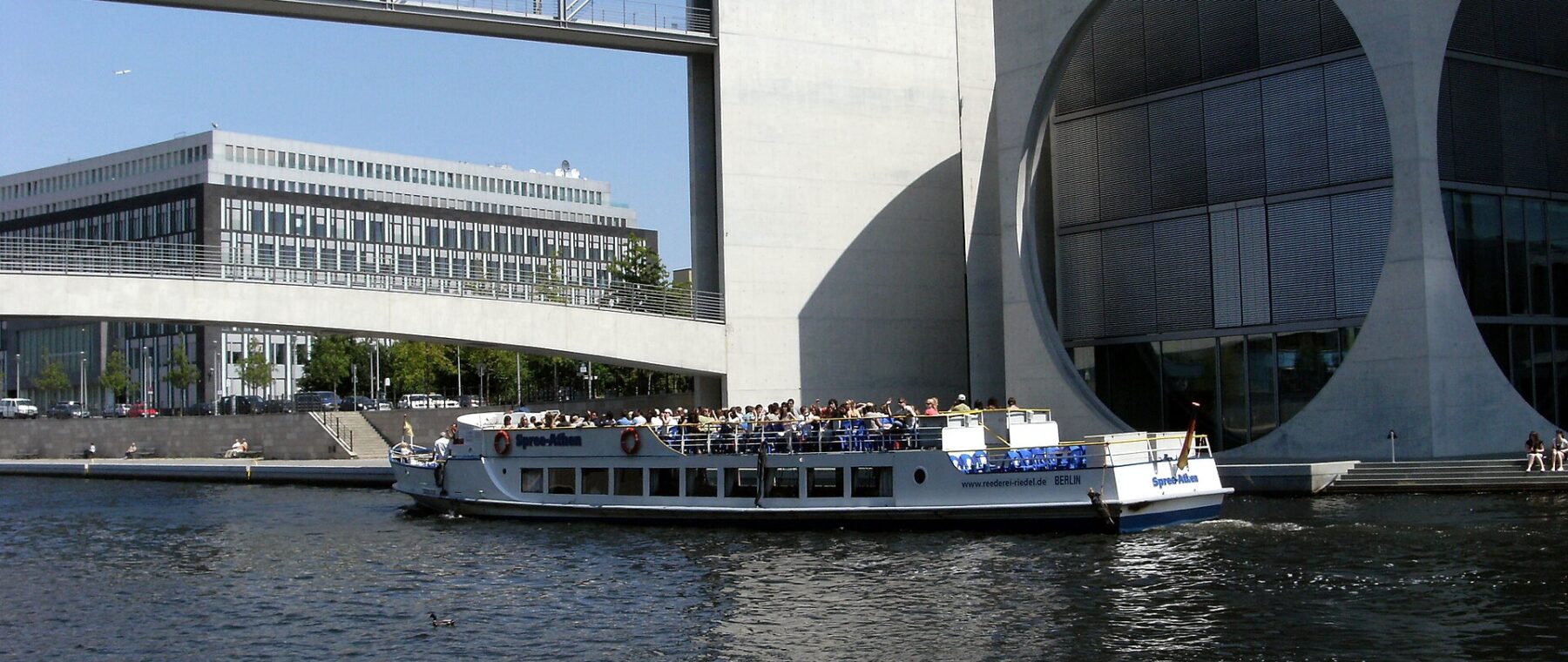
A boat trip is the most relaxing way to see central Berlin, and one of the few tours that is equally good for children, grandparents and anyone whose feet have given up. The Spree runs right through the historic centre, past Museum Island, the Berliner Dom and the government quarter, and the view from the water is genuinely different: you see the Reichstag and the modern parliament buildings from below, the old bridges from underneath and the city’s relationship with its river.
The classic choice is the one-hour city cruise. Stern und Kreis, one of the largest operators, runs a one-hour historical cruise from landings at Friedrichstraße and the Nikolaiviertel, past the Reichstag and through the government quarter to the Haus der Kulturen der Welt and back, with an audio guide in eight languages; prices for 2026 start at €22.50. Several other companies run similar trips from landing stages around Museum Island and the Nikolaiviertel, alongside longer cruises that loop through the Landwehrkanal, evening trips and seasonal specials.
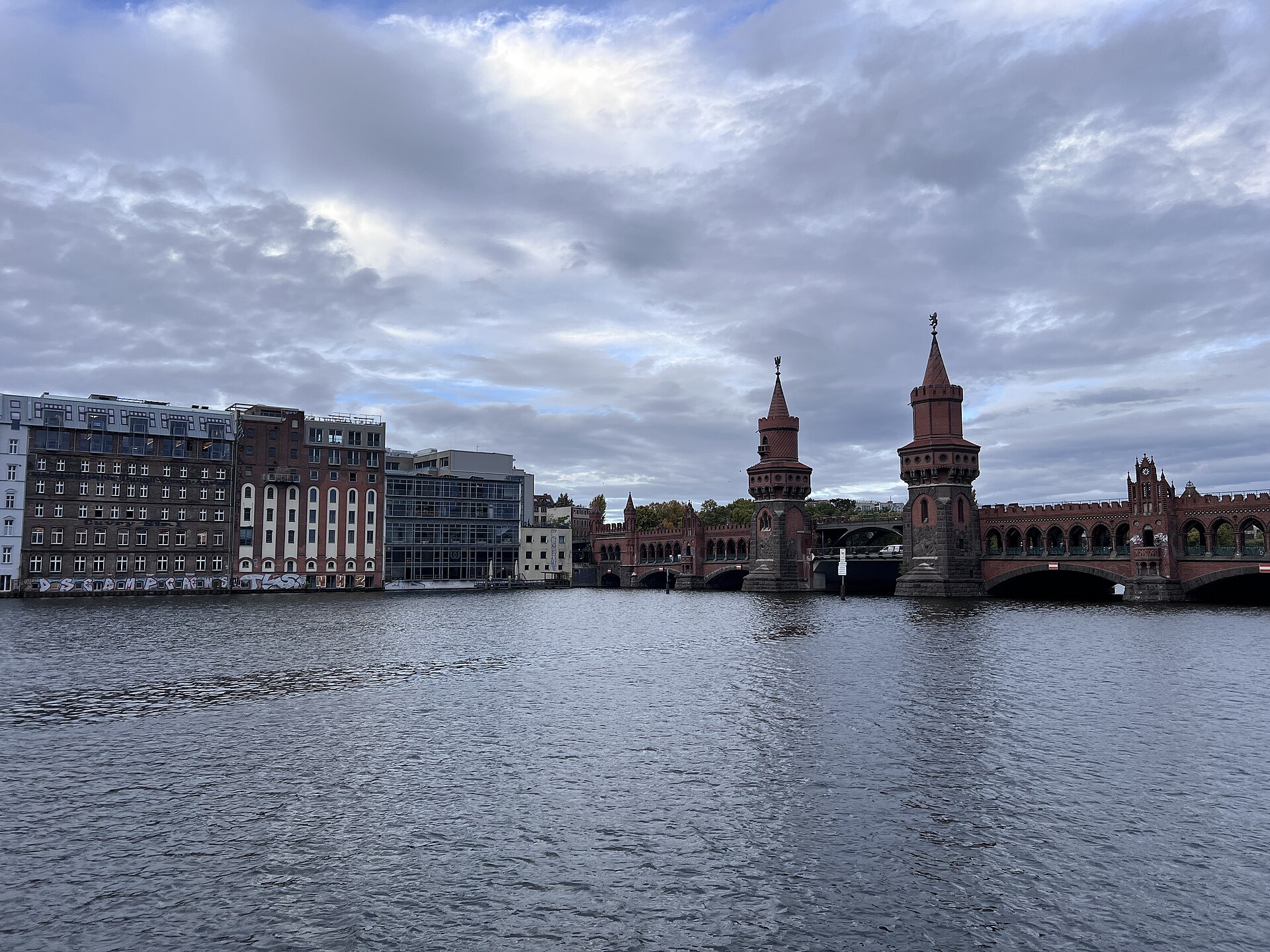
Our verdict: the one-hour cruise is the sweet spot — long enough to see the centre, short enough not to get bored or cold. Longer cruises of three hours or more are lovely on a warm summer afternoon with a drink in hand and a slog on a grey October one. Sit outside if you can, and take a layer: it is always cooler on the water than on the street.
Hop-On Hop-Off Buses, and the Bus 100 Alternative
Open-top sightseeing buses loop around central Berlin all day, with recorded commentary in several languages and stops at the major sights. They are easy, and for travellers with limited mobility or very little time they have a genuine purpose. For most other visitors, they are the tour we are least enthusiastic about.
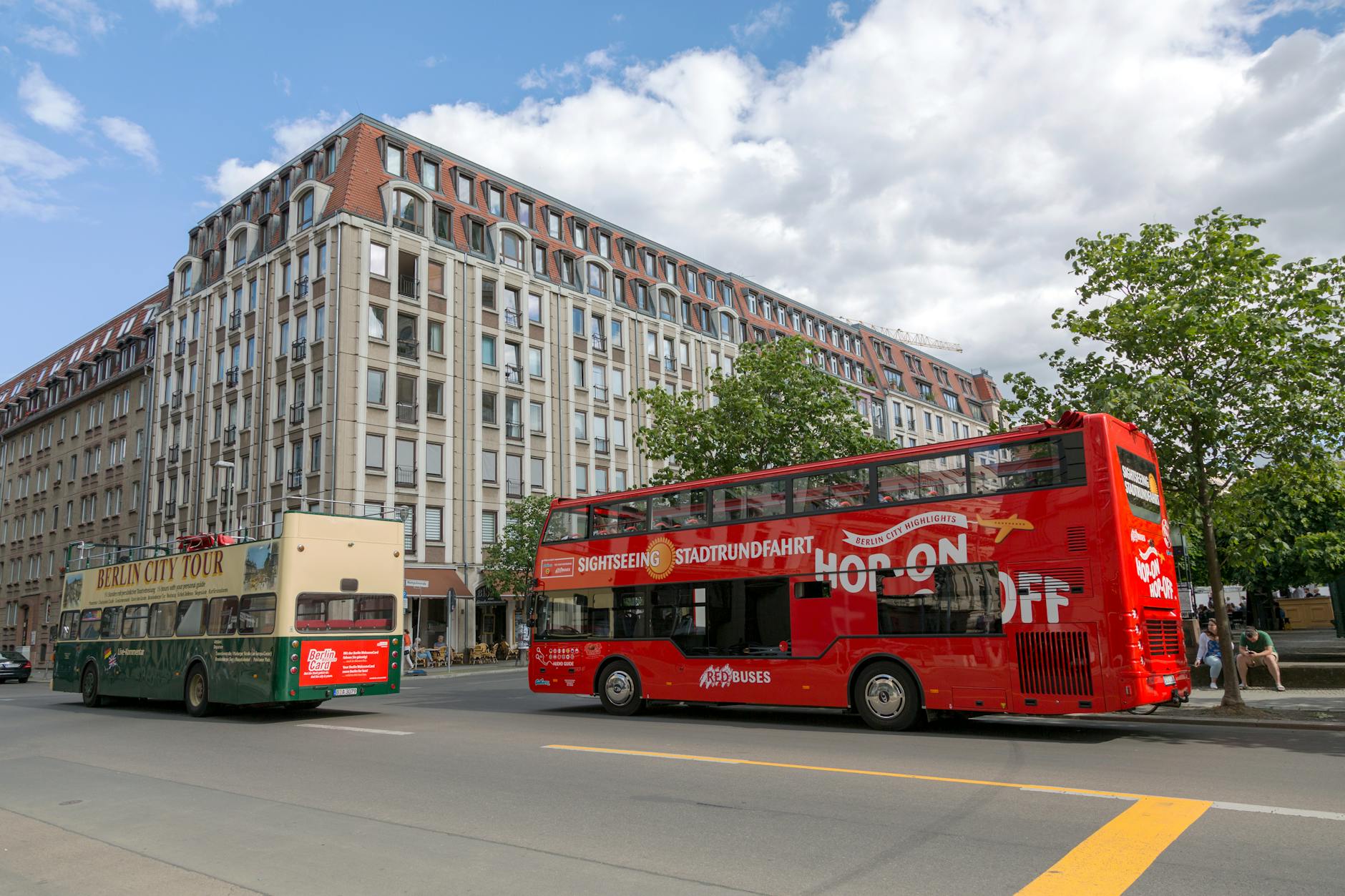
The reason is Berlin’s public buses. Bus 100 runs from Zoologischer Garten past the Victory Column, the Tiergarten and the government quarter and along Unter den Linden to Alexanderplatz; bus 200 takes a parallel route via the Tiergarten and Potsdamer Platz. Many of them are double-deckers, both run on an ordinary public-transport ticket, and a day ticket costs a fraction of a hop-on hop-off pass. What you lose is the commentary, which a downloaded audio guide or a good guidebook can replace. What you gain is money, frequency and the ability to get off and not wait for the next tour bus. Our guide to BVG tickets explains which ticket to buy.
Where the tour buses do make sense: a first afternoon when you are jet-lagged and just want to sit and look; a traveller who finds walking difficult; a family with small children who need the novelty of the top deck. In winter, when the open top is closed or freezing, the case for them gets weaker still.
Bike Tours
Berlin is flat, green and laced with cycle lanes, and a guided bike tour covers in three or four hours what a walking tour could not do in a day. The standard routes link the historic centre with the Tiergarten, the course of the Wall and sometimes Tempelhofer Feld or the East Side Gallery; themed rides follow the Wall, visit beer gardens or cross the old East. The price, usually somewhat more than a walking tour, includes the bike, and helmets are usually available.

Our verdict: in good weather, a bike tour is one of the best-value ways to see Berlin, particularly on a second or third day when you already know the centre. It is less good for nervous cyclists, for children too small for a full-size bike, and in the rain. If you would rather ride without a guide, our Berlin by bike guide covers bike hire, the rules of the road and the best self-guided routes.
History Tours: the Wall, the Cold War and the Third Reich
This is where Berlin’s tours earn their reputation, and where the difference between a good guide and an average one is starkest.
Berlin Wall and Cold War tours
The Wall stood for 28 years and has almost completely disappeared, which makes it the perfect subject for a tour. A good Wall tour follows its route, explains how the border strip actually worked — the inner wall, the death strip, the watchtowers, the outer wall — and spends real time at the Berlin Wall Memorial on Bernauer Straße, the one place where the whole system can still be understood. It also explains the escapes, the tunnels and the people who died, and the night in November 1989 when it all came apart. Some tours continue to the East Side Gallery, the longest surviving section, now an open-air gallery.
Many Wall tours also take in Checkpoint Charlie. Be aware that the guardhouse there is a replica standing in a busy junction, and that the whole site is more souvenir stop than memorial. A tour that lingers there and hurries Bernauer Straße has its priorities the wrong way round. For a self-guided route to every surviving section, see our guide to Berlin Wall sites and memorials and the Berlin Wall timeline.
Third Reich and WWII tours
Nowhere else on earth tells the history of Nazi Germany at the scale Berlin does, and almost none of it is marked by a grand building. A Third Reich tour walks you through a landscape of absence: the site of Hitler’s bunker, now a car park with an information board; the vast former Air Ministry that survived the bombing; the Topography of Terror on the site of the Gestapo and SS headquarters; the Holocaust Memorial; and Bebelplatz, where the books were burned in 1933. It is some of the most affecting tour material anywhere in the world.
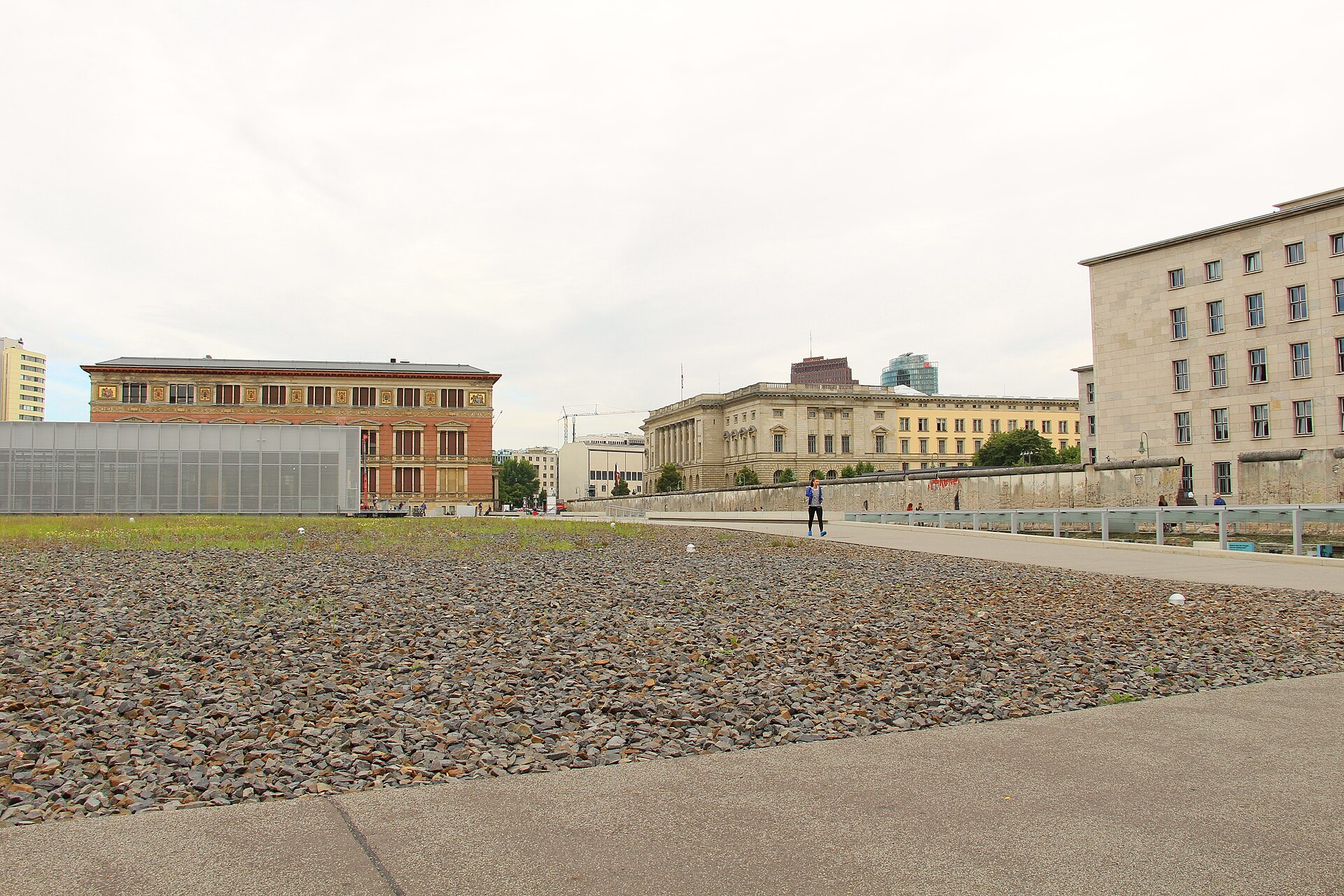
These tours are almost always paid, from around €15, because the free-tour model struggles with the depth and the tone the subject needs. Look for a guide who talks about how ordinary Germans came to support the regime and how Berlin has chosen to remember it, not only about Hitler’s final days. Our guide to Nazi history sites in Berlin covers every place a tour is likely to visit, and more, for anyone who prefers to go alone.
Bunker and underground tours
Beneath Berlin lies a second city of air-raid shelters, flak towers, abandoned stations and Cold War fallout bunkers, and the only way in is on a guided tour. The main operator is the non-profit association Berliner Unterwelten, whose 90-minute public tours cost around €18 and take you through real wartime shelters under Gesundbrunnen station and a Cold War nuclear bunker. Tours sell out, some have minimum ages, and they are not for the claustrophobic. We have covered the tours, the options and the booking rules in detail in our guide to Berlin’s bunker tours. They are among the most memorable things you can do in the city.
GDR and Stasi tours
The East German state is explored on walking tours of the old East, on Trabi tours and, most powerfully, at the former Stasi prison in Hohenschönhausen, where guided tours have been led over the years by former prisoners. Pair a tour with the Stasi Museum in the ministry’s former headquarters and the hands-on DDR Museum for the everyday side.
Street Art and Alternative Berlin Tours
Alternative tours set out to show the Berlin of squats, clubs, murals and subculture rather than monuments, usually in Kreuzberg and Friedrichshain. The best of them are led by people who actually paint, organise or live in that world, and they explain the difference between tags, throw-ups, paste-ups and commissioned murals, the politics of gentrification and the stories behind particular walls. The better ones end with a workshop where you try spray-painting yourself.
The weaker ones are a brisk walk past graffiti that anyone could find with a map, padded out with nightlife tips. Check what is included, how long is spent in each neighbourhood and whether there is a hands-on element before you pay. For the neighbourhoods themselves, see our guides to Kreuzberg and Friedrichshain, and to the RAW-Gelände, one of the city’s great open-air canvases.
Food Tours
Berlin’s food tours are walking tours with tastings, usually three to four hours through one or two neighbourhoods, stopping at five to eight places for anything from currywurst and döner to Turkish breakfast, craft beer and vegan bakeries. Most cost roughly €55–95 per person, with the food included. The good ones are as much about neighbourhood history — Turkish Berlin, the old East, immigrant food cultures — as about eating.
Are they worth it? If you would spend that much eating out in a day anyway, and you enjoy being told what you are eating and why, yes. If you are on a tight budget, a self-guided crawl of the city’s cheap eats gets you much of the way. Our Berlin food tours guide compares the operators, neighbourhoods and prices, and our cheap food in Berlin guide is the DIY alternative.
Guided Day Trips: Sachsenhausen and Potsdam
The two most popular guided day trips from Berlin are to the former Sachsenhausen concentration camp at Oranienburg, just north of the city, and to the palaces and gardens of Potsdam to the south-west. Both are easy to reach alone on a public-transport ticket that includes fare zone C, so the question is whether the guide is worth the premium.
For Sachsenhausen, our answer is usually yes: the site is vast, the history is complicated, and a good guide turns an overwhelming day into an understandable one. Visiting independently with the memorial’s own audio guide is also perfectly valid, particularly if you prefer to go at your own pace. For Potsdam, a guide is less essential; the palaces have their own tours and audio guides, and the pleasure of the place is wandering. See our guides to the Sachsenhausen memorial day trip and the Potsdam day trip, and our overview of day trips from Berlin.
Novelty Tours: Trabi Safaris, Segways and Pub Crawls
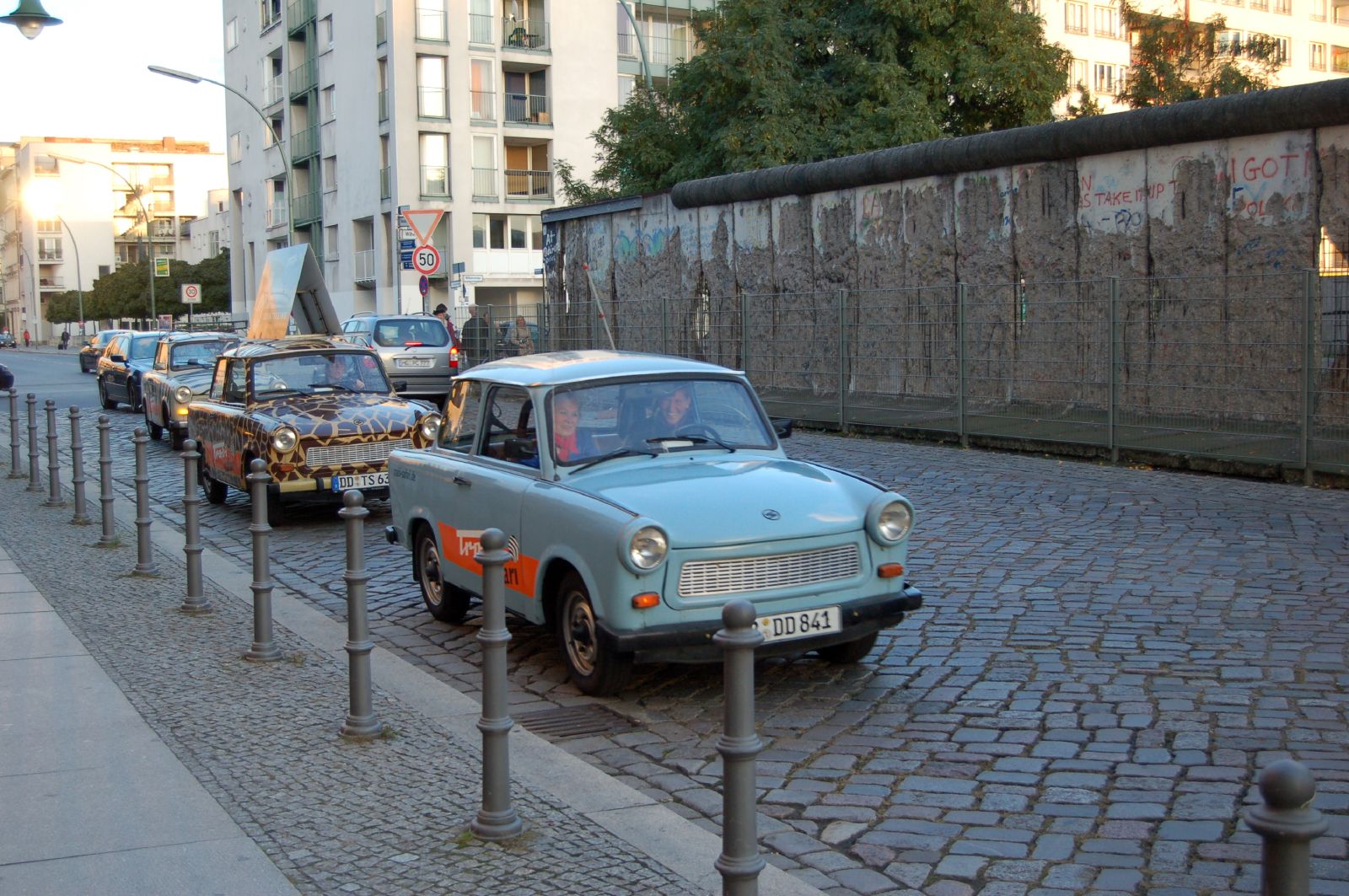
- Trabi Safari. You drive a Trabant, the plastic-bodied East German car, in a convoy through the city, with a guide’s commentary over the car radio. It is noisy, cramped, smelly and genuinely good fun, and you need a driving licence. The commentary is necessarily thin compared with a walking tour, and the price is high for what you learn. Book it as an experience, not as history.
- Segway tours. You spend much of the tour concentrating on the machine, you cannot easily stop to look at anything, and the price is well above a bike tour that covers more. We would skip them.
- Pub crawls. Organised crawls through several bars, sometimes ending at a club, are popular with solo travellers and groups of friends. They are a good way to meet people, a poor introduction to Berlin’s actual nightlife, and they will not get you into Berghain. Our Berlin nightlife for beginners guide explains how the city’s night really works.
Private Guides
A private guide costs a fixed fee for your group rather than a price per head, usually by the half day or the hour, which makes it better value the more of you there are. It is worth considering for a family with children who need a flexible pace, a group of four or more, anyone with limited mobility, or a specialist interest — architecture, a family history, a particular part of the war — that no public tour covers. Many of the established walking-tour companies also offer private tours, including by car. Book well ahead in summer and around Christmas.
Tours With Children, or With Limited Mobility
Most Berlin tours are built for able-bodied adults who are happy to stand and listen for three hours, which is not everybody. A little planning makes a big difference.
- Young children do best with short, varied formats. The one-hour boat trip is the easiest win: there is something to look at, a seat, and it ends before boredom sets in. A bike tour works for older children confident on a full-size bike; ask about child seats or trailers before booking for younger ones. Standard walking tours are long for under-tens, and a private guide who can adjust the pace is often a better investment for a family than three or four places on a public tour.
- Teenagers are often gripped by the history tours, particularly bunkers, the Wall and the Stasi, which tend to land better than any museum. Check minimum ages: some underground tours will not take young children at all.
- Limited mobility. Ask how far the tour walks and how long it stands before you book, and whether there are steps. Boat trips and bus tours involve the least walking, but boarding arrangements differ from boat to boat, so ask. A private guide with a car is the most comfortable way to see a lot in a day.
Our guides to Berlin with kids and accessible transport in Berlin cover the rest of the trip.
Booking: Direct or Through a Platform?
Most Berlin tours can be booked either directly with the operator or through the big booking platforms. Platforms are convenient, show reviews side by side and often offer free cancellation; the price to you is usually the same as booking direct, but the operator pays the platform a commission, so more of your money reaches the guide when you book with the company itself. Either way, check three things: the exact meeting point, the cancellation window and whether the tour is guaranteed to run with a small group.
If you are buying a Berlin WelcomeCard, check its partner list before you book: Original Berlin Walks, Insider Tour and Stern und Kreis are among the tour operators that take part. Whether the card pays for itself is another matter; our honest WelcomeCard review does the sums.
On a paid tour, a tip is not expected in the way it is on a free one, but it is appreciated when a guide has been genuinely good: a few euros per person, handed over at the end, is the usual gesture in Germany. On a free tour, as above, the tip is the price.
Berlin Tours by Season
- Spring and summer are peak season for boat and bike tours, and for the long evenings that make a sunset cruise worthwhile. Book popular tours a few days ahead, and bring water: a three-hour walking tour in a July heatwave is hard work.
- October brings the Festival of Lights, when the city’s landmarks are lit with projections for about ten days; evening walks, bus tours and cruises built around it are popular. See our Berlin in autumn guide.
- Winter means short days and cold feet. Walking tours still run, but choose shorter ones with indoor stops, and consider an evening tour of the Christmas markets in December. Bunker tours are the same temperature all year.
For what else changes through the year, see our guide to seasonal activities in Berlin.
The Self-Guided Alternative
Not every sight needs a guide, and some of Berlin’s best history is already explained for free on the spot. If your budget is tight, or you simply prefer your own pace, these do much of a tour’s work:
- The Berlin Wall Memorial on Bernauer Straße is a free outdoor exhibition along a preserved section of the border strip, with information panels, a viewing platform and a visitor centre.
- The Topography of Terror is free, and its exhibition is as good as most paid tours on the history of the SS and Gestapo.
- The Reichstag dome comes with a free audio guide that points out the landmarks as you climb the spiral ramp.
- The Berlin Wall Trail, the Mauerweg, follows the line of the Wall for kilometres with information boards along the way; ride part of it on a hired bike.
- Buses 100 and 200 give you a top-deck view of the centre on an ordinary ticket.
Our guide to free attractions in Berlin has many more, and our essential Berlin apps guide covers audio guides and maps worth downloading. A sensible compromise is one guided tour early in the trip to give you the framework, and self-guided exploring for the rest.
Tours That Are Not Worth Your Money
Every city has them. In Berlin, these are the ones we would steer you away from:
- Paid “tours” of the Reichstag dome. The dome is free. You register online in advance with the Bundestag’s visitor service and get a free audio guide at the top. Our Reichstag dome guide explains how.
- Tours built around Checkpoint Charlie. A replica hut in a traffic junction is not Cold War history. Go to Bernauer Straße instead.
- Hop-on hop-off in winter, or for anyone happy to use a public bus. Buses 100 and 200 cover much of the route for the price of a normal ticket.
- Segway tours, for the reasons above.
- “Skip-the-line” packages for places with no line, and combination tickets that bundle something free with something you did not want.
- Very large free tours in peak season, where you spend three hours at the back of a crowd of fifty. Choose a smaller group or a paid tour instead.
Frequently Asked Questions
What is the best tour in Berlin for first-time visitors?
A three-hour walking tour of the historic centre on your first morning, either a free tour with a tip of €10–15 or a paid small-group tour from around €20. It covers the Reichstag, the Brandenburg Gate, the Holocaust Memorial, the Wall and Checkpoint Charlie, and gives you the context for everything else.
Are free walking tours in Berlin really free?
There is no charge up front, but the guide is paid through tips, and €10–15 per person is the expected amount for a good tour. Treat the tip as the price.
How much does a boat tour in Berlin cost?
A one-hour sightseeing cruise on the Spree costs from €22.50 in 2026 with Stern und Kreis, one of the largest operators. Longer cruises and evening trips cost more.
Is the hop-on hop-off bus worth it in Berlin?
For most visitors, no. Public buses 100 and 200 cover many of the same sights on an ordinary ticket. The tour buses make sense for travellers with limited mobility or a very short, tired first day.
Which Berlin tours are best for history?
A Berlin Wall or Cold War tour that includes the memorial on Bernauer Straße, a Third Reich walking tour, a bunker tour with Berliner Unterwelten, and a guided day trip to Sachsenhausen.
Can I use the Berlin WelcomeCard on tours?
Several tour operators give WelcomeCard discounts, including Original Berlin Walks, Insider Tour and Stern und Kreis. Check the current partner list, and whether the card saves you money overall, before you buy it.
Do I need to book Berlin tours in advance?
For bunker tours, food tours, small-group tours and anything in summer or at Christmas, yes. Free walking tours usually ask you to reserve a place, but you can often turn up; boat trips can usually be booked on the day outside the peak summer weekends.
For the full comparison of Spree cruises — the one-hour city tour from €22.50, the two-hour and evening tours, the three-hour Bridge Trip through the Landwehrkanal, the Havel lake cruises from Wannsee and where each one leaves from — see our guide to Berlin boat tours on the Spree.
For the detail on sightseeing buses — City Circle from €28.50, Big Bus’s two routes, how early the last buses leave, and a stop-by-stop self-guided ride on public bus 100 — see our guide to hop-on hop-off buses in Berlin.
For Wall tours specifically — the Berlin Wall Foundation’s free one-hour English tour at Bernauer Straße, paid Cold War walks, bike tours along the Mauerweg and a self-guided Wall day by public transport — see our guide to Berlin Wall tours.
For street art in particular — who runs the artist-led tours, what €20 buys you, the spray-can workshops at Urban Spree and the free Urban Nation museum in Schöneberg — see our guide to Berlin street art tours.
For WWII and Third Reich tours in detail — the free weekend tours at the Topography of Terror and the German Resistance Memorial Center, four-hour walks from €15, guided trips to Sachsenhausen, and the bunker and stadium tours — see our guide to Third Reich and WWII tours in Berlin.
For bike tours in detail — Berlin on Bike’s three-and-a-half-hour tours from €27, Fat Tire’s from €35, the Wall, street art, beer-garden and Potsdam rides, e-bikes, and how to ride safely in Berlin traffic — see our guide to Berlin bike tours.
For the subculture walks, underground tours and ruins in more depth, from Alternative Berlin’s €20 walking tour to Teufelsberg and the Spreepark’s planned reopening in 2027, see our guide to alternative and underground Berlin tours.
If the Trabi Safari tempts you, our full guide to the Trabi Safari in Berlin covers both tours, from €59 and €89 per adult in 2026, the licence rules, what happens in rain and winter, and the other only-in-Berlin experiences nearby.
Related Berlin Guides
- Free Walking Tours in Berlin
- Berlin Food Tours
- Berlin Bunker Tours
- Berlin by Bike
- Berlin Wall Sites and Memorials
- Nazi History Sites in Berlin
- Sachsenhausen Memorial Day Trip
- Berlin Attractions and Tickets
- Things to Do in Berlin
- Berlin WelcomeCard Review
- Berlin With Kids
Photo Credits
Sightseeing boat on the Spree in the government quarter: 200806 Berlin 64 by Mark Ahsmann, CC BY-SA 3.0, via Wikimedia Commons.
Trabi Safari cars beside a section of the Berlin Wall: Three Trabant 601 automobiles of Trabi Safari in Berlin by ilovebutter from Houston, TX, USA, CC BY 2.0, via Wikimedia Commons.
Final Word
The best Berlin tours are not the ones with the biggest buses or the brightest umbrellas. They are the ones that stand you in an ordinary-looking street and make you see what happened there — the tunnel dug under Bernauer Straße, the books burned on Bebelplatz, the cellars under the Topography of Terror. For that, you need a good guide far more than a particular type of tour, and a good guide can be found on a tip-based walk as easily as on an expensive private day.
So spend your money where it counts: a walking tour on day one, a themed tour for whatever part of Berlin’s story grips you, a boat on a warm afternoon and a bunker if you can get a place. Skip the Segways, think twice about the tour bus, and tip your guide properly. Berlin is a city that explains itself slowly, and the right person beside you makes all the difference.