Berlin Street Art Tours: Who Runs Them and What You See
Who runs Berlin's street art tours, what €20 buys you, the spray-can workshops at Urban Spree, the neighbourhoods the tours cover, the free Urban Nation museum, and how to pick a tour led by someone who actually paints.
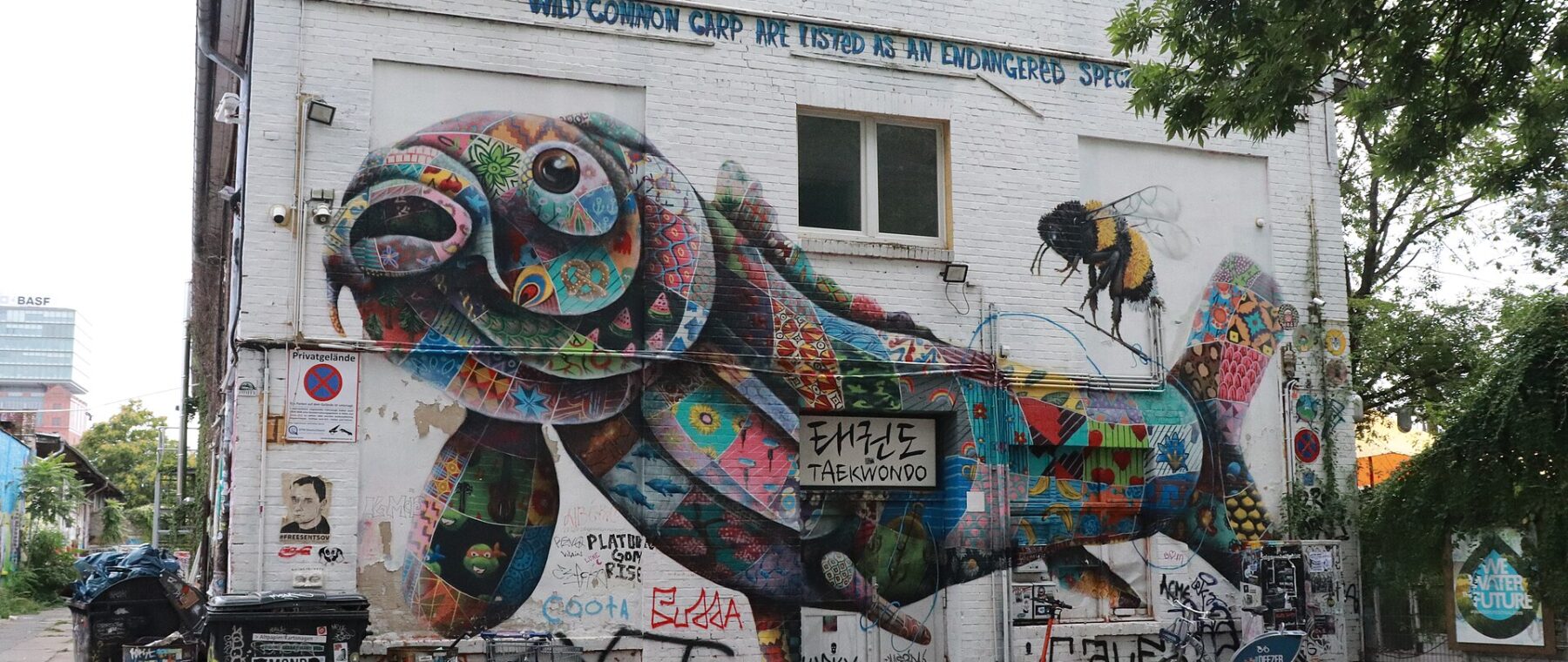
In December 2014, two of the most photographed murals in Berlin disappeared under a coat of black paint. The giant figures painted by the Italian artist Blu on the firewalls beside the Cuvry wasteland in Kreuzberg had become symbols of the neighbourhood, and the paint was rolled over them with the artist’s agreement, as a protest against the flats planned for the land next door. That is Berlin street art in a nutshell — political, temporary and fiercely argued over — and it is why a good Berlin street art tour is less a stroll past pretty walls than a lesson in how the city argues with itself.
This guide covers the companies that run street art tours in Berlin, what each one costs and shows you, the workshops where you pick up a spray can yourself, the neighbourhoods the tours visit, the free street art museum in Schöneberg, and how to choose. It is about guided tours and the people who run them; for the painted Wall itself, see our East Side Gallery guide, and for how street art tours compare with every other kind of tour in the city, our overview of Berlin tours. Prices were checked in September 2026; treat them as the right order of magnitude.
Berlin Street Art Tours at a Glance
| Tour | Price (September 2026) | Length | Starts | Our verdict |
|---|---|---|---|---|
| Alternative Berlin — Street Art Tour | €20 | 3 hours | RAW-Gelände, Friedrichshain | The classic, with local artists; our first pick |
| Alternative Berlin — Alternative Berlin Tour | €20 | 3 hours | Alexanderplatz | Subculture and politics as well as street art |
| Alternative Berlin — Twilight Tour | €25 | 3.5 hours | Bülowstraße, Schöneberg | Berlin after dark; good in winter |
| Alternative Berlin — Free Day & Night Tour | Tip-based | 2.5 hours | Görlitzer Bahnhof, Kreuzberg | A taster before you commit |
| Kreuzberg and Friedrichshain street art walk | €20; €18 reduced; under-12s free | 3 hours | Kreuzberg / Friedrichshain | A solid, well-established walk |
| Original Berlin Walks — Street Art Tour | Check current fare | See operator | Kreuzberg / Friedrichshain | From a company running tours since 1993 |
| Street art workshop | Varies | About 2 hours | Urban Spree, RAW-Gelände | The best part of any street art day |
| Urban Nation museum | Free | As long as you like | Bülowstraße 7, Schöneberg | Pair it with a tour |
A Very Short History of Berlin Street Art
Every good street art guide tells some version of this story, and it helps to know it before you go.
- The 1980s: the Wall as a canvas. On the western side, the Wall became the world’s longest blank wall, and artists could not resist it. The French artist Thierry Noir began painting it in Kreuzberg in 1984, and Keith Haring painted a long stretch near Checkpoint Charlie in 1986. The eastern side, patrolled and unreachable, stayed grey.
- The 1990s: the empty East. After reunification, whole blocks of Mitte, Friedrichshain and Prenzlauer Berg stood empty or half-derelict. Squatters, artists and club promoters moved in, and walls that nobody owned in practice became the city’s sketchbook. The most famous example, the Tacheles art squat in a ruined department store on Oranienburger Straße, was occupied in 1990 and lasted until 2012.
- The 2000s: the international scene. Cheap rent and a reputation for tolerance drew artists from all over the world, and big murals began to appear on firewalls across Kreuzberg and Friedrichshain, many of them painted with the owners’ blessing.
- The 2010s and since: success and its price. As Berlin became fashionable, the same neighbourhoods became expensive, and street art found itself on both sides of the argument: used to sell apartments, and used to protest against them. The blacking-out of Blu’s murals in 2014 and the opening of the Urban Nation museum in 2017 bookend the decade neatly.
A guide who can connect a sticker on a lamp post to that history is worth every cent. For the Wall’s own story, see our Berlin Wall timeline.
What a Street Art Tour Actually Shows You
Berlin’s walls hold everything from a scrawled signature to a six-storey commissioned mural, and the first thing a good guide does is teach you to tell them apart. By the end of a tour you will be able to read a wall the way the people who paint it do:
- Tags — a writer’s signature, fast and illegal, and the most common mark in the city.
- Throw-ups and pieces — bubble letters filled in quickly, and the larger, more elaborate lettered works that take hours.
- Stencils — cut in advance and sprayed in seconds, often political, often witty.
- Paste-ups — posters and prints glued to walls, layered over each other until the older ones peel away.
- Stickers and small sculptures — easy to miss, and a speciality of Berlin’s lamp posts and drainpipes.
- Murals — large, usually commissioned or tolerated works on firewalls, many of them by internationally known artists.
A good guide also explains the rules, written and unwritten: which walls are legal, which are tolerated and which are not; why a mural can be painted over within weeks; how the art is bound up with squats, gentrification, rent and the fight over who the city belongs to. The best guides are artists themselves, and they can tell you who painted what, and why, in a way no plaque ever could.
The Companies That Run Them
Alternative Berlin
Alternative Berlin is one of the companies most closely associated with street art tours in the city, and its programme is built around the Berlin that most walking tours skip. All its public tours are in English.
- The Street Art Tour, €20 for three hours, starts at the RAW-Gelände in Friedrichshain and explores the city’s open-air art with local artists as guides.
- The Alternative Berlin Tour, €20 for three hours from Alexanderplatz, covers underground culture, politics and street art together — squats, protest, the clubs and the walls.
- The Real Berlin Experience, €25 for four hours, also from Alexanderplatz, heads for everyday life beyond the tourist centre.
- The Twilight Tour, €25 for three and a half hours, starts at Bülowstraße in Schöneberg and deals with Berlin after dark, its hidden stories and nightlife history.
- The Free Day & Night Tour, two and a half hours from Görlitzer Bahnhof in Kreuzberg, is tip-based and billed as a first introduction to alternative Berlin.
- The Street Art Workshop, about two hours, takes place at Urban Spree on the RAW-Gelände; check availability and the price when you book.
If you can only do one of these, make it the Street Art Tour and, if the budget stretches, add the workshop. The free tour is a good way to find out whether the style suits you before you pay for a longer one; tip as you would on any free tour, which in Berlin means €10–15 per person for a good one.
The Kreuzberg and Friedrichshain street art walk
Among the longer-established specialist walks is a three-hour street art tour through Kreuzberg and Friedrichshain listed on the city’s official portal, which covers everything from huge murals to stencils and stickers with an experienced guide. It costs €20 for adults and €18 for under-26s and over-64s, children under 12 go free, and private tours start at €229, which makes it good value for a group or a family.
Original Berlin Walks
Original Berlin Walks, which has run English-language tours since 1993, includes a street art tour in its programme. It works its way through Kreuzberg and Friedrichshain, decoding stencil politics, paste-up culture, the stories behind the big murals and the city’s legal walls. Public tours can be cancelled free of charge up to 24 hours ahead; check the current fare on the company’s own site.
Free alternative tours
Several of the free walking tour companies also run tip-based alternative or street art walks, usually through Kreuzberg or Friedrichshain. They are a reasonable budget option, though the groups tend to be larger and the guides less likely to be working artists. Our free walking tours guide explains how the model works and how much to tip.
Workshops: Picking Up a Can Yourself
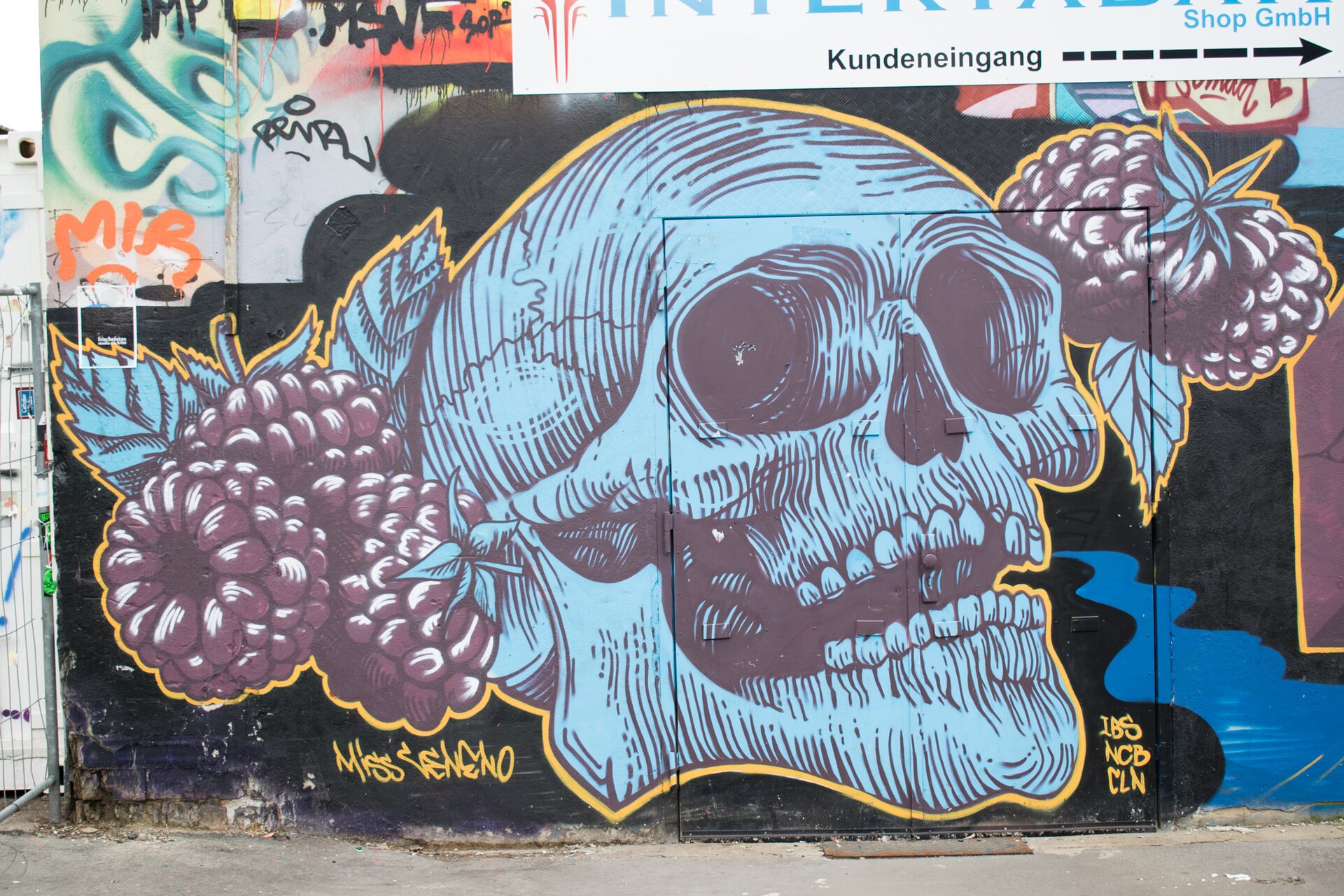
For many people the highlight of a street art day is not looking at the walls but painting one. Workshops, typically about two hours long, start with the basics — how a spray can behaves, how to control drips and lines, how a stencil is cut and sprayed — and end with you making something of your own on a legal wall, which you can photograph and, in some cases, take home.
The obvious place is Urban Spree, an arts space on the RAW-Gelände in Friedrichshain with galleries, artist residencies, workshops, concerts, an art bookshop and a large beer garden. Alternative Berlin runs its workshop there, and the space is worth a look in its own right. Workshops suit teenagers particularly well, and they are one of the few Berlin activities that genuinely work for a mixed group of adults and older children. Wear clothes you do not mind ruining.
For more on the site itself, see our guide to the RAW-Gelände.
Where the Tours Go
Different companies take different routes, and the art itself changes constantly, but most street art tours work in one or two of these areas:
- Kreuzberg — the heartland, particularly the streets of SO36 around Kottbusser Tor, Oranienstraße and Görlitzer Park, where political art and neighbourhood history are layered on every wall. See our Kreuzberg guide.
- Friedrichshain — the RAW-Gelände and the streets around Revaler Straße and Warschauer Straße, dense with murals, pieces and paste-ups. See our Friedrichshain guide.
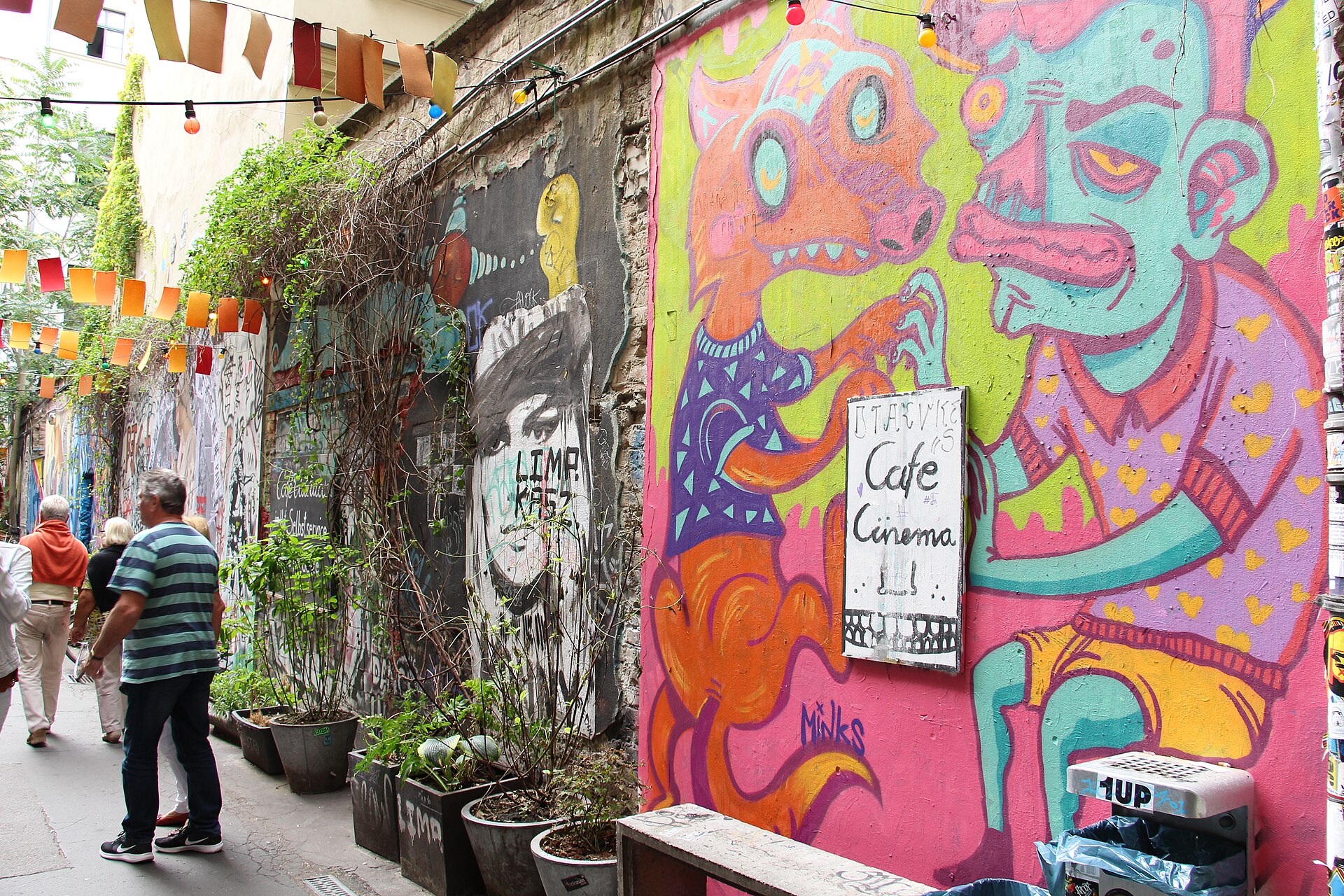
- Mitte — above all Haus Schwarzenberg on Rosenthaler Straße, near Hackescher Markt, a courtyard alley covered floor to roof in paste-ups, stencils and murals, which also holds the Anne Frank Zentrum and the museum in Otto Weidt’s former workshop for the blind, where Jewish workers were hidden during the war.
- Schöneberg — Bülowstraße, where the Urban Nation museum and its rotating community walls have turned a stretch of ordinary street into an open-air gallery.
Two places deserve a word of caution. The East Side Gallery is the most famous painted wall in the world, but it is not street art in the usual sense: the paintings were commissioned in 1990 and have since been restored. It is well worth seeing, and our East Side Gallery guide covers it in depth, but a “street art tour” that consists only of the East Side Gallery is not a street art tour. And the most famous works in any guidebook may already be gone: Blu’s Cuvrystraße murals are the classic example. A good guide knows what is on the walls this month.
Urban Nation: The Free Street Art Museum
The Urban Nation Museum for Urban Contemporary Art opened in September 2017 in a renovated 1880s building at Bülowstraße 7 in Schöneberg, and it is devoted entirely to street art, graffiti and urban contemporary art. Entry is generally free. It is open Tuesday and Wednesday from 10:00 to 18:00 and Thursday to Sunday from 12:00 to 20:00, and closed on Mondays.
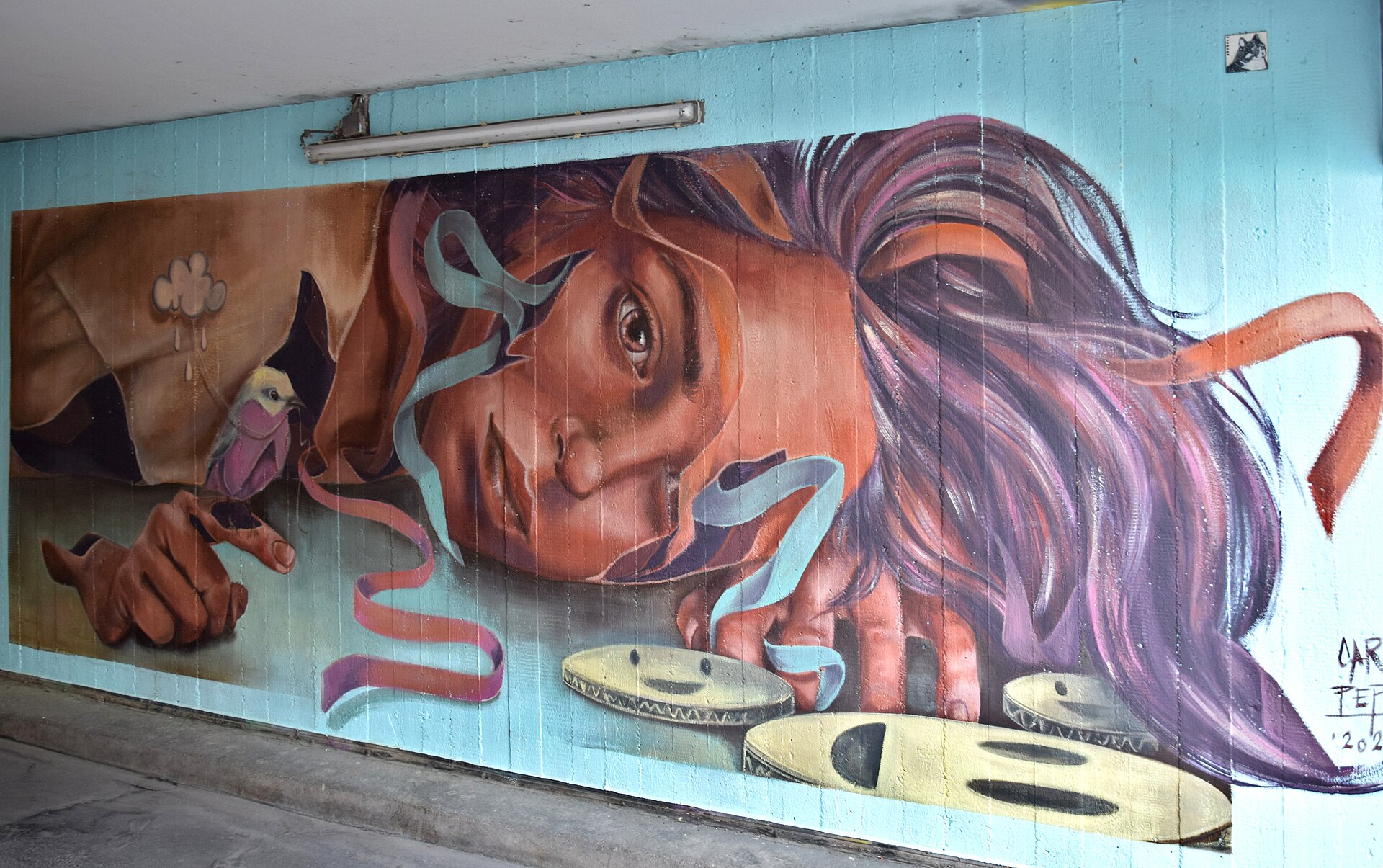
The museum is a good counterweight to the tours: indoors, curated and calm, with works by artists you may just have seen on the street. It also makes a natural pairing with Alternative Berlin’s Twilight Tour, which starts on Bülowstraße, a few steps away. For the neighbourhood around it, see our Schöneberg guide, and for the city’s more conventional art spaces, our guide to contemporary art museums in Berlin.
Making a Day of It
Street art tours end in some of Berlin’s best neighbourhoods, so plan the rest of the day around where yours finishes:
- After a tour at the RAW-Gelände, walk to the East Side Gallery and across the Oberbaumbrücke into Kreuzberg for the evening. In summer, the beer garden at Urban Spree is a good place to wait for the light to soften.
- After Haus Schwarzenberg, explore the Hackesche Höfe next door and the galleries of the surrounding streets; our guide to Berlin’s contemporary art galleries has the best of them.
- After Urban Nation, walk up to Nollendorfplatz and, on a Wednesday or Saturday morning, the Winterfeldtmarkt, one of the city’s best food markets.
- After a Kreuzberg tour, stay for dinner in SO36, or head for the Landwehrkanal on a warm evening. Our Berlin art and culture itinerary puts it all together.
How to Choose a Street Art Tour
Ask these questions before you book:
- Is the guide an artist? Tours led by people who paint are consistently better: they know the artists, the techniques and the politics from the inside.
- Is there a workshop? If you have the time and the budget, a tour followed by a workshop is the best street art day Berlin offers.
- Which neighbourhoods? Kreuzberg and Friedrichshain are the core; tours that also take in Schöneberg or Haus Schwarzenberg add variety.
- When? Daylight matters for looking at walls. In winter, choose a morning or midday start — or embrace the dark with the Twilight Tour.
- How big is the group? Street art tours stop in narrow side streets and courtyards, and a group of thirty blocks the pavement and hears very little.
| If you are… | Choose |
|---|---|
| Short on time or money | A free, tip-based alternative tour |
| Serious about street art | An artist-led street art tour, then a workshop |
| Interested in politics and subculture | The Alternative Berlin Tour |
| A family with teenagers | A street art tour with a workshop |
| A group of friends | A private tour, which quickly becomes good value per head |
| Visiting in winter | The Twilight Tour, plus the Urban Nation museum |
Street Art Etiquette
- Look, photograph, do not add. Your tour is not an invitation to leave your own tag; save that for the workshop’s legal wall.
- Remember people live here. Many walls are the outsides of homes, and the courtyards are shared spaces. Keep your voice down, do not photograph residents or their windows, and do not block doorways.
- Credit the artist if you post a photograph and know who painted it.
- Be wary of “street art” sold on the street. Buy prints from galleries, the artists themselves or the museum shop instead; our Berlin souvenirs guide has more ideas.
Is a Berlin Street Art Tour Worth It?
Yes, more than most tours, because street art is the one part of Berlin that changes week by week and that no guidebook can keep up with. You can walk Kreuzberg on your own and see plenty of paint; with an artist beside you, you will see which pieces are new, which are protests, which are tributes, which were painted legally and which at three in the morning, and why the building opposite used to be covered in murals and now is not. At €20 for three hours, the specialist tours are among the best-value paid tours in the city.
What is not worth it: a “street art” tour that is really a pub crawl, a tour that only visits the East Side Gallery, and paying for prints from a table on the pavement.
Frequently Asked Questions
How much is a street art tour in Berlin?
Most specialist street art tours cost around €20 for three hours in 2026. Alternative Berlin’s Street Art Tour is €20; its longer Twilight Tour and Real Berlin Experience are €25. A long-running Kreuzberg and Friedrichshain walk charges €20, or €18 reduced, with under-12s free. Tip-based alternative tours are also available.
Where is the best street art in Berlin?
Kreuzberg and Friedrichshain have the most, particularly around Kottbusser Tor, Oranienstraße and the RAW-Gelände. Haus Schwarzenberg near Hackescher Markt and Bülowstraße in Schöneberg, home of the Urban Nation museum, are also well worth seeing.
Can I do a graffiti workshop in Berlin?
Yes. Street art workshops of about two hours, where you learn the basics and paint on a legal wall, are run at Urban Spree on the RAW-Gelände in Friedrichshain, among other places. Book ahead and check the price when you do.
Is the Urban Nation museum free?
Entry is generally free. The museum, at Bülowstraße 7 in Schöneberg, is open Tuesday and Wednesday from 10:00 to 18:00 and Thursday to Sunday from 12:00 to 20:00, and closed on Mondays.
Is the East Side Gallery street art?
Not in the usual sense. Its paintings were commissioned in 1990 on the longest surviving section of the Berlin Wall and have since been restored. It is well worth visiting, but a street art tour should also cover the living, changing art of Kreuzberg and Friedrichshain.
Are street art tours suitable for children?
Older children and teenagers usually love them, especially with a workshop at the end. For younger children, three hours of walking and listening is a lot; choose a shorter tour or a private one that can go at their pace.
Related Berlin Guides
- Berlin Tours: Which Ones Are Worth Your Money
- The East Side Gallery
- The RAW-Gelände
- Kreuzberg
- Friedrichshain
- Schöneberg
- Contemporary Art Museums in Berlin
- Berlin’s Contemporary Art Galleries
- Hidden Gems in Berlin
- Free Walking Tours in Berlin
Photo Credits
Carp mural on the RAW-Gelände in Friedrichshain: Berlin RAW-Gelande mural Karp by Andrzej Otrębski, CC BY-SA 4.0, via Wikimedia Commons.
Skull mural on the RAW-Gelände: Berlin Raw Gelände (202208017) by Thomas Kühling, CC BY 3.0, via Wikimedia Commons.
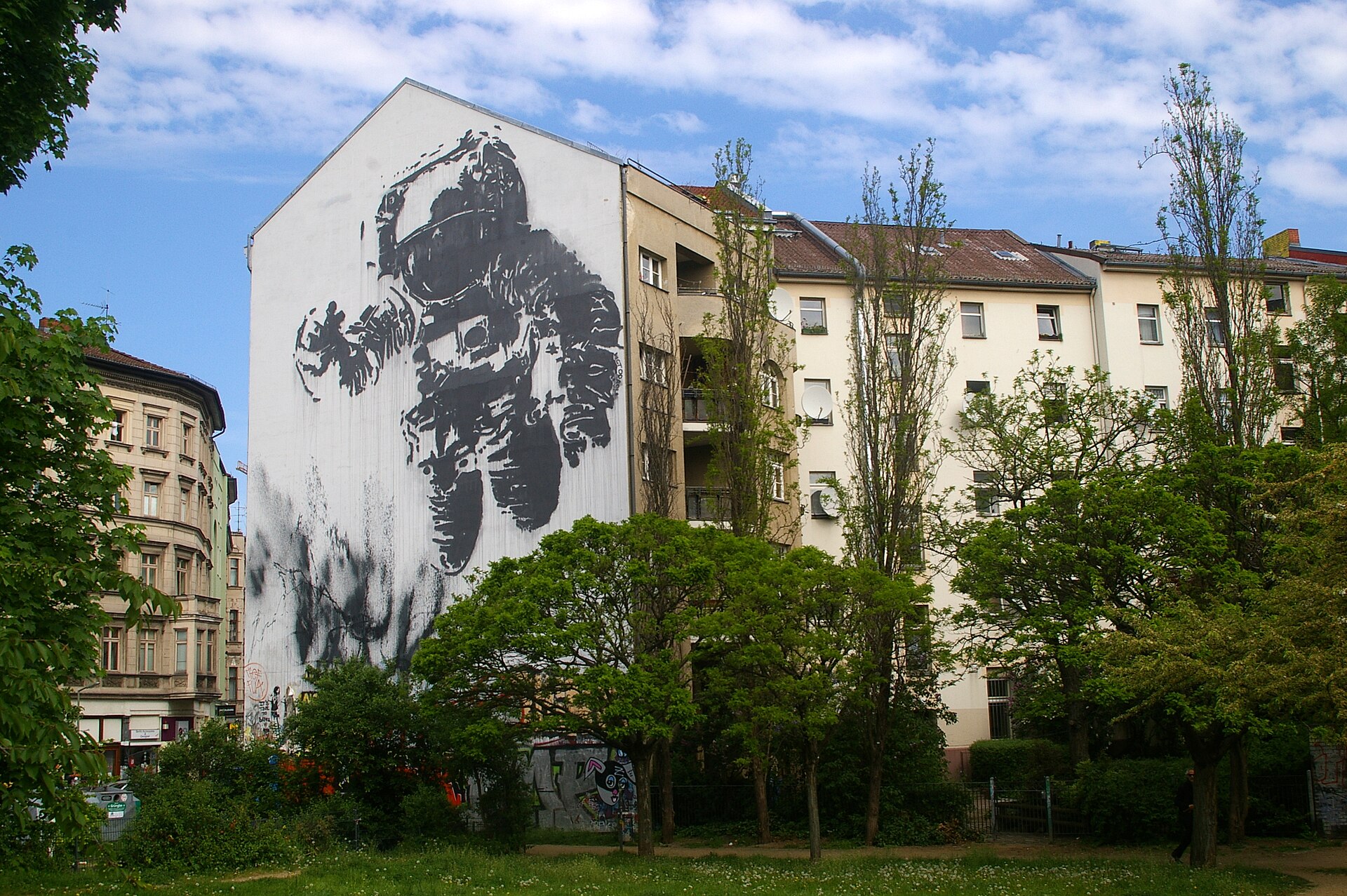
Victor Ash’s Cosmonaut mural in Kreuzberg: Astronaut – Cosmonaut by Victor Ash (14075258594) by Rae Allen from Brisbane, Australia, CC BY 2.0, via Wikimedia Commons.
Street art in the courtyard of Haus Schwarzenberg: Berlin (30354999894) by Fred Romero from Paris, France, CC BY 2.0, via Wikimedia Commons.
Community wall mural by Caro Pepe on Bülowstraße: Community Wall Elements of Distraction Caro Pepe Bülowstraße 4 Berlin-Schöneberg 02 by Singlespeedfahrer, CC0, via Wikimedia Commons.
Final Word
Berlin’s street art is the city talking to itself — about rent and refugees, about who gets to live in Kreuzberg, about the club that closed and the rent that rose. Most of it will be gone within a year, painted over by the next artist, the landlord or the city. That impermanence is exactly what makes it worth seeing with someone who knows it.
Take an artist-led tour through Kreuzberg or Friedrichshain, spend an afternoon painting your own piece at a workshop, and finish at the free Urban Nation museum to see the same artists indoors. You will never look at a Berlin wall in quite the same way again — and you will probably start noticing the stickers on every lamp post in your home town.