Third Reich & WWII Tours in Berlin
The free weekend tours at the Topography of Terror and the German Resistance Memorial Center, four-hour Third Reich walks from €15, Sachsenhausen, bunkers, the Olympiastadion — how to choose, and the tone these places deserve.
Behind a row of East German flats near Potsdamer Platz there is a car park, a strip of grass and an information board. Beneath that ordinary tarmac lay the Führerbunker, where Hitler killed himself on 30 April 1945; its remains were blown up and sealed, and in the late 1980s the East German state built apartments over the site. Almost nothing of Nazi Berlin is marked the way first-time visitors expect — no grand ruins, no preserved headquarters — which is why the best Berlin Third Reich WW2 tours are less about seeing than about understanding what you are standing on.
This guide covers the ways to explore that history with a guide: the free tours run by the Topography of Terror and the German Resistance Memorial Center, paid walking tours of the old government quarter and the Jewish district, guided trips to the Sachsenhausen memorial, bunker tours, and the Nazi-era architecture of the Olympiastadion and Tempelhof. It also covers how to choose, and the tone these places deserve. Prices and times were checked in September 2026; treat them as the right order of magnitude. For the sites themselves in detail, see our guide to Nazi history sites in Berlin, and for how these tours compare with every other kind, our overview of Berlin tours.
Third Reich and WWII Tours at a Glance
| Option | Cost (September 2026) | When and how long | Our verdict |
|---|---|---|---|
| Topography of Terror public tour in English | Free | Saturdays and Sundays at 15:30; 60 minutes | The best free WWII tour in Berlin |
| German Resistance Memorial Center tour | Free | First Sunday of the month (German) and third Sunday (German and English), 15:00 | Superb and rarely crowded; plan around it |
| Paid WWII and Third Reich walking tour | From €15 | About 4 hours | The backbone of any visit |
| Free walking tour of the centre | Tip; €10–15 is the norm | About 3 hours | Touches on the Nazi era; not enough on its own |
| Guided Sachsenhausen day trip | Tour fee plus an ABC ticket | About 6 hours | The trip that most needs a guide |
| Bunker tours | About €18 | 90 minutes | Unforgettable; book ahead |
| Olympiastadion tour | €11 self-guided; guided in English, price on the stadium’s site | About an hour guided | The 1936 Olympics in stone |
Why These Tours Need a Guide
Berlin was the capital of the Third Reich, the place where the regime was planned, run and finally destroyed, and yet the physical traces are few. The New Reich Chancellery was demolished after the war. The Gestapo headquarters on Prinz-Albrecht-Straße was bombed, then razed; the site lay as wasteland for decades. The bunker is under a car park. What Berlin did instead, slowly and after a great deal of argument, was to build its memorials at the scenes of the crimes: the Topography of Terror on the site of the Gestapo and SS headquarters, the Holocaust Memorial a short walk from where the Chancellery stood, small brass plaques in the pavements outside the homes of the people who were deported.
A good guide connects all of that. They tell you what stood here, what was decided in the building that still stands across the road, who lived behind the door with the brass plaques in front of it, and how the city has chosen to remember. They also handle the subject with care: the best Third Reich tours are sober, precise and humane, and never sensational.
The Free Tours Most Visitors Miss
The Topography of Terror
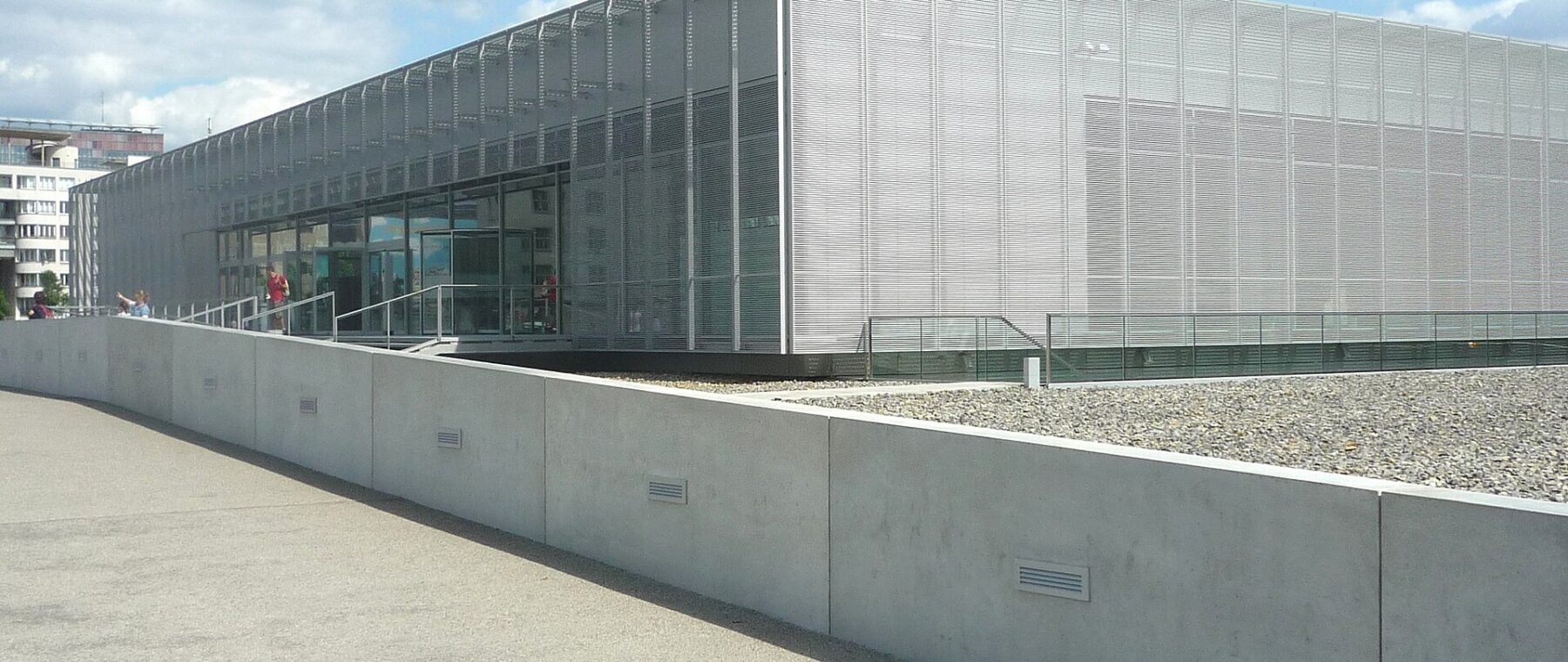
The Topography of Terror documentation centre stands on the site of the Gestapo and SS headquarters, and its permanent exhibition is one of the clearest accounts anywhere of how the Nazi terror apparatus worked. Entry is free, the exhibitions are open daily from 10:00 to 20:00, and the outdoor areas stay open until dusk, no later than 20:00.
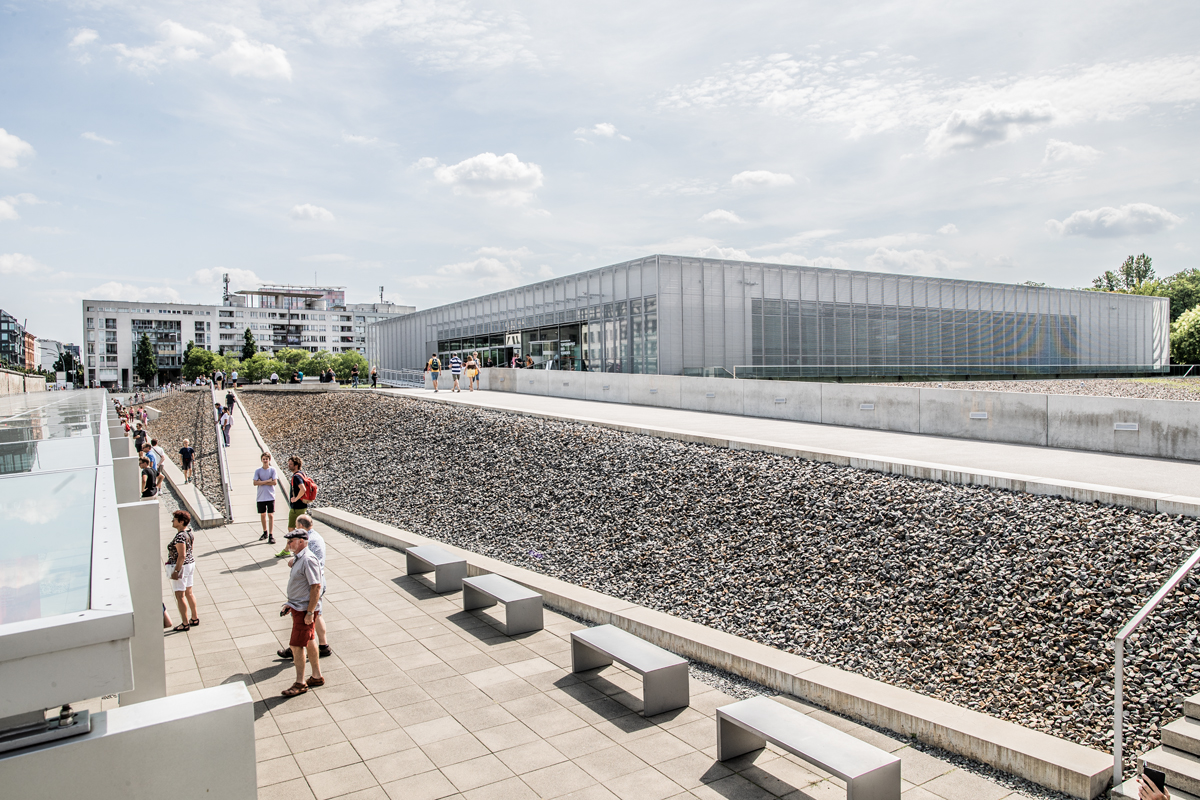
What many visitors do not know is that it runs free public tours every weekend. The 60-minute tour of the permanent exhibition in English starts at 15:30 on Saturdays and Sundays; gather at the visitors’ service counter in the foyer 15 minutes beforehand. You cannot register in advance, so arrive in good time. Our Topography of Terror guide covers the exhibitions and the outdoor site in detail.
The German Resistance Memorial Center
In the courtyard of the Bendlerblock, the former army headquarters, Claus von Stauffenberg and fellow conspirators were shot shortly after midnight on 21 July 1944, hours after their attempt to kill Hitler failed. Today the building houses the German Resistance Memorial Center, with an exhibition on the many forms of opposition to the regime — military, religious, political, Jewish, student and individual — and it is free.
Its public guided tours are free: on the first Sunday of every month in German, and on the third Sunday in German and English, starting at 15:00. At any other time you can take an audio tour, available in seven languages. The centre is open Monday to Friday from 09:00 to 18:00, and on weekends and public holidays from 10:00 to 18:00. It is one of the most moving places in the city, and it is rarely crowded.
Other free sites that explain themselves
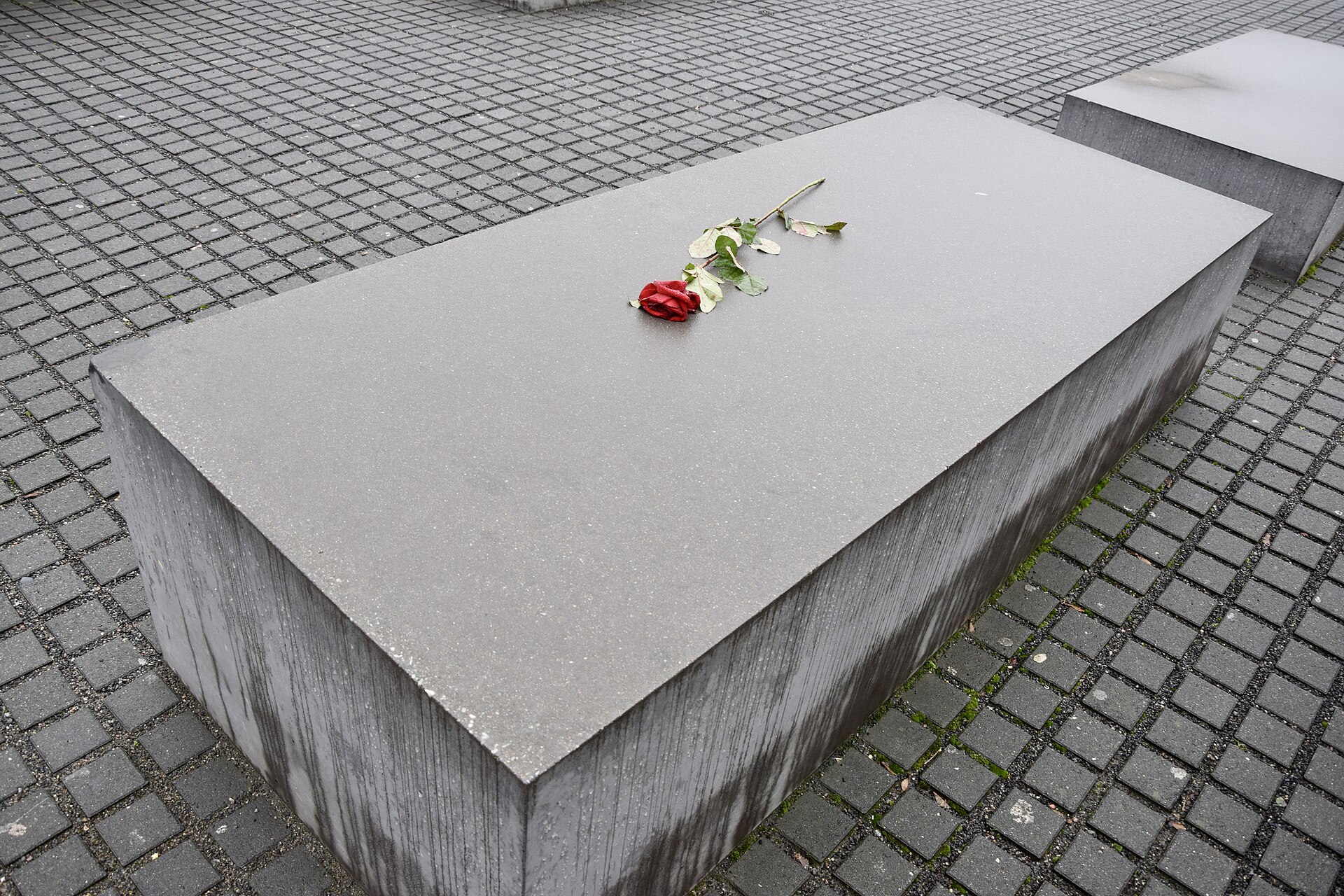
- The Holocaust Memorial, with its field of 2,710 concrete stelae, and the information centre underneath it, which tells the stories of individual victims and families.
- The House of the Wannsee Conference, the lakeside villa where senior officials met in January 1942 to coordinate the murder of Europe’s Jews, now a free memorial and exhibition.
- The Plötzensee Memorial, the former execution shed of Plötzensee prison, where more than 2,500 people were put to death under the Nazis, including many of the July 1944 conspirators. It is free and open daily, with no guided tours; see our Wedding and Moabit guide.
- The Soviet War Memorial in Treptower Park, a monumental burial ground for Red Army soldiers who died in the Battle of Berlin.
Paid Walking Tours: The Backbone of a Visit
For most visitors, a paid WWII and Third Reich walking tour is the best single way into the subject, because it links the government quarter, the sites of persecution and the memorials into one story in an afternoon. The fixed price buys a smaller group and a guide who specialises in the period.
Original Berlin Walks, which has run English-language tours since 1993, is a good benchmark. Its WWII and Third Reich Tour costs from €15 per person, varying by date, and lasts about four hours. It meets outside the Starbucks at Hackescher Markt, at Neue Promenade 3, and covers the Reichstag, the former Nazi ministries, the Topography of Terror, the site of Hitler’s bunker, the Holocaust Memorial, the old Jewish district around the New Synagogue, Otto Weidt’s workshop and the memorials to other victims of the regime. There is no minimum group size, so the tour runs however few people book, and you can cancel or reschedule free of charge up to 24 hours ahead. It uses public transport for part of the route, so bring a valid AB ticket.
Insider Tour runs its own Third Reich, Hitler and WWII walking tour, and several of the free-tour companies run paid Third Reich walks as well. Compare the routes: the best include the Jewish district as well as the government quarter, because a Third Reich tour that never mentions the people the regime persecuted is telling only half the story.
What a good Third Reich tour covers
- The Reichstag, whose fire in February 1933 gave the new regime its pretext to suspend civil liberties. Our Reichstag dome guide covers a visit.
- Wilhelmstraße, the old government quarter, where Göring’s Air Ministry, one of the few major Nazi buildings to survive, now houses the Federal Ministry of Finance.
- The site of the New Reich Chancellery and the bunker, now flats, shops and that car park.
- Bebelplatz, where students and Nazi officials burned books in May 1933. Look down through the glass panel in the square at Micha Ullman’s memorial of empty bookshelves.
- The Holocaust Memorial, and the nearby memorials to the persecuted Sinti and Roma, to homosexual victims, and to the victims of the Nazi “euthanasia” killings.
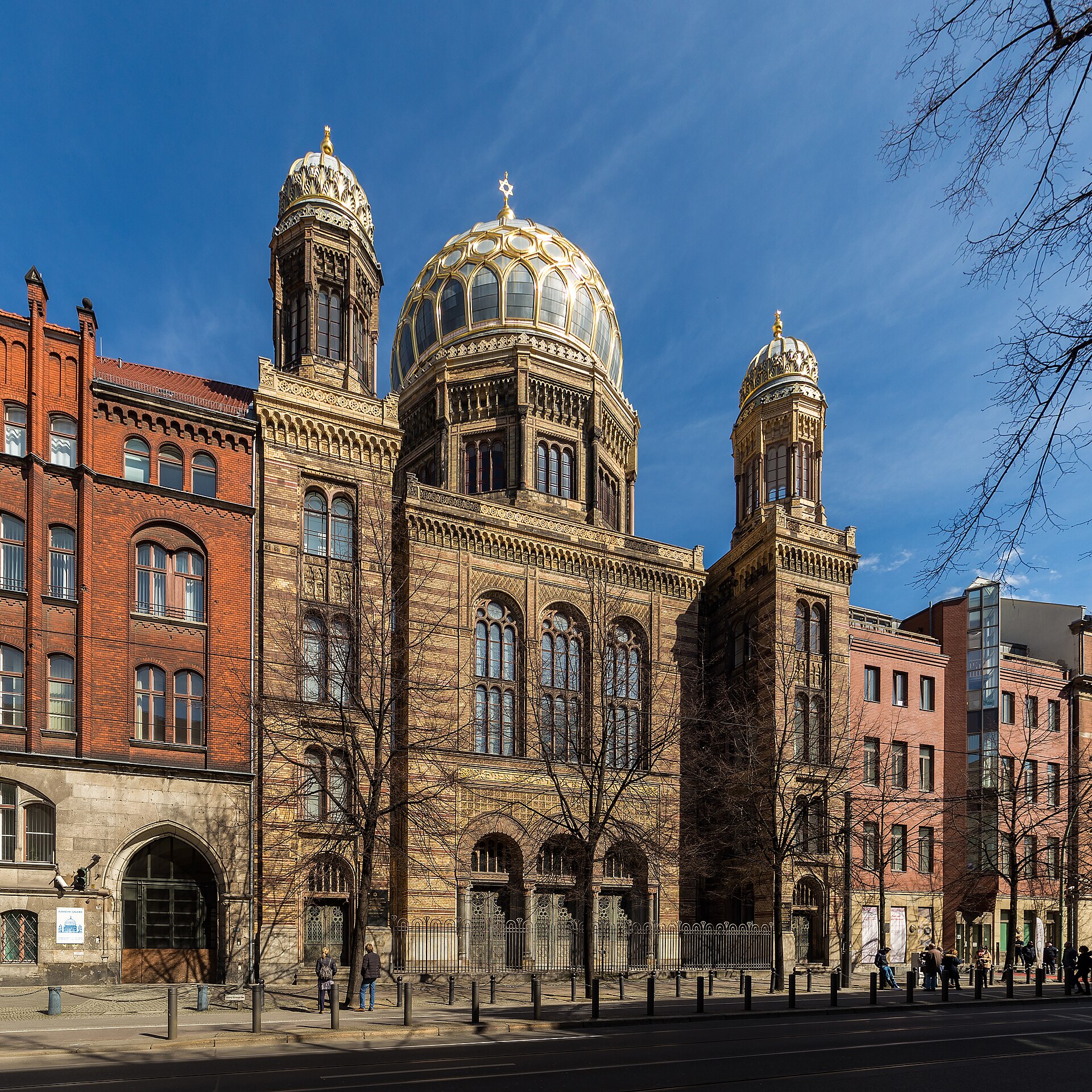
- The Scheunenviertel, the old Jewish district of Mitte, including the New Synagogue and Otto Weidt’s workshop for the blind, where Jewish workers were protected and some were hidden.
Look down: the Stolpersteine
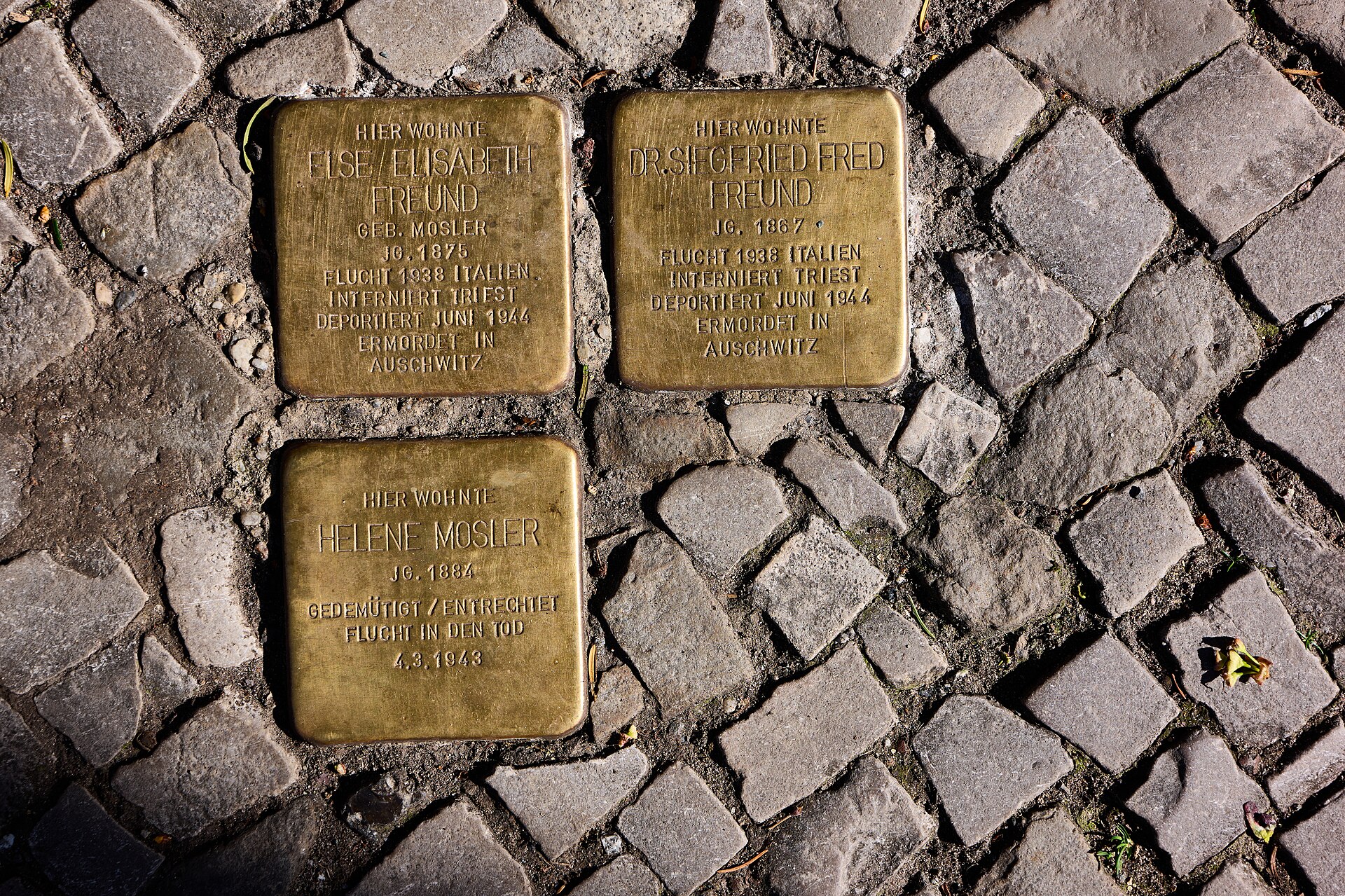
All over Berlin, set into the pavement in front of ordinary houses, are small brass plaques the size of a cobblestone. Each one is a Stolperstein, a “stumbling stone”, bearing the name of someone who lived there, and when they were deported, and where they were murdered. There are many thousands of them in the city. A good guide will stop at a few and read the names aloud; once you have noticed them, you will see them everywhere. Our guide to Jewish history in Berlin has more.
Sachsenhausen: The Day Trip That Most Needs a Guide
The Sachsenhausen concentration camp, at Oranienburg just north of Berlin, was opened in 1936 and became a model for the camp system, close to the SS administration that ran it. Tens of thousands of prisoners died there, and after the war the Soviet occupiers used the site as a special camp of their own. Today it is a memorial and museum, and entry is free.
It is also vast, and without context it can be overwhelming. A guided tour, typically about six hours from central Berlin including the train journey, turns a bewildering day into an understandable one; Original Berlin Walks is among the companies that run one. You need a public-transport ticket that includes fare zone C for the journey. Visiting independently with the memorial’s audio guide is also a perfectly valid choice if you prefer your own pace. Either way, this is not a trip for young children. Our Sachsenhausen memorial day trip guide covers the journey, the site and what to expect.
Bunkers and the World Underground
The only way to go beneath Berlin’s streets into its wartime shelters is on a guided tour, and these are among the most memorable experiences in the city. The non-profit association Berliner Unterwelten runs 90-minute public tours, at about €18, through real air-raid shelters and Cold War bunkers, and the Berlin Story Bunker near Anhalter Bahnhof holds an exhibition on how the Nazi regime came about, inside a genuine wartime bunker. Tours sell out; book ahead. Our guide to Berlin’s bunker tours compares them all.
One warning: nobody can take you inside Hitler’s bunker. It was blown up and sealed, and the site is a car park. Anything that promises otherwise is offering a reconstruction or a model.
The Architecture of Power: the Olympiastadion and Tempelhof
Two of the largest surviving Nazi-era buildings in Berlin are still in daily use, and both can be visited with a guide.
- The Olympiastadion, built for the 1936 Olympic Games, still has its monumental stone colonnades, bell tower field and sculptures. A self-guided visit costs €11, and a guided tour in English, priced on the stadium’s own site, reaches the VIP areas, the changing rooms and the underground warm-up hall. It is a remarkable place to discuss how the regime used sport and spectacle, and it is still a working football stadium.
- Tempelhof Airport, the vast terminal built in the late 1930s, later the heart of the Berlin Airlift, is offered on guided tours of the building and its underground spaces; book ahead. The airfield itself is now Tempelhofer Feld, one of the city’s great parks.
A Self-Guided Walk Between the Free Sites
If you prefer to go alone, the core of Nazi Berlin can be walked in about three kilometres, and every stop on this route is free. Allow three to four hours with time inside, and time it to finish at the Topography of Terror for the 15:30 English tour at the weekend.
- The Reichstag, and just to the south, at the edge of the Tiergarten, the memorial to the Sinti and Roma murdered under National Socialism: a dark pool with a single flower renewed each day.
- The Brandenburg Gate, through which the SA marched by torchlight on the night Hitler became chancellor in January 1933.
- The Holocaust Memorial, and the information centre beneath it. Across Ebertstraße, in the Tiergarten, is the memorial to the homosexual men and women persecuted by the regime.
- The site of the Führerbunker, a few minutes south, at the corner of In den Ministergärten and Gertrud-Kolmar-Straße, marked by its information board.
- Wilhelmstraße, the old government quarter, and the former Air Ministry at the corner of Leipziger Straße.
- The Topography of Terror on Niederkirchnerstraße, with the surviving stretch of the Wall along its edge and the cellar remains of the Gestapo headquarters below it.
Carry on another day to Bebelplatz, the New Synagogue and the Scheunenviertel, and to the memorial to the victims of the “euthanasia” killings at Tiergartenstraße 4, beside the Philharmonie. Our Berlin history itinerary strings all of this into a longer plan.
Choosing the Right Tour
| If you have… | Do this |
|---|---|
| A weekend afternoon | The Topography of Terror’s free English tour at 15:30, then the Holocaust Memorial |
| Half a day | A paid WWII and Third Reich walking tour |
| A full day | The walking tour, plus the Topography of Terror’s exhibition and the information centre under the Holocaust Memorial |
| Two days or more | Add a guided trip to Sachsenhausen and a bunker tour |
| The first or third Sunday of the month | The German Resistance Memorial Center’s free tour at 15:00 |
| An interest in architecture | The Olympiastadion and Tempelhof |
Our Berlin history itinerary builds these into a longer plan, and our Berlin Wall tours guide covers the Cold War chapter that followed.
Tone, Respect and Children
- The Holocaust Memorial is a memorial. Walk among the stelae; do not climb, jump between them or picnic on them.
- Think about age. The exhibitions at the Topography of Terror and Sachsenhausen include graphic photographs. Teenagers usually engage deeply with these tours; younger children are better served by a shorter, gentler introduction.
- Photograph thoughtfully, particularly at Sachsenhausen and the execution site at Plötzensee.
- Read a little first. An hour with our Nazi history in Berlin guide will make any tour far more rewarding.
What to Skip
- Anything that sensationalises Hitler. “Hitler’s Berlin” is a common marketing hook; the best tours are about the regime, its victims and its opponents, not about one man’s final days.
- Promises of the bunker’s interior. It no longer exists.
- A Third Reich tour with no Jewish history on the route. Ask before you book.
- Rushing the memorials. A tour that gives the Holocaust Memorial five minutes and Checkpoint Charlie twenty has its priorities wrong.
Frequently Asked Questions
What is the best Third Reich tour in Berlin?
A four-hour paid WWII and Third Reich walking tour, such as the one run by Original Berlin Walks from €15, which links the government quarter, the Topography of Terror, the Holocaust Memorial and the old Jewish district. Add the Topography of Terror’s free English tour at the weekend.
Are there free WWII tours in Berlin?
Yes. The Topography of Terror runs a free 60-minute tour in English on Saturdays and Sundays at 15:30, and the German Resistance Memorial Center runs free tours on the first Sunday (German) and third Sunday (German and English) of each month at 15:00.
Can you visit Hitler’s bunker in Berlin?
No. The Führerbunker was blown up and sealed after the war, and the site is now a car park beside a block of flats, marked by an information board. Bunker tours in Berlin visit other wartime shelters.
How do I get to Sachsenhausen from Berlin?
By train to Oranienburg, just north of the city, with a ticket that includes fare zone C, then on foot or by bus to the memorial. Guided tours from central Berlin take about six hours, including the journey.
Is the Topography of Terror free?
Yes. The exhibitions are free and open daily from 10:00 to 20:00, and the free English tour runs on Saturdays and Sundays at 15:30.
Are Third Reich tours suitable for children?
For teenagers, usually yes, and many find them the most memorable part of a Berlin trip. Some exhibitions include graphic images, so younger children are better with a shorter, gentler introduction.
Related Berlin Guides
- Nazi History Sites in Berlin
- The Topography of Terror
- The Holocaust Memorial
- Jewish History in Berlin
- The Jewish Museum Berlin
- Sachsenhausen Memorial Day Trip
- Berlin Bunker Tours
- Berlin Tours: Which Ones Are Worth Your Money
- Berlin Wall Tours
- Berlin History Itinerary
Photo Credits
Topography of Terror documentation centre: Topographie des Terrors 2 by Manfred Brückels, CC BY-SA 3.0, via Wikimedia Commons.
Visitors on the trench path at the Topography of Terror: Topo 1309w by Marco van Oel, CC BY-SA 4.0, via Wikimedia Commons.
The New Synagogue on Oranienburger Straße: Neue Synagoge, Berlin-Mitte, 160328, ako by Ansgar Koreng, CC BY 3.0 DE, via Wikimedia Commons.
Stolpersteine in Schöneberg: Stolpersteine Fregestraße 58 Berlin-Schöneberg 01 by Leonhard Lenz, CC0, via Wikimedia Commons.
Final Word
Berlin does not hide its darkest chapter, but it does not put it on display either. It asks you to look carefully: at a car park, a gravel lot, a square with a pane of glass set into the cobbles, a brass plaque by a front door. The best Third Reich and WWII tours teach you how to look, and a good guide will leave you seeing those traces on every street for the rest of your stay.
Start with the free tours at the Topography of Terror and, if the calendar allows, the Bendlerblock. Take a four-hour walk through the government quarter and the old Jewish district with a specialist guide, and give Sachsenhausen a day of its own. Go slowly, read the names, and let the city tell the story in its own quiet way.