Potsdam Day Trip from Berlin 2026: Sanssouci & Cecilienhof Guide
Complete Potsdam day-trip guide from Berlin — Sanssouci Palace, Cecilienhof, the Dutch Quarter, Alexandrowka, trains, tickets and a full one-day itinerary.
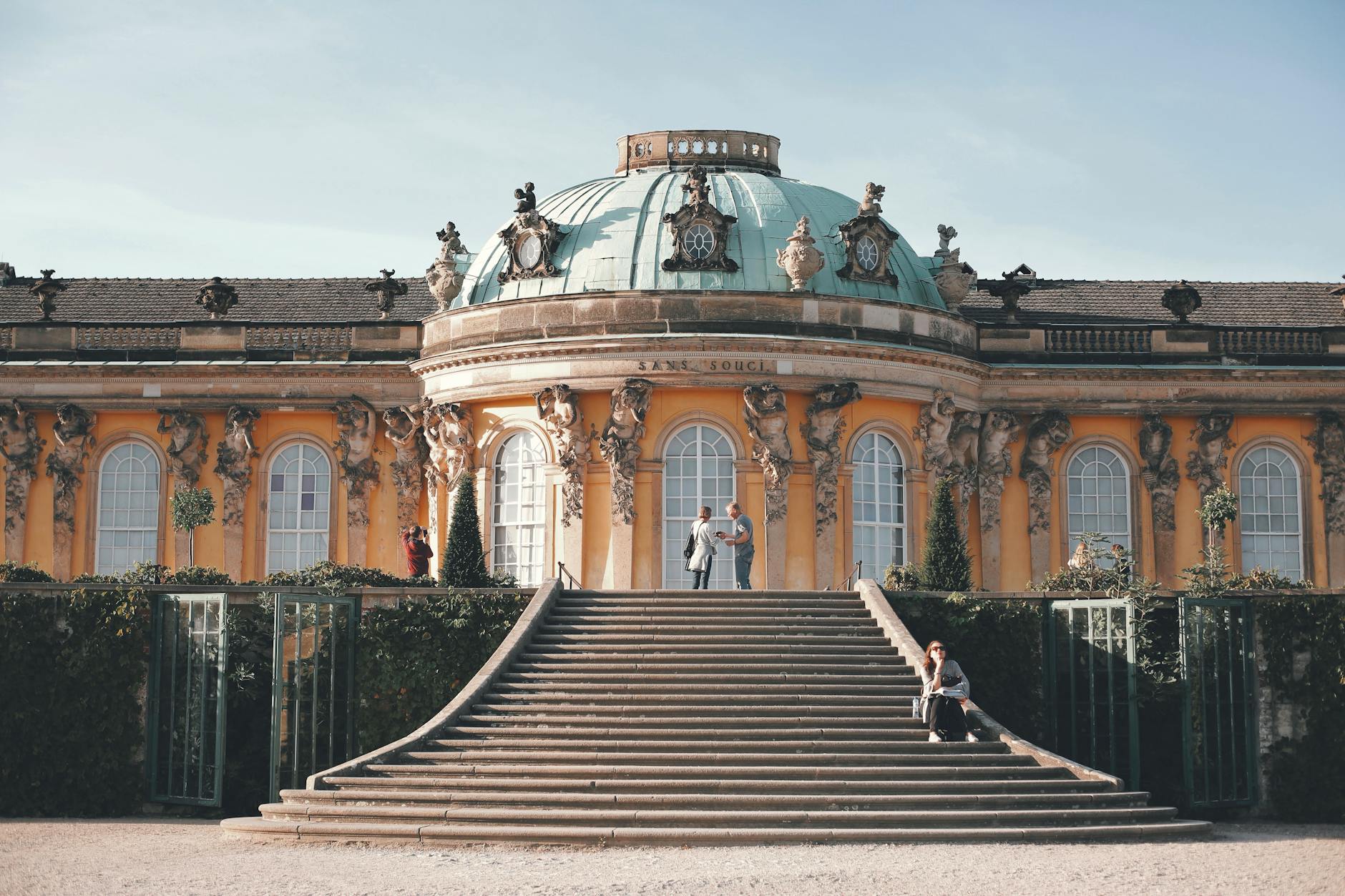
If you’re spending more than three days in Berlin, you should spend one of them in Potsdam. The former Prussian royal seat sits about 35 minutes from Berlin Hauptbahnhof on the S7, belongs to the UNESCO-listed Palaces and Parks of Potsdam and Berlin (a landscape of about 500 hectares of parks and 150 historic buildings), and somehow remains one of the more underrated day trips in Europe. Visitors come for Sanssouci — Frederick the Great’s intimate yellow Rococo palace — and leave realizing they could have spent three days here. The town itself has a Dutch Quarter built between 1734 and 1742 for Dutch workmen brought in by Friedrich Wilhelm I, a Russian colony from 1826 (also UNESCO), the actual Brandenburg Gate of Potsdam (built in 1770-71, about twenty years before Berlin’s), and the Cecilienhof palace where Truman, Stalin, and Churchill negotiated the postwar order in 1945.
This guide covers everything you need to plan a Potsdam day trip from Berlin in 2026 — trains, tickets, the right order to see things, what’s free and what isn’t, and the realistic answer to whether you should buy the combined ticket or pay per palace.
Potsdam Day Trip at a Glance
| Detail | Info |
|---|---|
| Distance from Berlin | Southwest of Berlin, on the city’s border |
| Train Journey | S7 from Berlin Hbf: about 35 min (38 min from Friedrichstrasse); until 12 Dec 2026 the RE1 starts at Berlin-Charlottenburg |
| Ticket Needed | VBB ABC zone (single €5, 24-hour ticket €12.90) |
| Sanssouci Palace | €14 / €10 reduced |
| sanssouci+ Combined | €22 / €17 reduced; sanssouci+ Familie €49 (2 adults + up to 4 kids, participating palaces) |
| Closed Day | Mondays (all SPSG palaces) |
| UNESCO Status | “Palaces and Parks of Potsdam and Berlin” (1990, extended 1992, 1999) |
| Best Time | April–October (seasonal palaces, park flowers) |
| Recommended Pace | Full day — minimum 6 hours on site |
Why Potsdam Makes the Perfect Berlin Day Trip
Three reasons. First: the geography is forgiving. The S7 runs every ten minutes during the day, and a missed train doesn’t ruin your plans. Second: the variety of attractions in a small area is remarkable. In a small area you’ll find an 18th-century Rococo palace, a Dutch immigrant quarter, the site of the most consequential post-war diplomatic conference in modern history, and, a 601 or 690 bus ride from Potsdam Hauptbahnhof, the Filmpark Babelsberg visitor attraction. Third: the contrast with Berlin is genuine. Where Berlin is loud, fast, and architecturally chaotic, Potsdam is quiet, formal, and built to a different scale. Spending a day in this contrast — going from techno city to royal residence and back — gives you a fuller sense of what the broader region actually contains.
How to Get to Potsdam from Berlin
RE1 Regional Express — The Fast Option
Until 12 December 2026, the RE1 regional trains that serve Potsdam Hauptbahnhof start and end at Berlin-Charlottenburg on the Berlin side, not at Berlin Hauptbahnhof, Friedrichstrasse or Zoo. From central Berlin take the S7, or check the VBB journey planner for the current RE1 connection. For visiting Sanssouci Park, stay on the RE1 past Potsdam Hbf to “Potsdam Park Sanssouci”, the station for the park — it puts you about 10 minutes’ walk from the New Palace and saves you from doubling back through town.
S7 S-Bahn — The Frequent Option
The S7 S-Bahn line runs from central Berlin through Wannsee and terminates at Potsdam Hauptbahnhof in 35-45 minutes depending on your starting station. Trains run every 10 minutes during the day, with some early-morning and late-evening services every 20 minutes; check for engineering works before you set off. The S7 is slower than the RE1 but much more frequent and slightly more comfortable for the short hop. From Wannsee onward, the S7 is the only realistic option.
The Ticket Question — VBB Zone ABC
Potsdam sits in VBB zone C — the outer zone beyond Berlin’s standard AB area. You’ll need an ABC-zone ticket for any journey to Potsdam. A single ABC ticket costs €5 (€3.50 reduced); the ABC 24-hour ticket is €12.90, valid for 24 hours from validation on local and regional public transport in zones A, B, and C. Two full-fare singles for the round trip come to €10, so add up any local Potsdam bus or tram rides before deciding whether the 24-hour ticket is worth it. If you have the Berlin Welcome Card, get the ABC version (not AB) for any Potsdam plans.
Sanssouci Park and Palaces
Sanssouci — Frederick the Great’s “without worries” — is the centerpiece of any Potsdam day trip. The park itself is free to enter and walk through. Individual palace tickets are sold for the buildings, and they sell out, particularly in summer.
Sanssouci Palace
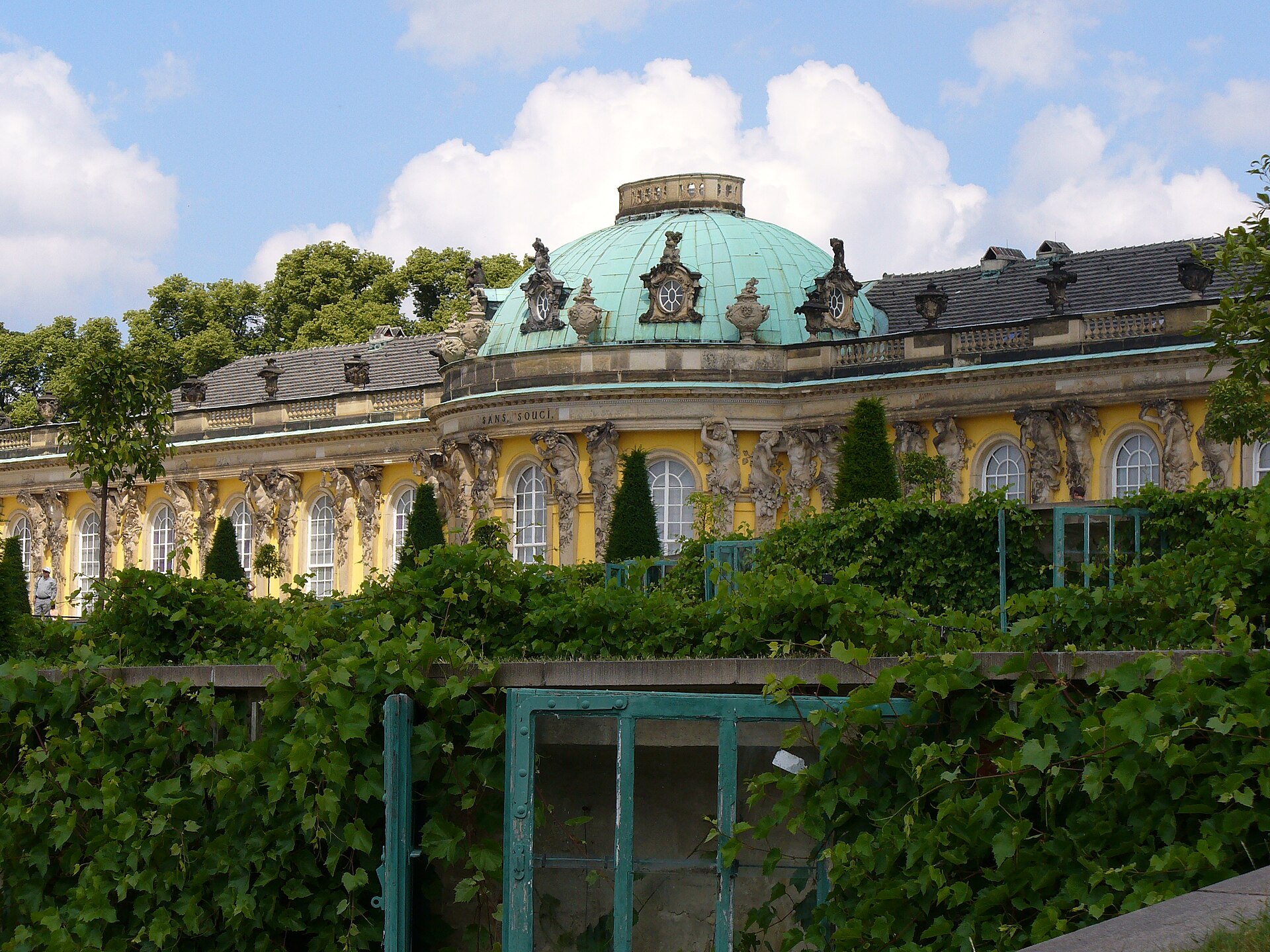
The original 1745-47 yellow Rococo palace, designed by Georg Wenzeslaus von Knobelsdorff under Frederick the Great’s own architectural direction. €14 standard, €10 reduced. Open Tuesday-Sunday 10:00-17:30 (April-October) or 10:00-16:30 (November-March). Closed Mondays. Last admission 30 minutes before closing. Tickets carry a fixed admission time — buy in advance for summer visits, particularly on weekends. The interior is small (Frederick designed it as an intimate retreat). Don’t miss the Concert Hall, the Library, and the unusual oval Marble Hall.
New Palace (Neues Palais)
At the western end of Sanssouci Park, the New Palace (Neues Palais) is the bigger, more bombastic statement — built 1763-69 to celebrate the end of the Seven Years’ War. The Grand Tour costs €14, or €10 reduced. Inside: the Grotto Hall (encrusted with shells, minerals, and semi-precious stones), the Marble Gallery, and the royal apartments.
Orangery Palace
The Italian Renaissance-influenced Orangery (1851-64), built under Friedrich Wilhelm IV. It is closed until further notice for renovation, though selected special events still take place there; spsg.de lists them. Its highlight, the Raphael Hall with more than 50 nineteenth-century copies of Raphael paintings, and the park view from the tower are out of reach until it reopens.
Chinese House
The Chinese House (Chinesisches Haus) is a small Rococo pavilion in chinoiserie style, with gilded statues of Chinese musicians and tea-drinkers around the exterior. Seasonal opening (typically May-October). Interior admission is €5, or €4 reduced. Worth the short walk from Sanssouci Palace itself.
The sanssouci+ Combined Ticket
The sanssouci+ combined ticket costs €22 (€17 reduced) and covers a day’s entry to the participating SPSG palaces in Potsdam. Schloss Sacrow, Jagdschloss Stern and special exhibitions are not included, Belvedere Pfingstberg gives reduced admission, and Cecilienhof and the Orangery are closed for restoration. For families, the €49 sanssouci+ Familie ticket admits up to two adults and four children. Add up the individual prices of the palaces you plan to enter before you buy. Buy online at spsg.de to skip queues at the ticket offices.
Cecilienhof and the Potsdam Conference
Cecilienhof is the most historically consequential building in Potsdam. The 1913-17 country house, built for Crown Prince Wilhelm in the style of an English Tudor manor, was the venue for the Potsdam Conference of July 17 – August 2, 1945. Harry Truman, Joseph Stalin, and Winston Churchill (replaced mid-conference by the newly-elected Clement Attlee) met here to determine the postwar political order in Europe — borders, occupation zones, war reparations, and the fate of Germany itself. The historic conference room is preserved as it was, with the round oak table at the center where the leaders signed the Potsdam Agreement.
Cecilienhof is in the Neuer Garten (New Garden), on the Jungfernsee lakeshore in the northern part of Potsdam. The palace is closed until further notice for restoration, so its rooms, the conference room included, can’t be visited for now; reopening news appears on spsg.de.
Potsdam’s Old Town
Holländisches Viertel — The Dutch Quarter
Potsdam’s Dutch Quarter is made up of 134 red-brick gabled houses built between 1734 and 1742 under King Friedrich Wilhelm I. The original residents were Dutch craftsmen invited to settle in Potsdam to help build the rapidly expanding Prussian capital. Today the quarter is a pedestrianized district of small boutiques, galleries, cafés, and bakeries. Free, walkable, perfect for a coffee stop after Sanssouci. Around Mittelstrasse, Benkertstrasse, and Friedrich-Ebert-Strasse.
Alexandrowka — The Russian Colony
The Russian Colony of Alexandrowka was built in 1826-27 for twelve Russian singers — former soldiers who had remained in Potsdam after the Napoleonic Wars and formed a choir that performed for the Prussian court. The thirteen log houses (one for each singer plus one for the supervisor) are built in traditional Russian style with carved wooden details. UNESCO World Heritage listing was added to the broader Potsdam ensemble in 1999. The small museum in House No. 2 (€3.50, or €3 reduced) tells the colony’s story.
The Other Brandenburg Gate
Yes, Potsdam has its own Brandenburg Gate, and it’s older than Berlin’s. Built 1770-71 under Frederick the Great to mark the western entrance to the city, the Potsdam Brandenburg Gate predates the more famous Berlin version by about twenty years. The two sides of the gate look completely different: Georg Christian Unger designed the outer side and Carl von Gontard the side facing the city. Free, central, makes for an unusual Berlin/Potsdam comparison photo.
Park Babelsberg and Filmpark Babelsberg
Park Babelsberg, created from 1833 by Peter Joseph Lenné and Hermann, Prince of Pückler-Muskau, lies on the Havel in Potsdam, with views across to the Glienicker Brücke (the famous “Bridge of Spies”) and Glienicke Palace Park. The park is free to enter and is a UNESCO-listed landscape. Babelsberg Palace, inside the park, opens for special events, which spsg.de lists.
Filmpark Babelsberg is a separate attraction — a visitor park, distinct from Studio Babelsberg’s working production studios, which can’t be toured. The park opens seasonally; check the opening calendar on filmpark-babelsberg.de before you go. Family ticket €84 online, €93 at the gate (two adults and up to three children, or one adult and up to four). The visit combines stunt shows and behind-the-scenes exhibits — particularly good for families. Most Berlin first-time visitors skip this in favor of Sanssouci, which is the right call, but Filmpark earns its place on a second or third Potsdam visit.
A Suggested One-Day Itinerary
Before 10:00: Aim to reach Potsdam Park Sanssouci station around 10:00. Until 12 December 2026 the RE1 that stops there starts from Berlin-Charlottenburg rather than Berlin Hauptbahnhof, so pick your outward connection in the VBB journey planner.
10:00–12:30: Sanssouci Park. Start at the New Palace (about a 10-minute walk from Park Sanssouci station). Visit the interior. Then walk the central avenue through Sanssouci Park to Sanssouci Palace itself. Time your timed-entry ticket for 12:00 or 12:30.
12:30–13:30: Lunch in the Dutch Quarter. Coffee at Café Heider, lunch at one of the bistros on Mittelstrasse.
13:30–14:00: Walk through the Dutch Quarter. Photograph the Brandenburg Gate. Brief stop at Alexandrowka.
14:00–17:30: Free time — Sanssouci Park gardens, Chinese House from outside, or coffee at one of the Old Town cafés.
17:30: Back to Berlin from Potsdam Hbf. The S7 runs through to Berlin Hauptbahnhof; the RE1 goes only as far as Berlin-Charlottenburg until 12 December 2026, so check the journey planner for the next departures.
Where to Eat in Potsdam
Café Heider on Friedrich-Ebert-Strasse is the classic — Habsburg-era café with serious cakes and decent meals, popular with both locals and tourists. Maison Charlotte in the Dutch Quarter does excellent French bistro lunches at fair prices. Drachenhaus (the Chinese-styled “Dragon House” in Sanssouci Park itself) is the place for a more atmospheric lunch — the building is an architectural folly of 1770-72, designed by Carl von Gontard, and lunch on the terrace with park views is one of the better Potsdam meals. Maleria am Wasser, on the New Garden lakeshore near Cecilienhof, is the dinner option if you’re staying late.
Best Times to Visit Potsdam
April through October is the optimal window. Cherry blossoms in Sanssouci Park peak in early April. The formal Sanssouci gardens are at their best in May and June. October foliage in the broader park system is excellent — combine your trip with our Berlin in autumn guide for the broader fall context. Avoid Mondays year-round (all SPSG palaces closed). Avoid the second weekend of August (Potsdam Schlössernacht, the palace night, packs all attractions). Winter visits work for the town, but most park palaces have reduced hours, and the gardens look austere rather than romantic.
Frequently Asked Questions
Is Potsdam worth a day trip from Berlin?
Yes — Potsdam is the single best day trip from Berlin for first-time visitors. The combination of a major UNESCO palace ensemble, a historic Dutch Quarter, and the Russian colony of Alexandrowka gives you three genuinely interesting destinations within easy walking distance of each other. At about 35 minutes from Berlin Hauptbahnhof on the S7, it is almost trivially accessible.
How long does it take to get from Berlin to Potsdam by train?
S7 S-Bahn: about 35 minutes from Berlin Hauptbahnhof, or 35-45 minutes from central Berlin depending on starting station, with trains every 10 minutes during the day. Until 12 December 2026 the RE1 regional express runs to Potsdam from Berlin-Charlottenburg, not from Hauptbahnhof.
Do I need to book Sanssouci Palace tickets in advance?
For summer weekends, yes — Sanssouci has timed-entry slots that sell out. For weekday visits in spring or autumn, walk-up is usually fine. Buy online at spsg.de to lock in a specific time slot. The other Potsdam palaces have less pressure on availability.
Can I visit Potsdam on Mondays?
The parks and town are open on Mondays, but all SPSG palaces (Sanssouci, New Palace, Chinese House) are closed. If you’re visiting on a Monday, focus on the town, the Dutch Quarter, Alexandrowka, and the free park walks. Avoid Mondays if palace interiors are the priority.
Does the Berlin Welcome Card cover Potsdam?
Yes, but only the ABC-zone version of the Welcome Card. The AB version doesn’t cover travel to Potsdam. The Welcome Card also offers discounts on some Potsdam attractions — check the included partner list. See our Berlin Welcome Card guide for details.
Can you see Sanssouci and Cecilienhof in one day?
Not at the moment: Cecilienhof is closed until further notice for restoration. For now a day trip pairs Sanssouci with the Dutch Quarter and Alexandrowka, with time for lunch in between.
What’s the cheapest way to do a Potsdam day trip?
An ABC 24-hour ticket at €12.90 covers local and regional public transport in zones A, B and C, though two ABC singles (€10) are cheaper if you only ride there and back. Skip palace interiors and walk Sanssouci Park (free), the Dutch Quarter (free), Alexandrowka exterior (free), and the Brandenburg Gate (free). You can have an excellent Potsdam day for under €20 total. For more budget Berlin tips, see our free attractions guide.
Final Word
Potsdam earns its reputation as the best Berlin day trip by being almost embarrassingly easy. The trains are frequent and short. The major attractions are walkable from each other. The palaces are world-class without the queue scale of central Berlin. The cafés are good. The town’s UNESCO status is fully justified — and most Berlin visitors come away from Potsdam wishing they’d built two days into the trip instead of one. Plan it for a Tuesday or Wednesday in late May or early September, and you’ll have one of the best days of your Berlin trip.
Photo Credits
Sanssouci Palace above the vines: 1000.Schloß Sanssouci(frz.sans souci = ohne Sorge) am Hang eines Weinberg 1745-1747 Steffen Heilfort by Steffen Heilfort, CC BY-SA 3.0, via Wikimedia Commons.