Friedrichshain Guide: Clubs, Karl-Marx-Allee & the RAW Site
Friedrichshain is famous for its nightlife and better in daylight. Karl-Marx-Allee, the Sunday markets, the park, the Wall — and an honest word on the club door.
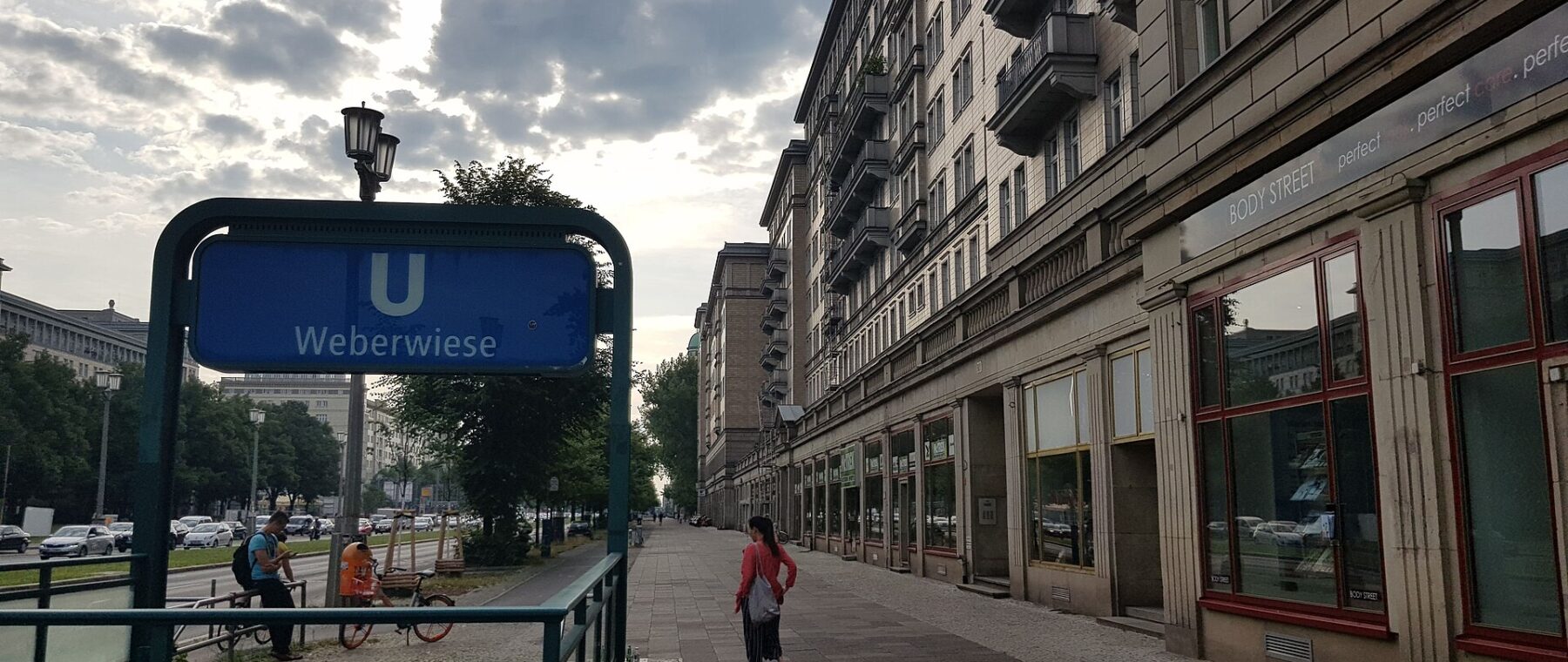
Friedrichshain is internationally famous for one thing, and it is the least interesting thing about it. Yes, the clubs are here, and yes, a large number of people arrive on a Friday evening intending to see nothing else. But the district also contains a two-kilometre socialist boulevard of tiled palaces built for workers, Berlin’s oldest public park with a fairy-tale fountain and a hill made of war rubble, a Sunday flea market on a square full of families, and 1.3 kilometres of the actual Berlin Wall. A useful Friedrichshain Berlin guide has to cover the daylight hours, because that is where most of the district actually is.
What follows works through the whole thing: Karl-Marx-Allee and why it looks like that, the Boxhagener Kiez, the RAW site, the park, the river, and an honest section on the clubs including the realistic odds of getting into the famous one. Details were checked in September 2026. For the wider map, see our Berlin neighbourhoods guide.
Friedrichshain at a Glance
| Area | What is there | Best time |
|---|---|---|
| Karl-Marx-Allee | Socialist boulevard, Frankfurter Tor, 1960s modernism | Morning, any day |
| Boxhagener Kiez | Flea market, food market, bars, restored Altbau | Saturday and Sunday daytime |
| Simon-Dach-Straße | The bar strip | Evening — and locals wish you would not |
| RAW-Gelände | Clubs, skate park, climbing bunker, Sunday market | Sunday afternoon or late Friday |
| East Side Gallery and the Spree | Painted Wall, arena, riverside path | Early morning or golden hour |
| Volkspark Friedrichshain | Oldest park in Berlin, fairy-tale fountain, rubble hills | Any daylight hour |
| Rigaer Straße | The autonomist left scene | Not a sight — see below |
Karl-Marx-Allee: The Boulevard the GDR Built to Be Photographed
If you do one thing in Friedrichshain in daylight, do this. Karl-Marx-Allee runs roughly two kilometres from Alexanderplatz east to Frankfurter Tor, ninety metres wide, lined on both sides with monumental apartment blocks clad in pale ceramic tiles, with colonnades, cornices and towers. It was built between 1952 and 1960, originally as Stalinallee, and it was the German Democratic Republic’s flagship — the physical demonstration that a socialist state could house workers in palaces.
The workers’ palaces
The style is Zuckerbäckerstil — wedding-cake style — imported from Moscow, and the ambition was genuine: these were prestige flats with central heating, lifts and shops beneath, given to model workers, at a moment when most of Berlin was still rubble. The tiles that face them came from Meissen. The prototype block at Weberwiese, a little further east, was finished first in 1952 and is worth looking at as the moment the idea was tested.
The uprising it started
The boulevard’s other history is less celebrated by the state that built it. In June 1953, construction workers on this street walked out over increased work quotas, and the strike escalated within two days into a nationwide uprising that Soviet tanks put down. The date, 17 June, gave its name to the avenue running west from the Brandenburg Gate through the Tiergarten — which is to say the two halves of the divided city commemorated the same event at opposite ends of the same axis, in opposite directions.
The 1960s end
The western section, nearer Alexanderplatz, was built later and in a completely different idiom: light, glassy, modernist. Kino International, a 1963 cinema with a first-floor glass foyer that was the GDR’s premiere house, is still a working cinema. Café Moskau opposite, with a Sputnik on the roof, is an events venue. The Computerspielemuseum, a museum of video-game history, sits on the same stretch and is more entertaining than it has any right to be.
How to walk it
Start at Frankfurter Tor, whose twin domed towers are the boulevard’s best single view, and walk west towards the TV Tower with the whole avenue narrowing in front of you. It takes about thirty-five minutes. Walk on the pavements under the colonnades rather than beside the traffic, and look at the ground-floor shopfronts — most are ordinary, a few are original. The U5 runs directly beneath if you tire of it.
Boxhagener Platz and the Kiez Around It
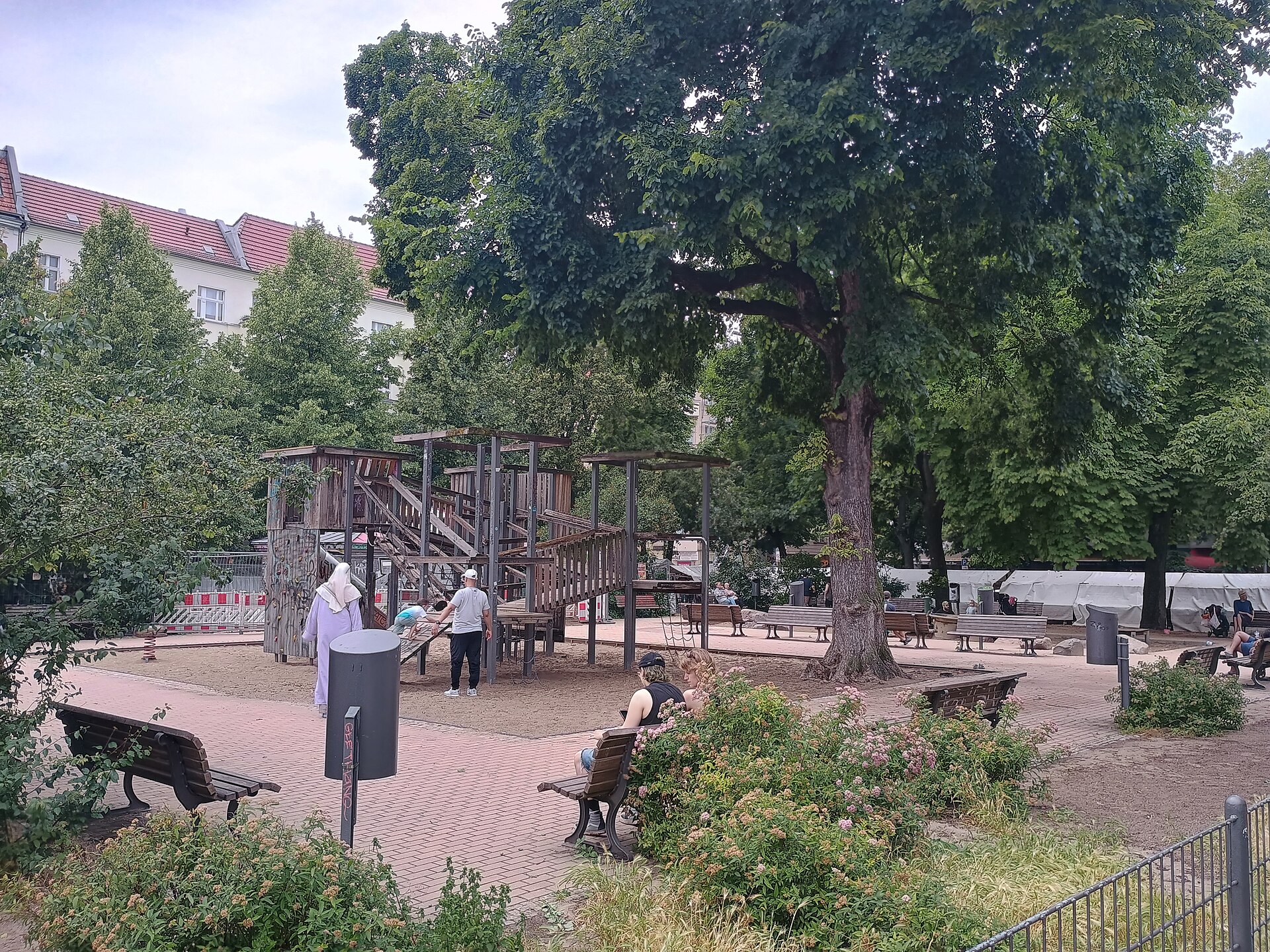
The heart of residential Friedrichshain, a square of mature trees, benches and a big wooden playground surrounded by restored nineteenth-century blocks. It hosts a food market on Saturdays and a well-known flea market on Sundays, and on a warm weekend it is one of the more agreeable places to spend two hours in east Berlin.
The streets around it — Gabriel-Max-Straße, Grünberger Straße, Krossener Straße — are full of small restaurants, bookshops, record shops and cafés, and they are where the district actually lives. Our guide to Berlin’s flea markets covers how the Sunday market here compares with Mauerpark and Arkonaplatz.
Simon-Dach-Straße, one street over, is the exception. It is a dense strip of bars and cheap restaurants that has become the district’s stag-and-hen destination, and local opinion of it is not warm. It is not unsafe and the beer is cheap; it is simply the least Berlin-feeling street in the district, and there are better bars four minutes’ walk in any direction.
The RAW-Gelände
A former imperial railway repair works — the initials stand for Reichsbahnausbesserungswerk — occupied since the 1990s by a shifting collection of clubs, bars, a skate park, studios, a Sunday flea market and a climbing wall built inside a wartime bunker. It is scruffy, thoroughly graffitied, and one of the last pieces of genuinely unpolished Berlin left this close to the centre.
It is also under permanent redevelopment pressure. The site has been bought, contested, partially rebuilt and argued about for years, and what is open changes. Do not plan around a specific venue without checking; do plan around the site itself, which is worth an hour in daylight and an entirely different thing after midnight. Our RAW-Gelände guide goes into detail.
The East Side Gallery and the River
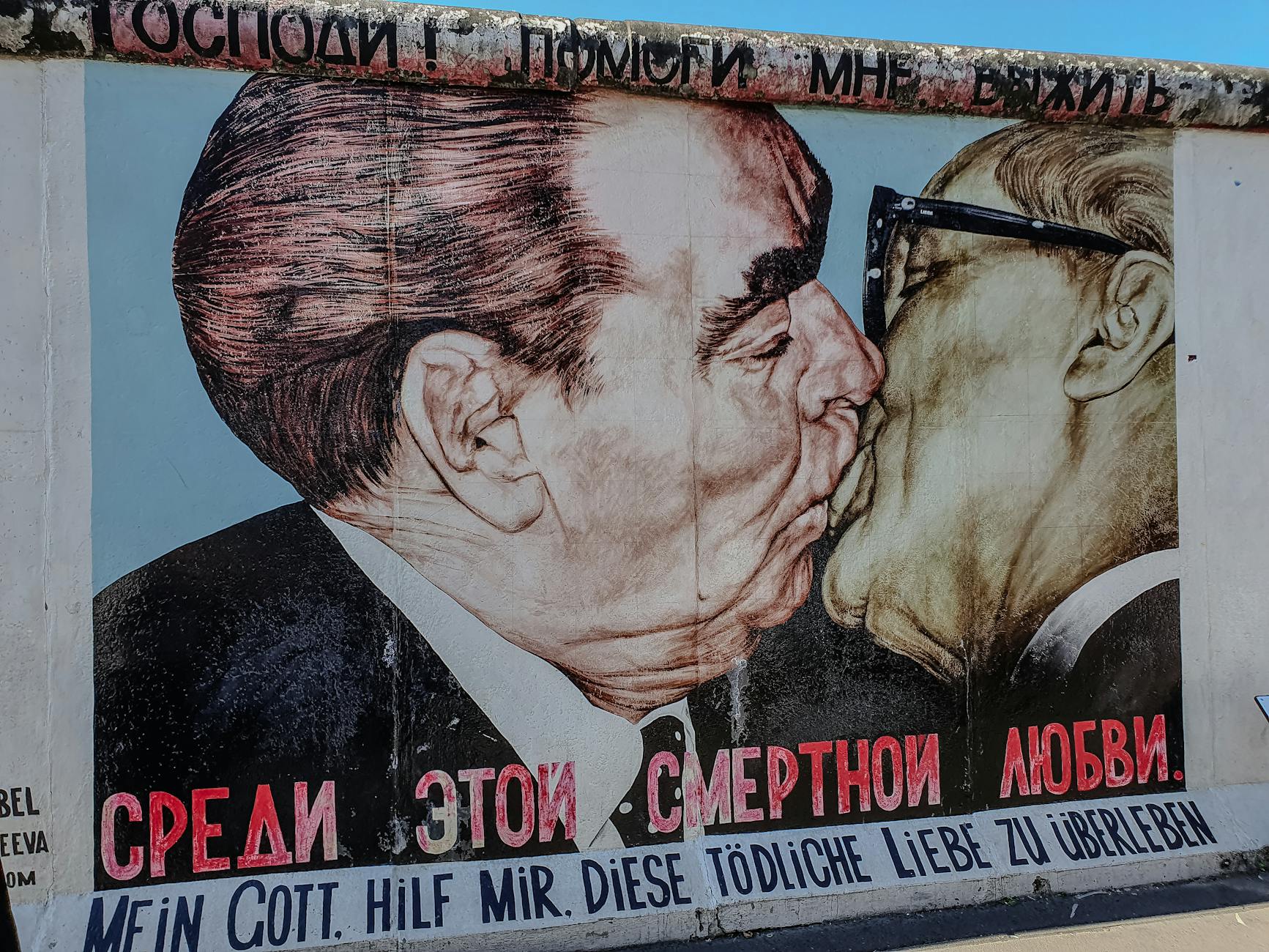
Running along Mühlenstraße beside the Spree is the longest surviving stretch of the Berlin Wall — 1.3 kilometres of it, painted by artists from around the world in 1990 in the months after the border opened. It is not a gallery in the ordinary sense and it is not a memorial in the ordinary sense; it is the actual back wall of the border strip, left standing and decorated.
Go early. By midday in summer the famous panels have queues in front of them, and the whole thing works considerably better at eight in the morning or in the last hour of light. Behind it are the riverside path, the large indoor arena that hosts concerts and ice hockey — its naming rights have changed hands more than once, so check the current name when buying tickets — and, at the eastern end, the Oberbaumbrücke across to Kreuzberg. Our East Side Gallery guide covers which panels are original and which are authorised repaintings, which is a genuinely contentious subject.
Volkspark Friedrichshain
Berlin’s oldest public park, laid out in the 1840s, and one of the best. Three things in it are worth going for.
- The Märchenbrunnen — a large neo-baroque fountain of 1913 ringed by stone figures from the Brothers Grimm, at the park’s western entrance. Free, popular with children, and a genuinely elegant piece of pre-war Berlin.
- The Bunkerberge — two hills built from war rubble piled over the remains of blown-up flak towers, the larger reaching around 78 metres. Berliners call them Mont Klamott, roughly “Rubbish Mountain”. The walk to the top takes ten minutes and gives you a view over the district.
- The Friedhof der Märzgefallenen — a small cemetery at the park’s edge holding the dead of the March 1848 revolution, later joined by casualties of the 1918 revolution. Two German revolutions, both defeated, in one quiet enclosure.
The park also runs an outdoor cinema in summer, has a large public swimming pool complex at its northern edge, and is where the district goes to sit on the grass in June. It is a fifteen-minute walk north of Karl-Marx-Allee.
The Clubs, Honestly
Friedrichshain and its immediate surroundings hold the venues that made Berlin’s reputation, and it is worth being realistic about what visiting them involves.
The most famous of them occupies a former power plant on the district’s western edge and is genuinely difficult to enter. The door is selective, the criteria are not published, and being refused is common and not personal — large groups, obvious tourist behaviour, queueing loudly and phones out all reduce your chances. Photography inside is not permitted and that rule is enforced. If you go, go in a pair or alone, go late — Sunday morning is a real part of the schedule there, not a joke — and have an alternative in mind. Our Berghain guide and club etiquette guide are specific about what actually helps.
The wider point: the district has dozens of smaller clubs and bars where the door is not an ordeal and the music is excellent, and most people’s best Berlin night happens in one of those rather than in the one they read about. Our techno clubs guide and nightlife for beginners cover the realistic options.
Practical notes: bring cash, expect to pay a cloakroom fee, do not arrive before midnight for anything serious, and remember that the U-Bahn and S-Bahn run all night on Friday and Saturday — see our night transport guide.
Rigaer Straße and the District’s Politics
Friedrichshain has one of the last concentrated autonomist left-wing scenes in Germany, centred on a handful of occupied and semi-occupied buildings around Rigaer Straße. It generates periodic large police operations, court cases and street protest, and it is part of why the district has the reputation it does.
The right way to treat it as a visitor is to leave it alone. It is a residential street where people live in a long-running dispute with the city and with property owners; it is not a sight, there is nothing to see beyond banners and boarded windows, and turning up to photograph it is the specific behaviour most likely to get you a hostile reception. Walk down it if your route goes that way, and do not make it a destination.
How Friedrichshain Ended Up Like This
The district’s split personality is not an accident of fashion. It follows directly from what happened here in the twentieth century, and three episodes explain almost all of it.
A working-class district, bombed flat
Friedrichshain was built in the Gründerzeit boom as dense workers’ housing around factories and the railway works, and it was among the most heavily damaged parts of Berlin in 1945 — which is why the eastern approach to the city centre was available as a blank site for the GDR to build its showpiece boulevard across. The Altbau streets around Boxhagener Platz that survived are the exception rather than the rule, and they survived because the bombing simply did not reach them in the same concentration.
Forty years as the East
From 1961 the Spree here was an international frontier and Friedrichshain was interior territory of the German Democratic Republic — not a border zone in the way Kreuzberg was, but a district facing a wall with no way through. It was ordinary East Berlin: state housing, state shops, state employment, and a nineteenth-century housing stock that nobody had the money to modernise.
The 1990s vacuum
Then the state that owned most of it ceased to exist. In the years after 1990, Friedrichshain had large numbers of empty buildings, unresolved ownership, cheap or free space and effectively no enforcement — and into that vacuum came squatters, artists and the first generation of Berlin’s club scene, which needed exactly what the district had: enormous derelict industrial buildings with no neighbours to complain. Berghain’s power station, the RAW railway works and half a dozen vanished venues all came out of that particular window.
What you see now is the tail of that process. The buildings have owners again, the rents have risen sharply, and the argument about who the district belongs to — which is what Rigaer Straße is ultimately about — is the same argument playing out across the city. Our Berlin Wall sites guide covers the border years here in more detail.
Friedrichshain With Children
Better than the district’s reputation implies, particularly in the northern half. Volkspark Friedrichshain has the fairy-tale fountain, several large playgrounds, a climbing hill and a swimming complex. Boxhagener Platz has one of the better wooden playgrounds in east Berlin with cafés on all four sides. The Computerspielemuseum on Karl-Marx-Allee is genuinely aimed at all ages and has playable machines going back to the 1970s.
What to avoid with children is the Warschauer Straße area in the evening and Simon-Dach-Straße at any time after about seven. Our Berlin with kids guide and the playgrounds guide cover the alternatives across the city.
Eating and Drinking
Friedrichshain eats well and cheaply, mostly in small places rather than destinations. The Boxhagener Kiez has the best concentration — Vietnamese, Italian, Middle Eastern and a good number of vegan kitchens, since this is one of the more reliably vegan-friendly districts in Berlin. The Saturday market on Boxhagener Platz is the best lunch in the area on the day it runs.
Avoid the strip on Simon-Dach-Straße for anything other than cheap beer, and avoid the restaurants immediately behind the East Side Gallery, which are priced for people who have just walked a kilometre and do not want to walk further. Ten minutes north puts you in ordinary neighbourhood prices. Our guides to vegan restaurants in Berlin, cheap food and beer gardens have the specifics.
Getting Around, and When to Come
Warschauer Straße is the district’s hub — U1, U3, S-Bahn, and the M10 and M13 trams all meet there, and it is the jumping-off point for the East Side Gallery, the RAW site and the Oberbaumbrücke. The U5 runs the length of Karl-Marx-Allee from Alexanderplatz to Frankfurter Tor and beyond. The M10 tram connects Warschauer Straße north to Prenzlauer Berg and west to Hauptbahnhof and is one of the most useful lines in the city for visitors.
All of it is fare zone A — see the BVG ticket guide. The district is flat and compact and cycling works extremely well here; the Spree path runs from the Oberbaumbrücke out to Treptower Park with almost no road crossings.
When to come: Sunday daytime is the district at its best — flea markets on Boxhagener Platz and at the RAW site, the park full, the Wall walkable, and a large part of the population visibly recovering from the night before. Summer evenings on the Spree are the other high point. November on Simon-Dach-Straße is nobody’s idea of a good time.
Frequently Asked Questions
Is Friedrichshain just about nightlife?
No — that is the district’s reputation rather than its substance. Karl-Marx-Allee, Volkspark Friedrichshain, the East Side Gallery and the Sunday markets around Boxhagener Platz are all daytime attractions, and together they make a full day without entering a single club.
What is Karl-Marx-Allee?
A two-kilometre boulevard of monumental tiled apartment blocks built by the GDR between 1952 and 1960, originally called Stalinallee. It was the state’s showpiece housing project and the site of the strike that triggered the June 1953 uprising. The eastern half is Soviet-influenced neoclassicism; the western half is 1960s modernism.
What is the difference between Friedrichshain and Kreuzberg?
They face each other across the Spree and share a borough, but Friedrichshain was in East Germany until 1989 and Kreuzberg was in West Berlin. Friedrichshain has the socialist architecture, the bigger clubs and a younger, more transient population; Kreuzberg has the deeper immigrant history and the better food. Our Kreuzberg guide covers the other bank.
Is the RAW-Gelände worth visiting?
Yes, and it is two different places depending on the hour: a scruffy, graffitied, half-derelict site with a skate park and a Sunday flea market in daylight, and one of Berlin’s busiest club clusters after midnight. Its future is contested and what is open changes, so check before relying on a specific venue.
Can I get into Berghain?
Sometimes. The door is genuinely selective and the criteria are not published. Go in a pair or alone rather than in a group, go late rather than early, keep your phone away, and accept that refusal is common and not a judgement on you. Have somewhere else in mind before you queue.
Is Friedrichshain safe?
Yes, with the ordinary caveats for a district with a heavy night economy. Warschauer Straße at three in the morning is crowded and chaotic, and pickpocketing around it is the realistic risk rather than anything worse. Our Berlin safety guide is specific.
How long should I spend in Friedrichshain?
A full day covers it comfortably: Karl-Marx-Allee in the morning, Volkspark Friedrichshain and Boxhagener Platz in the middle of the day, the East Side Gallery and the Oberbaumbrücke at golden hour. Add a night if that is what you came for.
Related Berlin Guides
- Berlin Neighbourhoods: What Each District Is Actually Like
- Kreuzberg Guide: SO36 vs Kreuzberg 61
- East Side Gallery: Visiting the Painted Wall
- RAW-Gelände: Berlin’s Scruffiest Night Out
- Oberbaum Bridge: Berlin’s Most Photographed Crossing
- Berghain: What Actually Happens at the Door
- Best Flea Markets in Berlin
- Berlin After Reunification
Photo Credits
Karl-Marx-Allee at Weberwiese: 2019-08-06 Karl-Marx-Allee, Berlin by Maksym Kozlenko, CC BY-SA 4.0, via Wikimedia Commons.
Boxhagener Platz: (20260621 134054981 HDR) Boxhagener Platz by Roy Zuo, CC BY-SA 4.0, via Wikimedia Commons.
Final Word
The mistake is to arrive in Friedrichshain at eleven at night and leave at nine in the morning having seen a queue, a dance floor and a train platform. Thousands of people do exactly that every weekend, and they could have had that night in any of a dozen cities.
Come on a Sunday instead, or as well. Walk Karl-Marx-Allee while the shops are shut and the boulevard is empty, climb the rubble hill in the Volkspark, buy something you do not need at the Boxhagener Platz flea market, and finish on the riverbank looking at the Oberbaumbrücke as the light goes. That is a district that spent forty years as the capital of another country and is now the loudest neighbourhood in Germany, and all of it is legible in an afternoon if you are looking.