Kreuzberg Guide: SO36 vs Kreuzberg 61, and What to Do in Both
Kreuzberg splits in two along a pair of old postal codes. What each half is like, what to eat, the honest word on Görlitzer Park, and why the district is the way it is.
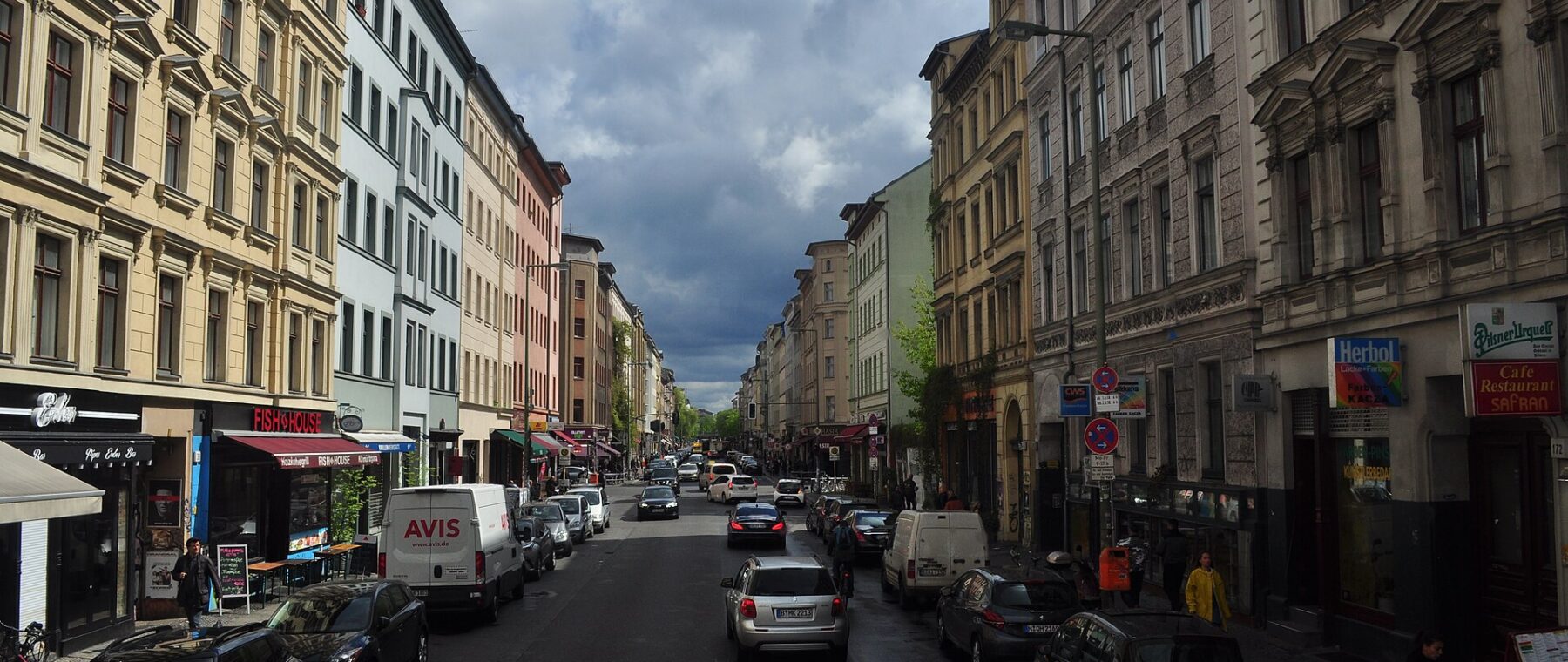
Two people can spend a weekend in Kreuzberg and come home describing entirely different places. One will tell you about a chaotic, crowded, brilliant district of Turkish grocers, all-night bars and a canal bank covered in people drinking beer. The other will describe cobbled streets, a market hall, a park with a waterfall and a great many prams. Neither is exaggerating. Any useful Kreuzberg Berlin guide has to start with the fact that the district splits cleanly in two, and that the half you land in determines almost everything about how it feels.
The dividing line is a pair of pre-war postal codes that officially stopped existing decades ago and which everybody still uses: SO36 in the east, Kreuzberg 61 in the west. This guide covers both halves properly — what is on the ground, what is worth your time, where to eat, what the district’s difficult history explains about its present, and the two or three places where honest advice is more useful than enthusiasm.
Kreuzberg at a Glance
| SO36 (east) | Kreuzberg 61 (west) | |
|---|---|---|
| Main streets | Oranienstraße, Wrangelstraße, Skalitzer Straße | Bergmannstraße, Mehringdamm, Chamissoplatz |
| Hubs | Kottbusser Tor, Görlitzer Bahnhof, Schlesisches Tor | Gneisenaustraße, Südstern, Platz der Luftbrücke |
| Character | Loud, dense, multicultural, nocturnal | Leafy, restored, residential, daytime |
| Best for | Food, bars, clubs, street life | Walking, markets, parks, coffee |
| Green space | Görlitzer Park, the Landwehrkanal banks | Viktoriapark, the Hallesches Tor cemeteries |
| Peak hours | 21:00 onwards, all night at weekends | 10:00–18:00, quiet after dark |
| Lines | U1, U3, U8, M29 bus | U6, U7, U1 (Möckernbrücke) |
Why Kreuzberg Splits in Two
The postcodes are the shorthand, but the cause is the Wall. Until 1989 SO36 was a dead end — West Berlin territory with the border wrapped around it on three sides, no through traffic, no reason for anyone with options to live there. Rents collapsed. Buildings were left unmodernised and slated for demolition. Into that vacuum came, in rough order, Turkish guest workers recruited to West Germany from the 1960s, young West Germans avoiding conscription (West Berlin residents were exempt from the draft), squatters occupying the condemned blocks, and the punk scene that grew out of all of it.
Kreuzberg 61, a couple of kilometres west, was never cut off. It kept its middle class, kept its shops, was renovated earlier and more gently, and never developed the siege mentality that gave SO36 its politics. Forty years later, the two halves have converged somewhat — 61 is livelier than it was, SO36 is far more expensive — but the fundamental difference in temperature is entirely intact.
SO36: The Loud Half
Oranienstraße
The spine of the district and the street most people mean when they say Kreuzberg. Bars, Turkish and Arab grocers, kebab counters, tattoo studios, political posters and a permanent low-level din. It runs from Moritzplatz down to Oranienplatz and on towards Kottbusser Tor, and walking its length at nine on a Friday evening is the single best way to understand what this district is.
The club SO36, roughly halfway along, is the district’s institution — a venue since the late 1970s, associated with the Berlin punk and industrial scene of that era, and still running an eclectic programme that includes long-standing queer and Turkish-German club nights. It is not glamorous and does not pretend to be.
Moritzplatz and the northern edge
The top end of Oranienstraße runs into Moritzplatz, a traffic roundabout that until reunification was almost against the Wall and is now the district’s design-and-workshop corner. Modulor, an enormous art and architecture supply store, occupies one side of it, and the surrounding blocks hold studios, a well-known bookshop-café and a good deal of the small-scale creative economy that Kreuzberg’s rents are steadily squeezing out.
Walk north from here and within five minutes you are on the line of the Wall itself, in the strip of Mitte that holds the Topography of Terror and the remains of Checkpoint Charlie. That abrupt transition — from a dense residential Kiez into a zone of memorials and government buildings, with nothing gradual in between — is one of the clearest illustrations in Berlin of what the border did to the city’s geography.
A walking route through SO36
If you want one route rather than a list, this one takes about ninety minutes with stops: start at Moritzplatz, walk the full length of Oranienstraße to Oranienplatz, continue to Kottbusser Tor and cut south to the canal at Kottbusser Brücke. Follow Maybachufer east to the Admiralbrücke, then cut back north through the Wrangelkiez to Schlesisches Tor and finish on the Oberbaumbrücke as the light goes. It covers every kind of street the district has, in the right order, and ends on the best free view in east Berlin.
Kottbusser Tor
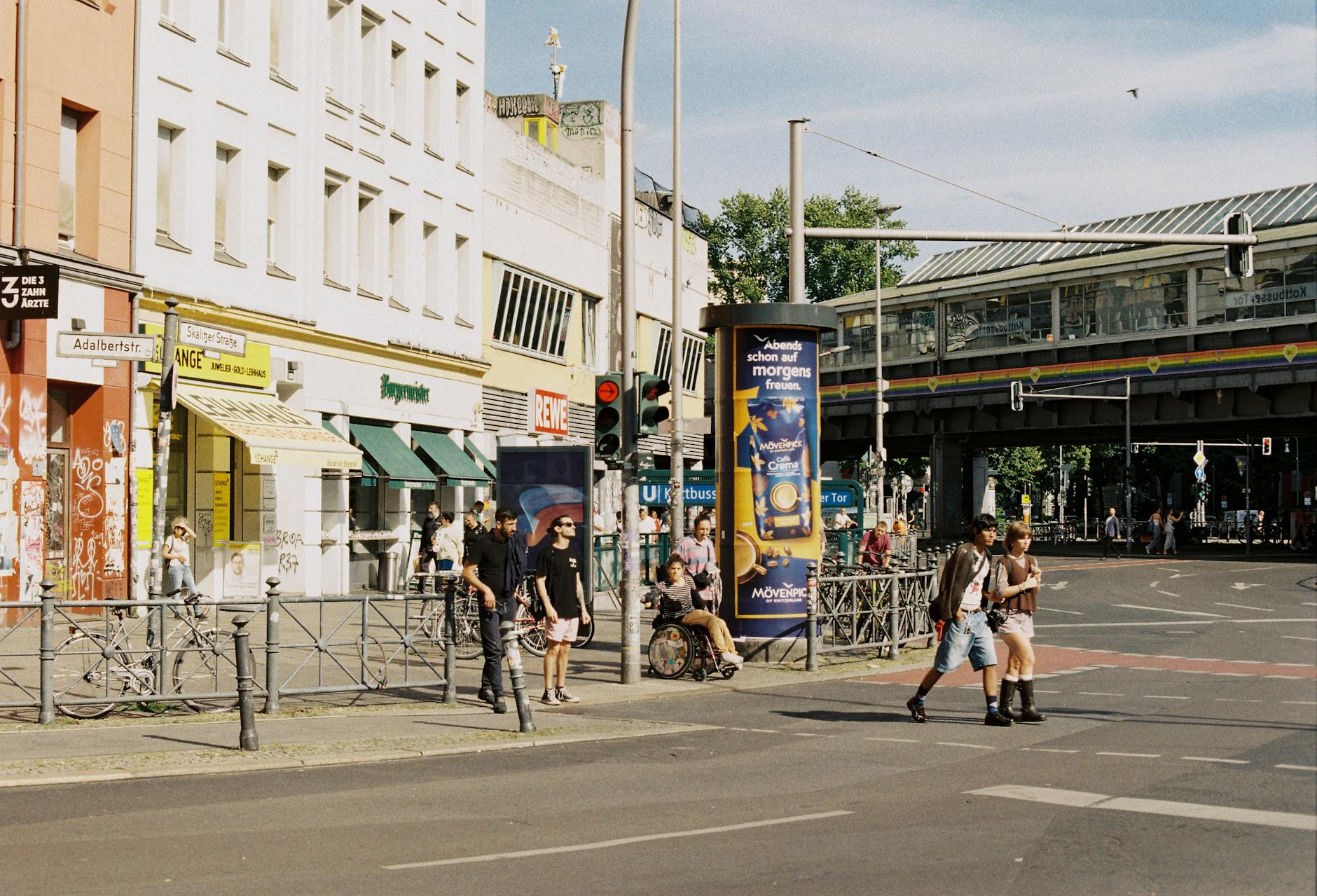
“Kotti” is the district’s central junction and its most argued-about square metre. An elevated U-Bahn station, a curving 1970s housing block wrapped around it, kebab shops open at every hour, and a permanent street scene that includes drug use and street drinking in plain view.
The honest version: Kotti is not dangerous in the sense that visitors usually mean, and thousands of people pass through it every day without incident. It is also visibly a place with hard social problems that Berlin has not solved, and it can be uncomfortable if you are not expecting it. Do not photograph people there. Keep your bag in front of you at night as you would at any major transport interchange. Beyond that, it is simply a busy corner of a big city, and some of the best late food in Berlin is within thirty metres of the station steps.
Görlitzer Park
Built on the site of a demolished railway terminus, “Görli” is SO36’s main green space and a genuine neighbourhood park — football pitches, a children’s farm, barbecues on summer weekends, families all over the grass. It also has a long-standing and very open drug-dealing scene, which the city has spent a decade trying to address through policing, park staff, fencing proposals and night-closure schemes, none of which has settled the matter.
What that means in practice: you will be approached, probably more than once, and a polite “nein, danke” without stopping is the entire required response. It is not aggressive and it is not a mugging risk. In daylight, with people around, it is a normal park. At night, alone, choose a different route — advice which applies to most large urban parks anywhere. Our Berlin safety guide is direct about the handful of places where this comes up.
Wrangelkiez and Schlesisches Tor
The streets between Görlitzer Park and the river — Wrangelstraße, Falckensteinstraße, Cuvrystraße — are the densest concentration of bars, late shops and small restaurants in the district, and they run right up to the Oberbaumbrücke and across into Friedrichshain. This is the heart of Berlin’s reputation for going out, and on a Saturday night it is chaotic in a way that is either exhilarating or exhausting depending on your age and intentions.
The Landwehrkanal
The canal is SO36’s other great outdoor space, and in summer its banks and bridges fill with people from about four in the afternoon. The Admiralbrücke, an ironwork bridge near Kottbusser Damm, is the classic spot: musicians, wine, a hundred people sitting on the parapet. Residents have complained about the noise for years, which tells you it is genuinely popular rather than a tourist invention.
The Turkish Market runs along Maybachufer on Tuesdays and Fridays — fabric, vegetables, cheese, olives, gözleme cooked in front of you. Tuesday is considerably quieter than Friday and is the better visit.
Kreuzberg 61: The Quiet Half
Bergmannstraße
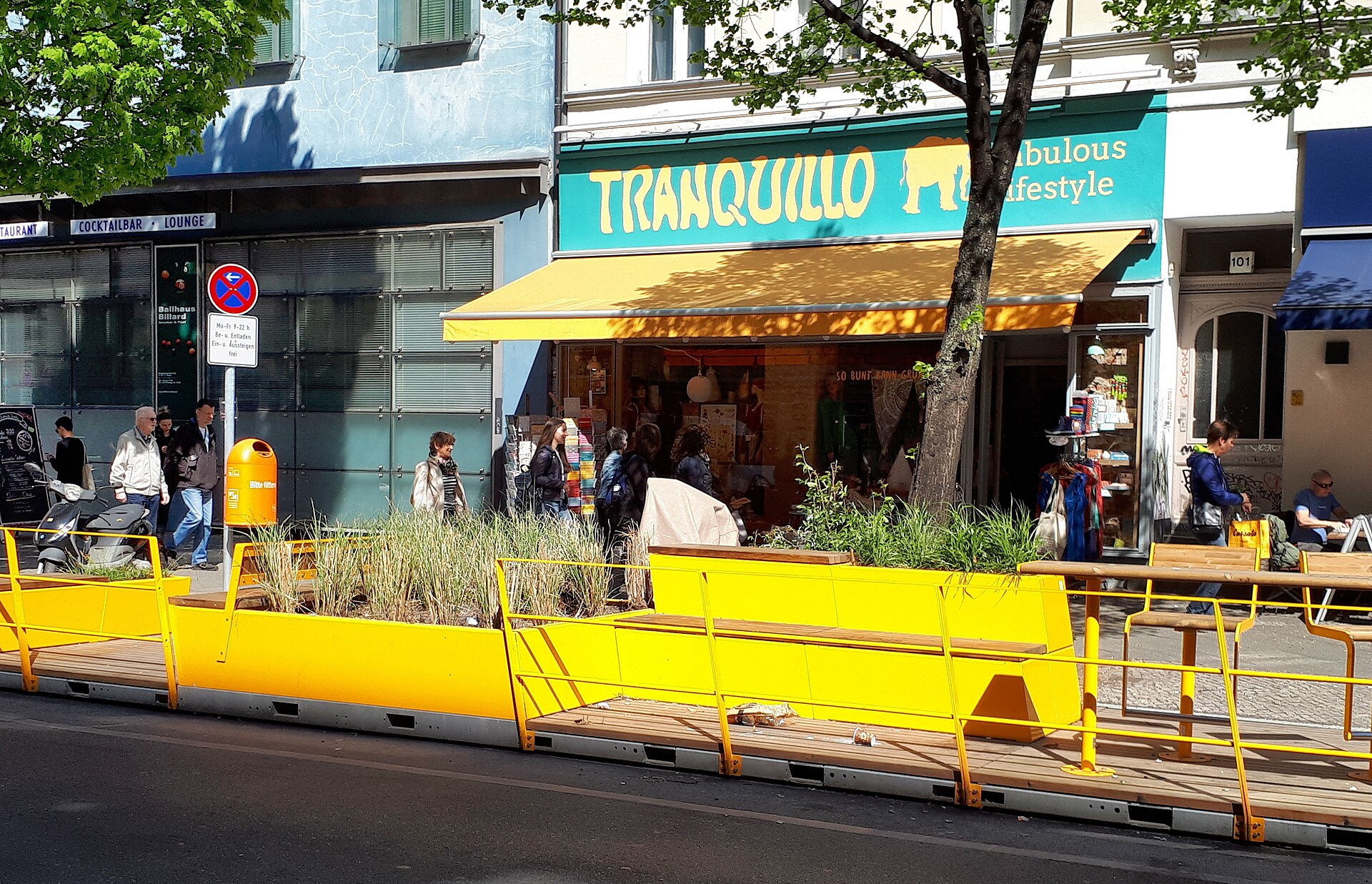
A long, low, largely pedestrianised street of cafés, second-hand shops, bookshops and restaurants, with sections of the roadway given over to timber and steel seating platforms. It is the most conventionally pleasant street in Kreuzberg and the one most likely to make you understand why people pay to live here.
The Marheineke Markthalle, halfway along, is a nineteenth-century covered market that was refurbished in the 2000s — cheese, fish, bread, a couple of good lunch counters and none of the queue culture of Kreuzberg’s more famous market hall. It is where the neighbourhood actually shops.
Chamissoplatz
A square of unusually intact Gründerzeit apartment blocks that escaped both wartime bombing and post-war modernisation, with original cobbles and even a surviving Victorian public urinal on the corner. It has a small organic market on Saturday mornings and is regularly used as a film set for anything that needs to look like pre-war Berlin. Five minutes off Bergmannstraße and almost nobody finds it.
Viktoriapark and the Kreuzberg
The hill the district is named after — 66 metres, the highest natural point in inner Berlin, with a Schinkel monument on top and an artificial waterfall running down the north slope in the warmer months. The view from the monument takes in the flat sprawl to the south and west, and it is free and open at all hours. There is a beer garden at the foot of the slope. It appears in our ranking of the best views in Berlin for a reason.
The cemeteries at Hallesches Tor
Four adjoining nineteenth-century burial grounds on Mehringdamm, densely planted and largely silent, holding among others the composer Felix Mendelssohn Bartholdy and the writer E.T.A. Hoffmann. They are open to walk through, free, and one of the most reliably peaceful places in inner Berlin.
What to Actually Do in Kreuzberg
The district is thin on conventional sights and unusually rich in a handful of serious museums, most of them clustered along its northern edge where the Wall used to run.
- Jewish Museum Berlin — Daniel Libeskind’s zinc-clad building on Lindenstraße, and one of the most powerful pieces of museum architecture anywhere. The building itself does as much work as the collection.
- Berlinische Galerie — the city’s museum of modern art, photography and architecture, in a converted glass warehouse on Alte Jakobstraße. Strong on Berlin Dada, the Secession and the divided-city decades, and rarely crowded.
- Deutsches Technikmuseum — an enormous transport and technology museum on Trebbiner Straße with a Berlin Airlift aircraft mounted on the roof, a hall of historic locomotives and a hands-on science centre attached. One of the best rainy-day options in the city with children.
- Topography of Terror — on Niederkirchnerstraße at the district’s northern boundary, free, and built on the excavated foundations of the Gestapo and SS headquarters.
- Prinzenbad — the open-air public pool on Prinzenstraße, an institution since the 1950s, packed on any hot day and one of the more democratic experiences in Berlin.
Checkpoint Charlie is also technically on the Kreuzberg boundary, and our verdict on it has not changed: look at the sign, do not pay for a photograph with a costumed actor, and walk five minutes to the Topography of Terror instead.
Eating in Kreuzberg
This is the district’s real argument for existing, and it is a strong one. Kreuzberg has the best cheap food in Berlin, and a good proportion of it is Turkish, Arab, Kurdish or Vietnamese.
The kebab question
The döner kebab as eaten across Europe was developed in Berlin by Turkish immigrants in the 1970s, and Kreuzberg is where to eat one. The famous vegetable-kebab stand near Mehringdamm generates a queue that regularly runs to an hour, and it is genuinely good — but so are a dozen unremarked places on Oranienstraße and Kottbusser Damm where you will wait four minutes. Our döner kebab guide is opinionated about which queues are worth joining, and this one usually is not.
Markthalle Neun
A restored 1891 market hall on Eisenbahnstraße, and the district’s food landmark. Regular market days for produce and bread, plus a long-running Thursday evening street food event that draws serious crowds. It is excellent and it is also the single most gentrification-freighted building in Kreuzberg — the campaign that kept a discount supermarket out of it is a chapter in the district’s ongoing argument with itself.
Currywurst and the rest
The best-known currywurst stand in Berlin sits at the Mehringdamm end of the district and is open extremely late, which is most of the explanation for its fame. Beyond that: Sonnenallee just over the Neukölln border for Arab bakeries and shawarma, Kottbusser Damm for Turkish supermarkets and cheap grills, and Wrangelstraße for the Vietnamese and Thai kitchens. Our guides to cheap food in Berlin and the best currywurst go into specifics.
Going Out
SO36 and the Wrangelkiez are where most visitors’ Berlin nights actually happen, as distinct from the handful of famous clubs they read about. The pattern is bars first — Oranienstraße, Wrangelstraße, Skalitzer Straße — then, if the night goes that way, across the river to Friedrichshain or down to the clubs along the Spree.
A few things worth knowing. Berlin bars generally do not close at a fixed hour; they close when they empty. Cash is still preferred in a good number of the older places. Nobody dresses up. And the door policy at the serious clubs is genuinely selective and genuinely unpredictable — our club etiquette guide explains what actually influences it. Our best bars in Berlin guide covers the district’s individual rooms.
The History That Explains the Present
Kreuzberg’s politics are not decorative. The squatting movement of the late 1970s and early 80s was a serious confrontation over housing that involved dozens of occupied buildings and repeated street fighting, and it ended with a substantial number of those buildings being legalised — several are still housing cooperatives today. The May Day demonstrations that began in 1987 became an annual fixture, sometimes violent, and although the character of the day has shifted a good deal since, the first of May in Kreuzberg is still a large political event rather than a normal Friday.
The district also holds Berlin’s oldest and largest Turkish-German community, now into its third and fourth generation. That community built much of what visitors now come here to enjoy, and it is currently being priced out of it — which is the source of the anti-gentrification posters you will see in windows and the reason a certain amount of visible resentment attaches to short-let flats and English-speaking bars. It is worth understanding that context rather than photographing it.
When to Come, and What Changes With the Season
Kreuzberg is more seasonal than most of Berlin, because so much of its life happens outdoors. From about May to September the canal banks, Görlitzer Park and every pavement with room for a table are full from mid-afternoon until late, and the district is at its best. Between November and March, SO36 retreats indoors and Kreuzberg 61 goes quiet by early evening — the bars are still there, but the street theatre that defines the place in summer simply stops.
Two dates are worth planning around rather than into. The first of May is a large annual political demonstration in the district, with associated street festivals, road closures and a heavy police presence; it is genuinely interesting if that is what you came for and a poor day to be looking for a quiet lunch. The Carnival of Cultures, at Whitsun, closes streets across Kreuzberg for a parade and several days of stages and food stalls, and is one of the best free events in the Berlin calendar.
Sundays are worth understanding too. German shops close, but Kreuzberg’s Spätis, kebab shops and cafés do not, which makes it one of the more functional districts to be in on a Berlin Sunday. Our guide to seasonal activities in Berlin covers the wider calendar.
Kreuzberg With Children
It works better than its reputation suggests, particularly on the western side. The Deutsches Technikmuseum is one of the best family museums in the city, with a hands-on science annexe attached. Viktoriapark has playgrounds and a waterfall to climb beside. Görlitzer Park has a children’s farm with goats and donkeys, free to visit. The Prinzenbad and the district’s other pools are cheap and popular with families all summer.
What does not work is SO36 after about eight in the evening, which is loud, crowded and full of people who are not thinking about pushchairs. Plan the day west and the early evening on the canal, and it is a straightforward district to visit with children — our Berlin with kids guide has more.
Getting Around Kreuzberg
The U1 runs on an elevated viaduct through the middle of SO36 — Hallesches Tor, Prinzenstraße, Kottbusser Tor, Görlitzer Bahnhof, Schlesisches Tor — above the street, with windows on both sides. Riding it end to end is the cheapest and best introduction to the district, and it is the same line that crosses the Oberbaumbrücke.
The U8 cuts north–south through Kotti, the U6 and U7 serve Kreuzberg 61, and the M29 bus runs the length of Oranienstraße. Everything is in fare zone A — see the BVG ticket guide. Walking between the two halves takes about twenty-five minutes along Gitschiner Straße beside the canal, and it is a genuinely interesting walk because you can feel the district change under your feet.
Cycling is excellent here — flat, dense, well served by lanes, and short distances. See our Berlin by bike guide.
Frequently Asked Questions
What is the difference between SO36 and Kreuzberg 61?
They are the two halves of the same district, named after pre-war postal codes. SO36 in the east — Kottbusser Tor, Oranienstraße, Schlesisches Tor — is dense, loud, multicultural and nocturnal. Kreuzberg 61 in the west — Bergmannstraße, Chamissoplatz, Viktoriapark — is leafy, restored, residential and quiet after dark.
Is Kreuzberg safe for tourists?
Yes. Berlin is a safe city and Kreuzberg is no exception, but two places warrant ordinary urban common sense: Kottbusser Tor and Görlitzer Park, both of which have visible drug scenes. You may be approached in Görlitzer Park; a polite refusal without stopping is all that is needed. Avoid the park alone at night and keep your bag secure at Kotti after dark.
What is Kreuzberg known for?
Turkish-German culture and the food that came with it, the squatting and punk movements of the 1970s and 80s, an unusually political street culture, and — more recently — being one of the most visibly gentrifying districts in Europe. It is also where the Berlin döner kebab was invented.
How long should I spend in Kreuzberg?
A full day if you want both halves: Kreuzberg 61 and the Bergmannkiez in the morning, the canal in the afternoon, SO36 in the evening. Most visitors give it an evening, which covers the food and the bars but misses everything west of Mehringdamm.
Is Görlitzer Park worth visiting?
In daylight, yes — it is a real neighbourhood park with football, barbecues and a children’s farm, and it is where a lot of Kreuzberg’s summer actually happens. It also has an open drug-dealing scene the city has not resolved. Go in the day, go with other people around, and do not go alone after dark.
When is the Turkish Market in Kreuzberg?
Tuesdays and Fridays on Maybachufer along the Landwehrkanal, running into the afternoon. Friday is the big one and is extremely busy; Tuesday is calmer and easier to actually shop at.
Which U-Bahn line is best for exploring Kreuzberg?
The U1, which runs on an elevated viaduct above the street through the whole of SO36 and then crosses the Oberbaumbrücke into Friedrichshain. It costs a normal fare and is better than most paid sightseeing in the city.
If you would rather have someone else do the choosing — and in a district with this many counters, that is a defensible position — several operators run guided eating routes through exactly these streets. Our guide to food tours in Berlin covers which ones actually feed you properly and which are a walk with samples.
The Prinzenbad is a summer proposition and closes when the weather turns, which leaves a gap that Berlin fills in an entirely characteristic way — with an indoor tropical resort inside a former airship hangar an hour south of the city. Our guide to Tropical Islands explains whether it is worth the trip in February.
Related Berlin Guides
- Berlin Neighbourhoods: What Each District Is Actually Like
- The Turkish Market on Maybachufer
- The Berlin Döner Kebab, Properly Explained
- Oberbaum Bridge: Berlin’s Most Photographed Crossing
- Jewish Museum Berlin
- Best Bars in Berlin
- Berlin Street Food and Markets
- Best Views in Berlin: 12 Viewpoints Ranked
Photo Credits
Oranienstraße in SO36: Berlin-Kreuzberg – Oranienstraße 01 by Joe Mabel, CC BY-SA 4.0, via Wikimedia Commons.
Bergmannstraße in Kreuzberg 61: Kreuzberg Bergmannstraße Parklets-001 by Fridolin freudenfett, CC BY-SA 4.0, via Wikimedia Commons.
Final Word
Do not do Kreuzberg in one evening on Oranienstraße. That is the version most visitors get and it is the shallowest possible reading of the district — a bar crawl through a place whose real interest is that it contains two incompatible neighbourhoods, a fifty-year immigration story and an unresolved argument about who a city belongs to.
Give it a day. Start on Bergmannstraße with coffee, walk up the Kreuzberg for the view, come down through the cemeteries, follow the canal east until the language on the shopfronts changes, and eat somewhere on Kottbusser Damm where nobody is queuing. Then, if you like, go out. You will have seen a good deal more of Berlin than a day in Mitte would have shown you, and it will have cost you almost nothing.