Potsdamer Platz: From Death Strip to Glass Canyon
Europe's busiest junction, then a field with rabbits in it, now a glass quarter. What is actually worth seeing at Potsdamer Platz, and how little time to give it.
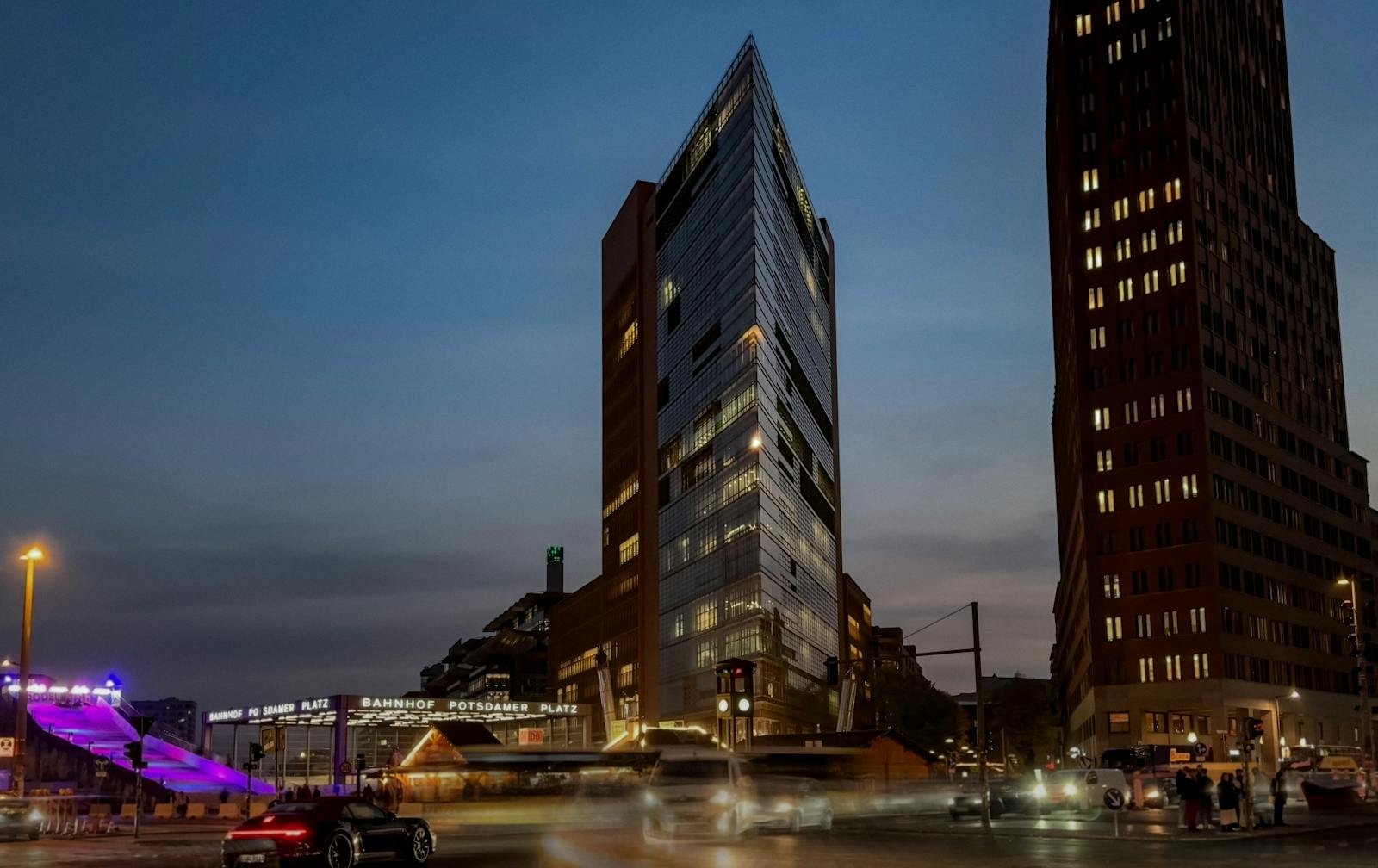
There is a photograph taken here in 1975 that shows a wide empty field with a watchtower in it and a few rabbits. There is another from 1930 that shows what was, by most accounts, the busiest traffic intersection in Europe. Both are the same three hundred square metres, and neither looks remotely like what you will find standing there today. potsdamer platz berlin has been a crossroads, a nightlife district, a bombed ruin, a strip of no-man’s-land and a corporate quarter, all inside a hundred years, and the reason to come is that you can still read every one of those layers off the ground.
This guide covers what is actually here now, which parts are worth your time and which are not, the Wall traces most visitors walk over without noticing, the two excellent museums nobody expects, and how long to give it. Everything on the square itself is free to look at. Prices quoted were checked in September 2026 and are the right order of magnitude.
The essentials
| Question | Answer |
|---|---|
| Cost | Free to walk. Museums and viewing platform charge separately. |
| Time to allow | 30 minutes for the square, half a day with the museums |
| Stations | Potsdamer Platz — U2, S1, S2, S25, S26, regional trains |
| Best time | After dark, when the Sony Center roof is lit |
| Wall traces | Preserved segments on Stresemannstraße, cobble line across the square |
| Paid attractions | Panoramapunkt, the Kino Museum, the Gemäldegalerie ten minutes west |
| Free | The Sony Center forum, the Wall segments, the first traffic light replica |
| Verdict | Worth thirty minutes; not worth an afternoon on its own |
What was here before
You cannot make sense of this place without the sequence, and the sequence is short.
By the 1920s Potsdamer Platz was the busiest intersection on the continent — trams, cars, five converging streets, the Haus Vaterland entertainment palace, the Café Josty, the Weinhaus Huth. Traffic was so heavy that in 1924 Germany’s first traffic light was installed here, a five-sided tower in the middle of the junction. A replica stands on the spot today and most people walk past it without looking up.
The war removed all of it. What survived the bombing was mostly cleared, and then the sector boundary between the Soviet, American and British zones was drawn straight through the middle of the square — which is why, when the Wall went up in 1961, Potsdamer Platz ended up not beside the border but inside it. For twenty-eight years this was death strip: raked sand, floodlights, a watchtower, patrol road, and nothing else. Photographs from the 1970s show grass growing through the tarmac.
After 1990 it was the largest development site in Europe and one of the most valuable pieces of vacant land anywhere. Daimler-Benz and Sony took the bulk of it, Renzo Piano, Helmut Jahn, Richard Rogers and Rafael Moneo took the buildings, and the whole quarter went up between 1993 and about 2000. The result is a piece of late-1990s corporate urbanism dropped into a hole in the middle of a city.
What is actually here
The Sony Center
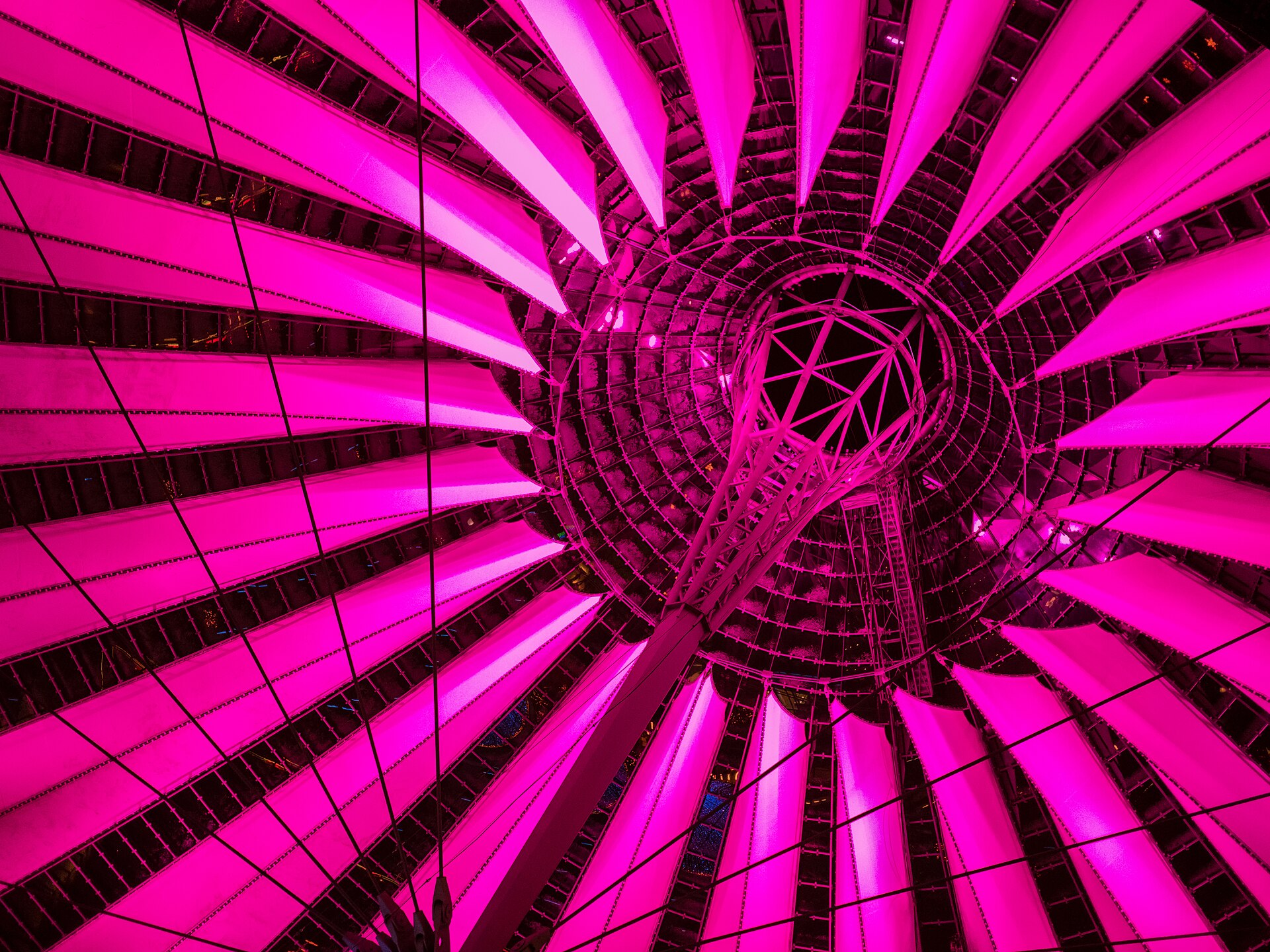
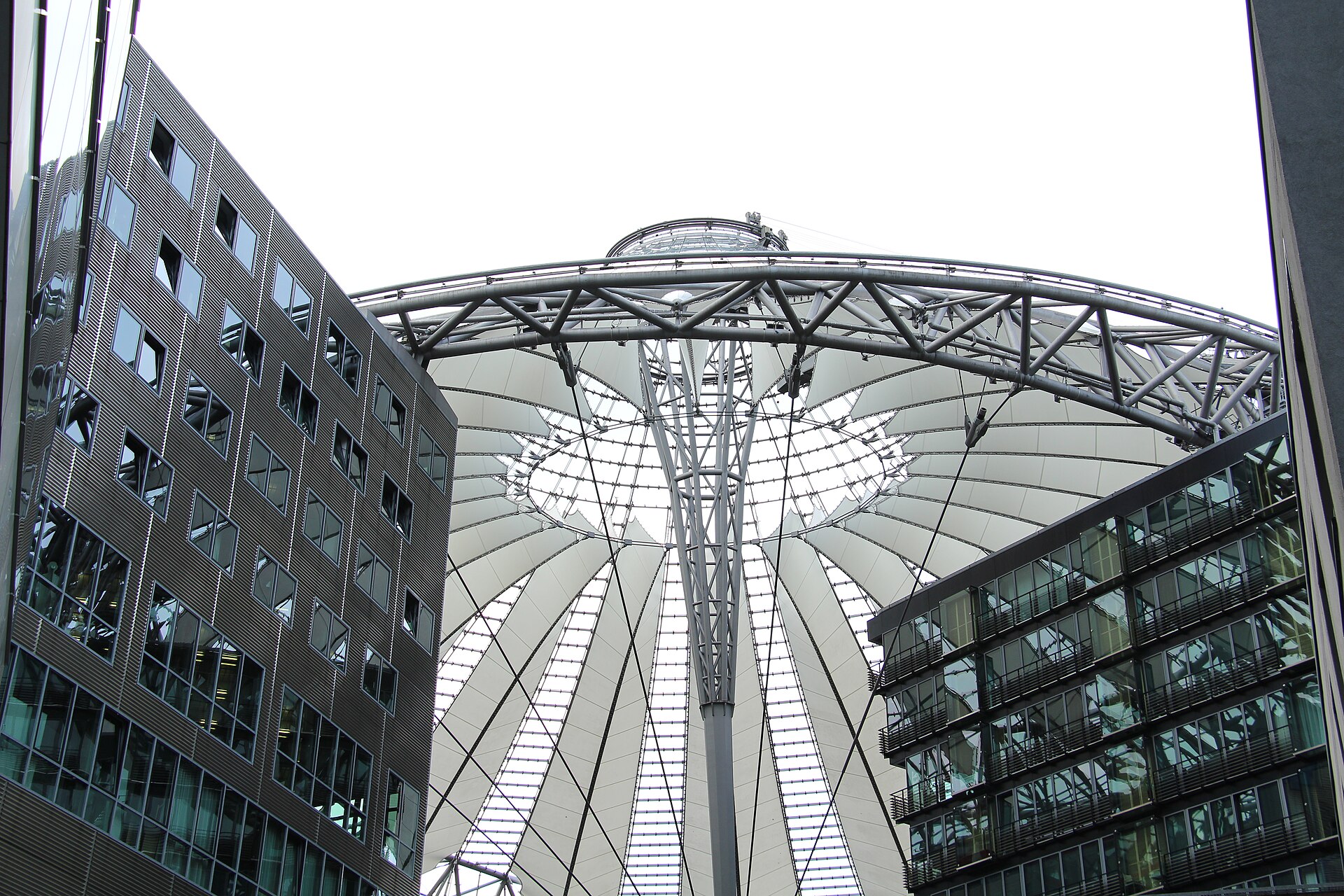
Helmut Jahn’s forum, and comfortably the best thing on the square. A ring of glass buildings around an open plaza covered by a tented roof of fabric and steel cables, modelled loosely on Fuji-san. By day it is a striking bit of engineering with restaurants underneath it. After dark it is lit and the colour cycles slowly, which turns the whole forum a different shade every few minutes and is the single most photographed thing here.
Look for the Kaisersaal — a fragment of the old Grand Hotel Esplanade, one of the few surviving pieces of pre-war Potsdamer Platz. In 1996 the entire room, weighing 1,300 tonnes, was moved seventy-five metres on air cushions to fit into the new development. It is now glassed into the Sony Center and you can see it from the plaza.
The Wall traces
These are the reason to slow down, and they are easy to miss.
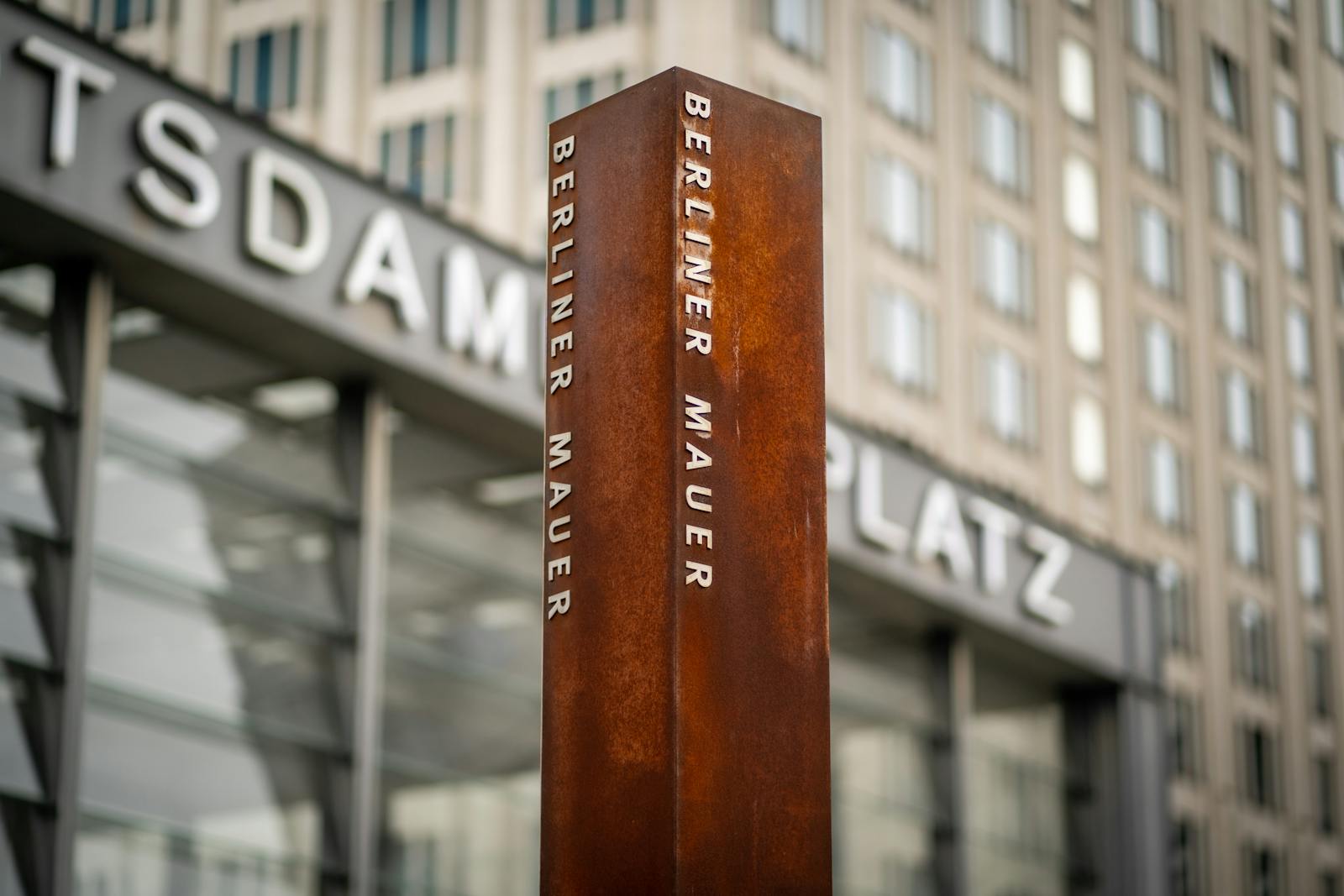
- The cobble line. A double row of setts runs across the square and on through the city, marking where the Wall stood. Once you spot it you will follow it for blocks.
- The preserved segments on Stresemannstraße, just south of the square — several original sections stood upright, thick with chewing gum and graffiti. They are real, unlike some of the fragments sold around Berlin.
- The information panels set into the pavement, which show the same view in 1930, 1975 and today. These are the best free interpretation on the square and about four people a day read them.
For the wider picture, our Berlin Wall sites and memorials guide maps the surviving stretches in walking order, and the Wall history timeline covers the chronology.
The Panoramapunkt
In the red-brick Kollhoff Tower on the south side: a lift — advertised as the fastest in Europe — to a viewing platform at about 100 metres, with an open-air terrace and a café. It costs considerably less than the Fernsehturm and it looks at the Fernsehturm, which is arguably the better composition, since the tower is the more interesting object in Berlin’s skyline. There is also a small exhibition on the square’s history on the way up. Our attractions and tickets guide compares every paid view in the city.
The first traffic light
A replica of the 1924 signal tower stands where the original did. It is a small thing and it is genuinely the reason this junction entered history — Europe’s traffic problem was solved, first, here.
The shopping and cinemas
The Potsdamer Platz Arkaden and a large multiplex. Neither is a reason to visit Berlin. In February, though, the whole quarter becomes the centre of the Berlinale — the Berlin International Film Festival — and the square is transformed for a fortnight. Berlinale tickets genuinely are sold to the public, which surprises people; see our events calendar.
The two museums nobody expects
Potsdamer Platz has a reputation as a place with nothing in it. That reputation ignores two very good institutions.
The Museum für Film und Fernsehen
In the Filmhaus at the Sony Center: a museum of German cinema and television, and much better than its footprint suggests. The Weimar cinema material is exceptional — Metropolis, The Cabinet of Dr Caligari, the whole expressionist period — and the Marlene Dietrich collection, acquired from her estate, includes costumes, correspondence and personal papers. There is also a properly unflinching section on cinema under the Third Reich.
The Kulturforum, ten minutes west
This is the one to plan around, and it is not on the square itself. Walk five to ten minutes west and you reach a cluster that includes:
- The Gemäldegalerie — one of the finest collections of European painting anywhere: Vermeer, Rembrandt, Bruegel, Caravaggio, Botticelli. It is reliably half empty because it is not on Museum Island, which makes it one of the best value-for-crowding trades in Berlin. Covered by the Museum Pass.
- The Neue Nationalgalerie — Mies van der Rohe’s glass box, reopened after a David Chipperfield refurbishment, holding twentieth-century art.
- The Philharmonie — Hans Scharoun’s concert hall, home of the Berliner Philharmoniker. Guided tours run several times a month, cost around €10, and are capped at 25 people. Concert tickets should be bought through the orchestra’s own site — it publicly warns about unauthorised resellers — and there is a Classic Card for under-30s at around €18.
- The Kunstgewerbemuseum — decorative arts, quiet, good.
Our Berlin museums guide covers these properly, and the live music venues guide has more on the Philharmonie.
The honest verdict
Potsdamer Platz divides opinion sharply and the criticism is largely fair. It was built fast, by committee, in a commercial idiom that has aged the way late-1990s corporate architecture generally ages. Berliners are not sentimental about it. The common charge — that it could be in any city, and that a place with this much history should not feel this generic — lands.
What that criticism misses is that the emptiness is the point. You are standing on ground that was a field with rabbits in it thirty-five years ago, and before that the busiest junction in Europe, and the reason it feels unrooted is that its roots were removed twice. The pavement panels showing 1930, 1975 and now are the best thing here precisely because they make that legible.
So: thirty minutes, at night, on the way to somewhere else. Look at the Sony Center roof, find the cobble line, read the panels, look up at the traffic light replica. Then either walk west to the Kulturforum for the Gemäldegalerie, or north to the Holocaust Memorial and the Brandenburg Gate, both about ten minutes away.
What it does not deserve is a dedicated afternoon. Visitors who allocate one generally end up in a shopping centre wondering what they missed. They did not miss anything; there is not that much there.
Getting there and what is nearby
Potsdamer Platz station is served by the U2, the S1, S2, S25 and S26, and regional trains. It is one stop from Brandenburger Tor and two from Friedrichstraße. The U-Bahn and S-Bahn guide covers the network and the BVG tickets guide the fares.
On foot from the square:
- Holocaust Memorial — 8 minutes north. Free, and the underground exhibition is the part to allow time for. See our Holocaust Memorial guide.
- Brandenburg Gate — 10 minutes north. See the Brandenburg Gate guide.
- Topography of Terror — 8 minutes east, free, and the most rigorous history museum in the city.
- Checkpoint Charlie — 12 minutes east, and our Checkpoint Charlie guide explains why you should look and keep walking.
- The Tiergarten — begins immediately north-west, and is the obvious place to decompress. See outdoor activities in Berlin.
The whole quarter is new-build and therefore unusually accessible: lifts everywhere, level surfaces, wide crossings. See our accessible transport guide.
Eating around Potsdamer Platz
Honestly: it is a business district and it eats like one. The Sony Center restaurants are convenient, tourist-priced and unremarkable; the Arkaden food court is a food court.
Two better options within ten minutes. Potsdamer Straße, running south-west, has become one of the more interesting eating and gallery streets in the city over the last decade — galleries, wine bars, proper restaurants. And walking north-east into Mitte puts you within range of everything in our Berlin food guide. For something quick and good, the cheap eats guide has options in both directions.
Reading the buildings
If you are going to spend thirty minutes here, it helps to know that the quarter is not one development but two, built at the same time by rival owners with quite different ideas — and that the seam between them is visible from the street.
The Daimler quarter
The southern and eastern half, masterplanned by Renzo Piano, who also designed several of its buildings. Piano’s brief was to make something that read as a piece of city rather than a campus: terracotta cladding, narrower streets, a deliberately varied roofline, and a set of individual buildings by different architects — Richard Rogers, Rafael Moneo, Arata Isozaki, Hans Kollhoff. It is the more urban half and the one that has aged better.
Kollhoff’s tower, the dark red brick one with the stepped top, is the most confident building on the square and deliberately references 1920s American skyscrapers. The Panoramapunkt is at the top of it.
The Sony quarter
The northern half, all Helmut Jahn, all steel and glass, organised inward around the covered forum rather than outward onto streets. It is the more spectacular half and the more criticised: the argument against it is that it turns its back on the city and works as an enclosure rather than a place. Standing under the roof at night, it is hard to be too severe about that.
The Weinhaus Huth
The small stone building that looks completely out of place among the towers. It is out of place: built in 1912, it is one of only two structures on Potsdamer Platz that survived both the war and the death strip, and it stood alone in the empty field for thirty years. Photographs of it isolated in the middle of nothing are among the more haunting images of divided Berlin. It is now surrounded, and it is worth walking over to.
Potsdamer Platz through the year
February — the Berlinale
For roughly ten days the whole quarter becomes the Berlin International Film Festival: red carpets at the Berlinale Palast, queues at the multiplexes, a genuine sense of occasion. Unlike Cannes, the Berlinale sells a large share of its tickets to the general public, and ordinary people do get into premieres. If you are in Berlin in February this is the single best reason to be at Potsdamer Platz.
December — Winterwelt
The square hosts a winter market with a toboggan run and a curling rink. It is enjoyable and it is not one of Berlin’s beautiful Christmas markets — for those see our Christmas markets guide.
Summer
The Sony Center forum is shaded and the restaurants put tables out, which makes it a reasonable place to sit out a hot afternoon. The Tiergarten immediately north-west is the better option. See Berlin in summer.
Rain
This is genuinely Potsdamer Platz’s strongest case. The Sony Center roof, the Arkaden, the cinemas, the film museum and the underground connections mean you can spend a wet afternoon here almost entirely under cover, and the Kulturforum is a ten-minute walk. On a Berlin November day that is worth something — our rainy day activities guide has more of the same.
A thirty-minute route
If you want to do this efficiently rather than wander, here is the walk.
- Start at the S-Bahn exit on the north side and find the replica traffic light immediately.
- Cross to the Wall segments on Stresemannstraße — two minutes south — and pick up the double cobble line where it crosses the road.
- Read the pavement panels showing 1930, 1975 and now. This is the two minutes that makes the rest make sense.
- Walk into the Sony Center forum and look up. If it is dark, stay a few minutes for the colour to change.
- Find the Kaisersaal glassed into the north side, and the Weinhaus Huth on the Daimler side.
- Leave west towards the Kulturforum, or north towards the Holocaust Memorial.
That is the square. Our three-day itinerary slots it in exactly this way, as a link in a longer walk rather than a stop of its own.
Frequently Asked Questions
Is Potsdamer Platz worth visiting?
For about thirty minutes, yes — mainly for the Sony Center roof after dark and the Wall traces in the pavement. It is not worth a dedicated afternoon. Treat it as a stop between the Holocaust Memorial and the Kulturforum rather than as a destination.
What is there to see at Potsdamer Platz?
The Sony Center and its lit roof, preserved Berlin Wall segments on Stresemannstraße, the cobble line marking where the Wall ran, a replica of Europe’s first traffic light from 1924, the Panoramapunkt viewing platform, and the Museum für Film und Fernsehen. The Kulturforum, with the Gemäldegalerie and the Philharmonie, is ten minutes west.
Was Potsdamer Platz part of the Berlin Wall?
Yes — the sector boundary ran directly through it, so from 1961 the square lay inside the death strip rather than beside it. For twenty-eight years it was raked sand, floodlights and a watchtower. Before the war it had been the busiest traffic intersection in Europe.
How long do you need at Potsdamer Platz?
Thirty minutes for the square itself. Half a day if you add the Kulturforum museums, which is the sensible way to spend the time here.
What is the Sony Center?
Helmut Jahn’s development on the north side of the square: a ring of glass buildings around an open plaza under a tented fabric-and-steel roof, completed in 2000. The roof is illuminated at night in slowly cycling colours. It also encloses the Kaisersaal, a surviving room from the pre-war Hotel Esplanade that was moved seventy-five metres on air cushions in 1996.
Is there a viewpoint at Potsdamer Platz?
The Panoramapunkt in the Kollhoff Tower, about 100 metres up, with an open-air terrace and a café. It costs well under half the TV Tower price and it looks at the TV Tower, which many visitors prefer.
What is the best time to visit Potsdamer Platz?
After dark, when the Sony Center roof is lit. By day the square is a business district; at night it is at least distinctive. February is the exception — the Berlinale takes the whole quarter over for a fortnight.
Related Berlin Guides
- Berlin Attractions & Tickets
- Berlin Wall Sites & Memorials
- Holocaust Memorial Berlin
- Berlin Museums Guide
- Checkpoint Charlie Berlin
- Berlin Reunification
Final Word
Potsdamer Platz is the most complete demonstration in Berlin of what the twentieth century did to this city, and it demonstrates it by having almost nothing old left standing. The Kaisersaal had to be dragged seventy-five metres on air cushions to survive at all. Everything else you can see went up between 1993 and 2000, on ground that was patrol road and floodlights within living memory.
Come after dark, when the roof is lit and the square has some character to it. Find the double line of cobbles and follow it for a hundred metres. Read the panels with the three photographs. Then go west to the Gemäldegalerie, where Vermeer and Rembrandt hang in half-empty rooms ten minutes from here, and which is the thing people should be coming to this part of Berlin for in the first place.
Photo Credits
The Sony Center roof at night: Berlin Potsdamer Platz Sony Center Dach 1210082-PSD by Ermell, CC BY-SA 4.0, via Wikimedia Commons.
The roof by day: Berlin – Sony Center am Potsdamer Platz by Fred Romero, CC BY 2.0, via Wikimedia Commons.