Berlin TV Tower Tickets: Fast View, Dining & Is It Worth It?
Every Fernsehturm ticket tier priced and assessed, the WelcomeCard quirk most visitors get backwards, and an honest answer to whether the view justifies €25.
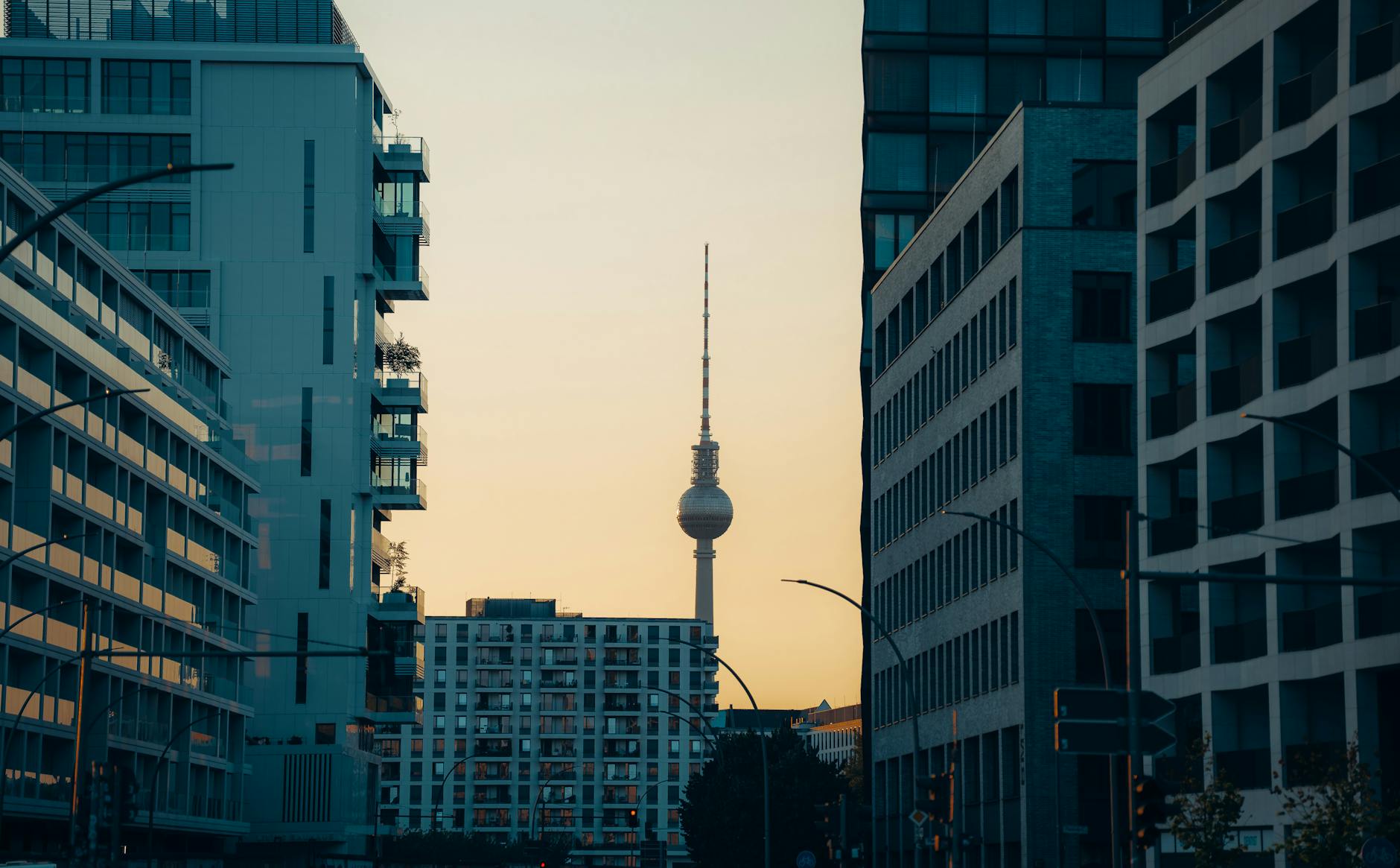
Somewhere in the reviews for every observation deck in Europe there is a one-star entry that says “you can’t see the tower from the tower”. For the Fernsehturm, the more common complaint is blunter than that: people pay upwards of €25, ride the lift for forty seconds, look out at 203 metres, and find that Berlin is a very flat city with not a great deal in it. That is the honest starting position for anyone weighing up berlin tv tower tickets, and this guide is going to work out when the money is well spent and when it is not.
Below: what each ticket tier actually gets you, how much the skip-the-line premium is worth, the dining and champagne-breakfast options, the WelcomeCard quirk that most people get backwards, what the view is genuinely like in different weather, and three cheaper places to stand high up in Berlin. Prices were checked in September 2026 and should be treated as the right order of magnitude — the tower reprices without much notice, so confirm on the operator’s own site.
The tiers at a glance
| Ticket | Rough price | What you get | Worth it? |
|---|---|---|---|
| Standard timed entry | from ~€25 | Lift to the viewing platform, a fixed entry window | The baseline. Book online. |
| Fast View / skip-the-line | a few € more | Priority lane, tighter slot | Yes in summer, no in February |
| Window table, restaurant | meal price plus a supplement | Guaranteed window seat in the revolving level | If you want dinner anyway |
| Inner table, restaurant | meal price | Restaurant access, no window guarantee | Poor value — the window is the point |
| Champagne breakfast | premium | Early slot before general opening, breakfast, quiet deck | The best-value premium option |
| Berlin WelcomeCard holder | discounted | Reduction on standard entry | Buy at the tower, not online |
Two things in that table catch people out and neither is obvious from the booking page. The restaurant has window and non-window tickets at different prices, and the WelcomeCard discount is not applied by the online checkout.
The honest verdict first
We would rather deal with this up front than bury it after two thousand words of enthusiasm.
Berlin is flat, low and sprawling. There is no harbour, no river gorge, no ring of hills, no dense cluster of skyscrapers. From 203 metres what you see is an enormous grey-green plain with a scattering of recognisable objects in it: the Berliner Dom, Museum Island, the Reichstag, the Tiergarten, Potsdamer Platz, and then flat roofs to the horizon in every direction. If your reference points are the Eiffel Tower, the Shard or Victoria Peak, you will find this underwhelming, and a great many reviewers do.
Set against that, three cases where it earns the money:
- First visit, geography. An hour up there does more for your mental map of Berlin than a day with a paper one. You can see where Mitte stops, how far Tempelhof is, why the eastern districts have a different grain. That is genuinely useful on day one of a longer trip.
- A properly clear day. On a crisp winter afternoon the sightlines run out to about forty kilometres and you can pick out the Brandenburg countryside. In grey haze you can see about as far as Alexanderplatz.
- You are eating. The revolving restaurant turns a full circle in about half an hour, and if you were going to have dinner somewhere anyway then you are paying for a meal with a rotating view rather than for the view alone. That is a different sum and it comes out better.
And the case against: if funds are tight and you have not yet done the Reichstag dome, which is free, or the Berliner Dom walkway, which costs about a third as much and looks straight down the Lustgarten, do those first. Our attractions and tickets guide lays the whole hierarchy out.
Buying the ticket
Book online, always
This is the one piece of advice that pays for itself. Walk-up visitors in high season routinely queue for an hour or more in the ticket hall at the base; people holding a timed online ticket are usually up inside fifteen minutes. The tower runs on slots, and the slots are the queue-management mechanism.
Standard entry starts around €25. The skip-the-line tier — marketed as Fast View — adds a few euros for a priority lane and a tighter time window.
Is the skip-the-line upgrade worth it?
It depends entirely on when you are going, and the answer flips completely between seasons.
- June to August, and any weekend afternoon — yes. The difference between the standard and priority lanes at 15:00 in July is real, and a few euros against forty minutes of standing is an easy trade.
- November to March, weekday mornings — no. There is often no queue at all and you are paying a premium for a lane with nobody in it.
- Any time after about 20:00 — usually no. Evening slots are quieter than the daytime ones and the standard lane moves.
The WelcomeCard trick
The Berlin WelcomeCard gives a discount at the Fernsehturm, but — and this is the part people get wrong — you have to buy at the tower to claim it. The online checkout has no field for it. So if you are holding a WelcomeCard, the calculation inverts: buy in person, take the discount, accept the queue, and go at a quiet hour to keep the queue short. If you are not, buy online. Our WelcomeCard review works out whether the card itself is worth having, and the comparison with the Museum Pass covers the alternative.
What about resellers?
Third-party sites do sell Fernsehturm entry, sometimes bundled with a walking tour or a river cruise. The bundles can be reasonable value; the standalone tickets generally are not, because they add a margin on a product you can buy direct. Buy from the tower’s own site unless the bundle genuinely contains something you wanted.
The dining tiers, explained properly
The restaurant sits above the viewing platform, at around 207 metres, and it revolves — roughly one full turn every half hour, so you see the whole city over the course of a meal without moving.
Window versus inner tables
This is the distinction the booking page makes and most visitors skim past. A window table is guaranteed at the glass; an inner table is not, and costs less. On a revolving floor an inner table means you are looking at the backs of other diners for most of your dinner. If you are doing this at all, book the window. The saving on the inner tier is not worth what it removes.
Is dinner up here good?
It is competent hotel-restaurant cooking at a view premium, which is exactly what you would expect and no scandal. Nobody comes here for the food and the kitchen knows it. If dining is the point of your evening rather than the view, Berlin has far better options at the price — see our fine dining guide and the wider Berlin food guide.
Where it does work: a first night, a birthday, an anniversary, anything where the occasion is doing some of the lifting. Our Berlin for couples guide is honest about which of the city’s romantic set-pieces deliver.
The champagne breakfast
Of the premium tiers this is the one we would actually buy. You go up before general opening, the deck is close to empty, the light in the morning is better than at any hour except sunset, and breakfast is included. It costs meaningfully more than standard entry but it removes the single worst thing about the tower, which is the crush.
What it is like once you are up
The lift takes about forty seconds and there is a running commentary. The viewing platform at 203 metres is a full circle of angled windows with an information band naming what you are looking at, and a bar. It is not enormous — at peak times it is genuinely crowded, and getting a clear stretch of window to yourself takes patience.
What to pick out, going round:
- West — Unter den Linden running dead straight to the Brandenburg Gate, with the Reichstag dome to its right and the Tiergarten beyond. This is the best direction and the one everybody photographs.
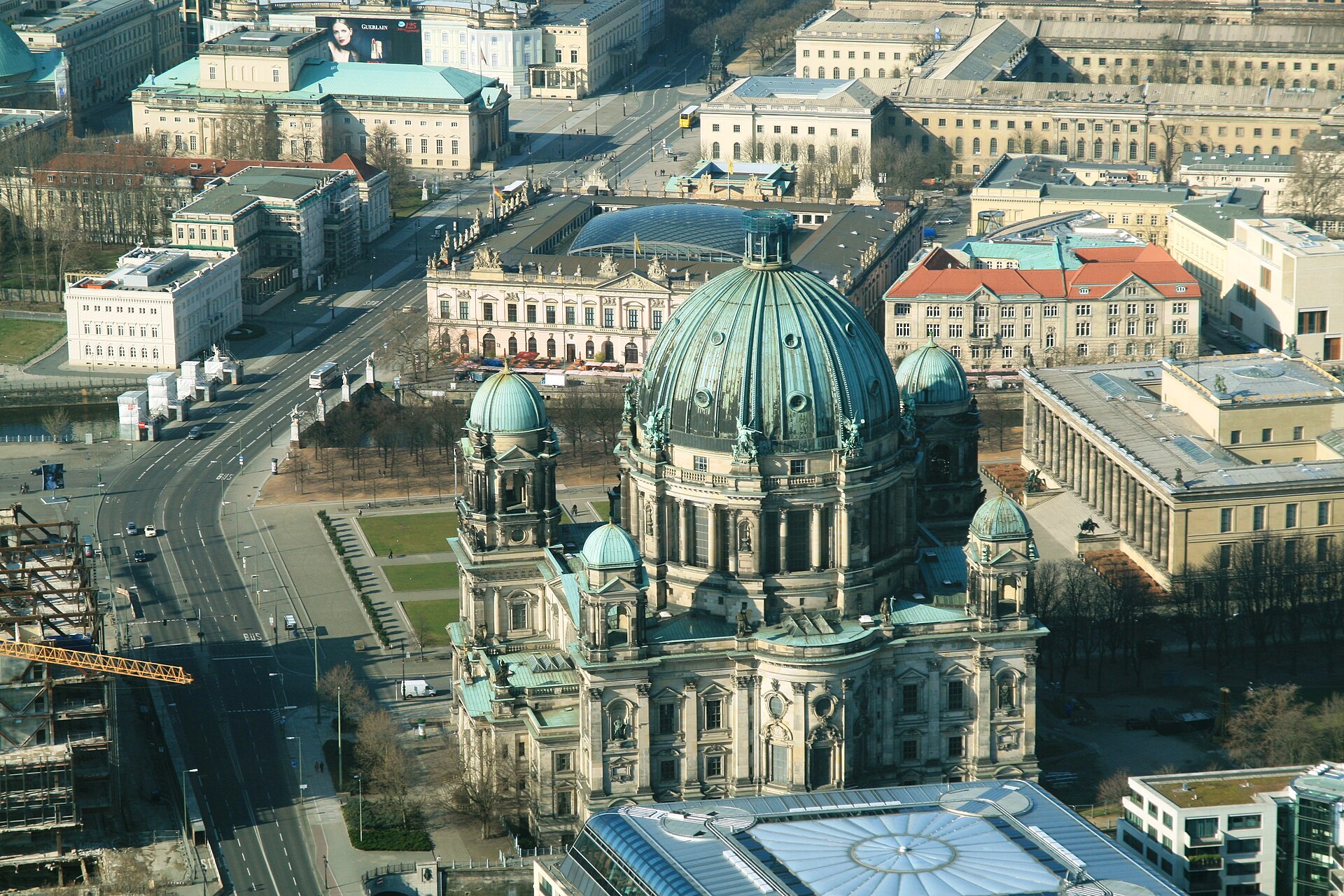
- South-west — Museum Island in the Spree, the Berliner Dom’s green domes directly below, Potsdamer Platz further out.
- South — Kreuzberg’s dense blocks, and on a clear day the long green rectangle of Tempelhofer Feld.
- East — Karl-Marx-Allee’s monumental socialist boulevard running out towards Frankfurter Tor, which is the single clearest legacy of East Berlin visible from anywhere.
- North — Prenzlauer Berg’s rooftops and, on a good day, the flat Brandenburg horizon.
Allow sixty to seventy-five minutes for the whole thing including security, the lift and enough time on the platform not to feel rushed. Add an hour and a half if you are eating.
Photography
The windows are glass and they reflect. Press the lens directly against the pane to kill the reflection, avoid flash entirely, and shoot at dusk if you can — the twenty minutes when the sky is still blue and the city lights are already on is when Berlin’s flatness stops mattering. Bring a lens hood or a dark jumper to shield the glass.
The tower itself: a genuinely interesting building
Worth knowing before you go up, because it changes what you are looking at.
It was built by East Germany between 1965 and 1969, opened in October 1969 shortly before the GDR’s twentieth anniversary, and at 368 metres it remains the tallest structure in Germany. It was a deliberate statement: a socialist future planted in the middle of a bomb-scarred city and visible from every part of West Berlin. That last part was the point.
Then came the joke that has outlived the state. When the sun hits the steel sphere, the reflection forms a cross on the surface. West Berliners called it the Pope’s Revenge — the atheist state’s showpiece producing a crucifix visible across the city, in a country whose government had spent considerable effort discouraging religion. There is no evidence it was deliberate and no evidence it could have been avoided. It is still there and you can see it on any sunny day from the square below.
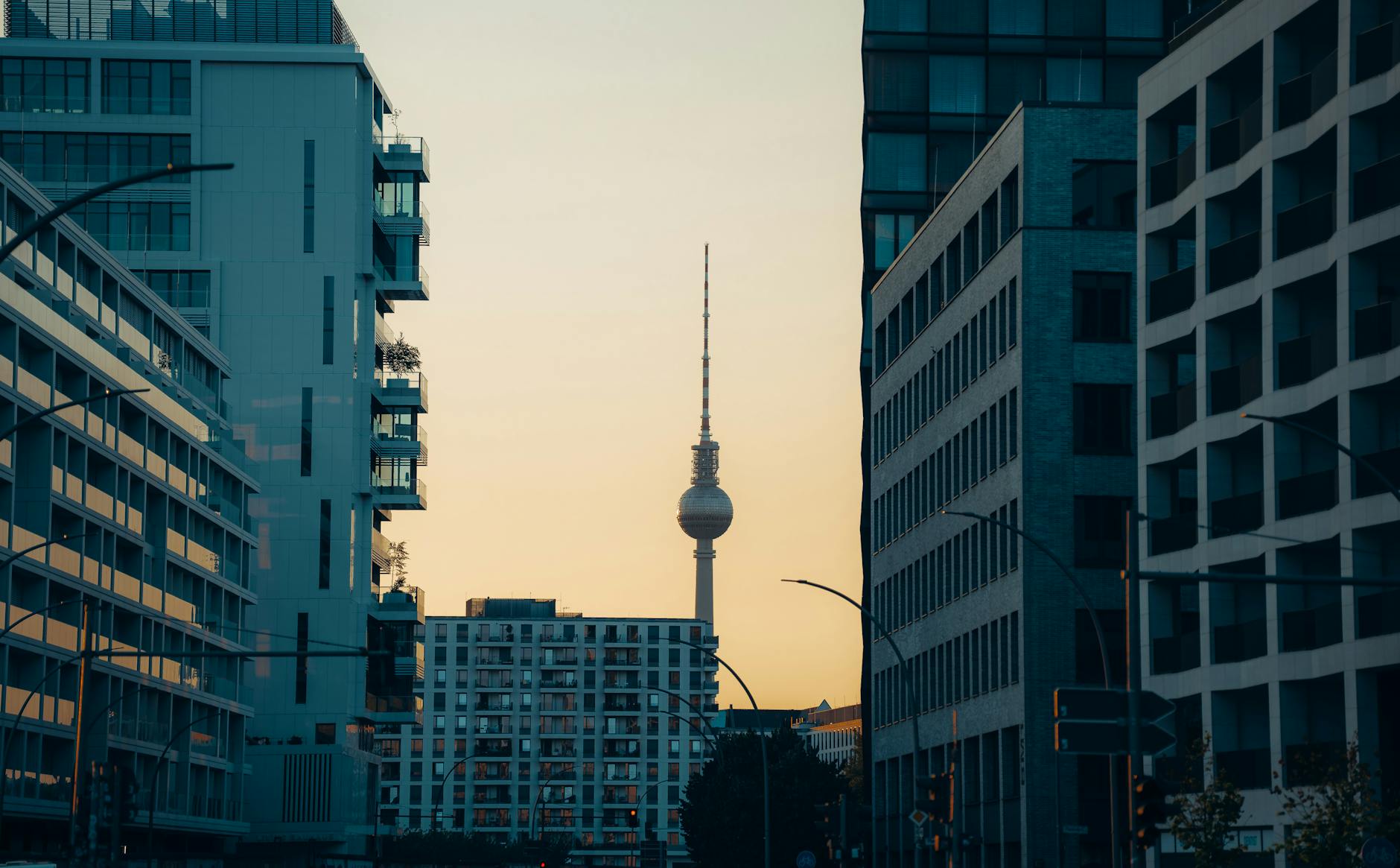
The sphere holds the viewing platform and the restaurant; above it a slim antenna carries the broadcast equipment that is still the building’s actual job. The whole structure was renovated in the 2010s, which is why the interior looks more contemporary than the exterior implies. There is more on the East Berlin context in our history and culture guide and the DDR Museum guide.
When to go
The weather rule
Check the forecast, and if it says overcast, do not go that day. This is the only major Berlin attraction where the weather changes the product completely. Fog, low cloud or heavy haze and you have paid €25 to look at grey. The tower does not refund for visibility.
The best conditions are the ones Berlin produces in late autumn and winter: cold, clear, high-pressure days when the air is scrubbed and you can see out past the city edge. Our weather guide covers what to expect month by month.
The best hours
- Dusk — the single best slot. Book about half an hour before sunset so you get daylight, the golden hour and the lit city in one visit. These slots sell first.
- First thing — quiet, clean light, no crowd. The champagne breakfast tier exists to sell you exactly this.
- Late evening — after about 21:00 the crowds drop off and the city is fully lit. Less good for orientation, better for atmosphere. See Berlin at night.
- Midday in summer — the one to avoid. Longest queues, flattest light, most crowded platform.
Cheaper places to stand high in Berlin
If the price is the problem rather than the principle, there are four alternatives and two of them are better.
- The Reichstag dome — free. Lower at 47 metres but sitting in the middle of the government quarter, with a far better composition and an audio guide included. It has to be registered weeks ahead; the full process is in our Reichstag dome tickets guide.
- The Berliner Dom walkway — around €10. 270 steps, no lift, and a rooftop circuit looking straight down at the Lustgarten with the Fernsehturm itself in the frame. Better value than the tower and a better photograph.
- The Siegessäule — a couple of euros. A tight spiral staircase in the Tiergarten with the Brandenburg Gate at the end of a dead-straight boulevard. No lift, and not for anyone uneasy on stairs.
- The Panoramapunkt at Potsdamer Platz. Around 100 metres, considerably cheaper than the Fernsehturm, and it looks at the Fernsehturm — which some people prefer, since the tower is the more interesting object in Berlin’s skyline.
There is also the bar on the upper floors of the Park Inn on Alexanderplatz, and a rooftop terrace there, both of which put you a hundred-odd metres up for the price of a drink. Our free attractions and budget guides collect the rest.
Getting there and what is around it
The tower is on Panoramastraße at Alexanderplatz, which is one of the best-connected points in Germany: U2, U5 and U8, the S3, S5, S7 and S9, regional trains, and a dozen tram and bus routes. You will not have trouble reaching it. The U-Bahn and S-Bahn guide covers the ticketing and the BVG tickets guide the fares.
Within a few minutes’ walk: the Weltzeituhr and the Neptunbrunnen fountain, the Nikolaiviertel and its reconstructed lanes, the Rotes Rathaus, the DDR Museum on the far bank, and Museum Island beyond it. Combining the tower with Museum Island in one day is the standard and sensible move — see the Museum Island guide.
The tower is step-free with lift access throughout, including to the restaurant. The accessible transport guide covers getting to Alexanderplatz.
Alexanderplatz at the foot of it
The square the tower stands on is worth twenty minutes whether or not you go up, and it is free. It is also, in fairness, not beautiful — a wide windswept plaza of chain retail and socialist planning that most guidebooks damn with the word “functional”.
The Weltzeituhr
The World Clock, put up in 1969 in the same anniversary push as the tower: a rotating aluminium cylinder showing the time in cities around the world, topped by a simplified model of the solar system. It has been Berlin’s default meeting point for fifty years. If a Berliner tells you to meet them “at the clock”, this is the one.
The Neptunbrunnen
The Neptune Fountain, between the tower and the Rotes Rathaus, dates from 1891 and shows Neptune surrounded by four female figures representing the Rhine, the Elbe, the Oder and the Vistula. In summer people sit on the rim of it with a beer. It is the prettiest thing in the immediate area by a wide margin.
The Nikolaiviertel
Five minutes south-west: a reconstruction of Berlin’s medieval quarter, built by East Germany in the 1980s around the genuinely old Nikolaikirche. Whether it reads as charming or as a theme park depends on your tolerance for reconstruction, but the lanes are quiet, the restaurants are old-fashioned German, and it is the only part of central Berlin that feels small.
Christmas markets
From late November, Alexanderplatz hosts one of the city’s largest markets, complete with an ice rink at the foot of the tower. It is busy and commercial rather than quaint — for the prettier ones see our Christmas markets guide.
Shopping
Alexa and Galeria are both on the square, and the Mall of Berlin is a couple of stops away. None of it is why you came to Berlin, but on a wet afternoon it is there. Our Alexa and Mall of Berlin guide compares them.
Practical notes people wish they had known
- There is airport-style security at the base — bag scan and metal detector. Allow ten minutes for it at busy times.
- Large luggage is not accepted. This does not work as a stop on the way to the airport.
- Buggies can go up in the lift but the platform gets tight when it is busy; a carrier is easier. See Berlin with toddlers.
- The lift occasionally closes in high wind, and when it does, pre-booked tickets are usually moved rather than refunded. Check the tower’s own status page on a stormy day before you set out.
- Timed slots are enforced at the start, not the end. Miss your window and you are at the mercy of the desk; arrive within it and you can stay as long as you like once you are up.
- There is a bar on the viewing platform. A drink up there is a cheaper way to make the visit feel like an occasion than upgrading to the restaurant.
- The gift shop is at the bottom, so you do not have to carry anything round the platform.
Frequently Asked Questions
How much are Berlin TV Tower tickets?
Standard timed entry starts around €25 as of September 2026, with the skip-the-line tier a few euros above that. Restaurant tickets are priced separately depending on whether you take a window or an inner table, and the champagne breakfast is a further premium. Check the tower’s own site before booking — the prices move.
Do I need to book the Berlin TV Tower in advance?
Not strictly, but it is strongly advisable. Walk-up visitors regularly queue over an hour in summer, while timed-ticket holders are usually up within fifteen minutes. The exception is if you hold a Berlin WelcomeCard, which can only be redeemed in person at the tower.
Is the Berlin TV Tower worth it?
Sometimes. It is worth it on a clear day, on a first visit, when you want the geography of the city to make sense, or if you are eating in the revolving restaurant. It is not worth it in flat grey weather, and it is not the first height in Berlin we would pay for — the free Reichstag dome and the €10 Berliner Dom walkway both come first.
How long does a visit to the TV Tower take?
Sixty to seventy-five minutes including security, the lift and time on the platform. Add ninety minutes or so if you are eating in the restaurant, which completes a full rotation in about half an hour.
Does the Berlin WelcomeCard include the TV Tower?
It gives a discount, not free entry — and the discount can only be claimed by buying at the tower itself. The online checkout does not accept it. If you have a WelcomeCard, buy in person and go at a quiet hour to keep the queue down.
What is the difference between window and inner tables at the TV Tower restaurant?
A window table guarantees a seat at the glass; an inner table does not, and is cheaper. On a revolving floor an inner table means looking at other diners rather than at Berlin, so if you are booking the restaurant at all, book the window.
How tall is the Berlin TV Tower?
368 metres, the tallest structure in Germany. The viewing platform is at 203 metres and the revolving restaurant just above it at around 207.
What is the Pope’s Revenge?
When sunlight hits the steel sphere, the reflection forms a cross. West Berliners named it the Pope’s Revenge — an unintended crucifix on the showpiece of an officially atheist state. You can see it from Alexanderplatz on any sunny day, for free.
Related Berlin Guides
- Berlin Attractions & Tickets
- Reichstag Dome Tickets
- Berlin WelcomeCard Review
- Museum Island Berlin
- Berlin at Night
- Free Attractions in Berlin
Final Word
The Fernsehturm is a better building than it is a viewing platform. It was put there to be seen from West Berlin rather than to let anyone look out of it, and that original purpose still shows: the most interesting thing about the tower is visible for nothing from the square at its foot, where the sun makes a cross on a socialist sphere.
If you go up, go on a clear day, book a slot around sunset, and press your phone against the glass. If the forecast is grey, spend the €25 on a museum and stand on the Berliner Dom instead — 270 steps, a third of the price, and the tower in your photograph rather than under your feet. And if you have not yet registered for the Reichstag dome, do that first, because it is free, it is better, and the booking window closes in a way the tower’s never does.
Photo Credits
The sphere from below: 2010-07-09 Berliner Fernsehturm Kugel Fenster Panoramaetage und Cafe by Sir James, CC BY-SA 3.0, via Wikimedia Commons.
The view over Museum Island: Berliner Dom from above by Bernt Rostad, CC BY 2.0, via Wikimedia Commons.