Berlin Weather and Packing Guide — Locals’ Honest Advice
Month-by-month Berlin weather data, what to pack each season, plus Berlin-specific dress codes — clubs, cobblestones, neighbourhoods — most guides miss.
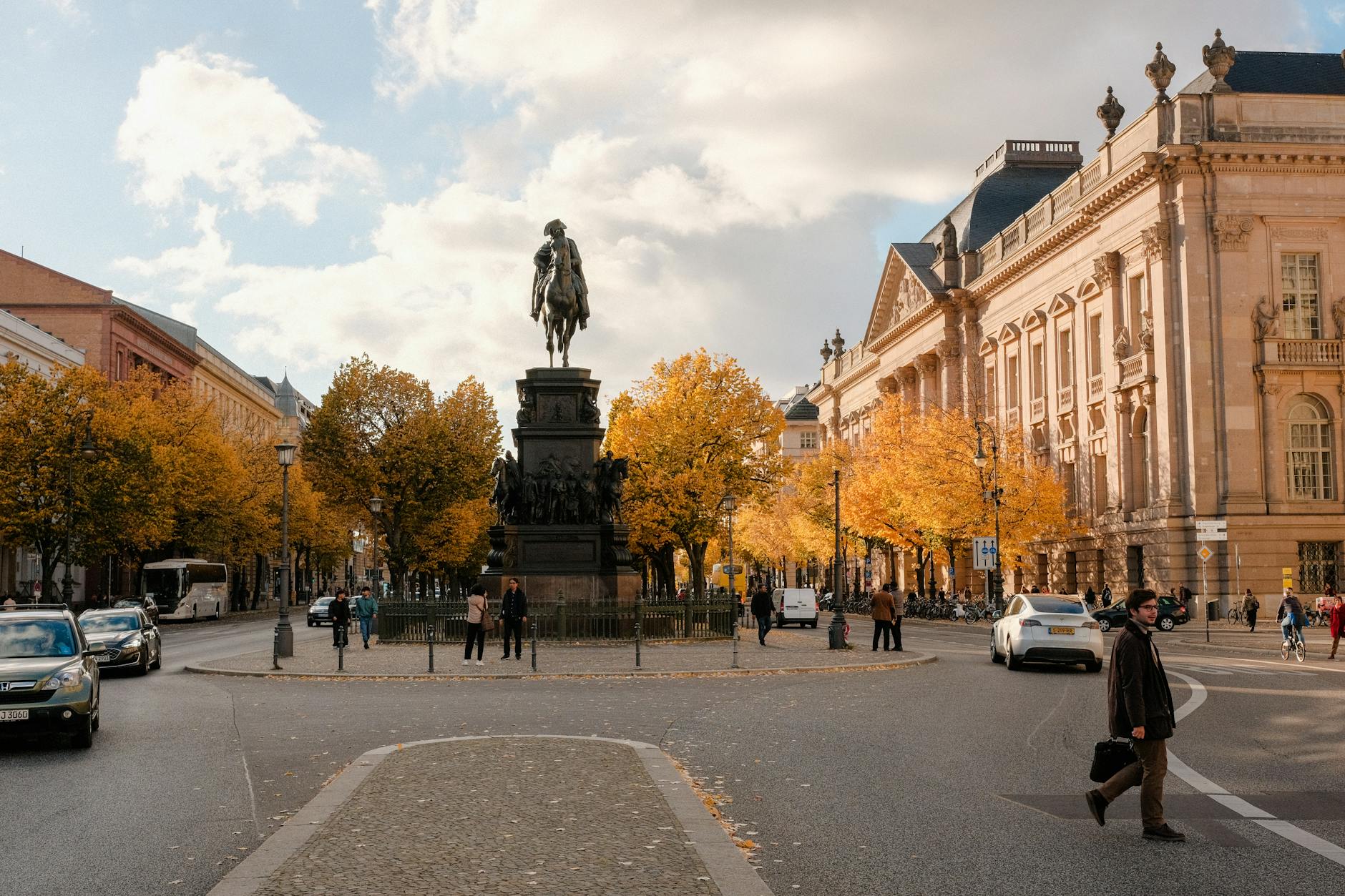
I’ve made every Berlin packing mistake there is to make. I’ve turned up in March in a thin trench coat and spent a week shivering through wet snow flurries. I’ve packed white sneakers for a January trip and watched them turn permanent grey on day two. I’ve worn ambitious heels to a Friedrichshain bar and limped back to the U-Bahn with blisters big enough to have their own postcode. And I’ve shown up at Berghain in something the bouncer described, in three words and a slow head-shake, as “no, mate.”
Berlin’s weather isn’t dramatic by global standards. It’s not Helsinki cold or London wet. But it is consistently underestimated, and the local style codes — neighbourhood by neighbourhood, club by club — punish tourists who treat Berlin like a generic European capital and pack accordingly. This guide tells you the real climate numbers month by month, what to actually pack for each season, what the dress codes for Berlin’s specific situations look like in 2026, and (this is the part most guides miss) what to leave at home.

Berlin weather: the honest baseline
Berlin sits at about 52.5° north — roughly the same latitude as Saskatoon or southern Alaska. It has a humid continental climate: cold winters, warm summers, and a lot of grey in between. Annual rainfall is moderate (around 535mm spread fairly evenly through the year), but the city gets only about 1,730 hours of sunshine — meaningfully less than Madrid, Rome, or even Paris. The “feels-like” is consistently colder than the number suggests because of two factors most weather apps don’t capture: relative humidity stays high (60-88%) and the wind almost never stops (12-17 kph year-round, much higher in winter).
What this means in practice: bring layers, expect grey, and trust that a sunny April afternoon can still get cold the second the sun drops behind a building. Berliners dress in layers as a default — fewer than a Norwegian, more than a Parisian — and you should too.
Month-by-month Berlin climate table
| Month | Avg Low °C/°F | Avg High °C/°F | Rain (mm) | Rain days | Daylight | Key concern |
|---|---|---|---|---|---|---|
| Jan | -2 / 28 | 3 / 38 | 40 | 10 | 8h | Coldest; possible snow/ice; cold snaps to -12 |
| Feb | -2 / 29 | 5 / 41 | 30 | 8 | 10h | Driest with April; frost risk |
| Mar | 0 / 33 | 9 / 48 | 35 | 9 | 12h | Wildly unstable; late snow possible |
| Apr | 4 / 39 | 15 / 59 | 30 | 6 | 14h | “April does what it wants” — swings 0 to 25°C |
| May | 8 / 47 | 20 / 67 | 55 | 8 | 15.5h | First thunderstorms; warm days arrive |
| Jun | 12 / 53 | 23 / 73 | 60 | 9 | 16.5h | Long days, evening chill, heatwaves possible |
| Jul | 14 / 57 | 25 / 77 | 70 | 9 | 16h | Hottest, wettest; heatwaves to 35°C+ |
| Aug | 13 / 56 | 25 / 77 | 50 | 8 | 14.5h | Lake season; thunderstorms common |
| Sep | 10 / 50 | 20 / 68 | 45 | 8 | 12.5h | Altweibersommer; near-perfect |
| Oct | 6 / 42 | 14 / 57 | 40 | 8 | 10.5h | Cool, leaves turn; layering essential |
| Nov | 2 / 35 | 8 / 46 | 40 | 8 | 8.5h | Greyest month; sun shines only 21% of daylight |
| Dec | -1 / 30 | 4 / 39 | 40 | 10 | 7.7h | Christmas markets; only 7.5 hours of light |
For more on which months suit which type of trip, read our companion guide on the best time to visit Berlin.
What to pack for Berlin in spring (March – May)
Spring in Berlin is a slow argument the weather has with itself. March can feel like January in the morning and like April by lunchtime. May can flip from 8°C to 25°C across a single week. The packing rule: pack for two seasons and layer aggressively.
- Waterproof shell — a packable rain jacket, ideally with a hood. Skip the umbrella for now (more on that below).
- One mid-weight layer — a cardigan or light fleece you can shed when the sun appears.
- Three to four long-sleeve tops + one or two short-sleeves for warm afternoons.
- Jeans, chinos, or trousers — bring one warmer pair if visiting in March.
- Waterproof ankle boots OR broken-in sneakers — Berlin is a walking city and cobblestones are everywhere.
- Compact umbrella, but only the wind-resistant kind. The cheap pop-up umbrellas die fast here.
- Light scarf, sunglasses, lip balm (the wind chaps lips).
- One smart-casual outfit for nicer dinners — Berliners dress down, but Mitte and Charlottenburg restaurants edge up.
For more on what to do once you’ve packed, our Berlin in spring guide lays out the season’s calendar.
What to pack for Berlin in summer (June – August)
Summer Berlin runs hot and (in older buildings without air conditioning) airless. Daytime can hit 35°C in a heatwave; evenings can still cool to 12-15°C. Thunderstorms arrive without warning. The city goes to the lakes on the weekends and the beer gardens on the weekdays.
- Breathable cotton or linen tops, summer dresses, shorts.
- Swimwear plus a microfiber towel — Wannsee, Müggelsee, Schlachtensee, and Tempelhofer Feld’s sprinkler-lawns are summer essentials.
- One light long-sleeve and a light jacket for evenings — even a 32°C day can drop to 15°C after midnight.
- Compact rain jacket — summer storms are dramatic but short.
- Comfortable walking sandals for the city (not flip-flops — Berlin is not a flip-flop city outside of lake days) plus broken-in sneakers.
- Sun protection: SPF 30+ sunscreen, hat, sunglasses, reusable water bottle (Berlin tap water is excellent and free).
- Mosquito repellent if you’re heading to lakes or camping.
- Bug-spray for evenings in Tiergarten and at lake beaches.
Read our Berlin in summer guide for everything that’s worth dragging yourself outdoors for.

What to pack for Berlin in autumn (September – November)
Autumn opens with Altweibersommer — Berlin’s version of Indian summer — and closes with the greyest, wettest month of the year. Pack for the spread.
- Mid-weight waterproof jacket with hood — wind-proof matters more than rain-proof here.
- Sweaters and long-sleeve layers — three or four for a week, in tones that handle a coffee spill.
- Jeans or warmer pants; thermal leggings if you’re here in November.
- Waterproof leather or treated boots — autumn drizzle plus leaves plus cobblestones equals slippery.
- Oversized scarf — functional and locally fashionable.
- Beanie and light gloves for late October onward.
- Compact umbrella and sunglasses — the low autumn sun on bike paths is blinding.
Our Berlin in autumn guide walks through the season’s mood and key dates.
What to pack for Berlin in winter (December – February)
Winter is the season most travellers under-pack for. They assume “cold European city, I’ll be fine.” Then they spend their Christmas-market afternoons cold-soaked through inadequate boots, cheeks raw from wind, hating their lives. Don’t be them.
- Insulated waterproof parka with hood — down or synthetic. This is the single most important item.
- Merino or synthetic thermal base layers — top and bottom. Game-changing on -5°C days.
- Two to three sweaters or fleeces.
- Waterproof insulated boots with grip — ice on Berlin cobblestones is genuinely treacherous.
- Wool socks — multiple pairs, thick ones.
- Beanie, scarf, insulated touchscreen-compatible gloves (you’ll need to use Google Maps with gloves on).
- Rich moisturizer, lip balm, hand cream — heated indoor air plus cold wind destroys skin.
- Hand warmers — Christmas markets, NYE crowd waits, and any time you need to stand still outside.
The full Berlin in winter guide covers what to actually do once you’re dressed for it.
Berlin-specific packing: the things tourist guides miss
Shoes for cobblestones
Mitte, Prenzlauer Berg, parts of Kreuzberg, and much of Charlottenburg sit on uneven pre-war paving. Thin-sole shoes feel fine for an hour and miserable by day two. Heels are punished. The locally adapted footwear is a cushioned sneaker (any major running brand), a chunky-sole boot, or a flat ankle boot. Whatever you bring, break it in before the trip. Berlin is a 20,000-steps-a-day city — your usual workday shoe budget won’t cover it.
The U-Bahn temperature swing
In winter, U-Bahn stations and trains run 10-15°C warmer than the street. That parka you needed outside becomes a sweat-machine on a packed train. Wear layers you can shed mid-commute — a thin jumper or fleece under the parka rather than a heavy sweater you can’t take off.
Techno club dress code (yes, even if you’re “not going to Berghain”)
Berlin’s club door policies are the city’s most-misunderstood social ritual. The unwritten rule across most of the city’s serious clubs — Berghain, Tresor, RSO, KitKat, Sisyphos to a lesser extent — is that you do not dress like you’re “going clubbing” anywhere else. No glitter, no logos, no club-night dresses, no fast-fashion party wear, no white sneakers. Pitch black, functional, slightly utilitarian, slightly austere. Combat boots or chunky black sneakers, plain T-shirts or mesh tops, harnesses if you’re feeling brave, leather. The point isn’t to look “hot” — it’s to look like you belong, which in Berlin reads as understatement, not flash.
If you’re not heading to a serious techno club, you can ignore this. But if Berghain or KitKat is on your list, pack one all-black outfit you’d genuinely wear to a friend’s gritty warehouse party. Our Berghain guide goes into the door process in detail, and our Berlin club etiquette piece covers the broader scene.
Neighbourhood style codes
Berlin’s neighbourhoods have distinct dress vocabularies. Mitte and Charlottenburg lean polished — good jeans, considered accessories, a leather jacket, real-leather shoes. Friedrichshain, Wedding, and Neukölln lean edgy — oversized vintage, all-black, no obvious logos, second-hand-confident. Prenzlauer Berg is pram-friendly hipster casual — comfortable, layered, slightly bourgeois. Schöneberg sits between Charlottenburg polish and Mitte ease. None of this is enforced; it’s just the room temperature. If you wear bright tourist activewear and a fanny pack to a third-wave coffee shop in Neukölln, you’ll be served politely and immediately clocked as a visitor.
Beer garden footwear
Berlin beer gardens — Prater Garten, Café am Neuen See, Birgit & Bier — tend to have gravel surfaces, communal benches, and a casual evening dress code. Closed-toe shoes work better than flip-flops; jeans or shorts both fine. Bring a layer for after sunset (even in July).
Cycling city, cycling clothes
Berlin is one of Europe’s better cycling cities. If you plan to use Nextbike, Donkey Republic, or rent a proper bike, pack clothes that handle it — no tight pencil skirts, nothing that gets caught in chains. A cycling clip for trousers is helpful. Our Berlin by bike guide covers the routes worth doing.
Cash and a slim cash wallet
Berlin is increasingly contactless-friendly but stubbornly cash-driven in pockets. Spätis, many döner shops, club door fees, smaller cafés, hair salons, and some Imbiss stands are still cash-only or take only German Girocard (not international credit cards). Carry €40-60 cash plus a card. American Express is near-useless outside major hotels.
Business attire (if you’re in town for work)
Berlin is the most casual of Germany’s major business cities. Smart-casual — blazer plus chinos plus no tie — covers most meetings outside finance, law, and federal-government roles. Tech startups and creative agencies tilt even more casual. When in doubt, undershoot the formality slightly and you’ll fit Berlin’s room temperature.
Packing for kids
Berlin’s cobblestones eat narrow stroller wheels for breakfast. A bigger-wheeled, suspension-equipped stroller fares much better; for under-2s, a soft carrier is often easier. Layered clothing matters more for kids than adults because the weather swings happen on a faster scale to a small body. U-Bahn elevators are unreliable — assume some stairs. Our Berlin with toddlers guide has more.
Electronics, adapters, and toiletries
Power adapter
Germany uses Type F (Schuko) sockets, which also accept Type C plugs. Voltage is 230V at 50Hz. US, UK, Australian, and Japanese travellers need an adapter. Check whether your hair dryer, curling iron, or electric razor is dual-voltage — most modern phone, laptop, and tablet chargers are; many hair appliances are not. A non-dual-voltage US hair dryer plugged in via adapter will fail loudly and possibly catch fire. Buy a cheap dual-voltage travel hair dryer instead.
Pharmacy (Apotheke) quirks
This one trips up nearly every visitor. In Germany, over-the-counter drugs — ibuprofen, paracetamol, cold and flu medicine, allergy tablets — are only sold at pharmacies (the red “A” sign), and they’re behind the counter. You cannot buy them at DM, Rossmann, or supermarket drugstores. Bring your preferred Advil/ibuprofen, Tylenol/paracetamol, Pepto-Bismol or loperamide (German pharmacies have alternatives but the brand familiarity matters when you’re sick), Benadryl, and any Nyquil-equivalent combo medication (these don’t exist in Germany as a single product). Pharmacies close on Sundays and most evenings — each district rotates a Notdienst (emergency) pharmacy.
Sunscreen, contact solution, tampons
Easy to buy at DM and Rossmann (Berlin’s everywhere drugstores). Good quality, no need to schlep them from home.
What to leave at home
- Heels. Cobblestones, U-Bahn stairs, and 20,000-steps days punish them.
- Big-logo branded clothing for clubs. Visible Supreme, Champion, Off-White will get you turned away at any serious door.
- White sneakers in winter. They’ll be permanent grey within 48 hours of contact with Berlin streets.
- Cheap pop-up umbrellas. The wind eats them. A hooded waterproof shell is better.
- US-voltage hair tools without dual-voltage capability. They will fail dramatically.
- Travel iron. Most hotels and Airbnbs have one. Pack wrinkle-friendly clothes instead.
- Expectations of buying Advil at the corner shop. Bring your own.
- Heavy guidebooks. You’re already on our website; pin pages, screenshot, go.
- Bright tourist activewear unless you’re literally going running. You will be visually clocked.
- Cash in non-EUR currency in any quantity. Get a small starter cash stash before you arrive, then use an ATM (Geldautomat) — bank-branded ones to avoid €5+ fees.
The one-bag packing list (everything-trip, 5-7 days)
For travellers who like the discipline of one carry-on. Adapted for the shoulder seasons (April-May / September-October) — add a heavier coat for winter, swap layers for summer.
- 1 waterproof shell jacket with hood
- 1 mid-layer (light fleece or wool sweater)
- 4 tops (mix of long- and short-sleeve)
- 2 pairs of trousers (jeans + chinos)
- 1 dress or smart shirt for nicer dinners
- 1 all-black outfit for clubs (if applicable)
- 1 pair of cushioned sneakers or ankle boots (worn on the plane)
- 1 pair of casual shoes
- Underwear, socks, sleepwear
- Swimwear and quick-dry towel (May–September)
- Compact umbrella + sunglasses
- Scarf and beanie (October–April)
- Toiletries (decanted into 100ml bottles)
- Pharmacy kit: ibuprofen, paracetamol, Pepto-Bismol, plasters, allergy meds
- Universal adapter, charging cable bundle, portable battery
- Reusable water bottle (Berlin tap water is excellent)
- Foldable shopping bag (Germans don’t give out bags at checkout)
- Cash wallet + main card wallet
- Passport + copy stored separately
Frequently asked questions
What is the best month to visit Berlin weather-wise?
May through September are the most reliably pleasant months. September is the sweet spot — warm enough for terraces, cool enough for sleeping, low rainfall, golden light.
Does it snow in Berlin in winter?
Yes, but inconsistently. Berlin gets more cold-wet-grey weather than postcard-white snow. Expect a few hard -10°C cold snaps and a handful of proper snow days each winter — but plan for grey drizzle as the baseline.
How many days of rain does Berlin get?
Around 101 rain days per year, fairly evenly distributed — 6 to 10 per month. The rain is usually light or showery rather than tropical downpour, though summer thunderstorms can be intense.
Do I need an umbrella in Berlin?
A compact wind-resistant one, yes. Cheap pop-up umbrellas die fast in Berlin’s wind. A hooded waterproof jacket is more reliable for everyday weather.
What shoes should I pack for Berlin’s cobblestones?
Cushioned sneakers, broken-in ankle boots, or chunky-sole walking shoes. Avoid heels, thin-sole flats, and brand-new shoes. Anything that handles a 12-kilometre walking day in mild rain.
What should I wear to Berghain or a Berlin techno club?
All black, functional, no logos, no glitter, no club-night dresses. Combat boots or chunky black sneakers. Arrive sober, in a small group, and play it cool at the door. Read our Berghain guide for the full door protocol.
What power adapter do I need for Berlin?
Type F (Schuko) at 230V/50Hz. US, UK, Canadian, Australian, and Japanese travellers need adapters. Check that your hair tools are dual-voltage; most chargers are.
Can I buy ibuprofen at a German supermarket?
No. Over-the-counter pain relievers are sold only at pharmacies (Apotheken), behind the counter. Bring your preferred brands from home — pharmacies close on Sundays and most evenings.
How casual is Berlin compared to other European capitals?
Very. Berlin is Europe’s most dress-down major city. There’s no need to formalise. Smart-casual covers nearly every restaurant and business context. The exceptions go in the opposite direction — clubs reward understatement, not flash.
What should I leave at home when packing for Berlin?
Heels, white sneakers in winter, big-logo clothing for clubs, US-voltage hair tools without dual-voltage support, cheap pop-up umbrellas, heavy guidebooks, and expectations of finding Advil at the corner shop.
One last bit of advice
Pack lighter than you think you need to. Berlin is full of laundromats, the second-hand shops in Neukölln and Friedrichshain are exceptional, and the city has DM and Rossmann drugstores on every other corner for whatever you forgot. A small bag forces you to wear your favourites, which means you’ll look better in your photos and feel more like yourself the whole trip. Then build the rest of your prep with our wider Berlin practical travel tips and our Berlin safety tips. The weather is what it is. The way you pack for it is in your hands.