Berliner Dom: Tickets, the Dome Climb & the Hohenzollern Crypt
Berlin Cathedral's rooftop walkway is a third the price of the TV Tower and a better view. Tickets, the 270 steps, the crypt, and the Sunday opening that catches people out.
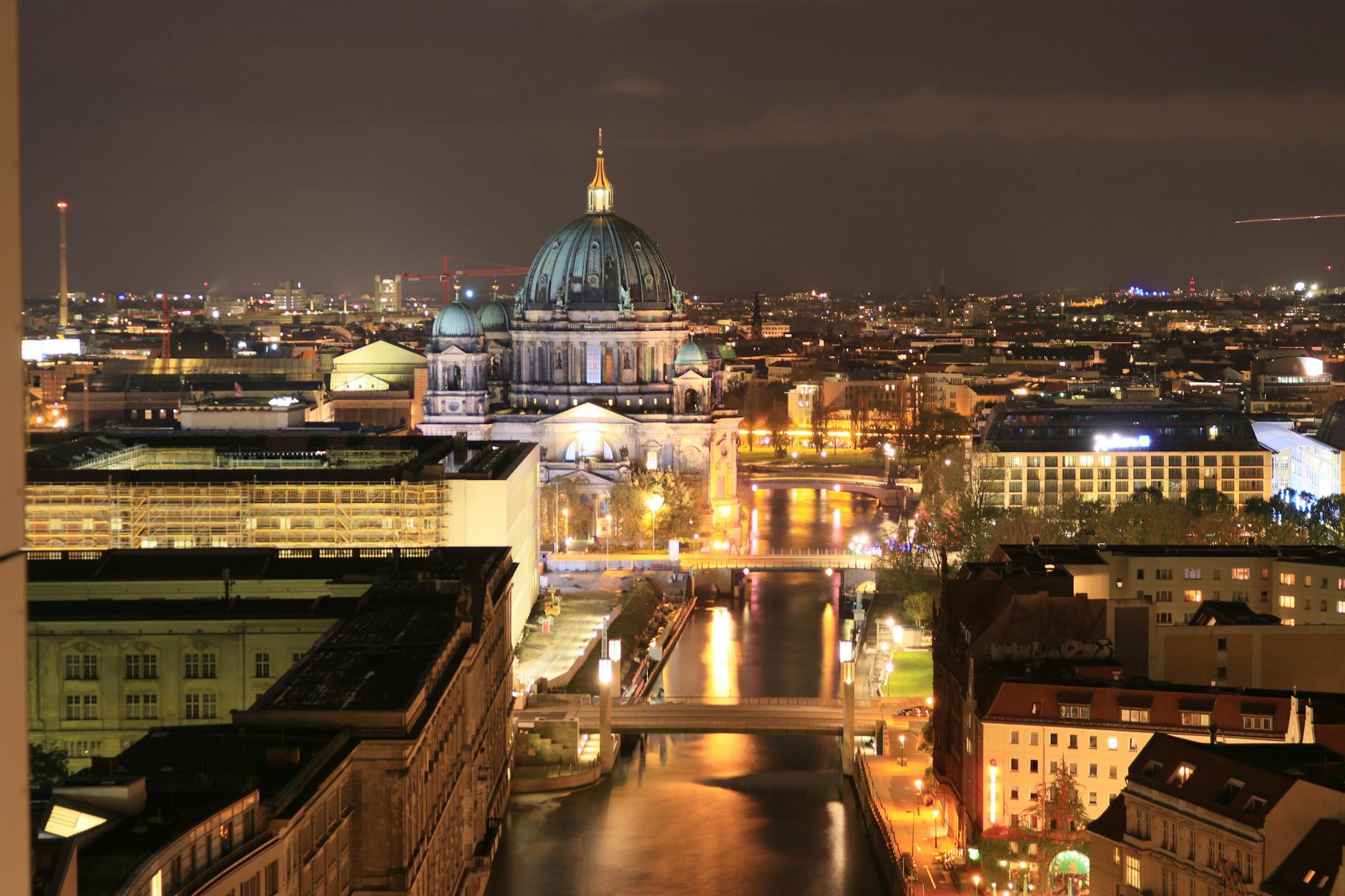
Four hundred metres from the Fernsehturm, and about a third of the price, there is a rooftop walkway that puts you above the Lustgarten with Museum Island on one side and the television tower on the other. Almost nobody plans for it. They photograph the green domes from the bridge, decide a cathedral is a cathedral, and walk on to the museums. This guide to the berliner dom berlin cathedral — one building, two names — is about what the ticket actually covers, and why the 270 steps are the reason to buy it.
Below: the tickets and what each includes, the dome climb, the Hohenzollern crypt with its ninety-odd coffins, the Sunday-morning trap that catches out a steady stream of visitors, and how the building fits into a Museum Island day. Prices were checked in September 2026; published figures vary between sources, so treat the numbers here as the right order of magnitude and confirm at the door.
The essentials
| Question | Answer |
|---|---|
| Standard admission | around €10 |
| Combined ticket | nearer €19 — dome walk, museum and audio guide |
| What the ticket includes | Nave, dome walkway, Hohenzollern crypt, imperial staircase |
| Dome climb | 270 steps. No lift to the walkway. |
| Opening hours | Roughly 09:00–20:00 summer, 09:00–19:00 winter |
| Sundays and holidays | Visitors admitted from 12:00 only — services before that |
| Time to allow | 60–75 minutes |
| Nearest station | Hackescher Markt (S-Bahn) or Museumsinsel (U5) |
| Booking | Not required. Walk-up is normal. |
| Services | Free to attend, as at any working church |
Note the two rows in bold. The 270 steps rule out a lot of people, and the Sunday noon opening is the single most common wasted journey at this building.
What the ticket buys
A cathedral charging admission surprises some visitors, so it is worth being clear about what you are paying for. The Berliner Dom is a working Protestant church — services are free to attend and always have been — but tourist access to the building outside service hours carries a charge, as it does at St Paul’s, the Duomo and most large European churches in the same position.
Standard admission runs around €10. A combined ticket at roughly €19 adds the cathedral museum in the roof space and an audio guide. Sources disagree on the exact figures, and the cathedral has revised them more than once, so check the board at the entrance rather than trusting a number you read three months ago.
What that covers, in the order you will walk it:
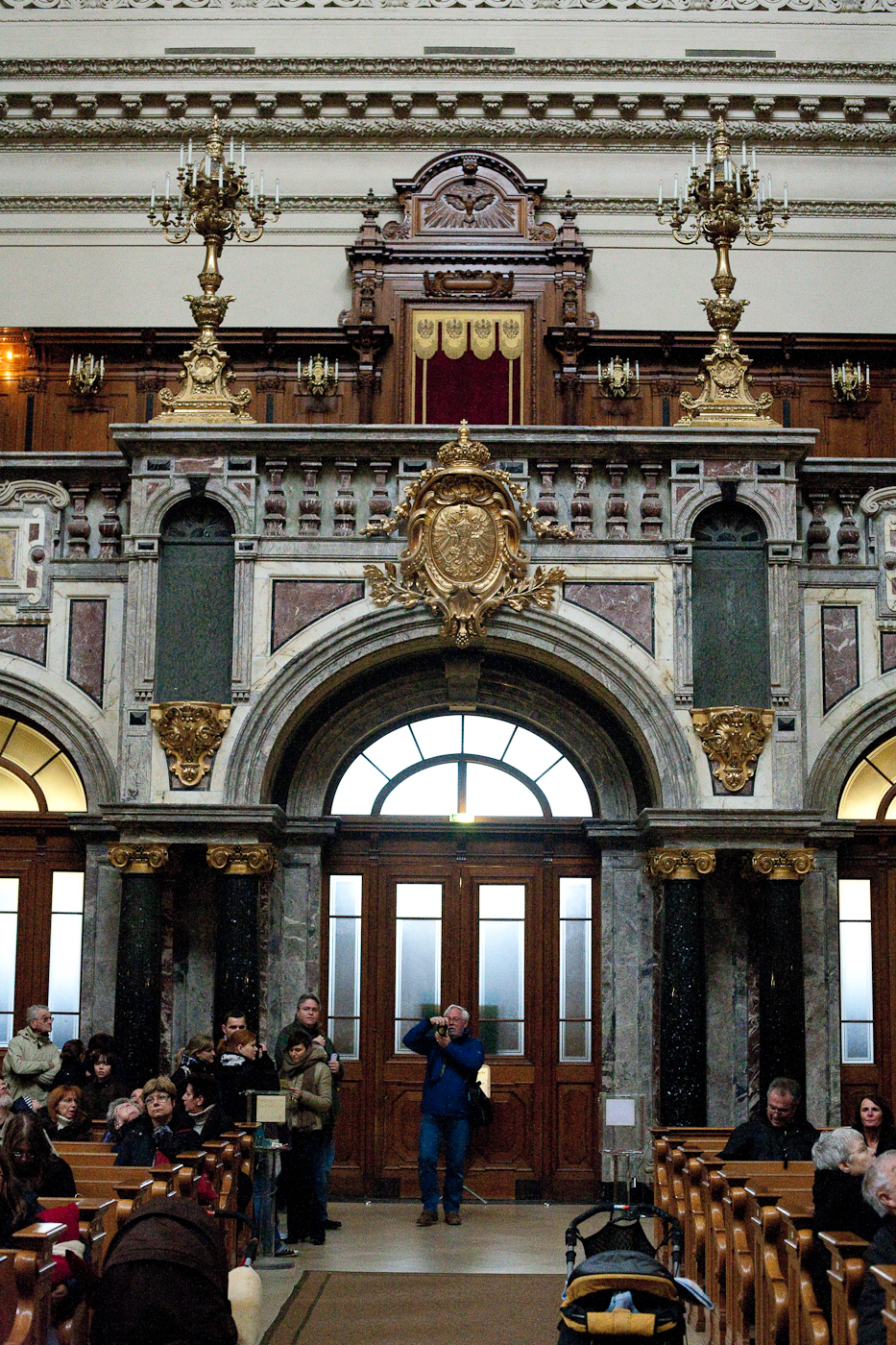
- The Predigtkirche — the main preaching church under the great dome, which is the space everyone photographs.
- The imperial staircase — a lavish stone stair built so the Hohenzollerns did not have to use the same entrance as anyone else.
- The Hohenzollern crypt — ninety-plus tombs in the basement, the largest dynastic burial collection in Europe outside the Habsburg vault in Vienna.
- The dome walkway — an outdoor circuit around the base of the dome, reached by 270 steps.
- The museum (combined ticket) — the building’s own history, including the models of what was there before.
The dome walk, which is the point
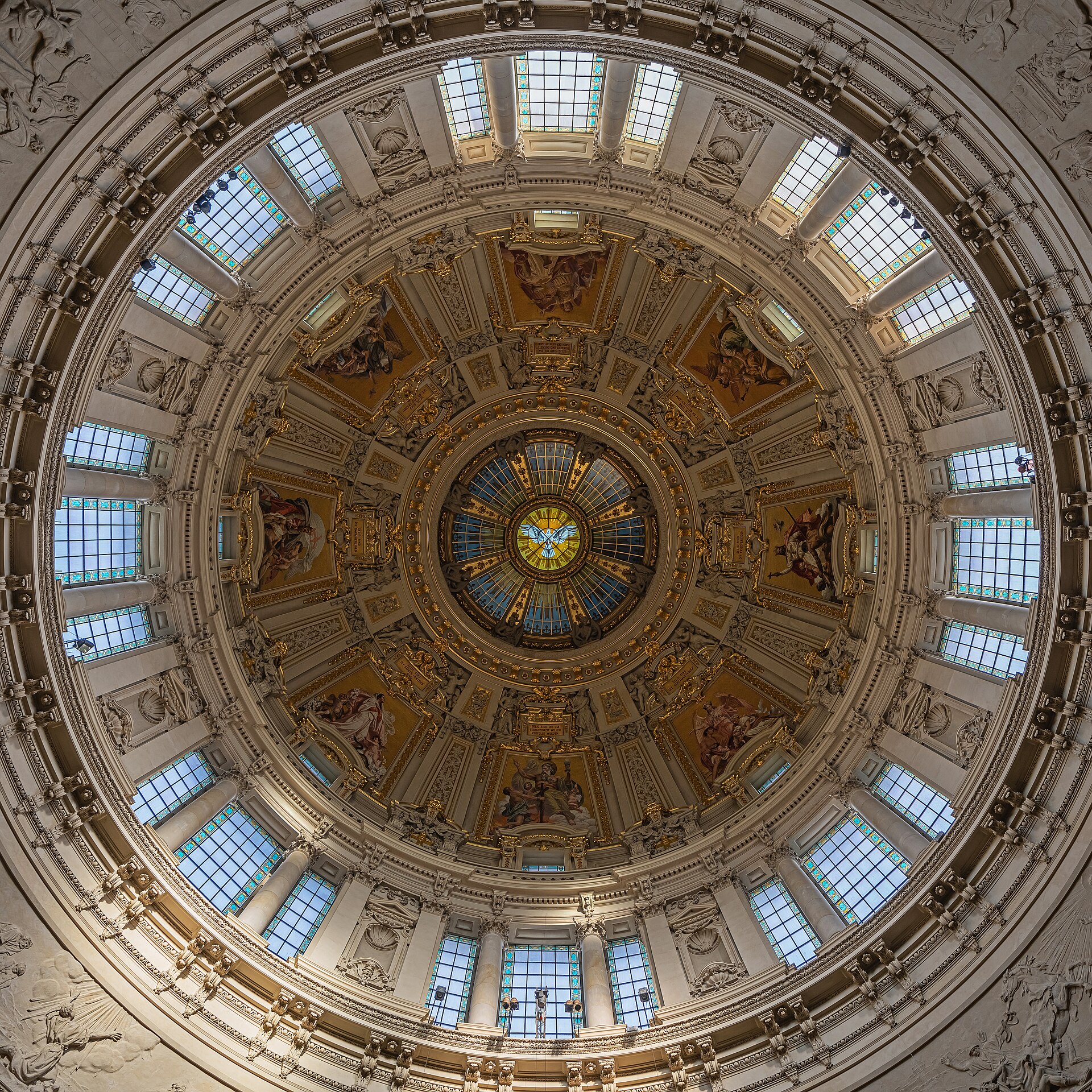
Take the stairs. Not because the interior is not worth seeing, but because the rooftop circuit is the best thing here and a genuinely underrated view of central Berlin.
It is 270 steps up a spiral in the fabric of the building, and there is no lift to the walkway. The stair narrows near the top and is two-way in places, so you will be standing aside for people coming down. It is not a difficult climb by cathedral standards — you are only going to about 50 metres — but it is a climb, and anyone with knees, a buggy or claustrophobia should know before they pay.
On the way up you pass through the roof space and the museum level, which is why the combined ticket makes sense — the exhibition is on the route rather than a detour.
What you can see from up there
- North-west — straight down onto Museum Island: the Altes Museum’s colonnade, the Neues Museum, the Bode at the tip of the island, the Spree splitting round it.
- West — the Lustgarten immediately below, then Unter den Linden running away towards the Brandenburg Gate.
- East — the Fernsehturm at close range, the Rotes Rathaus, the Nikolaiviertel roofs.
- South — the Humboldt Forum’s reconstructed baroque facade directly opposite, on the site of the demolished Stadtschloss.
The comparison worth making is with the TV Tower. The Fernsehturm is four times higher and costs around €25; the Dom is 50 metres up and costs about €10. Because Berlin is flat, the extra 150 metres adds much less than you would expect, and the Dom’s lower vantage actually gives a better composition — you are close enough to the buildings for them to have shape, rather than looking down on a grey plain. Our TV Tower tickets guide makes the full case, and the attractions and tickets guide ranks every paid view in the city.
The crypt
Down a staircase from the nave, the Hohenzollernkrypta holds more than ninety burials spanning roughly five centuries of the family that ruled Brandenburg, then Prussia, then Germany. It is the largest dynastic vault in Europe outside the Kapuzinergruft in Vienna.
What is down there is more varied than “royal tombs” suggests. There are elaborate baroque sarcophagi by Andreas Schlüter, notably those of Friedrich I and Sophie Charlotte — the same Sophie Charlotte whose summer house became Charlottenburg Palace. There are plain metal coffins. There are a great many very small coffins, because infant mortality did not exempt dynasties, and the effect of seeing them lined up is considerable.
It is cool, quiet and much less visited than the nave. Allow twenty minutes. It is not suitable for everyone — some visitors find the child burials genuinely upsetting — and it is worth saying so rather than pretending a crypt is a neutral experience.
The building, and the bigger one it replaced
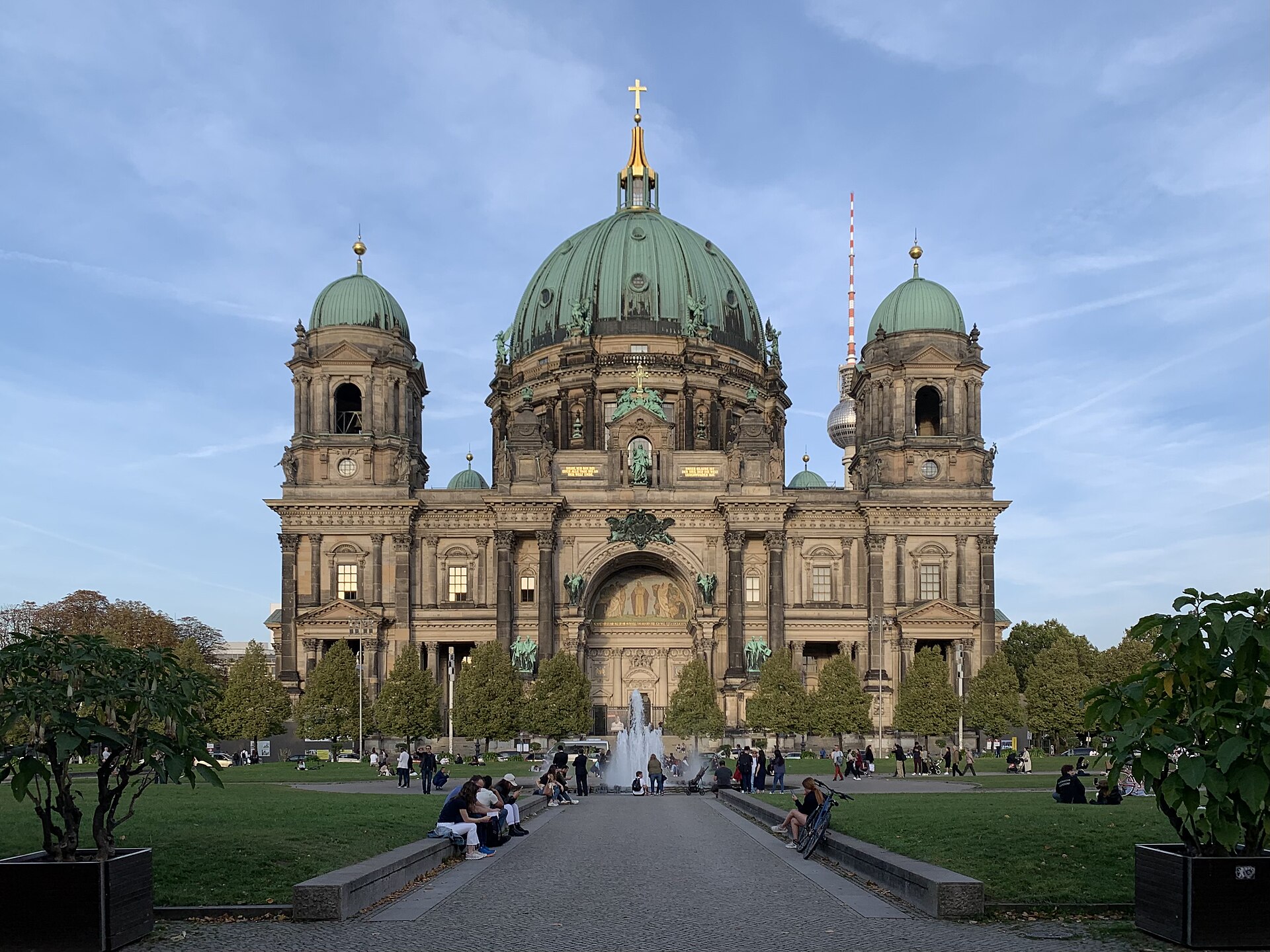
What stands today is not old. Julius Raschdorff built it between 1894 and 1905 for Wilhelm II, in a heavy Italian Renaissance manner, on the site of a much plainer cathedral that Schinkel had remodelled. The Kaiser wanted a Protestant answer to St Peter’s — a statement church for the new German Empire — and the result is exactly as subtle as that brief implies. It was substantially bigger before the war: a Denkmalskirche, a memorial church for the dynasty, stood on the north side and was demolished in the 1970s.
It was hit in 1944 and burned; the original lantern collapsed into the nave. Restoration under East Germany ran from 1975, with West German and international church funding, and the reconstruction is deliberately simplified — the dome is lower than Raschdorff’s and a good deal of the interior ornament was not replaced. The building only reopened fully in 1993. So what you are looking at is a 1900s cathedral in a 1980s restoration of a 1940s ruin, which is a very Berlin sequence.
Two things to look for inside. The Sauer organ of 1905 is one of the great late-romantic instruments in Germany, with over 7,000 pipes — try to catch one of the organ recitals, which are frequent and inexpensive. And the mosaics in the dome above the Predigtkirche, showing the Beatitudes, which survived the fire and are the best-preserved original decoration in the building.
Timing, and the Sunday trap
General hours run roughly 09:00–20:00 from April to September and 09:00–19:00 from October to March, with last admission an hour before closing.
The thing that catches people out: on Sundays and public holidays the cathedral does not admit visitors until midday, because services run through the morning. Turning up at ten on a Sunday with a Museum Island plan is a wasted half-hour, and it happens constantly. You are welcome at the service itself, free of charge, but that is a different proposition from a sightseeing visit.
Best times
- First thing on a weekday — the nave is quiet and the dome walkway is empty. This is the slot to take.
- Late afternoon in summer — the low sun on Museum Island from the walkway is the best light of the day.
- During an organ recital — cheap, frequent, and the Sauer organ in that acoustic is worth an hour on its own.
- Avoid midday in July and August, when the Museum Island crowd arrives all at once and the stair to the dome becomes a queue.
Combining it with Museum Island
The cathedral sits at the eastern end of Museum Island and is the natural bookend to a day there. It also has the advantage of being open when several of the museums are not — including Mondays, when a great many Berlin museums close.
A sensible day: one museum in the morning — the Neues Museum for Nefertiti, or the Alte Nationalgalerie for painting — lunch, the cathedral and its dome walk in the afternoon while the light is good, then across to the Humboldt Forum or east to Alexanderplatz. Our Museum Island guide sequences the buildings, and the Berlin museums guide covers what is worth seeing elsewhere.
One important 2026 note: the Pergamonmuseum is closed and does not reopen until 4 June 2027, and even then only in part — the Ishtar Gate halls stay shut into the 2030s. If it was on your list, read our Pergamon Museum guide before building a day around it.
Getting there
Hackescher Markt on the S-Bahn (S3, S5, S7, S9) is a five-minute walk; Museumsinsel on the U5 puts you almost at the door. The 100 and 300 buses stop on Karl-Liebknecht-Straße alongside. Alexanderplatz is ten minutes on foot. See the U-Bahn and S-Bahn guide.
Accessibility
The nave and the crypt are reachable by lift, and the cathedral is generally well set up at ground level. The dome walkway is not accessible — 270 steps, no lift, and no alternative route. That is a real limitation and the cathedral is upfront about it. Our accessible transport guide covers getting to the island.
Is it worth the money?
Yes, with one condition: buy it for the dome walk. If you cannot or will not climb 270 steps, the interior alone is a handsome but not extraordinary turn-of-the-century church, and around €10 for that is fair rather than compelling — Berlin has a great deal of free architecture.
With the climb, it is one of the better-value tickets in the city. You get an outdoor rooftop circuit over Museum Island, a crypt with five centuries of Prussia in it, a great organ, and a building that carries its own destruction and reconstruction openly. Against €25 for the Fernsehturm, it is not a close contest.
And if you are not paying at all: the Lustgarten in front of the cathedral is free, always open, and one of the pleasanter lawns in central Berlin to sit on with something from a bakery. Plenty of Berliners’ relationship with this building consists entirely of that. Our free attractions guide collects the rest.
What is immediately around it
The cathedral stands at one of the densest historical junctions in Germany, and four of the things within two minutes of its steps are free.
The Lustgarten
The lawn and fountain in front. It has been, at various points, a kitchen garden, a parade ground for Friedrich Wilhelm I, a Nazi rally space, and a car park under East Germany. It is now grass with people lying on it, which is the best use it has been put to. Schinkel’s Altes Museum closes the north side with its long Ionic colonnade.
The Humboldt Forum
Directly opposite, across the road. Three of its facades are a reconstruction of the Berliner Stadtschloss — the Hohenzollern city palace that stood here for centuries, was gutted in the war and blown up by East Germany in 1950, and whose site then held the Palast der Republik until that in turn was demolished. The fourth side is frankly modern. Inside are the ethnological and Asian art collections, plus a free rooftop terrace with a view straight at the cathedral. The building is one of the most argued-over in Europe and the argument is worth knowing about before you walk in.
The Spree and the bridges
The Schlossbrücke, with Schinkel’s marble figures on it, carries Unter den Linden across to the island. It is the classic spot for the cathedral photograph, and it is free.
The DDR Museum
On the far bank, facing the cathedral across the water. Hands-on, popular and shallow — our DDR Museum guide is honest about who should skip it.
Music at the Dom
This is the part of the building that regular Berliners actually use, and visitors almost entirely miss.
The Sauer organ of 1905 has more than 7,000 pipes across 113 stops and is among the most important late-romantic instruments in Germany. It survived the war largely intact and was restored in the 1990s. Half-hour organ recitals run frequently — typically several times a week in season — and cost a few euros or are sometimes free. Sitting in that acoustic while the instrument is being properly used is a different experience from walking round the same room with a ticket.
The cathedral also has two choirs and a full concert programme: Bach passions around Easter, Christmas oratorios in December, and visiting ensembles through the year. Tickets go through the cathedral’s own box office. For what else is on musically across the city, see our live music venues guide and the events calendar.
Practical notes
- Dress — it is a working church. Nothing is enforced at the door, but the usual courtesies apply, particularly if a service is running in a side chapel.
- Bags — large rucksacks are not welcome on the dome stair, which is narrow. There is limited storage.
- The walkway is outdoors and unsheltered. In rain it is wet and in a February wind it is cold. It sometimes closes in high wind or ice.
- Photography is permitted throughout without flash.
- Toilets are on the lower level near the crypt entrance.
- Under-18s enter at a reduced rate or free depending on the ticket; students and over-65s get reductions. Bring the card.
- It opens on Mondays, unlike most of Museum Island — useful to know when planning a Monday. See our one day in Berlin itinerary.
Frequently Asked Questions
How much does Berliner Dom cost?
Standard adult admission is around €10, with a combined ticket covering the dome walk, the cathedral museum and an audio guide nearer €19. Published prices vary between sources and the cathedral revises them, so check at the entrance. Reduced rates apply for students and children, and attending a service is free.
How many steps to the top of Berlin Cathedral?
270, up a spiral stair in the fabric of the building. There is no lift to the dome walkway and no alternative route, so the climb is the only way up. The nave and the crypt are reachable by lift.
What time does Berliner Dom open?
Roughly 09:00 to 20:00 in summer and 09:00 to 19:00 in winter, with last admission an hour before closing. On Sundays and public holidays visitors are only admitted from 12:00, because services run through the morning — this catches out more people than anything else about the building.
Is Berliner Dom worth visiting?
Yes if you will climb the 270 steps — the rooftop walkway over Museum Island is the best thing here and better value than the TV Tower at a third of the price. Without the climb it is a handsome but not exceptional 1900s church, and around €10 for that is reasonable rather than remarkable.
What is in the Hohenzollern crypt?
More than ninety tombs spanning around five centuries of the Hohenzollern dynasty, including baroque sarcophagi by Andreas Schlüter for Friedrich I and Sophie Charlotte. It is the largest dynastic vault in Europe outside Vienna. Allow twenty minutes; the many infant coffins are affecting and not to everyone’s taste.
Is Berlin Cathedral Catholic or Protestant?
Protestant — it is the principal Evangelical church in Berlin and has never been a Catholic cathedral, nor is it technically a cathedral in the strict sense, since it has never been the seat of a bishop. St Hedwig’s on Bebelplatz is Berlin’s Catholic cathedral.
Can you attend a service at Berliner Dom?
Yes, free of charge. Services run on Sunday mornings and at other times through the week, and organ recitals are frequent and inexpensive. Attending a service is a different thing from a sightseeing visit and does not include the dome walk or the crypt.
How long do you need at Berliner Dom?
Sixty to seventy-five minutes: twenty in the nave, twenty in the crypt, and the rest on the climb and the walkway. Add time if you are doing the museum on the combined ticket.
Five minutes east across the Rathausbrücke sits the quarter that looks older than anything on Museum Island and is in fact the newest thing in sight — East Germany built most of it in the 1980s around a genuinely thirteenth-century church. Our Nikolaiviertel guide sorts the real from the reconstructed and does the arithmetic on the museum combi ticket.
Related Berlin Guides
- Berlin Attractions & Tickets
- Museum Island Berlin
- Berlin TV Tower Tickets
- Pergamon Museum Berlin
- Charlottenburg Palace Berlin
- Free Attractions in Berlin
Final Word
The Berliner Dom is a building that wanted to be more impressive than it is allowed to be. Wilhelm II commissioned a Protestant St Peter’s and got one; the war took the lantern off it; the restoration deliberately gave it back a smaller dome and a plainer interior than the Kaiser had paid for. There is something appropriate in a cathedral of imperial self-assertion being rebuilt with the volume turned down.
Buy the combined ticket, go on a weekday morning, and climb the 270 steps. From up there you can see the whole of Museum Island laid out, the Fernsehturm close enough to read, and the Humboldt Forum standing on the footprint of the palace that Berlin blew up in 1950. That is a lot of the city’s argument with itself, visible from one walkway, for about a third of what the tower charges.
And do not turn up at ten on a Sunday.
Photo Credits
The dome interior: Berlin Kuppel des Doms Innenansicht asv2023-02 by A.Savin, FAL, via Wikimedia Commons.
The interior arcade: Berlin-14-106 by Christian Eckhardt, Public domain, via Wikimedia Commons.