Reichstag Dome: How to Book Free Tickets (and What If You Didn’t)
The Reichstag dome is free but has to be registered weeks ahead. How the Bundestag booking window works, the same-day route if you missed it, and what security will not let through.
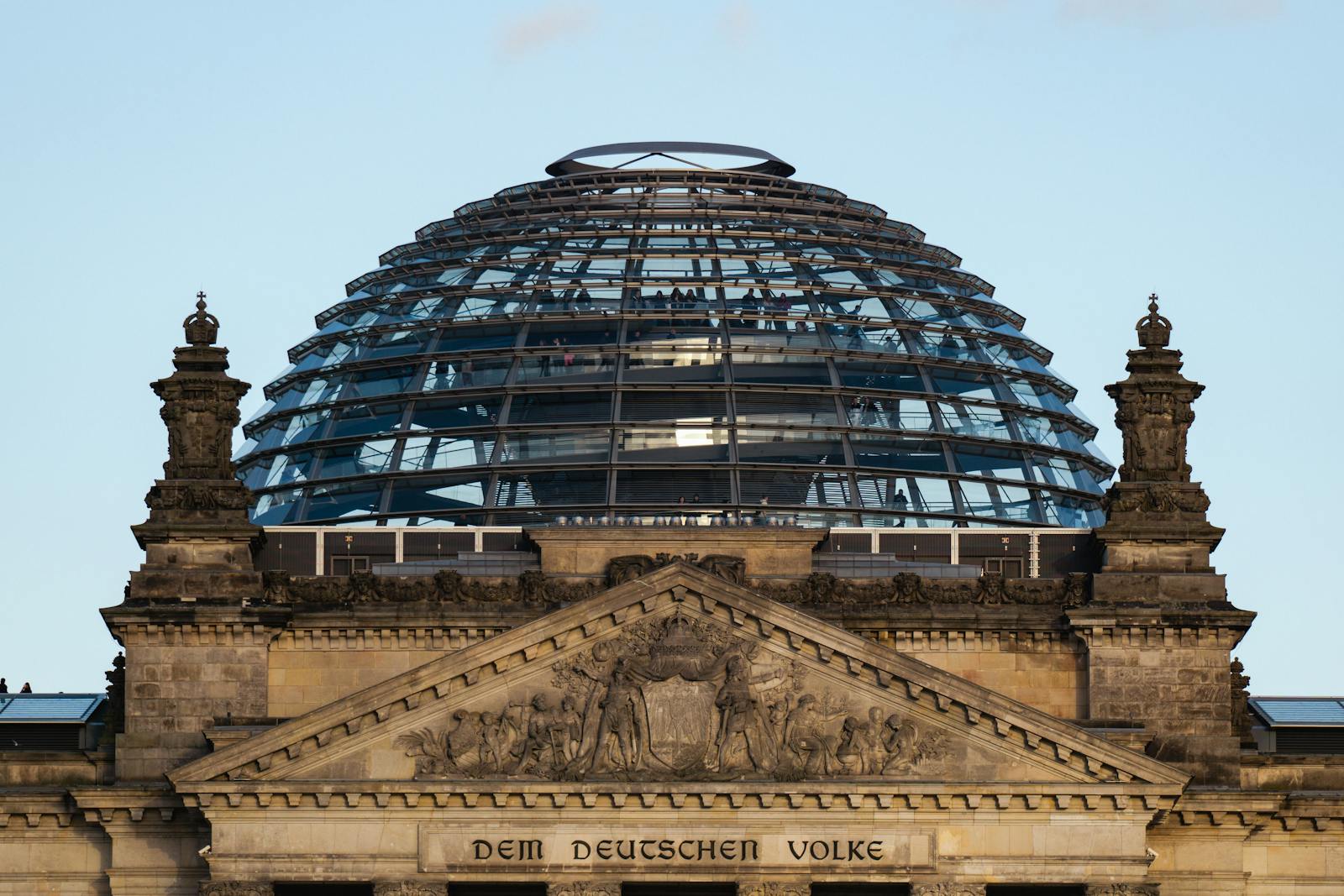
The best view in Berlin costs nothing, and the reason most visitors never see it is that they assumed there would be a booth. There is no booth. There is a website, run by the German parliament, that opens bookings for the current month and the next and nothing beyond, and if you have not used it before you arrive, you are relying on a same-day desk that is close to useless in August. Everything about reichstag dome tickets comes down to that one administrative fact, and this guide is about getting past it.
Below: exactly how the registration works, what to do if you missed it, what the same-day route actually involves, what you can and cannot bring through security, what the dome is like once you are inside, and the two paid alternatives if none of it works out. Prices and procedures were checked in October 2026 — the Bundestag adjusts its visiting rules with some regularity, so confirm on the parliament’s own site before you travel.
The essentials
| Question | Answer |
|---|---|
| Price | Free. There is no ticket to buy, at any tier. |
| Registration | Compulsory. Online, in advance, with the Bundestag visitors’ service. |
| Booking window | Current month and the following month only |
| What you must give | Full name and date of birth for every visitor |
| What you must bring | The confirmation email and government photo ID (passport for non-EU visitors) |
| Opening hours | Daily 08:00–24:00, last entry 21:45 |
| Time to allow | 60–90 minutes including security |
| Same-day option | Visitor Service on Scheidemannstraße, slots at least two hours ahead, no guarantee |
| Nearest station | Bundestag (U5) or Brandenburger Tor (U5, S1, S2, S25, S26) |
| Accessible? | Yes — lift to the roof terrace, step-free ramp inside the dome |
Note the second row and the third. Free does not mean walk-in, and the calendar window is the trap that catches most people.
How to book, step by step
The process is simple once you know it exists. It is the not-knowing that costs people the visit.
1. Work out your window
Bookings open for the current month and the next. If you are travelling in November, you can book in October at the earliest. If you are planning a trip in March from a January armchair, you cannot book yet — put a calendar reminder for February and do it then. This is the single most important sentence in this article.
2. Register online
Go to the Bundestag’s own visitors’ service pages and use the dome registration form. Do not use a third-party site — there is nothing to sell, so anyone charging you for a Reichstag dome slot is charging you for a free thing. You will choose a date and a time slot, and slots run at fifteen-minute intervals through the day.
3. Give the exact details
You need the full name and date of birth of every person in the party, spelled as they appear on the identity document each person will carry. A mismatch between the registration and the passport is grounds for refusal at the door, and the staff apply it. Register children too, whatever their age.
4. Confirm the confirmation
Your visit is booked only when the Bundestag Visitors’ Service issues a booking confirmation, so wait for that rather than treating your request as the booking. Save the confirmation offline — phone signal on Platz der Republik is reliable but the queue is not the place to discover otherwise.
5. Arrive early
Get to the visitors’ entrance about fifteen minutes before your slot. It is on the north side of the building, and there is airport-style security: bag scan, metal detector, ID check against the registration list. Late arrivals are not accommodated, because the next slot is already assembling behind you.
If you did not book: the same-day route
Not all is lost, and this is where most guides simply say “book ahead” and stop.
The Bundestag runs a Visitor Service on the south side of Scheidemannstraße, near the Berlin Pavilion, roughly opposite the Reichstag’s southern flank. You go in person with photo ID for everyone in the party and request a slot for the same day or the following day. Slots have to be at least two hours ahead of the request, so this is not a walk-up-and-in arrangement.
What it is actually like depends entirely on the season:
- November to March — works more often than not. Turn up mid-morning and you will usually get an afternoon or evening slot.
- April, May, September, October — a genuine coin-flip. Go early in the day and be flexible about the hour.
- June to August — close to hopeless. The desk regularly runs out of slots by mid-morning and the queue for the desk itself is substantial.
One thing improves your odds: go as a small party. Two people are easier to fit into a gap than six.
The other free way in
If you can read a little German or do not mind sitting through it, plenary sessions of the Bundestag are open to the public from the visitors’ gallery, and that too is free and registered separately. It is a different experience from the dome and a genuinely interesting one — you are watching a working parliament rather than a view. The visitors’ service handles both.
What security will and will not let through
This is a working parliament, not a museum, and the checks are correspondingly serious.
- Photo ID is compulsory and must match the registration. For non-EU visitors that means the passport. A driving licence will not do.
- Large bags and rucksacks are refused. There is no cloakroom worth the name — plan to arrive with a small bag or nothing.
- Liquids, sharp objects, tripods and drones — no. A folding tripod will be refused; handheld cameras are fine.
- Food and drink — not through security. There is a rooftop restaurant if you want to eat up there, and it takes its own separate bookings.
- Photography is allowed and encouraged in the dome and on the roof terrace.
- Allow for the queue. Fifteen minutes at a quiet hour, thirty at a busy one. The security tent is outdoors, which in January is a consideration.
What the dome is actually like
After security you enter the Reichstag through the west portal and take a lift to the roof terrace, and the dome is in front of you: twenty-three metres high, forty metres across, 3,000 square metres of glass. Foster designed it to replace the original dome, which the war left damaged and which was demolished in 1954 for structural reasons, and the politics of it are not subtle — the public walks above the chamber, and can look down into it.
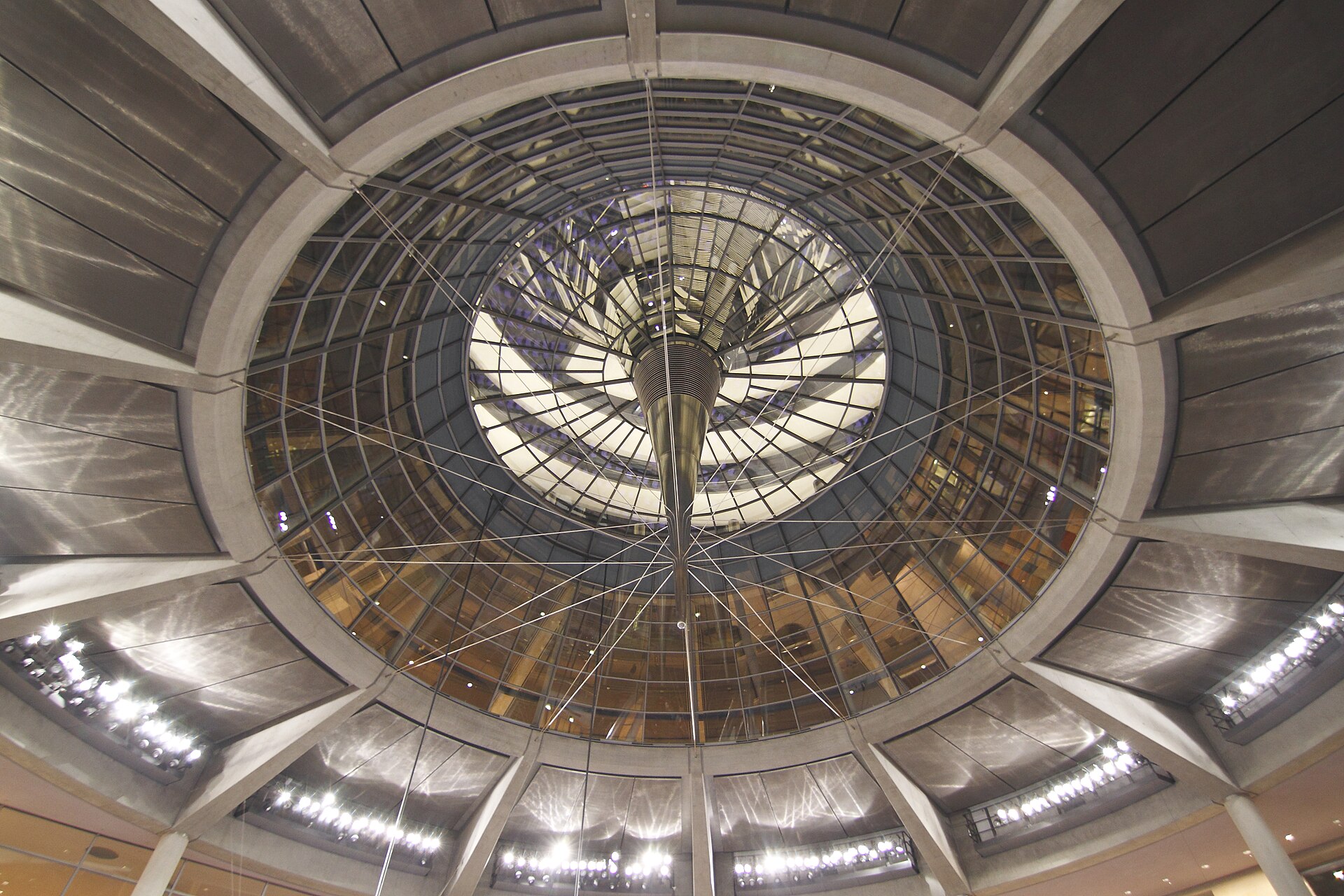
Two spiral ramps run up the inside, one for going up and one for coming down, wrapping around a central cone clad in 360 mirrors that reflects daylight into the debating chamber below. It is a functioning piece of environmental engineering as well as a viewing platform: the cone also draws hot air out through the top of the dome.
The walk up is about 230 metres of gentle ramp. It is genuinely step-free, which makes this one of the more accessible major sights in Berlin — a lift serves the roof terrace and wheelchair users can use the ramp. Our accessible transport guide covers getting there.
An audio guide starts automatically as you walk and is keyed to your position on the ramp, pointing out what you are looking at as it comes into view. It is free, it is available in a long list of languages, and it is better than most paid ones.
The view
Better than the TV Tower, and this is not a close contest. You are lower — the viewing platform is about 41 metres up against the Fernsehturm’s 203 — but you are in the middle of the government quarter, with the Tiergarten, the Brandenburg Gate, the Spree bend and the Hauptbahnhof all close at hand. The Fernsehturm gives you a wider view of a flatter city; the Reichstag gives you a composed one.
The open oculus at the top means you are outdoors at the summit. In rain, you will get wet. In a January wind it is genuinely cold. Neither is a reason not to go, but it is a reason to bring a jacket in a way the enclosed observation decks are not — see the weather and packing guide.
When to book your slot
Since the ticket is free, the variables are the date and the hour. Check the date as well as the time: when the dome is closed for scheduled works, only the roof terrace stays open. This matters more than people expect.
Sunset — the best slot
Aim for a slot forty-five minutes before sunset. You walk up in daylight, the city goes gold, and by the time you come down the lights are on. Check sunset for your date and allow time for security and the ascent when you choose. These slots go first, so book early.
After dark
The dome is lit and Berlin below it is lit, and the glass reflects both. It is the most photogenic condition, and the last admission is at 21:45. Our Berlin at night guide covers what else is open in that window.
Early morning
Admission starts at 08:00, with visits scheduled every quarter hour, and the light is clean. The downside is that the city is not doing much yet.
Midday
The busiest and the flattest light. Fine if it is the only slot you were offered — you are not paying for it — but not the one to chase.
A little history, because it changes the visit
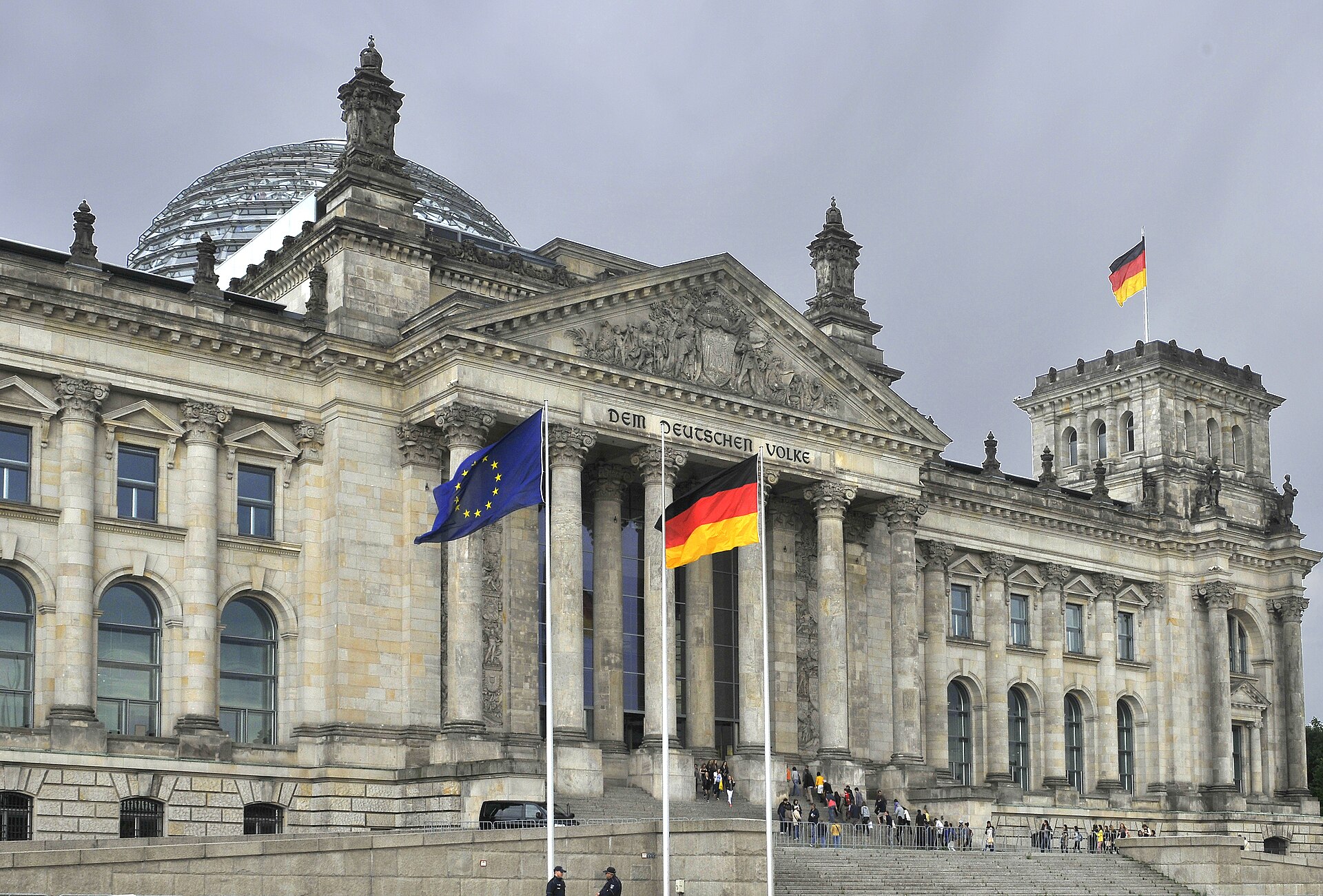
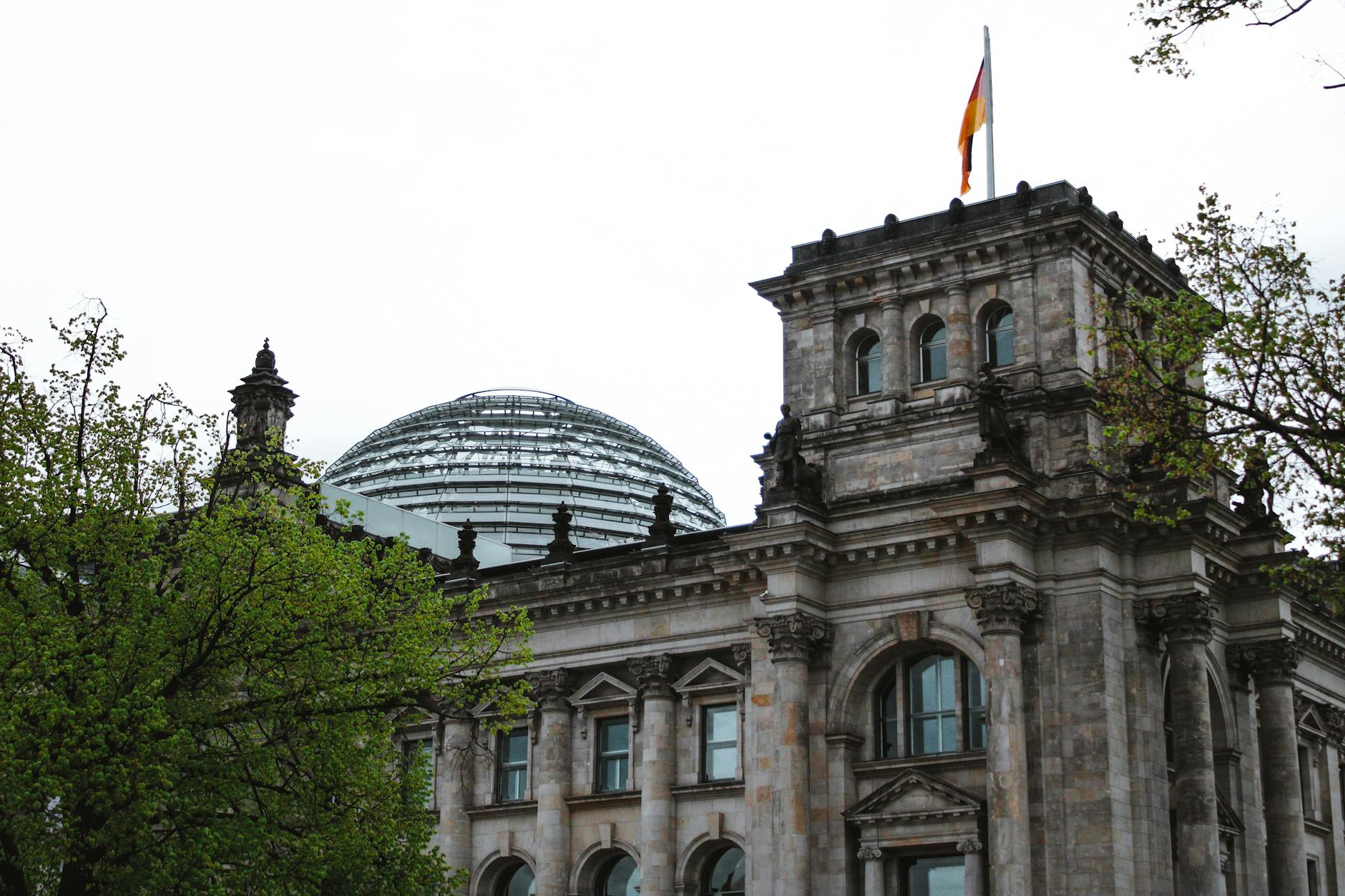
Paul Wallot built the Reichstag between 1884 and 1894 for the parliament of the German Empire. The inscription across the west portico — “Dem Deutschen Volke”, to the German people — was only added in 1916, after years of resistance from Wilhelm II, who understood perfectly well what it implied.
It burned on 27 February 1933, four weeks after Hitler became chancellor, and the fire was used within twenty-four hours to justify the emergency decree that suspended civil liberties in Germany. Whatever the truth about who lit it, the building’s political function ended that night; the Nazi regime never used it as a parliament.
It was fought over in the last days of the war and left a shell. Through the division it stood in West Berlin, right against the Wall, and was patched up but barely used. In 1991 the Bundestag voted to move back from Bonn, and in 1995 Christo and Jeanne-Claude wrapped the entire building in silver fabric for a fortnight. Foster’s reconstruction followed, and parliament sat here again from 1999.
The Soviet graffiti is still on the interior walls. When Foster stripped the building back he found Cyrillic inscriptions left by Red Army soldiers in 1945, and the decision was made to conserve rather than remove them. They are visible on parts of the tour route. Our history and culture guide and the Nazi history sites page put the building in the wider sequence.
If you cannot get a slot at all
Three honest alternatives, in the order we would take them.
- The Berliner Dom dome walk. The standard adult ticket is €15 and includes the dome walk, the cathedral, crypt, museum and audio guide. 270 steps, a rooftop circuit over Museum Island, and a better composition than the TV Tower for less money.
- The Siegessäule. €4.50 to climb (€3.50 reduced, cash only), straight down the axis of Straße des 17. Juni with the Brandenburg Gate at the end of it. Steep spiral stairs, no lift.
- The TV Tower. From €20 online, and the view we are least enthusiastic about — Berlin is flat and looks it from 203 metres. Read the honest verdict in our attractions and tickets guide before you buy.
And there is a fourth, free option people forget: the Reichstag’s rooftop restaurant, Käfer, takes its own reservations and a booking there gets you through security without a dome slot — you are paying for the meal, not the view, but the roof terrace comes with it.
Combining it with everything nearby
The Reichstag sits at the top of the densest cluster of sights in Berlin. The Brandenburg Gate is five minutes’ walk south, the Holocaust Memorial two minutes beyond that, and the Tiergarten begins immediately west. Unter den Linden runs east from the gate towards Museum Island, which is another twenty minutes on foot.
The practical consequence: build the day around the dome slot, because it is the only fixed point. Everything else in the area is free, open and unbookable. Our one day in Berlin and three-day itinerary both do exactly that, and the Brandenburg Gate guide covers the five-minute walk in between.
The government quarter around it
The Reichstag is one building in a deliberately designed federal quarter — the Band des Bundes, a “ribbon” of government buildings laid across the Spree bend, crossing both the river and the former border between East and West. You can see the buildings’ exteriors from public space.
Paul-Löbe-Haus and Marie-Elisabeth-Lüders-Haus
The two long modernist blocks immediately north of the Reichstag, connected to each other by a footbridge over the Spree that is itself a piece of symbolism — it crosses the former border. The Lüders building holds the parliamentary library and a preserved section of Wall in its basement. Both hold occasional public exhibitions.
The Chancellery
Berliners call it the Waschmaschine — the washing machine — and once you have seen the round window openings on the end elevation you will not unsee it. It is west of the Reichstag across Otto-von-Bismarck-Allee. You cannot go in, but the forecourt and the sculpture out front are public.
The White Crosses
Along the Spree bank behind the Reichstag, a line of simple white crosses commemorates people killed trying to cross the river to West Berlin. They are easy to walk past. The memorial has been moved more than once and is currently on the riverside path — worth the two minutes, and more affecting than a good deal of what is charged for elsewhere in the city. Our Wall sites and memorials guide covers the rest.
The Soviet War Memorial
A few hundred metres west in the Tiergarten, on Straße des 17. Juni: a colonnade flanked by two T-34 tanks, built in 1945. It stood in the British sector throughout the division, guarded by Soviet soldiers behind British lines, which is one of the stranger arrangements of the Cold War.
Mistakes people actually make
- Booking too late — or trying to book too early. The window is the current month plus one. Both ends of that catch people out: some try in January for a March trip and give up when the calendar refuses them, others try three days before and find nothing.
- Not waiting for the booking confirmation. A registration request is not a booking. Your visit counts only once the Bundestag Visitors’ Service issues a booking confirmation, so arrive with that.
- A name that does not match the passport. Middle names, hyphens, accented characters. Enter them exactly as printed on the document you will carry.
- Bringing the wrong ID. Non-EU visitors need passports. Every summer, people are turned away at the security tent holding a driving licence and a valid booking.
- Turning up with luggage. Doing the dome on the way to the airport does not work — large bags are refused and there is nowhere to leave them.
- Confusing the dome with the plenary gallery. They are separate registrations for separate things. If you want to watch a debate, say so when you register.
- Paying a reseller. There is no ticket and no price. If a site is charging for Reichstag entry, what you are buying is a guided tour of the surrounding area with the free registration bundled in.
Frequently Asked Questions
Are Reichstag dome tickets free?
Yes, completely. There is no admission charge for the dome, the roof terrace or the audio guide. What is required is advance registration with the Bundestag visitors’ service — free, but compulsory, and bookable only for the current month and the next. Anyone selling you a Reichstag dome ticket is selling you something that has no price.
How far in advance do I need to book the Reichstag dome?
As early as the system allows, which is the first day of the month before your visit. In summer, slots for popular hours go within days. In winter you can often book a fortnight out and still choose your time.
Can I visit the Reichstag dome without booking?
Sometimes. The Visitor Service on Scheidemannstraße takes same-day and next-day requests in person, with photo ID for everyone in the party, for slots at least two hours ahead. It works reasonably often between November and March and rarely between June and August. Ask for a late-evening slot — those fill last.
What do I need to bring to the Reichstag?
The booking confirmation email and government photo ID matching the name on the registration. Non-EU visitors need their passport; a driving licence is not accepted. Leave large bags behind — they will not go through security and there is no proper cloakroom.
How long does the Reichstag dome visit take?
Allow sixty to ninety minutes. Fifteen to thirty of that is security and the lift, and the ramp walk with the audio guide takes about half an hour if you are not rushing. There is no fixed exit time once you are up there.
What are the Reichstag dome opening hours?
Daily from 08:00 to midnight, with last entry at 21:45. It is one of very few major Berlin sights open late, which is worth knowing when you are fitting it around a full day.
Is the Reichstag dome better than the TV Tower?
For most visitors, yes — and it is free. The Fernsehturm is four times higher but Berlin is a flat, low city and the extra altitude adds less than you would expect. The Reichstag puts you in the middle of the government quarter with the Tiergarten, the Brandenburg Gate and the Spree all in frame.
Is the Reichstag dome wheelchair accessible?
Yes. A lift serves the roof terrace and the spiral walkway inside the dome is a continuous ramp with no steps. Register the requirement with the visitors’ service when you book so staff know to expect you.
Related Berlin Guides
- Berlin Attractions & Tickets
- Brandenburg Gate Berlin
- Free Attractions in Berlin
- One Day in Berlin
- Berlin History & Culture Guide
- Berlin Travel Tips
Final Word
There is something worth noticing in the fact that the best view of the German capital sits on top of its parliament, is free to everyone, and puts the public physically above the chamber where the politicians sit. Foster designed it that way on purpose, inside a building badly damaged by fire in 1933, a fire Hitler used to suspend civil liberties. It is a rare case of a monument that argues with you.
All of which is undermined slightly by the booking system, which quietly excludes anyone who did not know it existed. So: put a reminder in your calendar for the first day of the month before you travel, register everyone with the names exactly as their passports have them, and take a slot forty-five minutes before sunset. If you have already missed that window, walk to the Visitor Service on Scheidemannstraße and ask for nine in the evening. It costs nothing to ask, which is fitting.
Photo Credits
The Reichstag west facade: Berlín, Reichstag 1 by LBM1948, CC BY-SA 4.0, via Wikimedia Commons.
Inside the dome: The Reichstag dome (11851173483) by Fulvio Spada from Torino, Italy, CC BY-SA 2.0, via Wikimedia Commons.