Dresden Day Trip from Berlin: ICE Trains, Frauenkirche & Zwinger
Complete Dresden day-trip guide from Berlin — ICE trains, Frauenkirche, Zwinger, Semperoper, Residenzschloss, Neustadt, and a tight one-day itinerary.
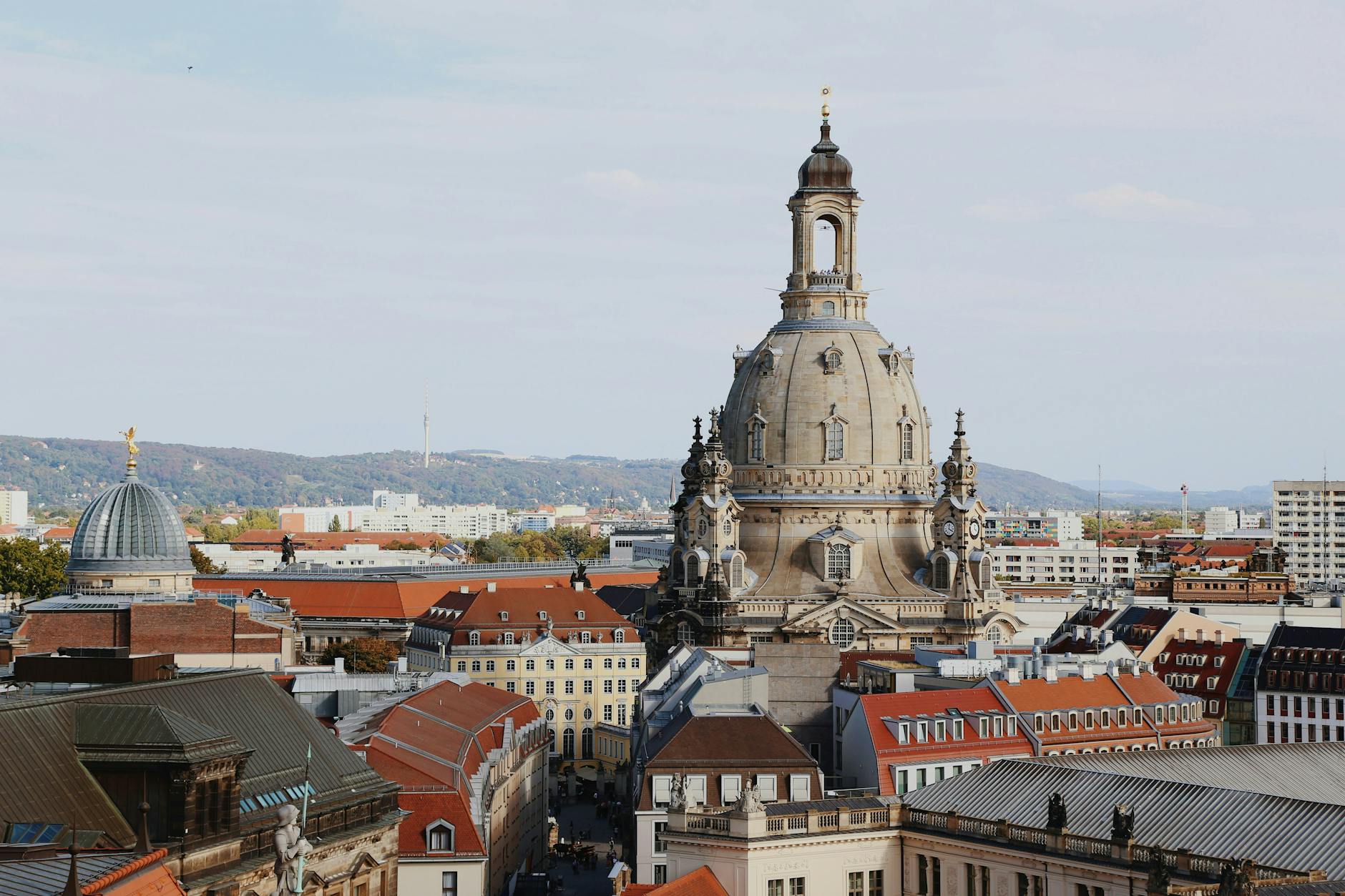
Dresden is a slightly ambitious Berlin day trip — two hours each way on the ICE — and worth every minute. The Saxon capital is one of the great rebuilt cities of Europe, with a baroque core that was almost completely destroyed in the British and American bombing raids of February 1945 and then painstakingly reconstructed over more than seventy years. The Frauenkirche, the architectural symbol of Dresden, reopened in 2005 after a sixty-year reconstruction project that recovered original stones from the rubble pile and integrated them into the new building. The Zwinger palace complex, the Semperoper opera house, the Residenzschloss, and the Brühl’s Terrace promenade above the Elbe all sit within walking distance of each other in the Altstadt. Across the river, Neustadt offers a younger, post-reunification Dresden — alternative culture, the Kunsthofpassage, late-night bars — that travelers often skip but probably shouldn’t.
This guide is built for a single, well-paced day in Dresden in 2026 — trains, walking routes, the museums worth your time, and the things to skip if you only have ten hours on the ground.
Dresden Day Trip at a Glance
| Detail | Info |
|---|---|
| Distance | ~190 km south of Berlin |
| Train | ICE/EC: ~2 hours; ~11 daily, hourly frequency |
| Round-Trip Cost | €35–55 (Sparpreis advance), €55–85 walk-up |
| Key Sights | Frauenkirche, Zwinger, Semperoper, Residenzschloss, Brühl’s Terrace |
| Neustadt Highlight | Kunsthofpassage |
| Pillnitz Palace | Tram + paddle steamer along Elbe |
| Saxon Switzerland | Not combinable in one day with Dresden city |
| Day Trip Total | €85–120 per person (transport + entries + food) |
Is Dresden Worth a Day Trip from Berlin?
Yes — with the understanding that you’ll be traveling most of the day. A 6 am train arrives Dresden by 8 am, gives you eight or nine hours on the ground, and gets you back to Berlin by midnight. The journey is genuinely worth it because Dresden offers a tightly clustered set of world-class baroque attractions you can’t see anywhere else in Germany. The Zwinger’s Old Masters Gallery alone (Vermeer, Raphael, Titian, Rubens, Rembrandt) justifies the trip. The Frauenkirche reconstruction is one of the most moving architectural projects of the 20th century. The Semperoper is one of the great opera houses of Europe.
The honest counterargument: Dresden in one day is rushed. A second day allows for Pillnitz Palace on the Elbe, deeper Neustadt exploration, or a side trip into the Saxon Switzerland national park. If you can spend a weekend in Dresden as a separate trip from Berlin, do that. If you only have a single day, plan it carefully and don’t try to do everything.
Getting from Berlin to Dresden
ICE and EC Trains
The fastest connections are the InterCity Express (ICE) and EuroCity (EC) services running from Berlin Hauptbahnhof to Dresden Hauptbahnhof. Total journey time about 2 hours. Trains run roughly hourly through the day, with about seven of the eleven daily services being direct (no transfer). Buy advance Sparpreis tickets through bahn.de — €35-55 round trip when booked 2-4 weeks ahead. Walk-up flexible tickets run €55-85.
Regional Trains and FlixBus
Regional RE trains take longer (about 2.5 hours) but are cheaper if you have the Deutschland-Ticket (the monthly €58 transit pass valid on regional services across Germany). FlixBus options run 2-3 hours each way at €15-30 per direction. Neither offers significant time savings over the ICE for a day trip; the ICE is the right choice for most day-trippers.
Timing the Round Trip
Aim for a 6:00-6:30 am departure from Berlin and a 19:00-20:00 return from Dresden. This gives you about 9 hours on the ground, which is the realistic minimum for a satisfying Dresden day. The last evening trains back to Berlin run until around 22:00; missing the last train means staying overnight, so plan with margin.
Suggested One-Day Itinerary
The most efficient walking route through Dresden’s main sights:
8:00 am: Arrive Dresden Hbf. 15-minute walk or one S-Bahn stop to the Altstadt.
8:30–10:00: Frauenkirche. Free entry, but timed tickets sometimes apply on busy days. Climb the dome (separate ticket, ~€10) for the view if open.
10:00–12:30: Zwinger Palace complex. Visit the Old Masters Gallery (Gemäldegalerie Alte Meister, around €14) — Raphael’s Sistine Madonna is the marquee work, alongside major works by Vermeer, Titian, Rubens, and Rembrandt. The Mathematisch-Physikalischer Salon (mathematical and physical instruments) and the Porcelain Collection are smaller but excellent.
12:30–13:30: Lunch. Wenzel Prager Bierstuben for hearty Bohemian-Saxon classics; Coselpalais for an upmarket lunch in a baroque setting; or any of the cafés on Brühlsche Terrasse for a quick lighter meal with Elbe views.
13:30–14:30: Brühl’s Terrace (Brühlsche Terrasse) — the elevated promenade above the Elbe, also known as the “Balcony of Europe.” Free, scenic, perfect for a post-lunch walk. The Albertinum museum (modern art, around €12) is at the eastern end if time allows.
14:30–15:30: Residenzschloss. The reconstructed royal palace houses several important collections — the Historic Green Vault (the Wettin dynasty’s treasure chamber, advance booking required, €14), the Turkish Chamber, the Coin Cabinet. Pick one collection; you can’t see them all in a single visit.
15:30–16:00: Walk past the Procession of Princes (Fürstenzug) — the 102-meter mural along Augustusstrasse made of about 23,000 Meissen porcelain tiles, depicting Saxon rulers from 1127 to 1873. Free, dramatic, photogenic.
16:00–17:30: Cross the Augustusbrücke (Augustus Bridge) into Neustadt. Visit Kunsthofpassage — the series of artistically themed courtyards (the famous “Singing Drainpipes” yard, the “Animals’ Court,” the “Court of Light”). Free, walkable in 30-45 minutes, atmospherically distinctive from the Altstadt’s formal baroque.
17:30–19:00: Late afternoon café or early dinner in Neustadt. Coffee at Hellers Kuchenglocke or Cafe Continental; dinner at Planwirtschaft (regional Saxon dishes) or Watzke for traditional brewery food.
19:30–20:00: Walk back to Dresden Hbf. Train back to Berlin, arriving around 22:00.
Dresden’s Baroque Triangle in Detail
The Frauenkirche
The Lutheran Frauenkirche (Church of Our Lady) was destroyed in the February 1945 firebombing of Dresden. Reconstruction began after reunification in 1994 and was completed in 2005 — eleven years of meticulous work that recovered approximately 3,800 original stones from the rubble and integrated them into the new structure. Look closely at the exterior and you’ll see darker, older stones interspersed with the lighter new sandstone. The 91-meter dome can be climbed for one of the great views of central Europe (separate ticket required). Free entry to the church interior; donations welcome. The interior is hosting daily mid-day prayers and concerts; check the schedule on frauenkirche-dresden.de.
The Zwinger
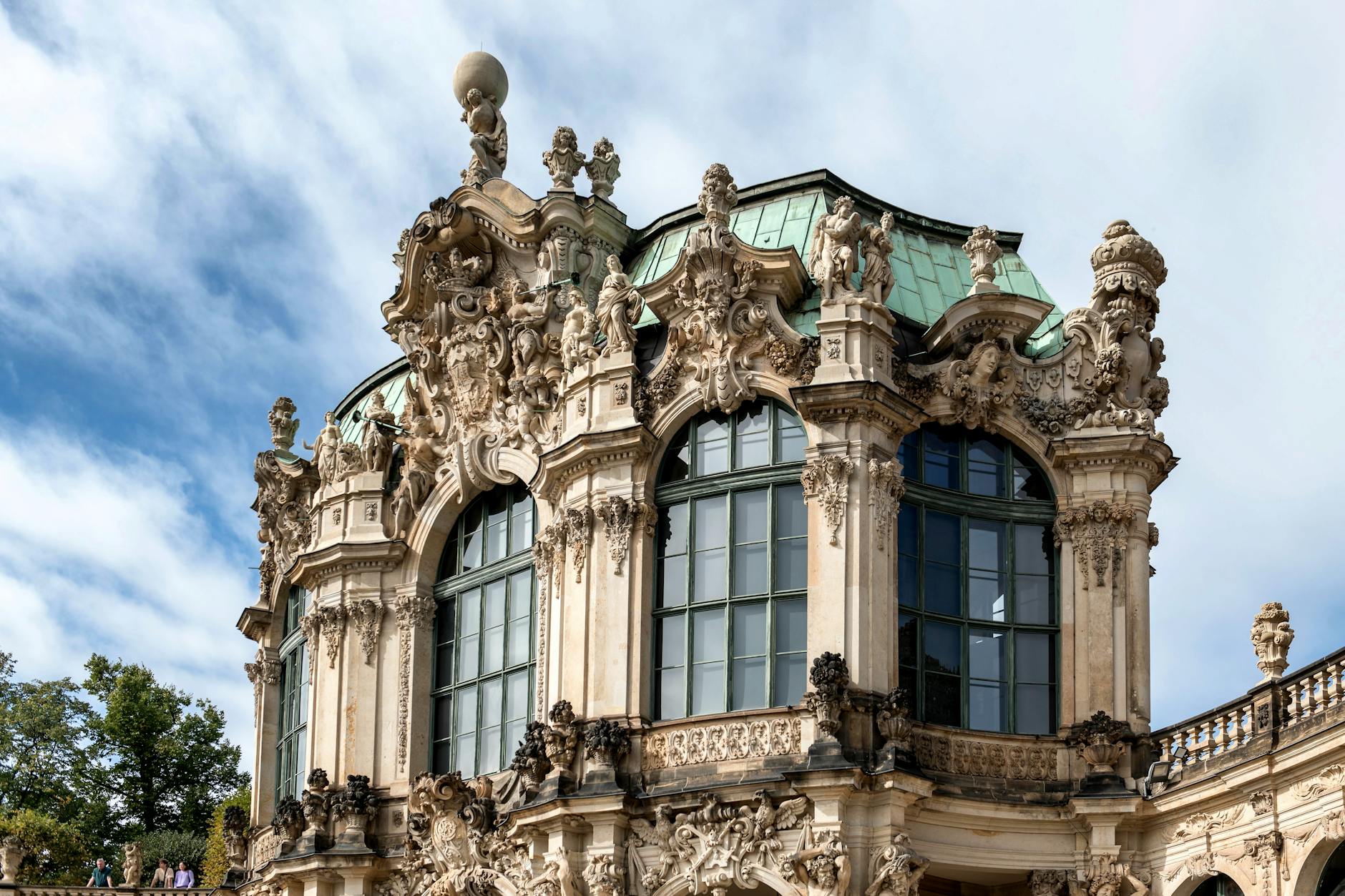
August the Strong’s baroque pleasure complex, built 1710-1728 by architect Matthäus Daniel Pöppelmann. The four wings of pavilions and galleries form a vast inner courtyard, with the famous Crown Gate (Kronentor) and Glockenspiel Pavilion serving as architectural landmarks. The Zwinger houses three major museums: the Gemäldegalerie Alte Meister (Old Masters Gallery, with Raphael’s Sistine Madonna as the headliner), the Mathematisch-Physikalischer Salon (scientific instruments from the 16th-19th centuries), and the Porcelain Collection (Meissen porcelain in extraordinary depth). The Zwinger’s central garden is free to walk through; the museums require individual tickets (€14 Old Masters, around €6-10 for the smaller collections). A combined Zwinger ticket of around €18 covers all three.
The Semperoper
The Semperoper opera house, designed by Gottfried Semper in 1838-41, was destroyed in WWII and rebuilt in the same baroque-revival style by 1985. The building exterior is free to photograph from Theaterplatz. Guided tours of the interior (around €13) run several times daily — check the website for the current schedule. The Semperoper hosts performances every evening in season (September-July); if you can extend your trip and see a performance, it’s one of Europe’s great operatic experiences. Saxony State Opera and Saxon State Orchestra both perform here.
The Residenzschloss
The reconstructed royal palace was originally built in the 13th century, rebuilt and expanded multiple times, and severely damaged in WWII. The current reconstruction integrates surviving Renaissance and baroque elements with new construction. The Historic Green Vault — the most famous of the palace’s collections — preserves the Wettin dynasty’s treasure chamber as it was arranged in 1733 by Augustus the Strong. The treasures include the Dresden Green Diamond, the Bath of Diana, the famous ivory sculpture of Saturn devouring his children. Advance booking required because of timed entry; tickets around €14. Walk-up rarely works.
Brühl’s Terrace
The “Balcony of Europe” — Count Heinrich von Brühl’s private garden terraces above the Elbe, opened to the public in 1814. The promenade runs about 500 meters along the river, with views across to the Neustadt. Free, atmospheric, lined with sculpture and informal cafés. The Albertinum museum sits at the eastern end. Walking the full length takes 15-20 minutes; pair with the Frauenkirche and Brühlsche Garten for a leisurely circuit.
Neustadt and Kunsthofpassage
Cross the Elbe and you’re in a different Dresden. The Neustadt district survived the 1945 bombing better than the Altstadt, retaining more pre-war buildings and a less formal atmosphere. The post-reunification cultural scene developed here — alternative bars, indie galleries, vintage shops, and street art. The Äußere Neustadt section, in particular, is one of the best small neighborhoods for evening exploration anywhere in eastern Germany.
The Kunsthofpassage is the Neustadt’s most famous attraction — a series of five interconnected courtyards each designed around a different artistic theme by local artists in the early 2000s. The “Singing Drainpipes” courtyard, where the building drainpipes are designed to make musical sounds when it rains, is the headline. The “Court of Light” features metallic reliefs and reflective surfaces; the “Animals’ Court” has sculpted creatures on the building facades. Free to walk through, entry through Görlitzer Strasse 21-25. Allow 30-45 minutes.
Beyond the Center — Pillnitz Palace
If you’re spending a second day in Dresden (or visiting in a longer trip), Pillnitz Palace is the standout outer-area attraction. The summer residence of the Saxon electors, designed in a Chinese-influenced style by Pöppelmann (the Zwinger’s architect) in 1721-23. The palace and its gardens sit on the Elbe about 10 km upstream from central Dresden. Access by tram 2 to Niederpoyritz then a short walk, or by paddle steamer along the Elbe (the more atmospheric option — €15-20 each way, ~1.5 hours). The gardens are free; the palace interiors and museums require tickets (~€8). Worth a full half-day on a longer Dresden visit.
What About Saxon Switzerland?
Saxon Switzerland (Sächsische Schweiz) National Park — the sandstone rock formations along the Elbe southeast of Dresden — is often suggested as a Dresden day trip add-on. Be realistic: it’s not. The national park requires its own full day to do justice, and trying to combine it with central Dresden in a single day from Berlin will result in seeing neither properly. If Saxon Switzerland interests you, plan it as a separate Berlin day trip (RE/IC to Bad Schandau, about 3 hours each way) or as part of a multi-day Saxony trip.
Where to Eat in Dresden
For traditional Saxon food, look for: Sauerbraten (marinated pot roast), Quarkkäulchen (quark cheese pastries), Eierschecke (a layered Saxon cake), and the regional Pulsnitzer Pfefferkuchen (a heavy ginger-honey biscuit). For sit-down meals: Wenzel Prager Bierstuben (Bohemian-Saxon classics, central), Coselpalais (baroque setting, upmarket), Planwirtschaft (Neustadt, regional Saxon), Watzke (traditional brewery, Neustadt). For lighter options: the cafés along Brühlsche Terrasse, the bakeries around Frauenkirche, and a half-dozen modern brunch spots in Neustadt.
Frequently Asked Questions
How long is the train from Berlin to Dresden?
The ICE/EC takes about 2 hours each way. Regional RE trains take 2.5 hours. Trains run roughly hourly during the day, with about seven daily direct services from Berlin Hauptbahnhof to Dresden Hauptbahnhof.
How much does a Dresden day trip cost?
Around €85-120 per person total. ICE round-trip €35-55 (advance Sparpreis) or €55-85 (walk-up). Museum entries €25-35 if you visit two or three. Lunch and snacks €25-40. The Dresden Card (€18, 24 hours) bundles transit + discounts and is worth considering if you’ll use 2+ museums.
Can I combine Dresden with Saxon Switzerland in one day?
No — not realistically. Saxon Switzerland requires its own day to do properly. Trying to combine both in a single day trip from Berlin means seeing neither well. Plan them as separate trips.
Is Dresden worth visiting in one day?
Yes, with a tight itinerary. A 6 am train, focused walking route through the Altstadt baroque core, lunch, and a Neustadt evening before the 19:30 return train gets you a satisfying 9 hours on the ground. A weekend trip is better if you can manage it, but a day trip is genuinely worthwhile.
Do I need to book Frauenkirche or Zwinger tickets in advance?
Frauenkirche entry is free and walk-up is usually fine; the dome climb requires a separate timed ticket that does sell out — book a day or two ahead. The Zwinger’s Old Masters Gallery rarely needs advance booking. The Residenzschloss’s Historic Green Vault always requires advance timed-entry tickets — book a week or more ahead.
What time should I take the train back?
Aim for the 19:30 or 20:30 train back to Berlin. The last evening services run until around 22:00. Missing the last train means staying overnight, so plan with margin.
Is Dresden good for families?
Mixed. The baroque architecture and museums work better for older children and teens than for younger kids. The Frauenkirche dome climb is a hit. The Procession of Princes is photogenic. The Zwinger gardens are good open-running space. Younger kids may find the day trip’s transit time tough; consider keeping them in Berlin and choosing a different Berlin family day. See our Berlin with kids guide.
Final Word
Dresden in one day is ambitious but rewarding. The Frauenkirche reconstruction is one of the most moving urban-architectural projects of the post-war century. The Zwinger’s Old Masters Gallery is genuinely world-class. The Procession of Princes is one of the great public art works in Germany. Plan early trains, walk the Altstadt circuit efficiently, save Neustadt for the evening, and treat the day as the focused excursion it requires. Berlin is large and demanding; Dresden is large and demanding; you’ll need to commit to the trip to get the best of it.