Day Trips from Berlin: 9 Best Excursions by Train (2026)
The best day trips from Berlin by train — Potsdam, Spreewald, Dresden, Saxon Switzerland, Sachsenhausen, and more. Complete guide with travel times, costs, and practical tips.

Day Trips from Berlin: The Best Excursions Within Easy Reach
Berlin is an extraordinary city, but some of the best experiences in this part of Germany lie just beyond its borders. Day trips from Berlin open up a world of UNESCO palaces, forested waterways, historic cities, sobering memorials, and landscapes that feel centuries removed from the capital’s urban energy. The best part: Berlin’s excellent rail connections mean most destinations are reachable in under two hours by train, with no car required.
Brandenburg — the state surrounding Berlin — offers lakes, forests, and historic towns in every direction. Further afield, Saxony’s Dresden and Leipzig, the Spreewald biosphere reserve, and even the Czech border are all within comfortable day trip range. Whether you want royal palaces, outdoor adventure, dark history (see our Berlin history guide for in-city historical sites), or just a change of pace, these day trips from Berlin deliver.
This guide covers the best day trips from Berlin by distance and travel time, with practical details on getting there, what to see, and how to make the most of each excursion.
Potsdam: The Essential Day Trip (About 35 Minutes)
If you take only one of these day trips from berlin, make it Potsdam. The capital of Brandenburg sits just southwest of Berlin, and the S-Bahn (S7) gets you from Berlin Hauptbahnhof to Potsdam Hauptbahnhof in about 35 minutes, or 38 from Friedrichstraße. Once the residence of Prussian kings and German emperors, Potsdam is essentially an open-air museum of 18th and 19th-century architecture, surrounded by 500 hectares of UNESCO-listed parks and gardens.
Sanssouci Palace and Park
Sanssouci is the jewel of Potsdam — Frederick the Great’s summer palace, built in the 1740s as a retreat from Berlin’s formality. The rococo palace sits atop terraced vineyards and overlooks a vast landscaped park containing additional palaces, follies, and gardens. The Neue Palais at the park’s western end is even grander than Sanssouci itself. Allow a full day to explore the park properly; it’s 290 hectares of beautifully maintained grounds. Tip: Use Potsdam Charlottenhof station rather than Potsdam Hauptbahnhof for the shortest walk to the park entrance.
Potsdam’s Old Town
Beyond Sanssouci, Potsdam’s old town rewards exploration. The Dutch Quarter (Hollandisches Viertel) has 134 red-brick houses, built between 1734 and 1742 for Dutch immigrants. The Nikolaikirche on the Alter Markt, the reconstructed Stadtschloss (City Palace, now the Brandenburg parliament), and the charming Brandenburger Straße pedestrian zone round out a full day.
Babelsberg Film Park
Film history enthusiasts should visit the Babelsberg Film Park, built on the grounds of one of the world’s oldest film studios. Pair it with the rest of Potsdam for a full day.
Sachsenhausen Memorial (45 Minutes to Oranienburg)

The Sachsenhausen Memorial and Museum in Oranienburg preserves the site of a Nazi concentration camp where over 200,000 people were imprisoned between 1936 and 1945. The S-Bahn (S1) takes about 45 minutes from Friedrichstraße to Oranienburg station, and the memorial is a walk from there. It’s one of the most important and sobering day trips from Berlin.
The memorial includes the camp’s original gatehouse with its cynical “Arbeit macht frei” inscription, reconstructed barracks, the punishment cells (Station Z), and several permanent exhibitions documenting the camp’s history. Audio guides (available in eight languages, €3.50) are highly recommended for context that the site’s sparse signage doesn’t fully provide. Guided tours offer even deeper understanding — several Berlin-based tour companies run daily group trips.
Don’t rush it: the grounds are large and the exhibitions detailed. The site is outdoors and exposed — dress for the weather and wear comfortable shoes. Entry to the memorial is free. This is an emotionally demanding experience, so consider spacing it from lighter activities in your itinerary.
Spreewald: Canals, Forests, and Pickles

The Spreewald is a UNESCO-designated biosphere reserve southeast of Berlin where the River Spree splits into hundreds of small waterways flowing through ancient alder and birch forests. It’s one of the most popular day trips from Berlin for nature lovers, and it feels like entering a different world entirely.
Punting and Paddling
The classic Spreewald experience is a Kahnfahrt — a punt boat ride through the canals, steered by a local boatman in traditional Sorbian dress. Tours range from 2–4 hours and depart from Lübben, Lübbenau, and Burg; the first two have their own railway stations. For a more active experience, rent a canoe or kayak and explore independently — rental stations are abundant, and the waterways are well-marked and safe for beginners.
Sorbian Culture
The Spreewald is home to the Sorbian (Wendish) minority — a Slavic people with their own language, traditions, and cuisine. Bilingual signs, traditional thatched-roof farmhouses, and Sorbian folk museums give the region a cultural dimension beyond its natural beauty. The Spreewald is also famous for its pickled gherkins (Spreewälder Gurken), which you’ll find at every market stall and restaurant.
Getting There
Until 12 December 2026, works on Berlin’s Stadtbahn divert the RE2 via Gesundbrunnen, Ostkreuz and Schöneweide, so it doesn’t stop at Hauptbahnhof or Friedrichstraße. For Lübben and Lübbenau, board the RE2 at Ostkreuz or take an RE20 from Hauptbahnhof, and look up the journey time in the DB or VBB journey planner. From the stations, it’s a short walk to the harbour areas where boat tours depart. This is one of the day trips from berlin that works perfectly without a car.
Dresden: Baroque Splendour (2 Hours)

Dresden is one of the most rewarding day trips from Berlin for architecture and art lovers. Known as the “Florence of the Elbe,” Saxony’s capital was devastated by Allied bombing in 1945 and has been painstakingly rebuilt over decades. The result is a city of astonishing baroque beauty, world-class museums, and a fascinating story of reconstruction and resilience.
Must-See Highlights
The Frauenkirche (Church of Our Lady) is Dresden’s most iconic landmark — a baroque masterpiece that lay in ruins for 50 years before being rebuilt and reconsecrated in 2005. Climb the dome for panoramic city views. The Zwinger Palace houses the Old Masters Gallery (Raphael’s Sistine Madonna, Vermeer, Rembrandt) and is an architectural marvel in its own right. The Semperoper (opera house), the Residenzschloss (Royal Palace) with its Green Vault treasure chamber, and the Fürstenzug (a 102-metre porcelain tile mural) round out the old town’s highlights.
Beyond the Old Town
Dresden’s Neustadt (New Town) across the Elbe is the city’s hip, bohemian quarter — packed with independent shops, street art, cafés, and a vibrant nightlife scene. The Kunsthofpassage, a complex of artist-designed courtyards (one façade is hung with trumpet-shaped funnels that make music with water), is worth seeking out.
Getting There
Fast long-distance trains cover Berlin–Dresden in under 2 hours. Regional trains (RE/RB) need a change and take longer, but they are significantly cheaper (covered by the Deutschland-Ticket). For more money-saving strategies, see our Berlin on a budget guide. An early departure (7–8am) gives you a full day. From the main station you can walk into the old town.
Leipzig: Culture and Revolution (1.5 Hours)
Leipzig has transformed from an overlooked East German industrial city into one of Germany’s most dynamic cultural centres. Bach, Wagner, Mendelssohn, and Schumann all worked here; the 1989 Monday Demonstrations at the Nikolaikirche helped bring down the Berlin Wall; and today the city’s art scene, food culture, and creative industries rival Berlin’s at a fraction of the cost.
Key Sights
The Nikolaikirche (closely tied to the 1989 peaceful revolution), the Thomaskirche (Bach’s church, where he worked from 1723 to 1750), the Völkerschlachtdenkmal (a colossal monument to the 1813 Battle of the Nations), and the Spinnerei (a former cotton mill that now houses eleven galleries) are the essential stops. The Marktplatz with its Renaissance town hall and surrounding arcades is one of Germany’s most handsome squares.
Getting There
ICE trains from Berlin Hauptbahnhof reach Leipzig in 1 hour 15 minutes; regional trains are slower. Leipzig’s compact centre is easily walkable from the Hauptbahnhof, which is itself an architectural landmark — one of Europe’s largest railway stations.
Saxon Switzerland National Park
The Saxon Switzerland National Park (Sächsische Schweiz) is one of the most dramatic day trips from Berlin for hikers and nature lovers. This sandstone landscape along the Elbe Valley features towering rock formations, deep gorges, table-top mountains, and viewpoints that justify every superlative in the guidebook.
The Bastei Bridge
The Bastei is the park’s most famous viewpoint — a stone bridge spanning rock pillars 194 metres above the Elbe, offering views across the entire valley. You reach it by a stepped climb up from Rathen. On clear days, the panorama extends to the Czech Republic. Arrive early to avoid crowds, especially on weekends.
Hiking Options
Beyond the Bastei, the park offers trails for all levels. The Malerweg (Painter’s Way) is a 116-km long-distance trail through the Elbe Sandstone Mountains, whose landscapes inspired Romantic-era artists including Caspar David Friedrich. For day trippers, shorter walks around the Schrammsteine rocks, Kuhstall (a massive natural rock arch), and the Festung Königstein fortress are excellent options.
Getting There
The S-Bahn S1 runs from Dresden to Rathen (for the Bastei), so from Berlin you can take a fast train to Dresden and change there. Alternatively, direct long-distance trains link Berlin with Bad Schandau (the park’s main town), an international EuroCity stop; the timetable shows how long each option takes on your day. A car offers more flexibility for reaching trailheads but isn’t essential.
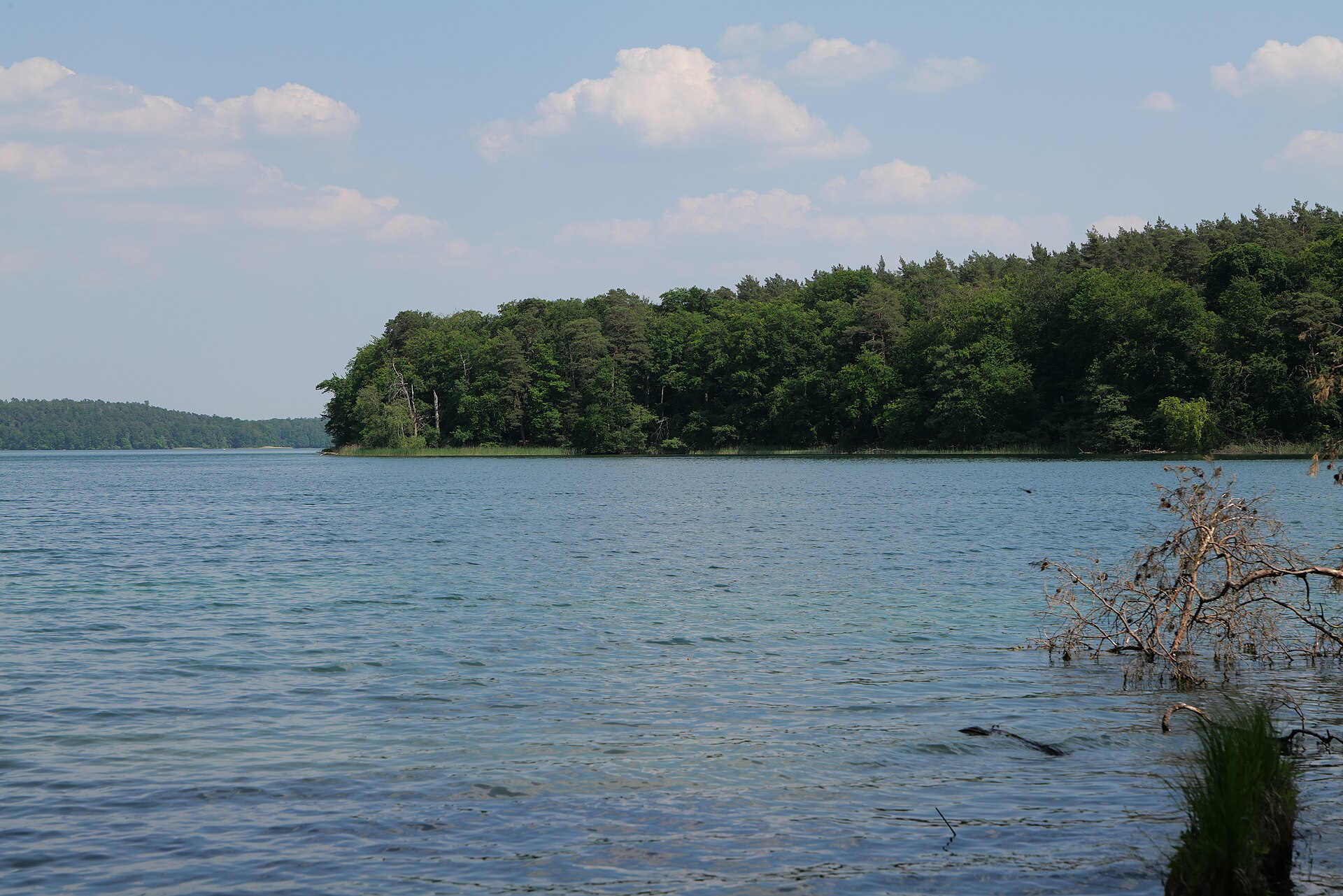
Brandenburg’s Lakes and Countryside
Some of the best day trips from Berlin are the simplest — escaping to the lakes and forests of surrounding Brandenburg for swimming, cycling, or simply breathing cleaner air.
Wannsee and Pfaueninsel
Wannsee is technically still within Berlin’s borders, but Strandbad Wannsee, which its operator calls Europe’s largest inland lido, has a sandy beach about 1.2 kilometres long and feels like a lakeside resort. Combine it with a ferry to Pfaueninsel (Peacock Island), a nature reserve and UNESCO World Heritage site with a fairytale castle, free-roaming peacocks, and centuries-old oak trees. The S1/S7 reaches Wannsee station in 30 minutes from central Berlin.
Liepnitzsee
Liepnitzsee, north of Berlin between Wandlitz and Bernau, is one of the cleanest lakes in Brandenburg. Surrounded by dense forest with no development on its shores, it’s a favourite of Berliners seeking true escape. A small island in the centre is reachable by rowing boat rental. Access by car is easiest, though determined cyclists can reach it via forest paths from Bernau (S2).
Rheinsberg
The small town of Rheinsberg, north of Berlin, centres on a lakeside palace where Frederick the Great spent his happiest years as crown prince. The palace now houses a music academy and literary museum (dedicated to Kurt Tucholsky, who wrote a beloved novella set here). The surrounding Rhin lakes offer swimming, canoeing, and cycling through gentle countryside.
Tropical Islands Resort
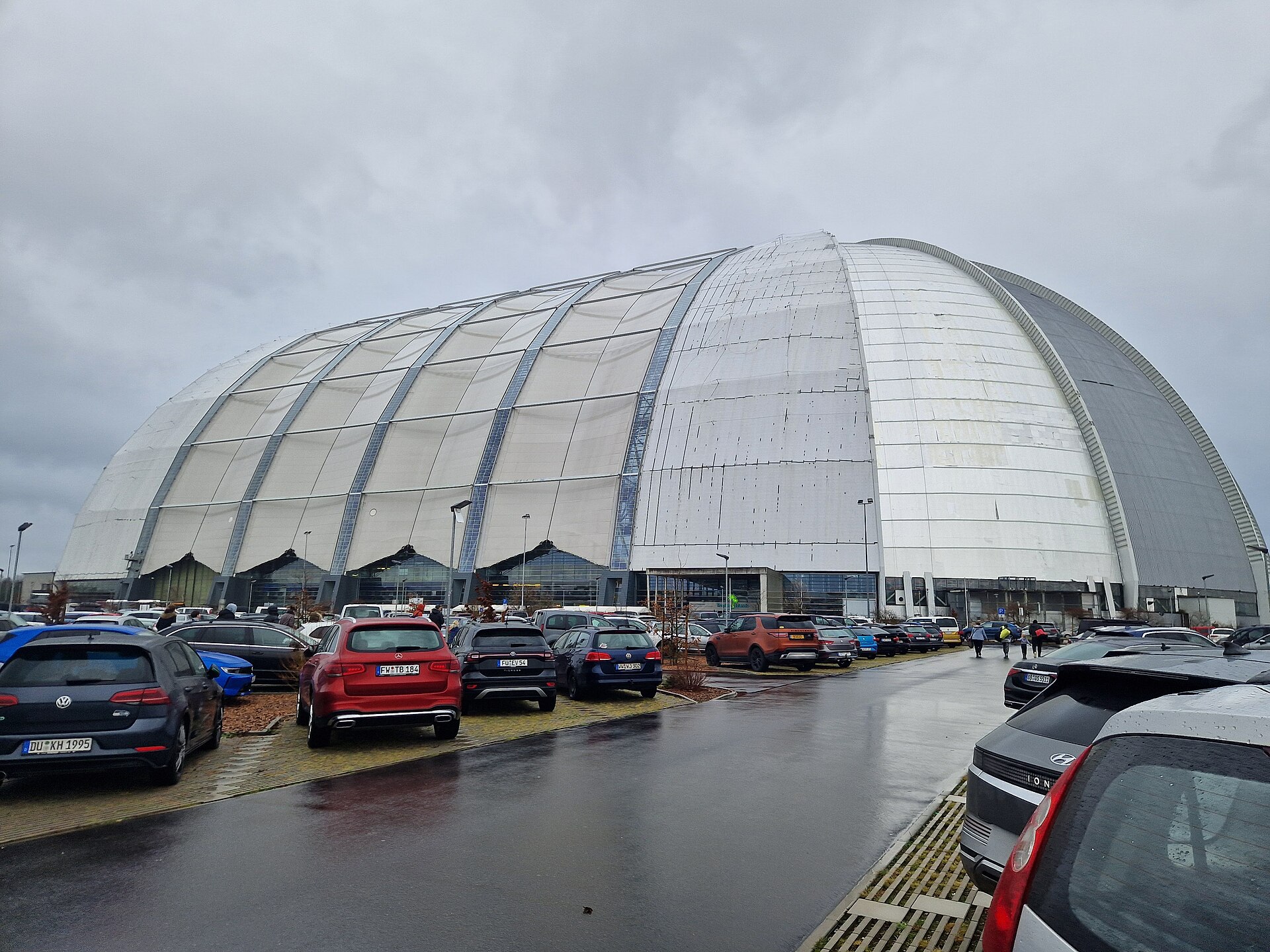
Tropical Islands is one of the more unexpected day trips from Berlin — a tropical water park and resort built inside a former airship hangar in Brand, about 50km south of Berlin-Schönefeld. The dome is large enough to hold the Statue of Liberty and keeps a warm tropical climate all year. Inside you’ll find a tropical rainforest, a lagoon with sandy beaches, water slides, spas, and themed areas replicating Borneo, Thailand, and the Amazon.
It’s undeniably kitsch, but on a grey Brandenburg winter day, the experience of swimming in warm water under palm trees is genuinely enjoyable — especially with children (see our Berlin with kids guide for more family ideas). The resort’s free shuttle bus runs from Brand Tropical Islands station; look up the journey time in the DB or VBB journey planner.
Wittenberg: Reformation History
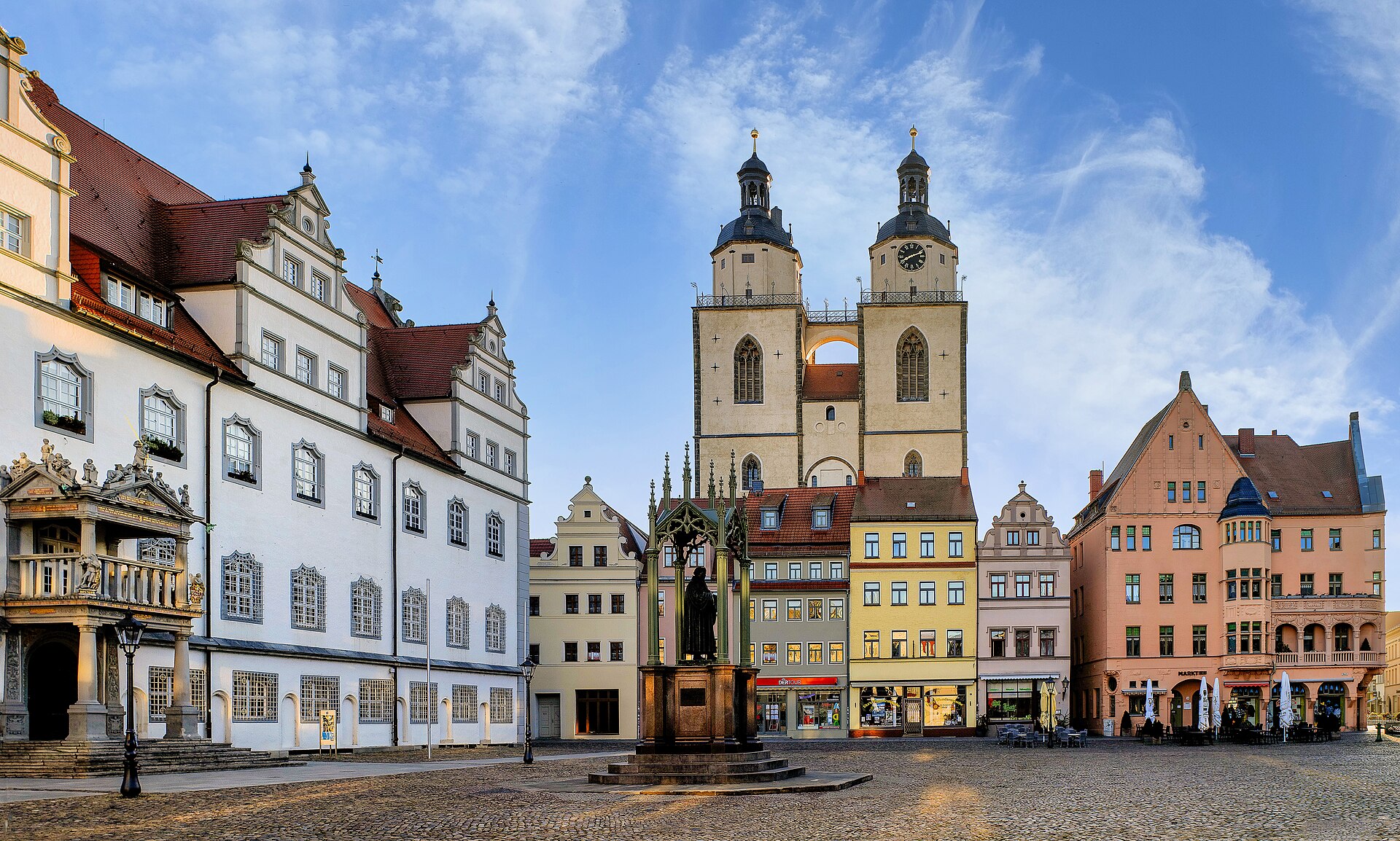
Lutherstadt Wittenberg is where Martin Luther published his 95 Theses in 1517, launching the Protestant Reformation; tradition has him nailing them to the Castle Church door, though that story is not securely established. Luther’s house, the Stadtkirche where he preached, Melanchthon’s house and the Castle Church itself belong to the UNESCO-listed Luther Memorials. For history and religion enthusiasts, it’s one of the most significant day trips from Berlin.
Both regional and faster long-distance trains run from Berlin to Wittenberg. The old town is compact and walkable from the station.
Practical Tips for Day Trips from Berlin
Train Tickets and Passes
The Deutschland-Ticket (€63/month in 2026, €66.80 from January 2027) covers local and regional public transport across Germany, S-Bahn included — making it extraordinary value if you’re planning multiple day trips from Berlin. It’s valid on RE/RB regional trains but not ICE/IC long-distance trains. For one-off trips, the Brandenburg-Berlin Ticket (€36.50 in second class for up to 5 people, bought online or from a machine; staffed DB counters add €2) covers regional travel within both states for a day — excellent value for groups.
Long-distance tickets to Dresden and Leipzig are cheapest when booked in advance via the Deutsche Bahn website, where Berlin–Leipzig ICE fares start at €17.99, subject to availability. Prices rise significantly for last-minute bookings. For a full breakdown of Berlin’s transport system, see our Berlin public transportation guide.
Timing Your Day Trips
For the most popular destinations (Potsdam, Saxon Switzerland), depart early — 8–9am — to maximise your time and avoid the worst crowds. Sachsenhausen benefits from an early start because the memorial can become very busy by midday. Spreewald boat schedules vary from one operator to the next, so look at the harbour’s departures before you set off. For Dresden and Leipzig, a train at 7–8am and an evening one back make the most of the day.
Guided vs. Independent
Most day trips from Berlin are easy to do independently using public transport. However, guided tours add significant value for Sachsenhausen (historical context), Potsdam (palace interiors and history), and Saxon Switzerland (navigation and trail knowledge). Several Berlin-based companies offer small-group day tours with transport included, typically priced at €40–80 per person.
What to Bring
Comfortable walking shoes are essential for all day trips from Berlin — you’ll cover significant ground at every destination. Pack layers (weather changes quickly in Brandenburg), sunscreen in summer, and rain protection year-round. Bring cash for smaller towns and markets where card payment isn’t universal. A packed lunch saves time and money, though all destinations have dining options (and our Berlin food guide covers eating well back in the city).
Half-Day Options
Short on time? Several destinations work as half-day trips from Berlin. In Potsdam, three or four hours is enough for a chosen route through Sanssouci park. Sachsenhausen can fit a morning or afternoon if you start early, though a full day leaves more time for the exhibitions. Wannsee and Pfaueninsel make a relaxed afternoon outing. Even the Spreewald works as a half-day if you take a shorter 2-hour boat tour and catch an early train back.
Choosing Your Day Trip
The right day trip from Berlin depends on your interests and available time. For first-time visitors with one spare day, Potsdam is the clear choice — it’s close, spectacular, and endlessly explorable. History-focused travellers should prioritise Sachsenhausen and Dresden. Nature lovers will find the Spreewald and Saxon Switzerland transformative. Families with children gravitate toward Tropical Islands and the Spreewald. And if you’re visiting Berlin for a week or more, you can comfortably fit 3–4 day trips from Berlin into your itinerary without feeling rushed (consult our things to do in Berlin guide for in-city planning alongside your excursions).
Whatever you choose, these day trips from Berlin reveal. For practical logistics, consult our Berlin travel tips guide, which covers transport tickets, money, and more. These day trips reveal a side of eastern Germany that most visitors miss. Beyond the capital’s famous energy lies a region of extraordinary history, natural beauty, and cultural richness — all within easy reach by train.
Photo Credits
Wooded shores of Großer Stechlinsee: Großer Stechlinsee 2021-06-17 69 by Leonhard Lenz, CC0, via Wikimedia Commons.
Wittenberg market square and Luther monument: Lutherstadt Wittenberg, Denkmalensemble Markt by Rolf Kranz, CC BY-SA 4.0, via Wikimedia Commons.
Tropical Islands Resort exterior: Tropical Islands Resort by Rkoster, CC BY 4.0, via Wikimedia Commons.