Berlin Food & Restaurant Guide: Best Restaurants, Street Food & Local Cuisine (2026)
Your ultimate guide to eating in Berlin — from traditional German cuisine and currywurst to Michelin dining, vegan restaurants, and vibrant street food markets.
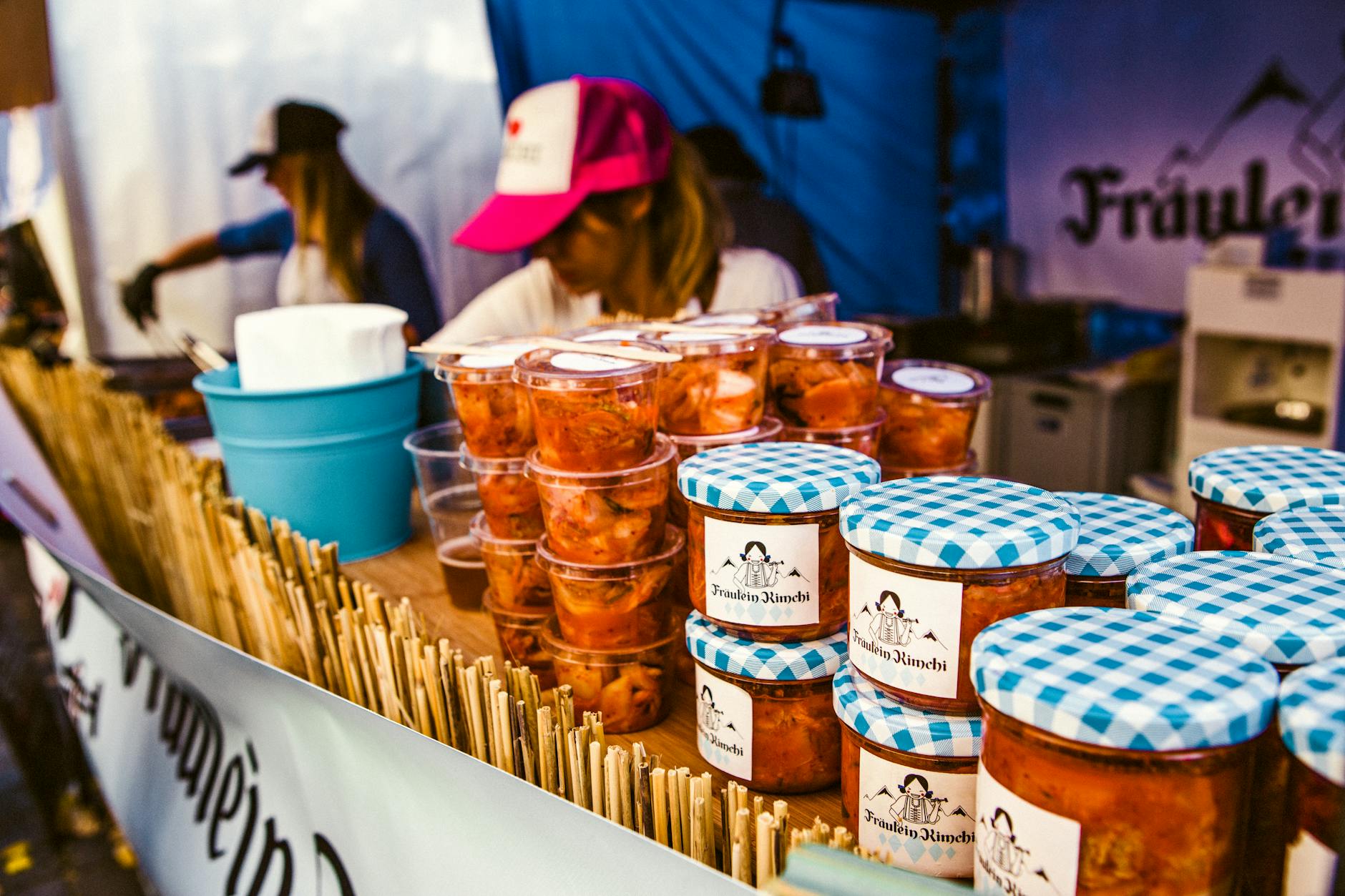
Why Berlin Is One of Europe’s Most Exciting Food Cities
Berlin’s food scene defies every stereotype about German cuisine. Yes, you can find excellent schnitzel and pork knuckle here, but the city’s real culinary identity was forged by decades of division, waves of immigration, and a creative spirit that turns abandoned buildings into world-class restaurants and railway arches into late-night burger joints.
The Berlin Wall didn’t just divide a city politically — it created two distinct food cultures. West Berlin attracted Turkish and Greek guest workers who brought döner kebabs and souvlaki. East Berlin developed ties with Vietnam, Cuba, and Mozambique, creating pockets of Southeast Asian cuisine that thrive today. When the Wall fell in 1989, these traditions collided and fused, producing a food landscape unlike anywhere else in Europe.
Today, as any berlin food guide worth reading will confirm, Berlin has more than 4,000 kebab shops (more than Istanbul), over 80 fully vegan restaurants, 22 Michelin-starred establishments, and some of the most creative street food markets on the continent. Whether you’re eating a €3 currywurst at a sidewalk stand or a seven-course tasting menu at a two-star restaurant, this berlin food guide will help you navigate every corner of the city’s extraordinary dining scene.
Traditional German Food You Must Try in Berlin
Before Berlin became a global food capital, it was a city of hearty, no-nonsense German cooking. Many of these traditional dishes remain deeply woven into everyday life, and tasting them is essential to understanding the city.
Currywurst is Berlin’s most iconic street food — a grilled or fried pork sausage sliced and doused in curry-spiced ketchup, typically served with fries or a bread roll. Invented in 1949 by Herta Heuwer in Charlottenburg, it’s so beloved that Berlin has a museum dedicated to it. You’ll find it everywhere from €2.50 to €4.50 at street stands. The two most legendary spots are Curry 36 at Mehringdamm 36 in Kreuzberg and Konnopke’s Imbiss beneath the U-Bahn tracks at Eberswalder Straße in Prenzlauer Berg, which has been serving since 1930.
Eisbein (pork knuckle) is a Berlin institution — slow-cooked until the meat falls off the bone, served with sauerkraut and pea purée. Expect to pay around €14-18 at traditional restaurants. Buletten, Berlin’s answer to meatballs, are pan-fried and seasoned with marjoram and nutmeg. Königsberger Klopse — veal meatballs in a creamy white caper sauce — is comfort food at its finest and appears on menus across the city.
Schnitzel (breaded and fried veal or pork cutlet) remains a staple at traditional restaurants across Berlin. For dessert, the Berliner Pfannkuchen — a jam-filled doughnut known elsewhere in Germany simply as a “Berliner” — is available at bakeries throughout the city, especially during Carnival season.
For a comprehensive look at where to find the best traditional dishes, see our Traditional German Food in Berlin guide.
Berlin’s Döner Kebab: A Culinary Institution
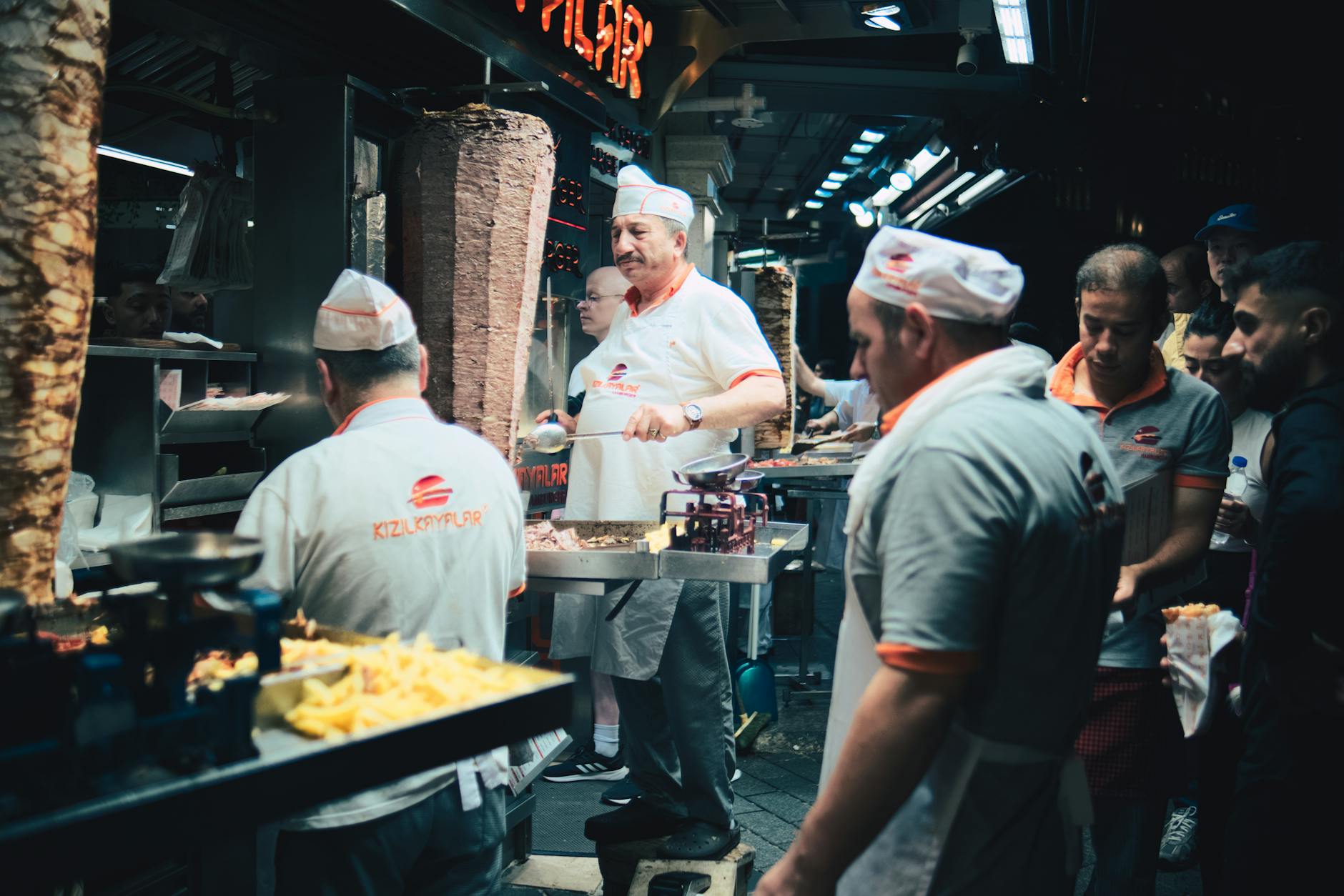
The döner kebab wasn’t invented in Turkey — it was invented in Berlin. Turkish guest workers in the 1970s adapted traditional rotisserie meat for a portable flatbread format, and it became the city’s unofficial national dish. Today, Berlin’s 4,000-plus kebab shops generate billions in revenue and fierce debate about who makes the best one.
Mustafa’s Gemüse Kebap at Mehringdamm 32 is arguably the most famous döner in the world. Their chicken gemüse (vegetable) kebab features roasted vegetables, feta, lemon juice, and herbs that elevate the format to something extraordinary. The trade-off is the queue — expect 40 minutes minimum, sometimes stretching to three hours on weekends. Arrive early on weekdays for shorter waits.
Rüyam Gemüse Kebab in Schöneberg has emerged as a serious rival, with yaprak chicken (shaved from a vertical spit), fried vegetables, crumbled cheese, and a squeeze of lemon that regulars swear is superior to Mustafa’s — without the marathon queue. Imren Grill near Kottbusser Damm, operating since 1993, is widely considered the best for beef döner. They bake their own flatbread and stack their own meat skewers daily.
A quality döner in Berlin costs between €5 and €8. Our Berlin Döner Kebab guide covers the full history and our picks across every neighborhood.
Street Food Markets and Food Halls
Berlin’s street food scene goes far beyond sidewalk vendors. The city has developed a culture of curated food markets that bring together diverse cuisines under one roof — or open sky.
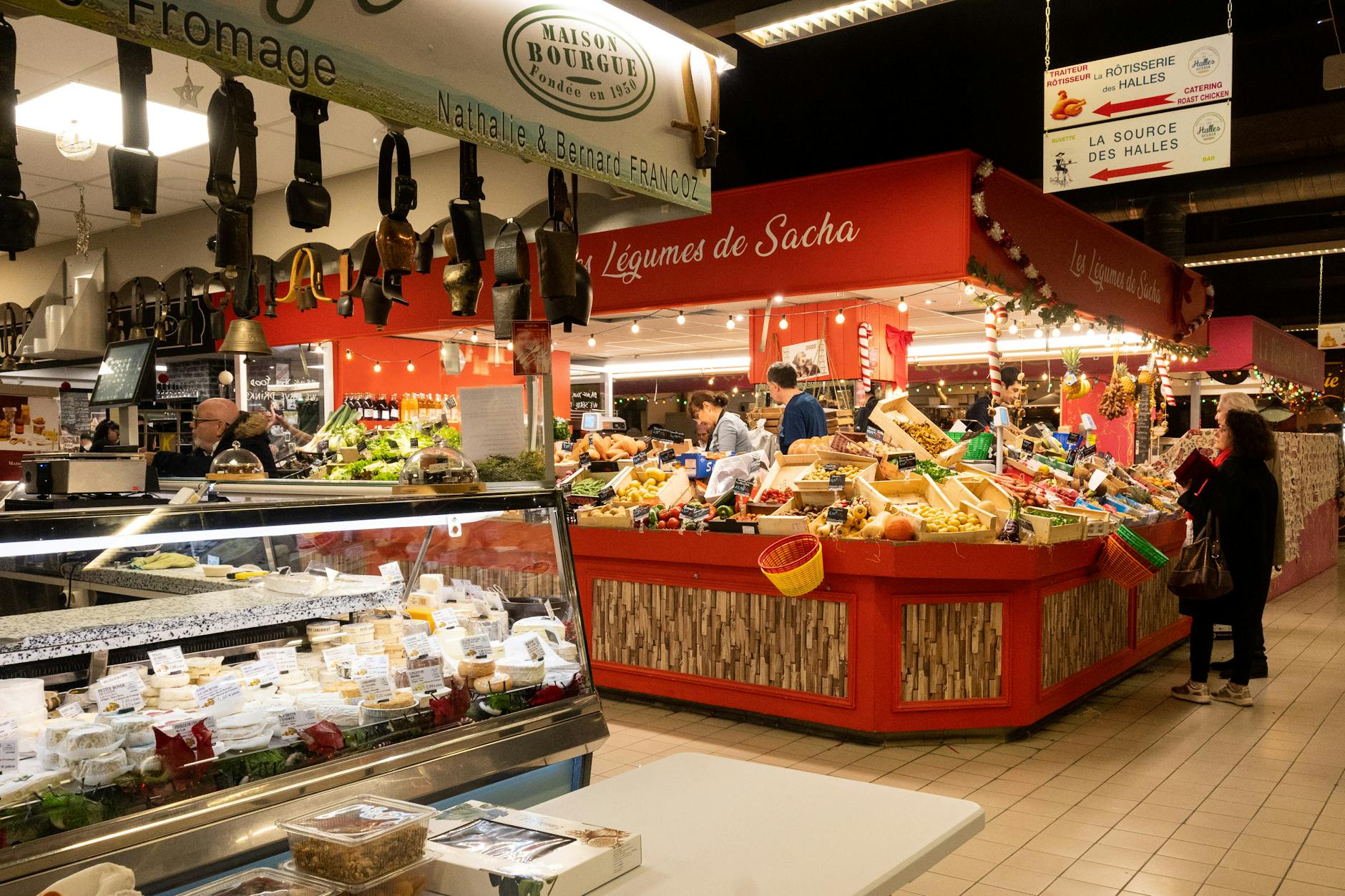
Markthalle Neun in Kreuzberg is the crown jewel. This 1891 market hall at Eisenbahnstraße 42-43 hosts Street Food Thursday every week from 5:00 PM to 10:00 PM, drawing thousands for everything from Nigerian fufu to Neapolitan pizza to Taiwanese bao buns. On the third Sunday of each month, the Breakfast Market offers an equally impressive spread. Regular market hours feature permanent vendors selling artisan bread, cheese, charcuterie, and seasonal produce.
Thai Park (officially Preußenpark in Wilmersdorf) is one of Berlin’s most unique food experiences. From April through October on weekends, Thai residents set up cooking stations throughout the park, serving authentic pad thai, green curry, som tam, and sticky rice at prices well below restaurant level. The atmosphere — eating Thai food on blankets in a Berlin park — is unforgettable. Note that Thai Park is strictly seasonal and weather-dependent.
Bite Club takes residency at various locations during summer months, often at Badeschiff (the floating pool on the Spree). These monthly Friday events feature bite-sized portions from Berlin’s most creative restaurants and food trucks, accompanied by DJs and cocktails.
Burgermeister, housed in a converted public toilet beneath the Schlesisches Tor U-Bahn station, has become a Berlin landmark for late-night burgers. The menu is simple — a handful of burger options — but the quality and the setting make it an essential experience, especially after midnight.
Explore all the options in our Berlin Street Food Markets guide.
Berlin’s Multicultural Food Scene
What makes any berlin food guide incomplete without its immigrant communities is simple — they built the modern food culture. More than a quarter of Berlin’s residents have roots outside Germany, and their cuisines have become as integral to the city as the Brandenburg Gate.
Turkish and Middle Eastern
Kreuzberg and Neukölln are the heartlands of Berlin’s Turkish community, home to the largest Turkish population outside Turkey. Beyond döner, you’ll find exceptional lahmacun (Turkish flatbread pizza), pide (boat-shaped filled bread), and meze spreads. The Turkish Market along Maybachufer near Kottbusser Tor operates every Tuesday and Friday, with vendors selling fresh gözleme (stuffed flatbread), olives, spices, dried fruits, and sucuk (spiced sausage).
Sonnenallee in Neukölln, sometimes called “Arab Street,” is the center of Berlin’s Middle Eastern food scene. Palestinian hummus shops, Lebanese bakeries, and Syrian shawarma stands line both sides of the street. The quality here is remarkable — many establishments are run by families who brought recipes directly from Aleppo, Beirut, and Ramallah.
Vietnamese
East Berlin’s connection with Vietnam dates to the GDR era, when Vietnamese workers came as part of international solidarity agreements. Today, the Dong Xuan Center on Herzbergstraße in Lichtenberg is a sprawling indoor market modeled on Hanoi’s original Dong Xuan market. The food stalls here serve some of the most authentic pho, bun cha, and banh mi in Europe — at prices that feel like a time warp.
Vietnamese restaurants are scattered throughout Mitte, Prenzlauer Berg, and Friedrichshain, ranging from casual pho shops to elevated modern Vietnamese cuisine.
Other International Cuisines
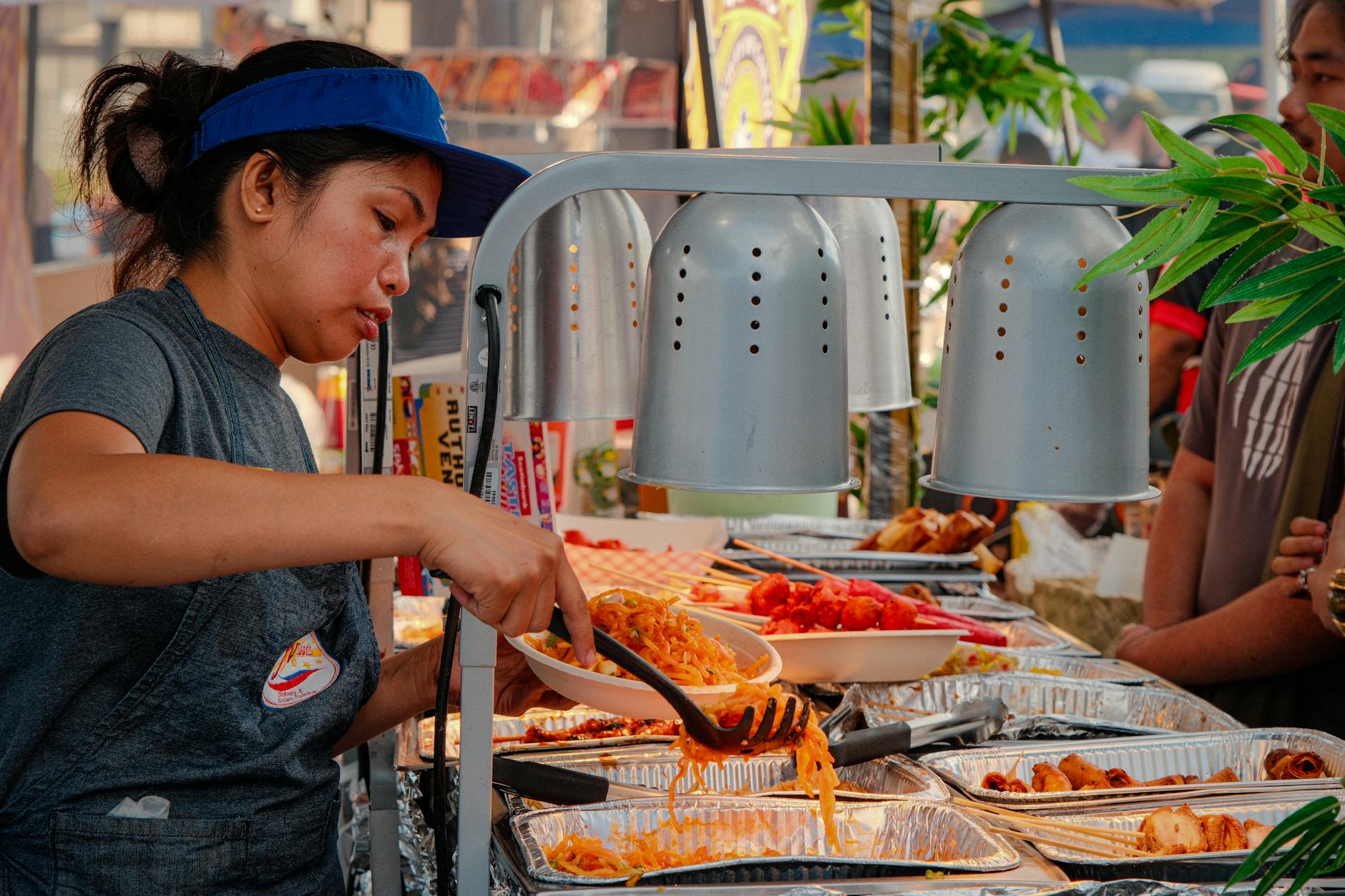
Berlin’s food diversity extends well beyond Turkish and Vietnamese. Neukölln has become a hub for Korean cuisine, with several excellent Korean BBQ and bibimbap restaurants along Sonnenallee and the surrounding streets. Japanese ramen shops have exploded across Kreuzberg and Mitte. Italian trattorias, Greek tavernas, Ethiopian injera restaurants, and Indian curry houses round out a food scene where you can eat your way around the world without leaving a single neighborhood.
Vegan and Vegetarian Berlin: Europe’s Plant-Based Capital
Berlin is widely recognized as the vegan capital of Europe, with more than 80 fully vegan restaurants and hundreds more offering extensive plant-based menus. The city’s progressive, creative culture has made it a laboratory for vegan innovation, from casual street food to Michelin-level fine dining.
Cookies Cream, located in an alley off Unter den Linden, has held a Michelin star continuously since 2018 — making it one of the world’s most acclaimed vegetarian restaurants. The entrance through a service corridor behind a nightclub adds to its mystique. Expect innovative dishes that challenge any assumption about meatless cooking being limited.
Lucky Leek on Kollwitzstraße in Prenzlauer Berg offers three-to-seven-course vegan tasting menus that rival the creativity of any omnivore fine dining experience. A seven-course dinner runs around €95 per person. Kopps in Mitte has been serving elegant vegan cuisine since 2011, with their Tuesday “Come Together” communal dinner offering three courses for just €25 — one of the best dining deals in the city.
Frea in Mitte deserves special mention as the world’s first zero-waste vegan restaurant, composting all organic waste on-site and sourcing exclusively from regional producers. It represents the intersection of Berlin’s environmental consciousness and culinary ambition.
For the complete rundown, see our Vegan and Vegetarian Restaurants in Berlin guide.
Fine Dining in Berlin
Berlin has 22 Michelin-starred restaurants, carrying a combined 28 stars — a number that has grown steadily as the city attracts ambitious chefs from around the world.
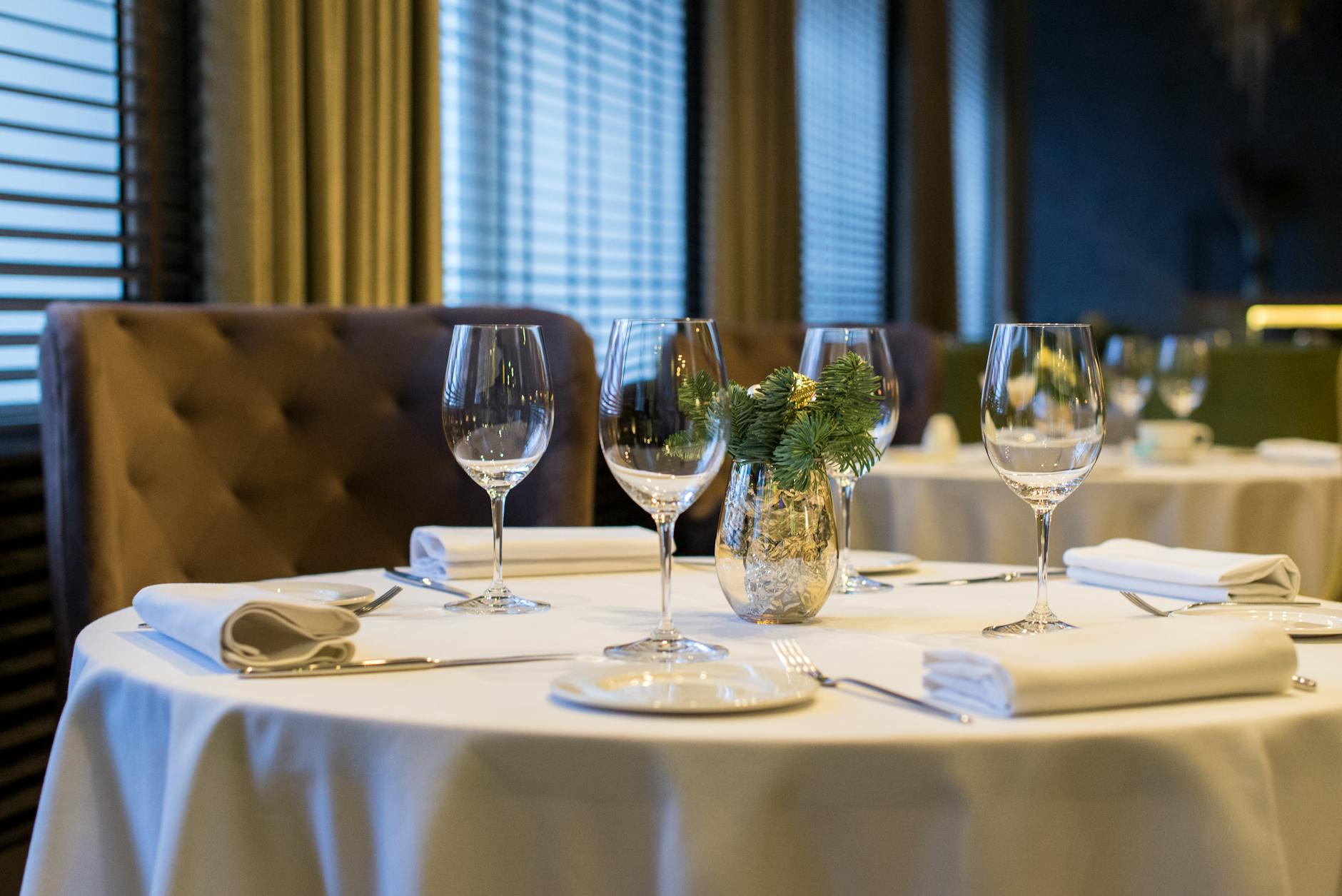
Rutz on Chausseestraße holds three Michelin stars, making it Berlin’s highest-rated restaurant. Chef Marco Müller’s tasting menus focus on modern German cuisine using regional ingredients in unexpected ways. Reservations should be made weeks in advance.
Tim Raue near Checkpoint Charlie carries two Michelin stars and consistently ranks among the world’s 50 best restaurants. His Asian-inspired cuisine, particularly the Peking duck and wasabi-infused creations, draws international diners specifically to Berlin.
CODA Dessert Dining is perhaps Berlin’s most singular fine dining concept — a two-Michelin-starred restaurant serving only dessert courses. Each dish in the multi-course menu is built around a single flavor, with optional cocktail pairings. It’s the only desserts-only restaurant to hold Michelin stars in over a century.
Nobelhart & Schmutzig (one star) takes a radical local approach, using exclusively ingredients sourced within the Berlin-Brandenburg region and refusing to use any product that must be imported — no lemons, no olive oil, no coffee. The resulting menus are a fascinating study in what Berlin’s immediate landscape can produce.
Fine dining in Berlin is significantly more affordable than in Paris or London. Expect to pay €75-150 per person for a tasting menu at a starred restaurant, compared to €200-400 in comparable establishments elsewhere. Our Fine Dining in Berlin guide covers the full Michelin scene.
Berlin’s Best Food Neighborhoods
Each Berlin neighborhood has developed its own distinct food personality, and no berlin food guide would be complete without covering them, shaped by the communities who live there and the history that formed them.
Kreuzberg
Kreuzberg is Berlin’s most dynamic food neighborhood, blending Turkish tradition with punk-rock creativity. The area around Kottbusser Tor is döner and falafel territory, while Oranienstraße and Bergmannstraße offer everything from trendy brunch cafés to traditional German Kneipen (pubs). Markthalle Neun anchors the neighborhood’s gourmet side. This is where you’ll find some of Berlin’s best eating at every price point.
Neukölln
Once overlooked, Neukölln has become one of Berlin’s most exciting food districts. The northern section (sometimes called “Kreuzkölln” for its proximity to Kreuzberg) buzzes with new restaurants, wine bars, and bakeries. Sonnenallee brings exceptional Middle Eastern food, while Weserstraße and the streets around Schillerpromenade are packed with international restaurants and natural wine bars that attract a young, creative crowd.
Prenzlauer Berg
This leafy, gentrified neighborhood in former East Berlin is Berlin’s brunch capital. Kastanienallee and Kollwitzstraße are lined with cafés where weekend breakfast stretches into the afternoon. The Sunday flea market at Mauerpark pairs perfectly with the surrounding food options. Prenzlauer Berg is also home to several excellent vegan restaurants and some of the city’s best coffee roasters.
Mitte
Berlin’s central district houses the highest concentration of fine dining, along with upscale international restaurants. The area around Hackescher Markt offers a range of cuisines and price points. Auguststraße and the surrounding streets in the gallery district feature some of the city’s most innovative restaurants.
Friedrichshain
Friedrichshain brings youthful energy to the food scene. The area around Boxhagener Platz hosts a Saturday food market and is surrounded by diverse restaurants — Japanese, Portuguese, Vietnamese, and more. Simon-Dach-Straße is lined with bars and casual restaurants, while the RAW Gelände complex offers street food and late-night eating in a post-industrial setting.
Berlin Brunch Culture
Berliners take brunch seriously. The concept of a long, lazy weekend breakfast — often stretching from 10:00 AM well past 2:00 PM — is central to the city’s social culture. Unlike the hurried affairs found in many European cities, Berlin brunch is an event: shared tables, bottomless coffee, and no pressure to leave.
Many cafés offer set brunch spreads featuring bread, cheese, cold cuts, eggs, fresh fruit, pastries, and jams for a fixed price, typically €10-16 per person. Others specialize in more elaborate à la carte options with Australian-style eggs, shakshuka, or açaí bowls.
Prenzlauer Berg and Neukölln lead the brunch scene, though excellent options exist in every district. Our Best Brunch in Berlin guide covers the top spots across the city.
Beer Gardens and Drinking Culture
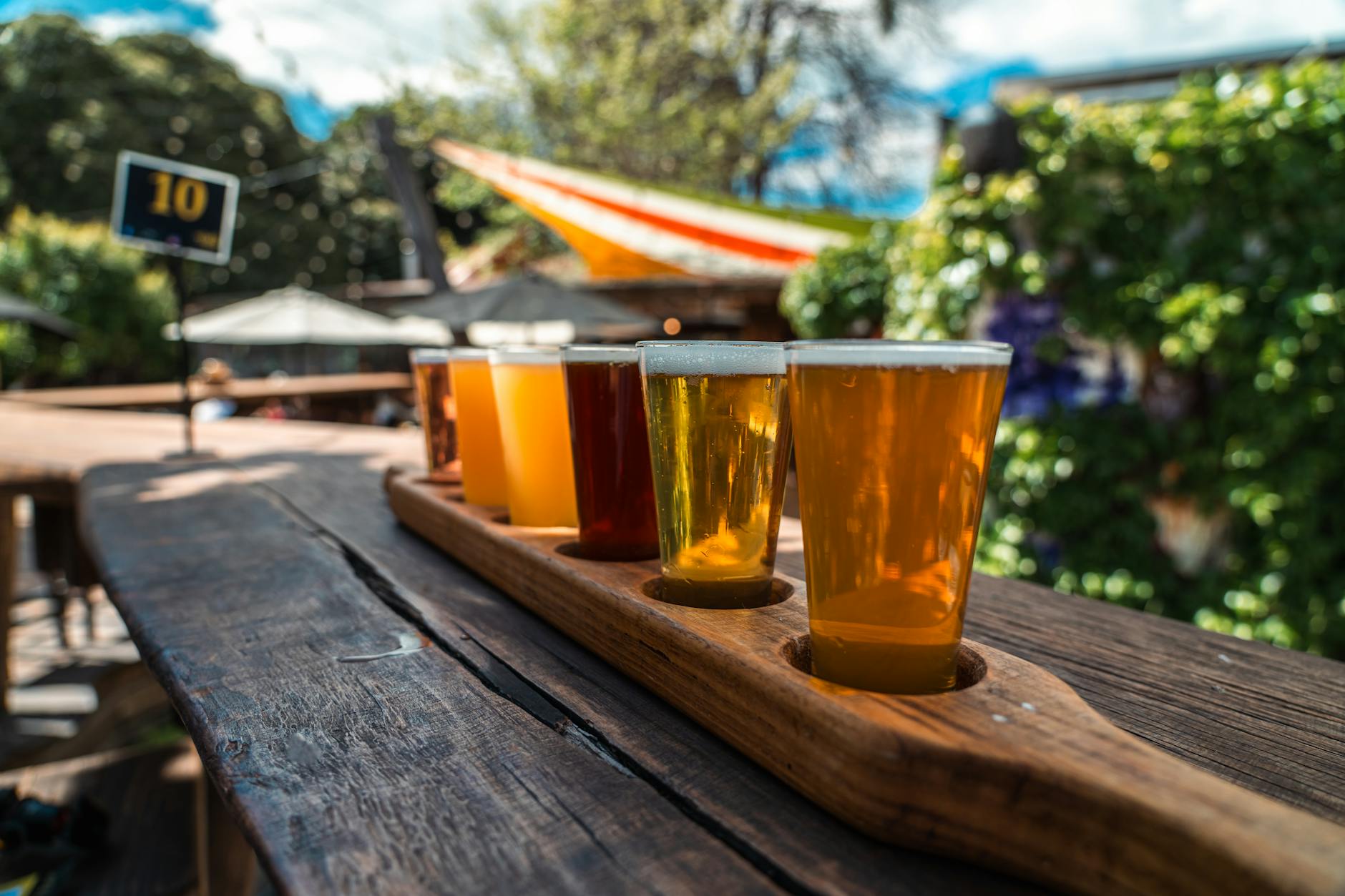
Berlin’s Biergarten tradition stretches back centuries, and the city’s beer gardens remain beloved gathering spots from spring through autumn.
Prater Garten in Prenzlauer Berg is Berlin’s oldest beer garden, operating continuously since 1837. With 600 seats beneath chestnut trees, it serves traditional German food alongside locally brewed Prater Pils. The atmosphere is quintessentially Berlin — relaxed, multigenerational, and entirely unpretentious.
Café am Neuen See in the Tiergarten park is arguably the most scenic beer garden in the city, set on a lake where you can rent rowing boats. It’s particularly magical on warm summer evenings. Schleusenkrug, near Zoo station and the canal locks, has been pouring beers since 1954 and offers a quirky riverside setting with reasonably priced German comfort food.
Beyond traditional beer gardens, Berlin’s craft beer scene has exploded. Breweries like BRLO (in a shipping container complex near Gleisdreieck Park) and Stone Brewing (in a historic gasworks in Mariendorf) offer taprooms with rotating selections. The local specialty worth trying is Berliner Weisse — a tart, low-alcohol wheat beer (around 2.8% ABV) traditionally served with a shot of raspberry or woodruff syrup. It’s refreshing, unique to Berlin, and perfect for warm-weather drinking.
See our full Berlin Beer Gardens guide for the complete list.
Coffee Culture in Berlin
Berlin’s third-wave coffee scene is among the best in Europe, and an essential part of any berlin food guide, driven by roasters who treat coffee with the same seriousness that winemakers treat grapes.
The Barn operates multiple locations across the city and was named Best Independent European Coffee Shop in 2018. Their approach emphasizes direct relationships with micro-farmers and precise roasting that highlights origin flavors. Bonanza Coffee, established in 2007, is credited with bringing third-wave coffee to Berlin. Their fruity, light-roasted beans have a cult following. Five Elephant in Kreuzberg combines specialty coffee with an acclaimed bakery — their cheesecake is legendary.
A flat white or filter coffee at a specialty shop typically costs €3.50-5.00. Our Berlin Coffee and Cafés guide maps the best spots across every neighborhood.
Food Tours and Culinary Experiences
For visitors who want a guided introduction to Berlin’s food scene, several excellent food tours operate across the city. These range from three-hour neighborhood walks sampling six to eight dishes (typically €50-80 per person) to full-day culinary experiences combining cooking classes with market visits.
The best food tours focus on a single neighborhood — a Kreuzberg tour covering Turkish, German, and international food, or a Neukölln tour exploring Middle Eastern and emerging cuisines. Market tours of Markthalle Neun are also popular, especially during Street Food Thursday.
Cooking classes focused on German cuisine, bread baking, or vegan cooking are available through various schools and private chefs. For a uniquely Berlin experience, look for “supper clubs” — private dining events held in apartments and studios, often announced through social media and word of mouth.
Our Food Tours in Berlin guide covers the best options with prices and booking information.

Practical Tips for Eating in Berlin
Budget planning: Berlin remains one of the most affordable food cities in Western Europe. Street food runs €3-8 per item. A casual restaurant meal with a drink costs €12-20. Mid-range dinner with wine is €25-45 per person. Fine dining tasting menus start around €75 and rarely exceed €150, making Berlin’s Michelin scene remarkably accessible.
Tipping: Service charge is included in menu prices in Germany, but tipping 5-10% is customary and appreciated. In restaurants, round up the bill or add 10% for good service. Tell the server the total amount you want to pay when they bring the check — don’t leave cash on the table as you leave. At casual spots and cafés, rounding up to the nearest euro is sufficient.
Payment: Berlin has a reputation as a cash-heavy city, and while card acceptance has improved significantly, many smaller restaurants, street food vendors, and Imbisse (snack bars) remain cash-only. Always carry some cash, especially in Kreuzberg and Neukölln. Larger restaurants and chains accept cards.
Reservations: For Michelin-starred restaurants and popular brunch spots on weekends, book in advance. Most casual restaurants don’t require reservations, though showing up at peak times (7:30-9:00 PM for dinner) at popular spots without one may mean a wait.
Dining hours: Berliners eat late by German standards. Lunch typically runs from noon to 2:30 PM, and dinner from 7:00 PM onward. Many restaurants don’t fill up until 8:00 or 9:00 PM. Brunch on weekends often runs 10:00 AM to 3:00 PM. Street food is available throughout the day and well into the night — some döner shops and Burgermeister stay open until 3:00 or 4:00 AM.
Useful German food vocabulary: Speisekarte (menu), Rechnung (bill), Trinkgeld (tip), Vorspeise (appetizer), Hauptgericht (main course), Nachspeise (dessert), Getränke (drinks), ohne Fleisch (without meat), vegetarisch (vegetarian), vegan (same word in German).
Explore Berlin’s Food Scene in Depth
This berlin food guide only scratches the surface. Dive deeper into any aspect of the city’s culinary world with our specialized guides:
- Traditional German Food in Berlin — Classic dishes, historic restaurants, and where to find authentic German cooking
- Best Currywurst in Berlin — The definitive ranking of Berlin’s most iconic street food
- Berlin Street Food Markets — Every market, food hall, and outdoor food event worth visiting
- Vegan and Vegetarian Restaurants in Berlin — The complete guide to plant-based dining in Europe’s vegan capital
- Fine Dining in Berlin — Every Michelin-starred restaurant reviewed and compared
- Best Brunch in Berlin — Weekend brunch spots across every neighborhood
- Berlin Beer Gardens — Traditional Biergärten, craft breweries, and where to drink outdoors
- Berlin Döner Kebab — History, culture, and the best kebab shops in the city
- Berlin Coffee and Cafés — Third-wave roasters, specialty shops, and the best café culture
- Food Tours in Berlin — Guided culinary experiences, cooking classes, and supper clubs