Berlin’s food scene runs much wider than Currywurst — but the German classics remain the anchor. To eat traditional German food in Berlin properly, you need to know what to order, where to go, and which dishes are local Berlin specialties versus regional German ones travelers often confuse with Bavarian cooking. This guide covers the must-try traditional dishes, the best classic restaurants from working-class kneipen to fine-dining versions, and the practical advice on portions, ordering, and seasonal availability you’ll wish you had on day one.
Berlin’s culinary identity is shaped by Prussian peasant cooking, post-war improvisation, and the wave of migration from Turkey, Vietnam, and elsewhere that defines the city today. Traditional German food in Berlin sits at one end of that spectrum — hearty, meat-heavy, beer-friendly, and designed for cold winters.
The Must-Try Traditional German Dishes in Berlin
Start your culinary tour with these essentials. Most are available at every classic German restaurant in the city, often with regional variations.
Currywurst
The Berlin street food classic — a sliced pork sausage (Bratwurst) topped with a tomato-based curry sauce and dusted with curry powder. Usually served with a side of fries (Pommes) or a roll (Brötchen). Invented in 1949 by Herta Heuwer in Charlottenburg using British soldier rations, it’s now a Berlin institution. €3-€8 at street stands. See our dedicated best currywurst in Berlin guide.
Schnitzel
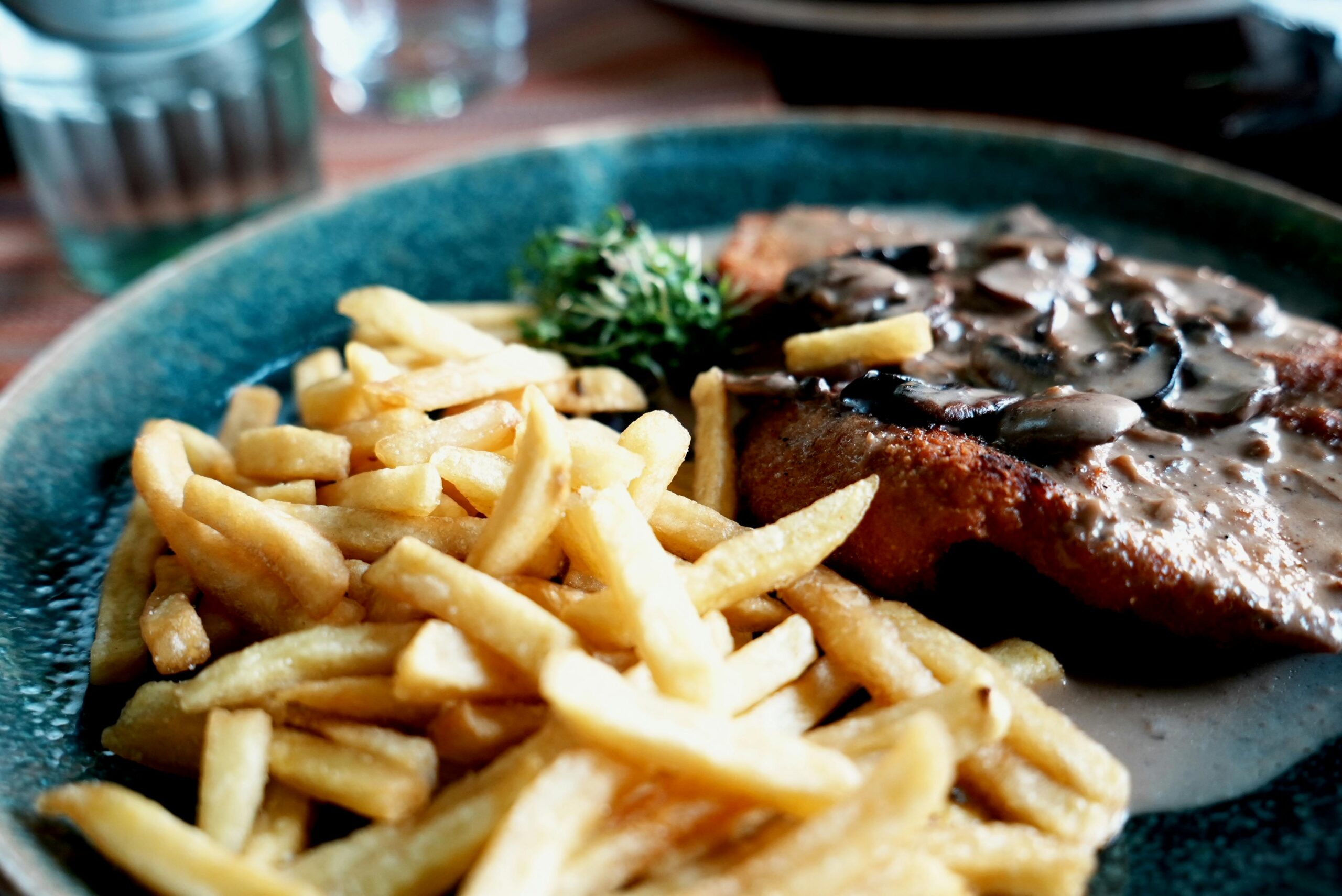
Breaded and pan-fried meat cutlet — typically pork (Schweineschnitzel) in Berlin, sometimes veal (Wiener Schnitzel — but this term is legally protected for veal only). Served with potato salad, fries, or sauerkraut. Most German restaurants offer 2-3 schnitzel preparations, including the spectacular Jägerschnitzel (with mushroom sauce) and Zigeunerschnitzel (with paprika sauce, though increasingly renamed for sensitivity reasons). €15-€22 at sit-down restaurants.
Königsberger Klopse
A genuinely Prussian dish — meatballs (typically veal or a veal-pork mix) in a creamy white caper sauce, served with boiled potatoes and beetroot. Originally from Königsberg (now Kaliningrad), these are a Berlin classic that’s harder to find at touristy restaurants but a staple at neighborhood kneipen. €14-€19.
Eisbein
The Berlin version of pork knuckle — boiled (rather than roasted, like Bavarian Schweinshaxe) and served with sauerkraut, mushy peas (Erbspüree), and boiled potatoes. Massive portions. €18-€28. Less common in restaurants now than it was a generation ago, but still available at traditional venues like Zur letzten Instanz or Marjellchen.
Schweinshaxe (Bavarian Pork Knuckle)
The roasted-skin version of pork knuckle that originates in Bavaria but appears on most Berlin German-food menus. Crispy skin, fall-off-the-bone meat, served with sauerkraut and potato dumplings. €22-€30. Best at beer gardens and Bavarian-themed restaurants.
Sauerbraten
A vinegar-marinated pot roast (typically beef), slow-cooked and served with red cabbage and potato dumplings (Klöße). The marinade gives the meat a distinctive sweet-sour flavor. Found at most traditional German restaurants. €18-€25.
Spätzle and Käsespätzle
Soft, irregular egg noodles (Swabian in origin but ubiquitous in Berlin). Käsespätzle — layered with melted cheese and topped with crispy fried onions — is the German answer to mac and cheese. €11-€16 as a main course, vegetarian option.
Rouladen
Thin slices of beef rolled around bacon, onion, mustard, and pickle, then braised in red wine sauce. Served with potatoes and red cabbage. A Sunday-dinner classic, found at proper German restaurants. €19-€26.
Maultaschen
Swabian filled pasta — square pockets stuffed with minced meat, spinach, and onions. Often served in broth (Maultaschen in Brühe) or pan-fried with onions and egg (Geröstete Maultaschen). €12-€18.
Boulette / Frikadelle
The Berlin name for a pan-fried meat patty — essentially a German hamburger without the bun. Often eaten at room temperature with mustard from a Imbiss snack bar. €3-€5 standalone or part of a plate.
Senfei
An East Berlin specialty — hard-boiled eggs in mustard sauce, often served with mashed potatoes. Comfort food at its most basic. €8-€12.
Bockwurst and Wiener
Berlin’s other sausage classics — Bockwurst is a smoked, mild pork-veal sausage usually boiled and served with mustard and a Brötchen. Wiener is the long, thin smoked sausage Americans know as a “frankfurter.” Both are sold at every Imbiss for €2-€4.
Berliner Pfannkuchen (Doughnut)
Filled jelly doughnut, called simply a “Berliner” or “Pfannkuchen” in Berlin. Powdered sugar coating, filled with rose-hip or plum jam (sometimes other flavors). €1.50-€3 at any bakery. Confusingly, in southern Germany the word “Pfannkuchen” means a thin pancake.
Apfelstrudel
Apple strudel — Austrian in origin but on every German restaurant dessert menu. Served warm with vanilla sauce or vanilla ice cream. €6-€9.
Best Traditional German Restaurants in Berlin
For each of these, expect a meat-and-potatoes menu, German beer on tap, brisk service, and prices in the €15-€30 range for mains.
Zur letzten Instanz (Mitte)
Berlin’s oldest restaurant, dating to 1621. Wood-paneled rooms, classic Berlin specialties (Eisbein, Königsberger Klopse, Sauerbraten), and Napoleon-era atmosphere. Touristy but genuinely historic. Reservations strongly recommended. €18-€28 for mains.
Marjellchen (Charlottenburg)
Specialist in East Prussian and Silesian cooking — Königsberger Klopse, Eisbein, Sauerbraten, and rare regional dishes. Cozy, family-run, intimate dining room. A favorite for serious German-food lovers. €19-€32.
Lutter und Wegner (Mitte)
An upscale traditional German restaurant on Gendarmenmarkt with a focus on Wiener Schnitzel and Austro-German classics. Old-Berlin atmosphere, formal service, excellent wine list. €22-€42.
Restaurant Nolle (Mitte)
Set under the railway arches at Friedrichstrasse station, restored to its 1920s Art Deco character. Solid Berlin-Prussian cuisine in a memorable setting. €18-€28.
Wirtshaus zum Dachsbau (Charlottenburg)
A traditional Bavarian Wirtshaus serving Schnitzel, Schweinshaxe, Käsespätzle, and large beer steins. Less Berlin-specific but excellent Bavarian fare. €15-€25.
Schlesisch Blau (Kreuzberg)
Daily-changing menu of Silesian and Berlin classics at very fair prices. €11-€16 for mains, with a focus on Spätzle, Cordon Bleu, and pork roast. A locals’ favorite.
Tisk (Friedrichshain)
Self-described “modern Speisekneipe” — traditional German dishes elevated with contemporary technique and presentation. Less heavy than classic German cooking, more interesting plating. €18-€28.
Heuberger (Schöneberg)
Friendly traditional restaurant known for Schnitzel with fried potatoes and excellent Käsespätzle. Vegetarian-friendly options too. €14-€22.
Wilhelm Hoeck 1892 (Charlottenburg)
Long-standing traditional restaurant with a flammkuchen (German flatbread) specialty. €13-€20.
Augustiner am Gendarmenmarkt (Mitte)
Bavarian beer-hall culture transplanted to Berlin, with full-strength Munich Augustiner beer on tap and a comprehensive Bavarian-leaning menu. Schweinshaxe is a standout. €16-€26.
Beer Gardens (Biergärten) — A Different Way to Eat German Food
Beer gardens are a key part of the German food experience. The food is simpler than at sit-down restaurants — usually grilled sausages, pretzels, simple Schnitzel, and Käsespätzle — but the atmosphere is unbeatable in summer. See our dedicated Berlin beer gardens guide for a deeper dive.
Top Beer Gardens for Traditional German Food
- Prater Garten (Prenzlauer Berg) — Berlin’s oldest beer garden (since 1837)
- Café am Neuen See (Tiergarten) — large beer garden on a lake within Tiergarten
- Loretta am Wannsee — lakeside, family-friendly
- Schleusenkrug (Tiergarten) — by the lock on the canal
- Brauhaus Lemke (multiple locations) — house-brewed beer plus traditional menu
Where to Try Traditional German Food in Berlin: By Budget
Budget (under €15 per main)
- Schlesisch Blau (Kreuzberg) — full traditional plates from €11
- Konnopke’s Imbiss (Prenzlauer Berg) — currywurst classic since 1930
- Curry 36 (Kreuzberg) — currywurst at its most famous
- Markthalle Neun (Kreuzberg) — multiple stalls with regional German specialties
Mid-Range (€15-€25)
- Heuberger (Schöneberg)
- Augustiner am Gendarmenmarkt (Mitte)
- Restaurant Nolle (Mitte)
- Brauhaus Lemke (multiple locations)
Upscale (€25+)
- Marjellchen (Charlottenburg)
- Lutter und Wegner (Mitte)
- Zur letzten Instanz (Mitte)
- Hotel am Steinplatz restaurant (Charlottenburg)
Vegetarian Traditional German Food
German cuisine is meat-heavy, but several traditional dishes are naturally vegetarian or commonly available in vegetarian versions:
- Käsespätzle — cheese spätzle with crispy onions
- Maultaschen — vegetarian filled pasta
- Pfifferling-based dishes in season (chanterelle mushroom sauces with bread dumplings)
- Kartoffelsuppe — potato soup, often vegetarian
- Linsen mit Spätzle — Swabian lentil stew with spätzle (often vegetarian)
- Vegetarisches Schnitzel — increasingly common, breaded vegetable cutlet
For dedicated vegetarian/vegan dining, see our vegan and vegetarian restaurants in Berlin guide.
What to Drink With Traditional German Food in Berlin
Beer
The natural pairing. Berlin’s classic local beers include:
- Berliner Kindl and Berliner Pilsner — local mass-market lagers
- Berliner Weisse — sour wheat beer, often served with raspberry (rot) or woodruff (grün) syrup
- Schultheiss, Engelhardt — older Berlin breweries
- Brauhaus Lemke, Brewbaker, Hops & Barley — modern craft breweries
Wine
German wines pair surprisingly well with traditional German food. Try Riesling (off-dry to dry) with Schnitzel and pork dishes, or Spätburgunder (Pinot Noir) with Sauerbraten and roasts.
Schnaps
A small post-meal digestif. Common options: Korn (clear grain spirit), Obstler (fruit brandy), Jägermeister (the herbal classic). Usually €3-€6 a glass.
Practical Ordering Tips
Portions Are Large
Most traditional German mains are designed for serious appetites. Two people can often share one Schweinshaxe. Pace yourself.
Tipping
Round up to the nearest euro for a coffee or quick drink, 5-10% for a regular meal, 10-15% for excellent service. Tip in cash if possible — say the total amount you want to pay (including tip) when handing over the card or cash.
Reservations
For tourist-heavy traditional restaurants (Zur letzten Instanz, Lutter und Wegner), reservations are essential — especially weekends and dinner. Most others accept walk-ins, but Friday/Saturday evenings can be busy.
English Menus
Most central German restaurants offer English menus. The traditional kneipen in residential neighborhoods may only have German menus — Google Translate camera is your friend.
Daily Specials (Tagesgericht)
Look for the daily special menu (Tageskarte or Tagesgericht). These are usually the freshest, best-priced dishes — often €8-€14 for a full plate.
External Resources
For additional, authoritative information on traditional German food in Berlin, the following sources are useful:
Quick Reference: Traditional German Food in Berlin
This traditional german food in berlin guide is updated for 2026 with current pricing, schedules, and recommendations. Use this traditional german food in berlin resource as your one-stop reference, and bookmark for return visits. For travelers researching traditional german food in berlin alongside other Berlin topics, see our linked guides for related coverage.
Frequently Asked Questions
What is the most famous traditional German food in Berlin?
Currywurst is Berlin’s signature street food (invented in the city in 1949), but Königsberger Klopse, Eisbein, and Schnitzel are equally important traditional Berlin dishes. For sit-down restaurant meals, Sauerbraten and Schweinshaxe are widely available.
Where can I find traditional German food in Berlin?
Try Zur letzten Instanz (oldest restaurant, Mitte), Marjellchen (Charlottenburg, East Prussian classics), Lutter und Wegner (upscale on Gendarmenmarkt), Schlesisch Blau (budget Kreuzberg), or Augustiner am Gendarmenmarkt (Bavarian beer-hall style).
How much does traditional German food in Berlin cost?
Street food (Currywurst, Bockwurst) costs €3-€8. Mid-range traditional restaurants charge €15-€25 for mains. Upscale German restaurants charge €25-€42 for mains. Beer gardens are mid-range with simple plates €10-€18.
What’s a traditional Berlin breakfast?
A typical “Frühstück” includes fresh bread (Brötchen), butter, multiple cheeses, cold cuts (cured ham, salami), boiled eggs, jams, sometimes Müsli, and coffee. Brunch culture in Berlin extends this with hot dishes, often runs into mid-afternoon. See our best brunch in Berlin guide.
Is German food in Berlin only meat?
No — vegetarian options are widely available, especially Käsespätzle, Maultaschen, mushroom dishes, and vegetarian schnitzel. Berlin’s broader food scene also includes a strong vegan presence.
What’s the difference between Berlin food and Bavarian food?
Berlin specialties skew toward Prussian and East Prussian classics — Currywurst, Königsberger Klopse, Eisbein (boiled pork knuckle). Bavarian classics focus on Schweinshaxe (roasted pork knuckle), pretzels, weisswurst, and stronger beer culture. Many Berlin restaurants serve both, but the truly local Berlin dishes are the Prussian ones.
Are tipping customs different at traditional German restaurants?
Standard German tipping applies: round up small bills, leave 5-10% for casual meals, 10-15% for excellent service. Add the tip to the total at payment rather than leaving cash on the table.
What’s the best traditional German breakfast spot?
For a proper traditional German Frühstück, try Café Anna Blume (Prenzlauer Berg), Café Liebling (Prenzlauer Berg), or Tomasa (Mitte). Most German cafés serve breakfast until 4pm on weekends.
Final Verdict: Traditional German Food in Berlin
Don’t visit Berlin without sampling its traditional German food — even if your trip’s foodie focus is Vietnamese, Turkish, or Michelin-starred. Start with Currywurst at Konnopke’s, work through Schnitzel and Käsespätzle at a neighborhood Wirtshaus, and book a single special-occasion dinner at Marjellchen or Zur letzten Instanz. The Prussian-Berlin classics are worth a few hours of any Berlin trip.
For more food-focused planning, see our Berlin food and restaurant guide, best currywurst in Berlin, and Berlin street food markets.
Leave a Reply